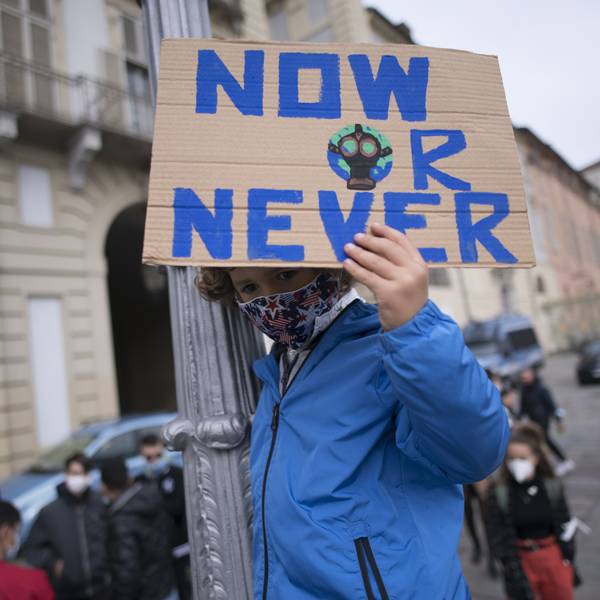

Historic Climate Deal Reached, But Campaigners say the Work is Just Beginning
'This deal puts the fossil fuel industry on the wrong side of history.'—Kumi Naidoo, Greenpeace International
The global talks known as COP21 ended Saturday with nearly 200 countries agreeing to a carbon emissions-slashing deal (pdf). But climate campaigners are saying that the agreement doesn't go far enough, and that the real work is just beginning.
While Reuters described the deal's adoption as "setting the course for a 'historic' transformation of the world's fossil fuel-driven economy within decades in a bid to arrest global warming," commentator George Monbiot writes Saturday of the draft agreement, "By comparison to what it could have been, it's a miracle. By comparison to what it should have been, it's a disaster."
How Rainforest Action Network viewed the deal--"with both hope and disappointment"--captures the takeaway from Monbiot as well as many groups.
Greenpeace International executive director Kumi Naidoo's take at the end of the talks was that the agreement marks "only one step on long a road, and there are parts of it that frustrate and disappoint me, but it is progress. This deal alone won't dig us out the hole we're in, but it makes the sides less steep."
Here's how environmental organization Earthjustice sums up just what the Paris Agreement commits its signatories to:
- hold the increase in global temperature average to well below 2 degrees Celsius above pre-industrial levels and pursue efforts to limit the temperature increase to 1.5 degrees, a goal that reflects the most current science on the uppermost limit of warming if we are to reduce the risk of the most catastrophic impacts of climate change
- review progress every five years, the first before 2020, and bring countries back to the table to increase their emissions reduction efforts
- robust transparency provisions to hold nations accountable to carry through on their pledges
- provide support to poorer countries to help them leapfrog to low-carbon development, adapt to climate change and cope with unavoidable loss and damage.
The Guardian reports that the deal "for the first time commits rich countries, rising economies and some of the poorest countries to work together to fight climate change."
"The overall agreement is legally binding," the reporting adds, "but some elements--including the pledges to curb emissions by individual countries and the climate finance elements --are not."
That was noted by Friends of the Earth Scotland, who said that among the pact's problems is the fact that "[t]here is no legally binding way forward to address the problem of lack of ambition of current national contributions towards post-2020 action--a very weak "facilitative dialogue" in 2018 with no obligation to actually improve these plans." And as far as the 1.5 degree limit is concerned, the language used--"to pursue efforts"--is weak.
Naidoo said of the 1.5 degree limit, "That single number, and the new goal of net zero emissions by the second half of this century, will cause consternation in the boardrooms of coal companies and the palaces of oil-exporting states."
"This deal puts the fossil fuel industry on the wrong side of history," Naidoo said. Indeed, similar to Reuters' phrasing of the outcome, the Guardian wrote in its reporting of the deal's adoption: "Governments have signaled an end to the fossil fuel era." Similarly, ThinkProgress' Joe Romm wrote that it's a deal "that will leave most of the world's fossil fuels unburned." That laudable element aside, many of the nations' pledges put the world on a path to warming of not 2 but over 3 degrees, Earthjustice says.
On the issue of climate finance, says ActionAid, the deal "lets the world's biggest historical polluters off the hook." Disappointments aside, the group's chief executive, Adriano Campolina, said the deal "provides an important hook on which people can hang their demands."
"And so our work is just beginning," Earthjustice President Trip Van Noppen. "Whether we live in rich nations or poor ones, in low-lying coastal communities or in the American heartland, our fates are bound together."
Others at the Paris conference took to Twitter to underscore the importance of grassroots movements now in forcing governments to commit to making the changes required:
And that sentiment brought out thousands to the streets of Paris--in defiance of a protest ban--on Saturday. Among those is Philippine activist Joseph Purugganan from the organization Focus on the Global South. "The message here is that the real solution will come from the people," he told the New York Times.
As Naidoo added in his statement, "To pull us free of fossil fuels we are going to need to mobilize in ever greater numbers." And there have been successes, he noted. "This year the climate movement beat the Keystone pipeline, we kicked Shell out of the Arctic and put coal into terminal decline."
"For us," he said, "Paris was always a stop on an ongoing journey. Ultimately our fate will be decided over the coming decades by the collective courage of our species. I believe we will succeed."
We are at a crossroads
This country and this world are at a monumental crossroads. In a few short weeks, US voters will have an opportunity to beat back the forces of fascism and confront the billionaires who are rigging the economy, our media system, and our democracy, making it increasingly impossible for ordinary people to get by. We’re not just talking about the election. We’re talking about what must be done once these fascist elements are vanquished from power. We need a bolder set of solutions than what either major party has so far been willing to offer and a working-class movement ready to fight like hell for it. Trump didn't emerge from nowhere. The conditions that fueled MAGA authoritarianism were created by decades of radical neoliberal economic policies and a corrupt political system dominated by corporate interests. They slashed taxes on the super-rich, promising that the benefits would trickle down. They said giveaways to the corporate titans would make life more affordable for the rest of us. It was all bullshit. And when a bitter, betrayed populace searches for someone to blame, right-wing demagogues have little trouble finding scapegoats. People know when they're being lied to, but you won't hear any of this from the corporate media. Only independent journalism—powered and funded by people who believe in building a better world—can deliver truly trustworthy daily news. Our Fall Campaign is underway, and we need your help. To power our newsroom through the rest of the year, we need to raise $125,000 by midnight on October 31. So if you share our vision, please contribute whatever you can to sustain our work. |
The global talks known as COP21 ended Saturday with nearly 200 countries agreeing to a carbon emissions-slashing deal (pdf). But climate campaigners are saying that the agreement doesn't go far enough, and that the real work is just beginning.
While Reuters described the deal's adoption as "setting the course for a 'historic' transformation of the world's fossil fuel-driven economy within decades in a bid to arrest global warming," commentator George Monbiot writes Saturday of the draft agreement, "By comparison to what it could have been, it's a miracle. By comparison to what it should have been, it's a disaster."
How Rainforest Action Network viewed the deal--"with both hope and disappointment"--captures the takeaway from Monbiot as well as many groups.
Greenpeace International executive director Kumi Naidoo's take at the end of the talks was that the agreement marks "only one step on long a road, and there are parts of it that frustrate and disappoint me, but it is progress. This deal alone won't dig us out the hole we're in, but it makes the sides less steep."
Here's how environmental organization Earthjustice sums up just what the Paris Agreement commits its signatories to:
- hold the increase in global temperature average to well below 2 degrees Celsius above pre-industrial levels and pursue efforts to limit the temperature increase to 1.5 degrees, a goal that reflects the most current science on the uppermost limit of warming if we are to reduce the risk of the most catastrophic impacts of climate change
- review progress every five years, the first before 2020, and bring countries back to the table to increase their emissions reduction efforts
- robust transparency provisions to hold nations accountable to carry through on their pledges
- provide support to poorer countries to help them leapfrog to low-carbon development, adapt to climate change and cope with unavoidable loss and damage.
The Guardian reports that the deal "for the first time commits rich countries, rising economies and some of the poorest countries to work together to fight climate change."
"The overall agreement is legally binding," the reporting adds, "but some elements--including the pledges to curb emissions by individual countries and the climate finance elements --are not."
That was noted by Friends of the Earth Scotland, who said that among the pact's problems is the fact that "[t]here is no legally binding way forward to address the problem of lack of ambition of current national contributions towards post-2020 action--a very weak "facilitative dialogue" in 2018 with no obligation to actually improve these plans." And as far as the 1.5 degree limit is concerned, the language used--"to pursue efforts"--is weak.
Naidoo said of the 1.5 degree limit, "That single number, and the new goal of net zero emissions by the second half of this century, will cause consternation in the boardrooms of coal companies and the palaces of oil-exporting states."
"This deal puts the fossil fuel industry on the wrong side of history," Naidoo said. Indeed, similar to Reuters' phrasing of the outcome, the Guardian wrote in its reporting of the deal's adoption: "Governments have signaled an end to the fossil fuel era." Similarly, ThinkProgress' Joe Romm wrote that it's a deal "that will leave most of the world's fossil fuels unburned." That laudable element aside, many of the nations' pledges put the world on a path to warming of not 2 but over 3 degrees, Earthjustice says.
On the issue of climate finance, says ActionAid, the deal "lets the world's biggest historical polluters off the hook." Disappointments aside, the group's chief executive, Adriano Campolina, said the deal "provides an important hook on which people can hang their demands."
"And so our work is just beginning," Earthjustice President Trip Van Noppen. "Whether we live in rich nations or poor ones, in low-lying coastal communities or in the American heartland, our fates are bound together."
Others at the Paris conference took to Twitter to underscore the importance of grassroots movements now in forcing governments to commit to making the changes required:
And that sentiment brought out thousands to the streets of Paris--in defiance of a protest ban--on Saturday. Among those is Philippine activist Joseph Purugganan from the organization Focus on the Global South. "The message here is that the real solution will come from the people," he told the New York Times.
As Naidoo added in his statement, "To pull us free of fossil fuels we are going to need to mobilize in ever greater numbers." And there have been successes, he noted. "This year the climate movement beat the Keystone pipeline, we kicked Shell out of the Arctic and put coal into terminal decline."
"For us," he said, "Paris was always a stop on an ongoing journey. Ultimately our fate will be decided over the coming decades by the collective courage of our species. I believe we will succeed."
The global talks known as COP21 ended Saturday with nearly 200 countries agreeing to a carbon emissions-slashing deal (pdf). But climate campaigners are saying that the agreement doesn't go far enough, and that the real work is just beginning.
While Reuters described the deal's adoption as "setting the course for a 'historic' transformation of the world's fossil fuel-driven economy within decades in a bid to arrest global warming," commentator George Monbiot writes Saturday of the draft agreement, "By comparison to what it could have been, it's a miracle. By comparison to what it should have been, it's a disaster."
How Rainforest Action Network viewed the deal--"with both hope and disappointment"--captures the takeaway from Monbiot as well as many groups.
Greenpeace International executive director Kumi Naidoo's take at the end of the talks was that the agreement marks "only one step on long a road, and there are parts of it that frustrate and disappoint me, but it is progress. This deal alone won't dig us out the hole we're in, but it makes the sides less steep."
Here's how environmental organization Earthjustice sums up just what the Paris Agreement commits its signatories to:
- hold the increase in global temperature average to well below 2 degrees Celsius above pre-industrial levels and pursue efforts to limit the temperature increase to 1.5 degrees, a goal that reflects the most current science on the uppermost limit of warming if we are to reduce the risk of the most catastrophic impacts of climate change
- review progress every five years, the first before 2020, and bring countries back to the table to increase their emissions reduction efforts
- robust transparency provisions to hold nations accountable to carry through on their pledges
- provide support to poorer countries to help them leapfrog to low-carbon development, adapt to climate change and cope with unavoidable loss and damage.
The Guardian reports that the deal "for the first time commits rich countries, rising economies and some of the poorest countries to work together to fight climate change."
"The overall agreement is legally binding," the reporting adds, "but some elements--including the pledges to curb emissions by individual countries and the climate finance elements --are not."
That was noted by Friends of the Earth Scotland, who said that among the pact's problems is the fact that "[t]here is no legally binding way forward to address the problem of lack of ambition of current national contributions towards post-2020 action--a very weak "facilitative dialogue" in 2018 with no obligation to actually improve these plans." And as far as the 1.5 degree limit is concerned, the language used--"to pursue efforts"--is weak.
Naidoo said of the 1.5 degree limit, "That single number, and the new goal of net zero emissions by the second half of this century, will cause consternation in the boardrooms of coal companies and the palaces of oil-exporting states."
"This deal puts the fossil fuel industry on the wrong side of history," Naidoo said. Indeed, similar to Reuters' phrasing of the outcome, the Guardian wrote in its reporting of the deal's adoption: "Governments have signaled an end to the fossil fuel era." Similarly, ThinkProgress' Joe Romm wrote that it's a deal "that will leave most of the world's fossil fuels unburned." That laudable element aside, many of the nations' pledges put the world on a path to warming of not 2 but over 3 degrees, Earthjustice says.
On the issue of climate finance, says ActionAid, the deal "lets the world's biggest historical polluters off the hook." Disappointments aside, the group's chief executive, Adriano Campolina, said the deal "provides an important hook on which people can hang their demands."
"And so our work is just beginning," Earthjustice President Trip Van Noppen. "Whether we live in rich nations or poor ones, in low-lying coastal communities or in the American heartland, our fates are bound together."
Others at the Paris conference took to Twitter to underscore the importance of grassroots movements now in forcing governments to commit to making the changes required:
And that sentiment brought out thousands to the streets of Paris--in defiance of a protest ban--on Saturday. Among those is Philippine activist Joseph Purugganan from the organization Focus on the Global South. "The message here is that the real solution will come from the people," he told the New York Times.
As Naidoo added in his statement, "To pull us free of fossil fuels we are going to need to mobilize in ever greater numbers." And there have been successes, he noted. "This year the climate movement beat the Keystone pipeline, we kicked Shell out of the Arctic and put coal into terminal decline."
"For us," he said, "Paris was always a stop on an ongoing journey. Ultimately our fate will be decided over the coming decades by the collective courage of our species. I believe we will succeed."