
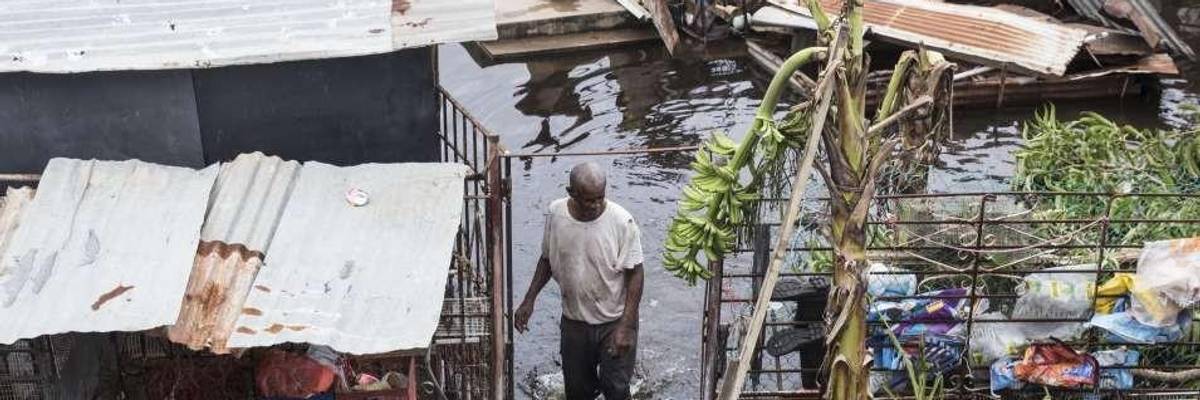
Hurricane Maria, which struck Puerto Rico on Sept. 20, 2017, caused an estimated $90 billion in damage to the U.S. territory. (Photo: Alex Wroblewski/Getty Images)
New Study Warns 5 Billion People Could Face Higher Risk of Climate-Related Coastal Storms, Water Pollution, and Crop Losses by 2050
"If we continue on this trajectory, ecosystems will be unable to provide natural insurance in the face of climate change-induced impacts on food, water, and infrastructure."
By 2050, five billion people across the globe--disproportionately those in poorer communities--could face a higher risk of enduring coastal storms, water pollution, and crop losses linked to the human-caused climate crisis, warns a study published in the journal Science and reported on Thursday by The Scotsman.
"Our analyses suggest that the current environmental governance at local, regional, and international levels is failing to encourage the most vulnerable regions to invest in ecosystems," said study co-author Unai Pascual, co-chair of the Intergovernmental Science-Policy Platform on Biodiversity and Ecosystem Services (IPBES).
"If we continue on this trajectory," Pascual added, "ecosystems will be unable to provide natural insurance in the face of climate change-induced impacts on food, water, and infrastructure."
According to The Scotsman:
The research team set out to understand and map where nature contributes the most to people's lives, and how many people might be impacted by climate change and changes in the way fossil fuels are used.
They focused on three areas in which nature is considered to be hugely beneficial to people--water quality regulation, protection from coastal hazards, and crop pollination--and analyzed how they might change using open-source software.
People in Africa and South Asia were projected to be most disadvantaged by "diminishing contributions" from nature.
"Determining when and where nature is most important is critical to understanding how best to enhance people's livelihoods and well-being," said study co-author Stephen Polasky of the University of Minnesota.
The researchers have developed an online, interactive map for their findings. Lead author Becky Chaplin-Kramer of Stanford University said the group hopes the study will help inform and "further galvanize global action."
"We're equipped with the information we need to avert the worst scenarios our models project and move toward an equitable, sustainable future," she added. "Now is the time to wield it."
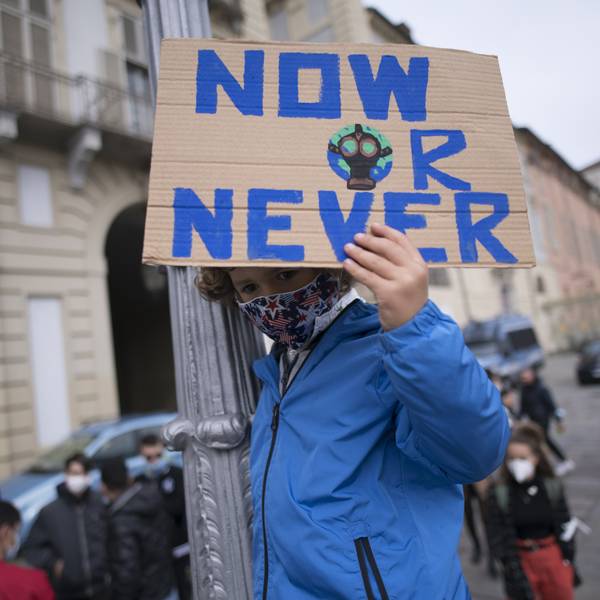
The study's warnings echo findings from previous research about the near-future consequences of human-driven global warming--such as a study from September on climate-related droughts and wheat production--and come as people around the world have taken to the streets since Monday for Extinction Rebellion's two weeks of action to pressure policymakers to pursue bolder climate action plans.
Alongside demands from scientists and activists that governments worldwide urgently work to transition energy systems away from fossil fuels to fully renewable sources, experts and campaigners are now promoting the restoration of nature to help prevent more catastrophic impacts of rising temperatures.
One such effort is the Natural Climate Solutions campaign, which launched in April and received renewed attention during last month's global climate strikes. It calls for protecting and restoring ecosystems such as forests to draw carbon dioxide out of the atmosphere and lock it away to prevent further warming.
We are at a crossroads
This country and this world are at a monumental crossroads. In a few short weeks, US voters will have an opportunity to beat back the forces of fascism and confront the billionaires who are rigging the economy, our media system, and our democracy, making it increasingly impossible for ordinary people to get by. We’re not just talking about the election. We’re talking about what must be done once these fascist elements are vanquished from power. We need a bolder set of solutions than what either major party has so far been willing to offer and a working-class movement ready to fight like hell for it. Trump didn't emerge from nowhere. The conditions that fueled MAGA authoritarianism were created by decades of radical neoliberal economic policies and a corrupt political system dominated by corporate interests. They slashed taxes on the super-rich, promising that the benefits would trickle down. They said giveaways to the corporate titans would make life more affordable for the rest of us. It was all bullshit. And when a bitter, betrayed populace searches for someone to blame, right-wing demagogues have little trouble finding scapegoats. People know when they're being lied to, but you won't hear any of this from the corporate media. Only independent journalism—powered and funded by people who believe in building a better world—can deliver truly trustworthy daily news. Our Fall Campaign is underway, and we need your help. To power our newsroom through the rest of the year, we need to raise $125,000 by midnight on October 31. So if you share our vision, please contribute whatever you can to sustain our work. |
By 2050, five billion people across the globe--disproportionately those in poorer communities--could face a higher risk of enduring coastal storms, water pollution, and crop losses linked to the human-caused climate crisis, warns a study published in the journal Science and reported on Thursday by The Scotsman.
"Our analyses suggest that the current environmental governance at local, regional, and international levels is failing to encourage the most vulnerable regions to invest in ecosystems," said study co-author Unai Pascual, co-chair of the Intergovernmental Science-Policy Platform on Biodiversity and Ecosystem Services (IPBES).
"If we continue on this trajectory," Pascual added, "ecosystems will be unable to provide natural insurance in the face of climate change-induced impacts on food, water, and infrastructure."
According to The Scotsman:
The research team set out to understand and map where nature contributes the most to people's lives, and how many people might be impacted by climate change and changes in the way fossil fuels are used.
They focused on three areas in which nature is considered to be hugely beneficial to people--water quality regulation, protection from coastal hazards, and crop pollination--and analyzed how they might change using open-source software.
People in Africa and South Asia were projected to be most disadvantaged by "diminishing contributions" from nature.
"Determining when and where nature is most important is critical to understanding how best to enhance people's livelihoods and well-being," said study co-author Stephen Polasky of the University of Minnesota.
The researchers have developed an online, interactive map for their findings. Lead author Becky Chaplin-Kramer of Stanford University said the group hopes the study will help inform and "further galvanize global action."
"We're equipped with the information we need to avert the worst scenarios our models project and move toward an equitable, sustainable future," she added. "Now is the time to wield it."
The study's warnings echo findings from previous research about the near-future consequences of human-driven global warming--such as a study from September on climate-related droughts and wheat production--and come as people around the world have taken to the streets since Monday for Extinction Rebellion's two weeks of action to pressure policymakers to pursue bolder climate action plans.
Alongside demands from scientists and activists that governments worldwide urgently work to transition energy systems away from fossil fuels to fully renewable sources, experts and campaigners are now promoting the restoration of nature to help prevent more catastrophic impacts of rising temperatures.
One such effort is the Natural Climate Solutions campaign, which launched in April and received renewed attention during last month's global climate strikes. It calls for protecting and restoring ecosystems such as forests to draw carbon dioxide out of the atmosphere and lock it away to prevent further warming.