

SUBSCRIBE TO OUR FREE NEWSLETTER
Daily news & progressive opinion—funded by the people, not the corporations—delivered straight to your inbox.
5
#000000
#FFFFFF
To donate by check, phone, or other method, see our More Ways to Give page.
Daily news & progressive opinion—funded by the people, not the corporations—delivered straight to your inbox.
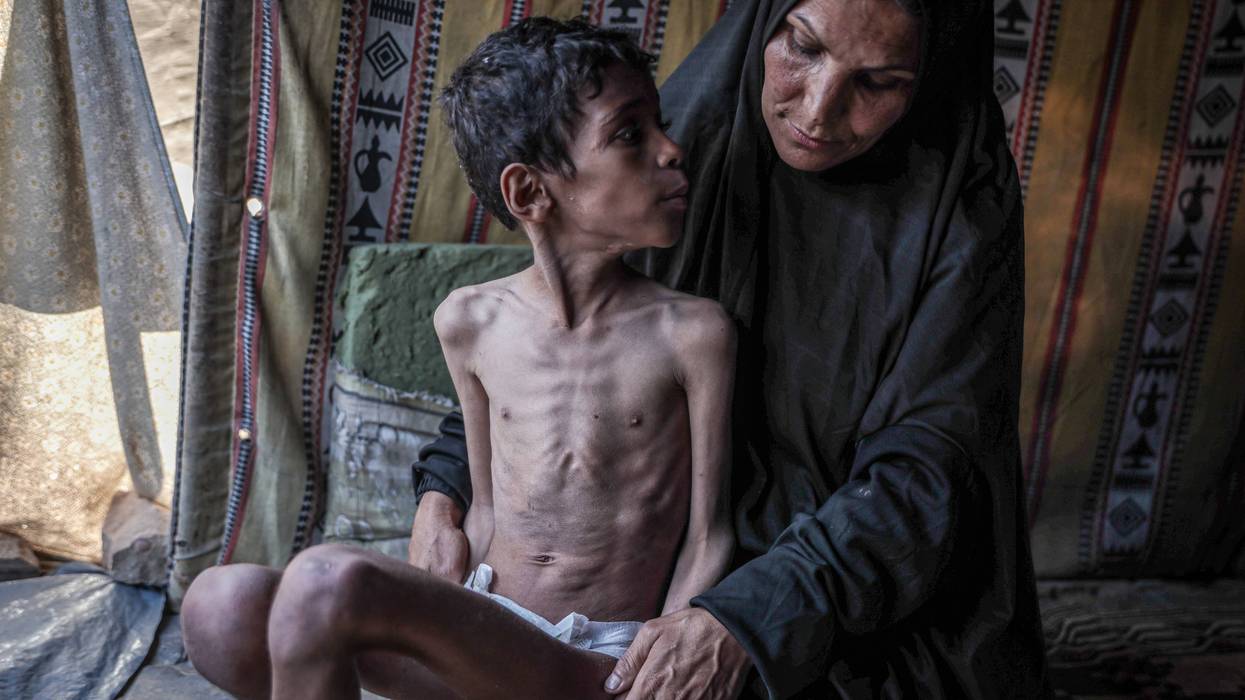
"Every six months, we might get a food parcel once. It's barely enough," said one mother. "We are forced to eat whatever is in front of us."
A ceasefire was declared between Israel and Hamas seven months ago, but just as the deal has not stopped the killing of hundreds of Palestinians in Gaza, it has failed to alleviate the acute malnutrition crisis that was created when Israel began blocking almost all humanitarian aid in October 2023.
The international aid group Doctors Without Borders, also known by its French name, Médecins Sans Frontières (MSF), on Wednesday accused Israel of imposing a "manufactured malnutrition crisis" that is proving particularly devastating for pregnant and breastfeeding women, newborns, and infants.
At four clinics operated by MSF in Gaza between late 2024 and early 2026, medical teams found higher levels of miscarriage among mothers who experienced malnutrition.
The group also analyzed data on 201 mothers of newborns who required treatment in neonatal intensive care units at Nasser Hospital in Khan Younis and Al-Helou Hospital in Gaza City between June 2025 and this past January. More than half of the mothers had been affected by malnutrition at some point in their pregnancy.
Ninety percent of the babies had been born prematurely and 84% had low birth weight.
"Neonatal mortality was twice as high among infants born to mothers affected by malnutrition compared to those born to mothers without malnutrition," said MSF.
Samar Abu Mustafa, a displaced mother from Abasan al-Kabira, said she was diagnosed with malnutrition while pregnant with her 3-month-old baby.
"I don't know how I will provide diapers and milk, nor how I will provide food for my other daughters. There is no income and no support," said Abu Mustafa. "There is nothing apart from food parcels from the World Food Program and community kitchens. Every six months, we might get a food parcel once. It's barely enough. It is all rice and lentils. We are forced to eat whatever is in front of us."
"For a long time, we haven't eaten anything nutritious and the baby does not get enough milk from me, so I am forced to provide formula, but I don’t have money for it," she said. "I have just one remaining can of milk."
Mercè Rocaspana, MSF's medical referent for emergencies, emphasized that malnutrition in the exclave was "almost nonexistent" before Israel began bombarding Gaza and blocking humanitarian aid—an action Israeli and US officials persistently claimed Israel was not taking before the ceasefire was reached, even as the number of deaths from starvation climbed to nearly 500.
“The malnutrition crisis is entirely manufactured,” said Rocaspana. "For two and a half years, the systematic blockade of humanitarian aid and commercial goods, on top of insecurity, have severely restricted access to food and clean water. Healthcare facilities have been forced out of service and living conditions have profoundly deteriorated. As a result, vulnerable groups of people are at heightened risk of malnutrition.”
Before the war, there were no dedicated therapeutic medical feeding units in Gaza's hospitals, but MSF teams admitted more than 500 infants under six months of age to outpatient feeding programs between October 2024-December 2025—programs that the bombardment has made impossible for many families to complete.
"Of those admitted, 91% were at risk of poor growth and development. By December, 200 infants were no longer in the program—only 48% of them were cured, while 7% died, another 7% were referred to a program for older children, and a staggering 32% defaulted due in part to insecurity and displacement."
The 20-point ceasefire agreement stipulated that at least 600 aid trucks must enter Gaza daily and that border crossings must be reopened, but as Common Dreams reported in April, five leading aid groups gave "humanitarian aid access" a failing grade in a scorecard rating conditions in Gaza six months after the deal was reached.
Israel was still restricting deliveries, and food items sold in Gaza were anywhere from 3% to 233% more expensive than they were before the war started.
Al Jazeera's Hind Khoury reported Thursday that only 150 aid trucks are being allowed in daily.
Last week, the United Nations Office for the Coordination of Humanitarian Affairs said that while there's been a 72% increase in the amount of humanitarian aid reaching Palestinians in Gaza since the ceasefire was brokered, 11% of coordinated humanitarian missions are still being denied.
"Many lives have been saved in Gaza because of scaled up humanitarian effort since the ceasefire. But much more to do: We need to sustain access, protection of civilians, neutrality, and partnership," said Tom Fletcher, UN under-secretary general for humanitarian affairs.
Gaza: Six months into the ceasefire, hunger continues to shape daily life and malnutrition levels remain high.@WFP is on the ground supporting those most in need, but aid alone is not enough for full recovery. pic.twitter.com/gABZySEjFI
— United Nations (@UN) May 6, 2026
Sahar Nafez Salem, who lives with her children in a tent in Khan Younis, told MSF that her family has been relying on a charity kitchen to eat.
"We eat lunch from it and save some for dinner," she said. "We try to manage getting lunch for our poor children every Friday, so we can bring them joy, but all week long, almost everything is from charity kitchens... The last time I received aid was during Ramadan... There is rice and lentils... Other things, like vegetables, are expensive. We can't get them all the time. So sometimes we go without vegetables for months."
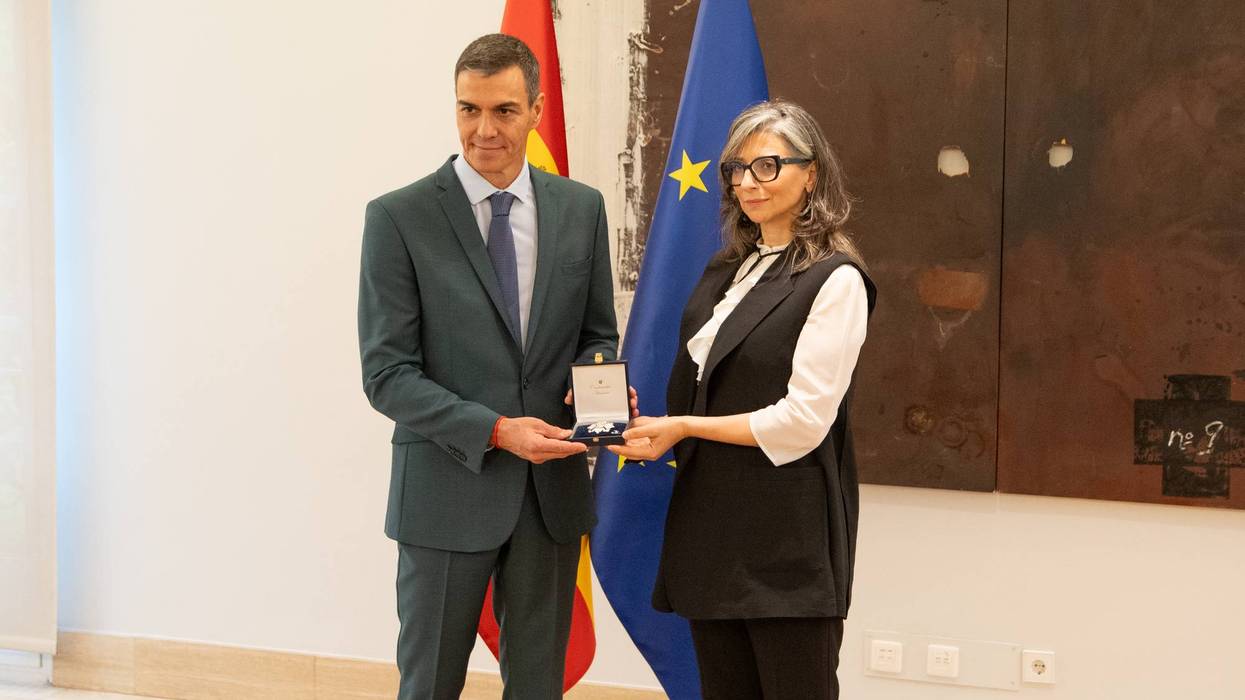
The UN’s special rapporteur on Palestine has said nations seeking to punish her for documenting atrocities committed by Israel “want to silence everyone who demands an end to genocide.”
Spanish Prime Minister Pedro Sánchez honored Francesca Albanese, the United Nations special rapporteur on Palestine, on Thursday, in a display of solidarity as she faces sanctions from the United States over her outspoken advocacy against Israel's genocide in Gaza.
Citing her work to document human rights violations over more than two years of conflict, Sánchez awarded Albanese the Order of Civil Merit, a knighthood granted to Spanish and foreign citizens for extraordinary services benefiting the state or society.
"Public responsibility... entails the moral obligation not to look the other way," Sánchez said in a social media post. "It is an honor to award the Order of Civil Merit to a voice that upholds the conscience of the world: Francesca Albanese."
Earlier this week, Sánchez petitioned the European Commission to intervene to stop compliance with the Trump administration's efforts to punish Albanese, as well as members of the International Criminal Court who have brought arrest warrants against Israeli Prime Minister Benjamin Netanyahu and former Defense Minister Yoav Gallant.
Albanese, an Italian legal scholar, has held the role of special rapporteur since 2022, a year before Israel launched a war in Gaza in response to a Hamas-led attack on October 7, 2023. Human rights organizations and UN experts have described Israel's assault as a genocide.
In March 2024, Albanese released the UN's first major public report, making the legal case that there are "reasonable grounds" to believe a genocide was being committed, referring to a litany of statements by Israeli officials establishing intent to destroy the Palestinian population.
In addition to documenting Israel's actions, she has published research demonstrating the "complicity" of nations that supply weapons and other support to Israel in what she has called a “collective crime" that they should also face responsibility for.
According to official estimates, at least 72,000 Palestinians have been killed since October 2023, many of them women and children, while independent analyses suggest the death toll is much higher, in part due to the near-total destruction of health and other public infrastructure.
Many of the buildings in Gaza have been destroyed by over two years of relentless bombings, leaving most of its 2.1 million people displaced and living in tent cities.
Albanese told a Spanish broadcaster that the US and other nations attempting to punish her and other international authorities for speaking out against atrocities in Gaza were "like an international mafia."
"They want to silence everyone who demands an end to genocide, an end to the crimes,” she said.
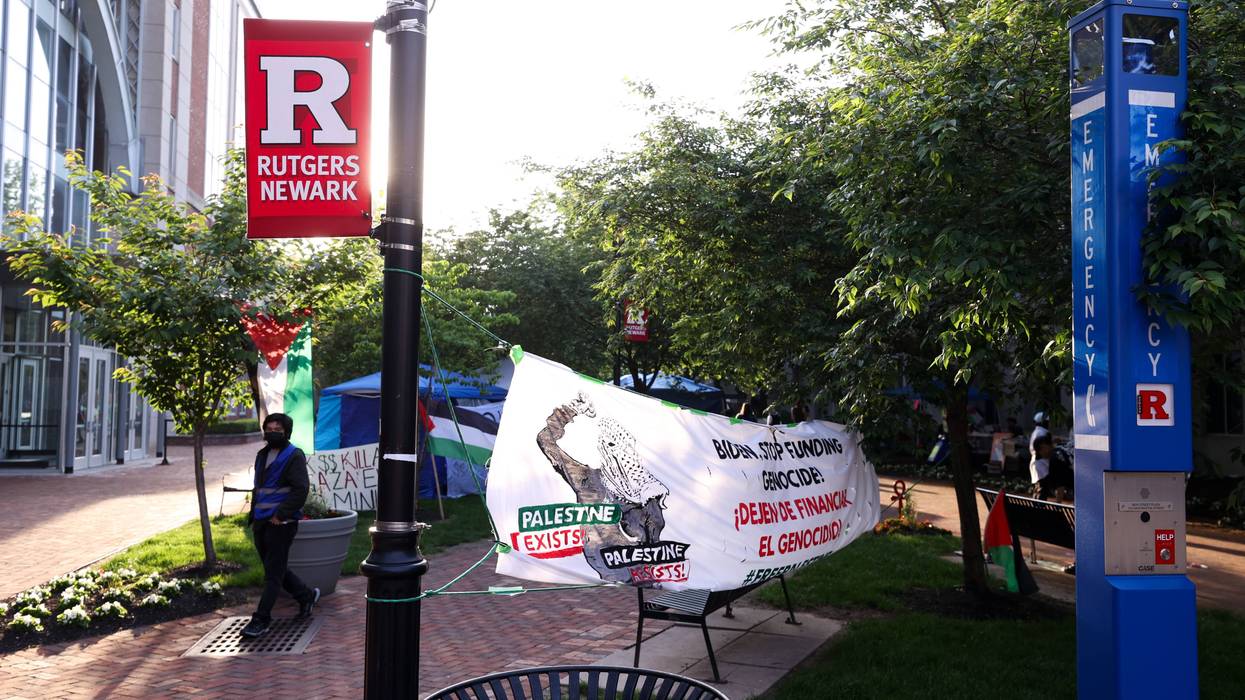
"The message Rutgers is sending to this class and everyone around the country is alarming," said Rami Elghandour. "Don't dare stand for anything. Don't dare speak up."
Faculty members at Rutgers University in New Jersey on Thursday were among those condemning the school's decision to rescind an invitation to Rami Elghandour, a biotech executive and producer of the Gaza-focused film The Voice of Hind Rajab, who had been invited to speak at the School of Engineering commencement next week.
Elghandour said the engineering school's dean, Alberto Cuitiño, had informed him that he was no longer scheduled to give the commencement address after a "few" students told the administration they would not attend the graduation in protest of Elghandour's online advocacy for Palestinian rights.
"Commencement season is here, and with it the usual cycle of silencing voices that stand up for human rights," said Waheed U. Bajwa, a professor at Rutgers in New Brunswick. "This one hits close to home... I publicly call on Rutgers to reverse this!"
Elghandour, a graduate of the engineering school, released a statement saying that the school had "decided that the feelings of a handful of students who said that my social media posts 'opposed their beliefs' were more important than the experience of the entire graduating class, the reputation of the school, the dignity and belonging of Arab and Muslim students, and the First Amendment."
Speaking to the New Jersey Globe, a spokesperson for the university cited a specific post that Elghandour wrote in April on the social media platform X, saying that Israel has "committed genocide" and is "running dungeons where they train dogs to sexually assault prisoners."
"Weapons embargo is the absolute minimum," said Elghandour. "Sanctions and diplomatic isolation are beyond justified."
Leading human rights organizations and Holocaust scholars are among those who have called Israel's assault on Gaza, which began in October 2023 in retaliation for a Hamas-led attack and has killed more than 72,000 Palestinians, a genocide.
Calls for the US to suspend military aid to Israel in light of the war are hardly a fringe view in the US; a Quinnipiac University poll released last August found that 60% of voters across all parties supported a suspension of aid.
Middle East Eye reported in December on Palestinian detainees' allegations that Israeli guards had used dogs to sexually assault them. Rights organizations including the Euro-Mediterranean Human Rights Monitor, the Palestinian Center for Human Rights, and the Council on American-Islamic Relations (CAIR) have also collected testimonies alleging such abuse.
Rutgers spokesperson Dory Devlin told the Globe that some students had accused Elghandour of making an "inflammatory claim" when they said they would not attend the graduation if he spoke.
"Rutgers chose me in part because of my humanitarian work,” said Elghandour in his statement. “They put my role as an executive producer for the Oscar-nominated The Voice of Hind Rajab front and center. They led with my social justice advocacy. Until it was inconvenient. That’s the difference between virtue signaling and principles. One withstands challenge. The other wilts in the slightest breeze.”
"The message Rutgers is sending to this class and everyone around the country is alarming," he added. "Don't dare stand for anything. Don't dare speak up."
He said he plans to record the speech he had been scheduled to give and post it online so students can still hear it.
Hank Kalet, a journalism professor at the school who serves as vice president of the Rutgers Adjunct Faculty Union, told the Globe that the university's actions met "the definition of viewpoint censorship.”
“We have somebody who is offering, in a public way on X, some opinions about genocide in Gaza and being retaliated against because of the opinions that he has,” said Kalet, who is Jewish. He told the outlet that he did not believe Elghandour to be antisemitic.
Naureen Akhter, public affairs director for CAIR-New Jersey, noted that Rutgers had recently hosted Israel Defense Forces soldiers on its campus as part of a national tour called "Triggered: The Ceaseless Tour."
“It is unconscionable that Rutgers rolls out the red carpet to soldiers engaged in genocide yet finds expression of pro-Palestine solidarity from one of their distinguished alumni so objectionable, they refuse to have him address graduates," said Akhter. “We call on Rutgers School of Engineering to reinstate Rami Elghandour as commencement speaker and approach issues of student safety and freedom of expression with more care.”
The Rutgers student body is no stranger to advocacy for Palestinian rights. As on other college campuses across the US, students held a sustained protest in the spring of 2024, demanding the school divest from companies that do business with Israel, terminate its relationship with Tel Aviv University, and take other steps to demonstrate solidarity with Palestinians.
Rutgers-Newark also defended its decision to host pro-Palestinian comedian Ramy Youssef at its 2025 commencement after a state lawmaker claimed his involvement would alienate Jewish students at the university.
The decision to cancel Elghandour's speech came days after the University of Michigan publicly apologized for a graduation speech by Professor Derek Peterson, who had applauded students who spoke out for Palestinian rights in campus protests, saying they exemplified the school's long history of social activism.
“I think [Palestine] is the moral issue of our time, and I believe it’s been used to undermine democratic institutions in the US,” Elghandour told The Guardian on Wednesday.
Bajwa said on social media that "everyone says they'd have stood against slavery, the Holocaust, segregation, and more."
"Easy to be righteous about the past," he said. "But what about now? What moral tests are you failing in your own time? That's the real test of courage."