

SUBSCRIBE TO OUR FREE NEWSLETTER
Daily news & progressive opinion—funded by the people, not the corporations—delivered straight to your inbox.
5
#000000
#FFFFFF
To donate by check, phone, or other method, see our More Ways to Give page.
Daily news & progressive opinion—funded by the people, not the corporations—delivered straight to your inbox.
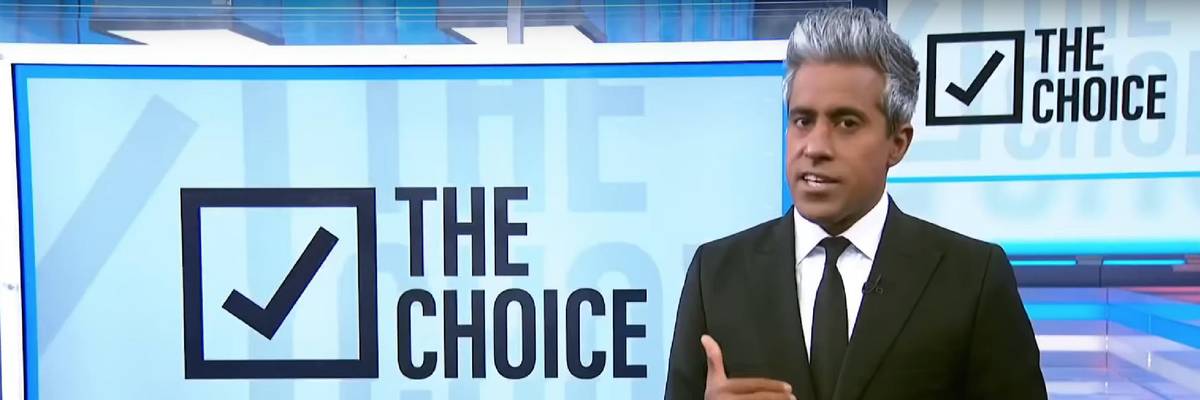
Writer Anand Giridharadas filled in as guest host of Peacock's "The Mehdi Hasan Show" on May 28, 2021. (Photo: The Choice/YouTube/Screenshot)
Writer Anand Giridharadas on Friday shared key lessons from the ongoing coronavirus pandemic on and wondered whether the "collective memory" of the crisis will compel the U.S. government and public to significantly invest in care infrastructure, pursue "real racial justice," and embrace an approach to live-saving healthcare that prioritizes global security over corporate profits.
"It is possible at this hour to be consumed by despair," Giridharadas said while filling in as guest host of Peacock's "The Mehdi Hasan Show," as the U.S. death toll from Covid-19 neared 600,000. "But there is, in moments like this one, a possibility of tearing open a hole in the universe and marching through it."
"I will tell you some of what I think we learned" since the lockdowns began, he said. "That child care is a shared societal burden, not a private good. We learned this year how much harder it is to work, how much harder women in particular have it, how much female brilliance we sideline, when we make child care a luxury product."
"We learned that we're only as healthy as the person next to us--so when they don't have access to healthcare, we all suffer," he continued. "We learned, at the same time, that there are no great equalizers, not even viruses--that inequity is a preexisting condition, and viruses, like so many other disasters on record, hit people according to their position in the caste hierarchy."
Watch:
"We learned that work wasn't working for workers," Giridharadas added. "We learned how our hyper-capitalist grind culture has starved our relationships, leaving us so little time at the end of the day... We learned that when we allow monopolies to corner every market, we become vulnerable to shortages and supply issues we usually associate with the Soviet Union--even as the owners of those monopolies profit from crisis."
Giridharadas went on to reference lessons from "Black Lives Matter" demonstrations sparked by the killings of George Floyd, Ahmaud Arbery, Breonna Taylor, and others. He also emphasized that "there can be no democracy without a shared belief in facts" and "a worldwide mobilization of the kind that will be required to fight climate change is possible."
"We learned that mental health is health, and mental healthcare is healthcare... that we in America so often fixate on a childish understanding of freedom," he said. "We learned we need a safety net that can catch people... that a system that privileges bipartisan consensus over actual problem-solving ends up with little of either thing and risks the very death of democracy."
"We learned that the activists our society so often resists listening to--the ones who provoke us--are often pointing us to truths hard to see in the present," he added.
According to Giridharadas, "The question before us now is: What will do with these lessons?"
Dear Common Dreams reader, It’s been nearly 30 years since I co-founded Common Dreams with my late wife, Lina Newhouser. We had the radical notion that journalism should serve the public good, not corporate profits. It was clear to us from the outset what it would take to build such a project. No paid advertisements. No corporate sponsors. No millionaire publisher telling us what to think or do. Many people said we wouldn't last a year, but we proved those doubters wrong. Together with a tremendous team of journalists and dedicated staff, we built an independent media outlet free from the constraints of profits and corporate control. Our mission has always been simple: To inform. To inspire. To ignite change for the common good. Building Common Dreams was not easy. Our survival was never guaranteed. When you take on the most powerful forces—Wall Street greed, fossil fuel industry destruction, Big Tech lobbyists, and uber-rich oligarchs who have spent billions upon billions rigging the economy and democracy in their favor—the only bulwark you have is supporters who believe in your work. But here’s the urgent message from me today. It's never been this bad out there. And it's never been this hard to keep us going. At the very moment Common Dreams is most needed, the threats we face are intensifying. We need your support now more than ever. We don't accept corporate advertising and never will. We don't have a paywall because we don't think people should be blocked from critical news based on their ability to pay. Everything we do is funded by the donations of readers like you. When everyone does the little they can afford, we are strong. But if that support retreats or dries up, so do we. Will you donate now to make sure Common Dreams not only survives but thrives? —Craig Brown, Co-founder |
Writer Anand Giridharadas on Friday shared key lessons from the ongoing coronavirus pandemic on and wondered whether the "collective memory" of the crisis will compel the U.S. government and public to significantly invest in care infrastructure, pursue "real racial justice," and embrace an approach to live-saving healthcare that prioritizes global security over corporate profits.
"It is possible at this hour to be consumed by despair," Giridharadas said while filling in as guest host of Peacock's "The Mehdi Hasan Show," as the U.S. death toll from Covid-19 neared 600,000. "But there is, in moments like this one, a possibility of tearing open a hole in the universe and marching through it."
"I will tell you some of what I think we learned" since the lockdowns began, he said. "That child care is a shared societal burden, not a private good. We learned this year how much harder it is to work, how much harder women in particular have it, how much female brilliance we sideline, when we make child care a luxury product."
"We learned that we're only as healthy as the person next to us--so when they don't have access to healthcare, we all suffer," he continued. "We learned, at the same time, that there are no great equalizers, not even viruses--that inequity is a preexisting condition, and viruses, like so many other disasters on record, hit people according to their position in the caste hierarchy."
Watch:
"We learned that work wasn't working for workers," Giridharadas added. "We learned how our hyper-capitalist grind culture has starved our relationships, leaving us so little time at the end of the day... We learned that when we allow monopolies to corner every market, we become vulnerable to shortages and supply issues we usually associate with the Soviet Union--even as the owners of those monopolies profit from crisis."
Giridharadas went on to reference lessons from "Black Lives Matter" demonstrations sparked by the killings of George Floyd, Ahmaud Arbery, Breonna Taylor, and others. He also emphasized that "there can be no democracy without a shared belief in facts" and "a worldwide mobilization of the kind that will be required to fight climate change is possible."
"We learned that mental health is health, and mental healthcare is healthcare... that we in America so often fixate on a childish understanding of freedom," he said. "We learned we need a safety net that can catch people... that a system that privileges bipartisan consensus over actual problem-solving ends up with little of either thing and risks the very death of democracy."
"We learned that the activists our society so often resists listening to--the ones who provoke us--are often pointing us to truths hard to see in the present," he added.
According to Giridharadas, "The question before us now is: What will do with these lessons?"
Writer Anand Giridharadas on Friday shared key lessons from the ongoing coronavirus pandemic on and wondered whether the "collective memory" of the crisis will compel the U.S. government and public to significantly invest in care infrastructure, pursue "real racial justice," and embrace an approach to live-saving healthcare that prioritizes global security over corporate profits.
"It is possible at this hour to be consumed by despair," Giridharadas said while filling in as guest host of Peacock's "The Mehdi Hasan Show," as the U.S. death toll from Covid-19 neared 600,000. "But there is, in moments like this one, a possibility of tearing open a hole in the universe and marching through it."
"I will tell you some of what I think we learned" since the lockdowns began, he said. "That child care is a shared societal burden, not a private good. We learned this year how much harder it is to work, how much harder women in particular have it, how much female brilliance we sideline, when we make child care a luxury product."
"We learned that we're only as healthy as the person next to us--so when they don't have access to healthcare, we all suffer," he continued. "We learned, at the same time, that there are no great equalizers, not even viruses--that inequity is a preexisting condition, and viruses, like so many other disasters on record, hit people according to their position in the caste hierarchy."
Watch:
"We learned that work wasn't working for workers," Giridharadas added. "We learned how our hyper-capitalist grind culture has starved our relationships, leaving us so little time at the end of the day... We learned that when we allow monopolies to corner every market, we become vulnerable to shortages and supply issues we usually associate with the Soviet Union--even as the owners of those monopolies profit from crisis."
Giridharadas went on to reference lessons from "Black Lives Matter" demonstrations sparked by the killings of George Floyd, Ahmaud Arbery, Breonna Taylor, and others. He also emphasized that "there can be no democracy without a shared belief in facts" and "a worldwide mobilization of the kind that will be required to fight climate change is possible."
"We learned that mental health is health, and mental healthcare is healthcare... that we in America so often fixate on a childish understanding of freedom," he said. "We learned we need a safety net that can catch people... that a system that privileges bipartisan consensus over actual problem-solving ends up with little of either thing and risks the very death of democracy."
"We learned that the activists our society so often resists listening to--the ones who provoke us--are often pointing us to truths hard to see in the present," he added.
According to Giridharadas, "The question before us now is: What will do with these lessons?"

