SUBSCRIBE TO OUR FREE NEWSLETTER
Daily news & progressive opinion—funded by the people, not the corporations—delivered straight to your inbox.
5
#000000
#FFFFFF
To donate by check, phone, or other method, see our More Ways to Give page.


Daily news & progressive opinion—funded by the people, not the corporations—delivered straight to your inbox.

Patrick Sullivan, (415) 517-9364, psullivan@biologicaldiversity.org
The Center for Biological Diversity today sued California regulators for supporting a so-called "aquifer exemption" plan to turn underground water in the Price Canyon area of San Luis Obispo County into a permanent disposal site for oil wastewater and other fluids. There are at least 100 water supply wells for drinking water and crop irrigation within a mile of this aquifer.
Today's lawsuit, filed in Superior Court in San Luis Obispo, faults regulators for not analyzing the aquifer exemption plan's risks as required by the California Environmental Quality Act. The suit asks the court to set aside the state's approval of the aquifer exemption and halt oil company injection into this underground water until regulators have complied with CEQA.
"Oil regulators are disturbingly determined to turn this aquifer into an oil industry waste dump, but they can't just shrug off California's environmental laws," said Maya Golden-Krasner, the Center attorney bringing the lawsuit. "As California sweats out another year of drought, officials must analyze the risks of sacrificing underground water in San Luis Obispo County and across the state to oil companies. If we let oil companies pollute these aquifers, Californians will bitterly regret that decision in the dry decades to come."
The state's Division of Oil, Gas and Geothermal Resources submitted the aquifer exemption application in February to the federal Environmental Protection Agency. If the EPA approves the plan to exempt the aquifer from protection under the Safe Drinking Water Act, oil giant Freeport-McMoRan could move forward with plans to drill hundreds of new wells in the area.
This is state officials' first attempt to seek an aquifer exemption following revelations last year that oil companies have been allowed to dump toxic waste into scores of protected underground water supplies across California (interactive map), in violation of federal and state water-protection laws.
A Center analysis has identified serious flaws in the aquifer exemption application for Arroyo Grande. The application, for example, fails to mention the company's plans to dramatically expand operations in the Arroyo Grande oil field. Freeport hopes to drill up to 350 new wells (including injection wells) to achieve up to a 10-fold increase in daily oil production.
The application also does not include any analysis of what will happen to the aquifer if that expansion proceeds -- including possible changes in pressures underground and the potential for inducing fractures that could transport pollution to other water sources.
Oil industry wastewater can contain high levels of benzene and other cancer-causing chemicals. State oil officials' own study detected benzene levels in oil wastewater at thousands of times the federal limits for drinking water.
"It's shocking that Gov. Jerry Brown's oil regulators are supporting the oil industry's efforts to get federal permission to dump waste into California's protected aquifers," Golden-Krasner said. "California officials must put our thirsty state's water needs ahead of oil company profits."
At the Center for Biological Diversity, we believe that the welfare of human beings is deeply linked to nature — to the existence in our world of a vast diversity of wild animals and plants. Because diversity has intrinsic value, and because its loss impoverishes society, we work to secure a future for all species, great and small, hovering on the brink of extinction. We do so through science, law and creative media, with a focus on protecting the lands, waters and climate that species need to survive.
(520) 623-5252"Mainers can't afford to pay their bills with a press release or a strongly worded letter," said Jackson.
Democratic US Senate candidate Troy Jackson took his Republican opponent, incumbent Sen. Susan Collins, to task during a Tuesday debate for her role in Maine's worsening healthcare crisis, accusing her of paving the way for the disaster while attempting to take credit for an inadequate relief fund.
"Senator Collins is like an arsonist who helped set the fire, and then she wants credit for bringing a cup of water to put it out," Jackson said after Collins touted her role in securing a $50 billion fund for rural hospitals. The fund was part of a Republican budget package that includes the largest Medicaid cuts in the program's history—roughly $900 billion over the next decade.
Collins, who is running for a sixth term, voted against final passage of the Republican budget legislation, but she played a key role in advancing the bill through the Senate.
"She could have stopped it," Jackson, the former president of Maine's Senate, said of the budget law, which is fueling hospital staffing cutbacks and closures across the US, including in Maine. "What she brought back is a pittance to what we're losing in this state. I mean, we're watching our healthcare system crash right in front of us."
Watch:
Tuesday's debate came weeks ahead of the November general election, which polling indicates is a tight race. A survey conducted at the end of September by the Maine People’s Resource Center found Jackson leading Collins 49.3% to 46.5%—an advantage that was within the poll's margin of error.
During the debate, Jackson hammered Collins over her pro-Trump voting record and repeatedly accused her of playing up minuscule or largely symbolic opposition to the president's unpopular actions, including his tariffs on Canada and his illegal war on Iran.
After Collins noted that she "got concrete, pulp, and road salt removed from the tariff list," Jackson responded: "We can't eat road salt."
"Mainers can't afford to pay their bills with a press release or a strongly worded letter," said Jackson.
Jackson also highlighted recent ProPublica reporting that placed Collins at the center of a “sprawling pay-to-play operation” involving a Hawaii-based defense contractor accused of funneling donations to lawmakers in exchange for federal contracts.
"As late as 2024, the FBI was circling around Senator Collins," Jackson noted, citing the federal investigation that ProPublica revealed. "Then, whenever President Trump came back, his administration dismantled the investigation. Now, she votes with Donald Trump 96% of the time."
"I don't owe Trump. I don't owe the billionaires nothing. In fact, I've spent my life fighting back against billionaires," Jackson added. "But I do owe the people of Maine everything. I refuse corporate PAC money, I want to ban congressional stock trading. I fight for working Mainers every day. I'm not taking money from corporations like Susan Collins does."
"And from what I understand, this is happening both to Democrats and Republicans when they are traveling to the Middle East."
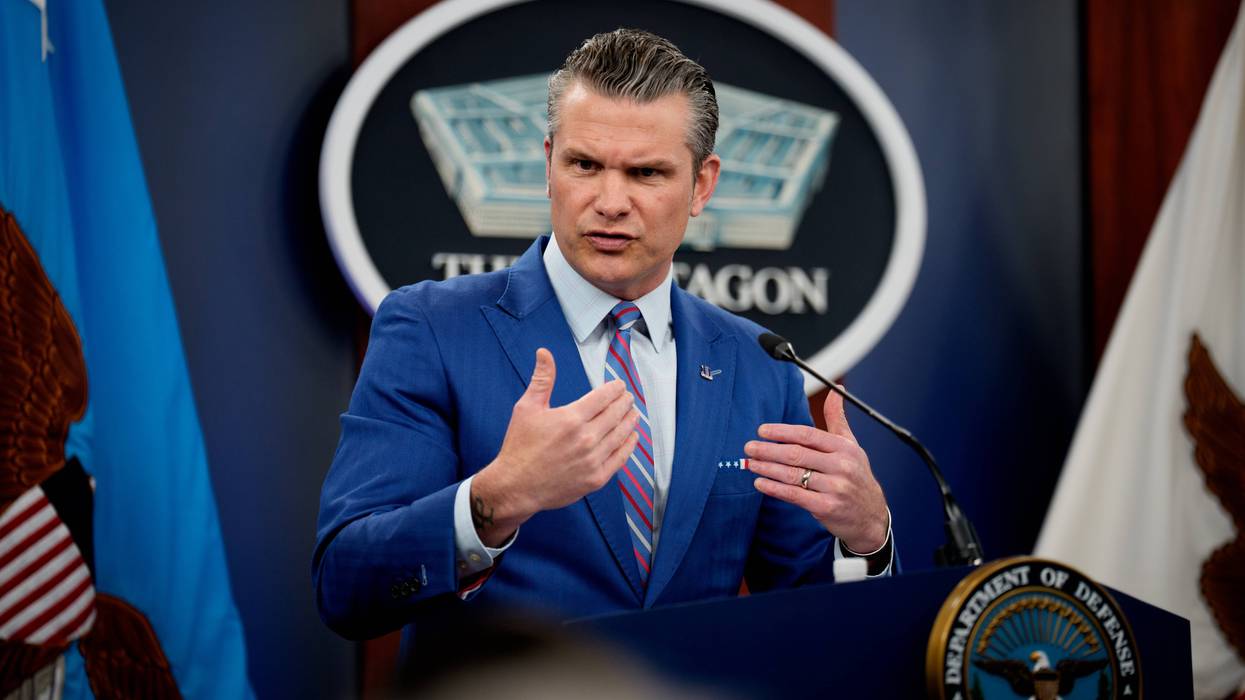
A US senator visiting the Persian Gulf said Tuesday that the Pentagon blocked him from inspecting a heavily damaged American military installation and refused to arrange a briefing on the Iran War, accusing Defense Secretary Pete Hegseth of mounting an "unprecedented" effort to conceal the conflict's costs and consequences from lawmakers and the public.
“This trip confirmed for me that there is an active, unprecedented, unconstitutional effort underway to hide the costs of this war and the implications of this war from Congress and the American people,” Sen. Chris Murphy (D-Conn.) told reporters Tuesday in Riyadh, Saudi Arabia.
Murphy said he sought to inspect Al Udeid Air Base in Qatar, the largest US military installation in the Middle East and a crucial hub for American operations in the region. The base was struck by Iranian missiles during the opening days of the war and sustained heavy damage, including a direct hit to its Combined Air Operations Center.
“I've never encountered anything like this in my time in the Senate,” the senator said, describing the Pentagon's actions as “part of a deliberate campaign of obfuscation that my Republican colleagues in Congress should demand an end to."
"We appropriate the money for that military action, and it is an ordinary function of members of Congress to travel around the world and talk to our generals and to our troops about military activities, especially during a time of war," Murphy continued.
"Adding insult to injury, the Department of Defense, under orders from [Defense Secretary] Pete Hegseth, even denied me access to talk to military leadership," he alleged. "They would not provide me even a briefing at the [US] Embassy."
According to Murphy:
Never before has this happened. Never before has a member of Congress been denied access to military facilities and been refused briefings by generals in theater. And from what I understand, this is happening both to Democrats and Republicans when they are traveling to the Middle East.
So just understand what this is: This is Secretary Hegseth deliberately trying to cover up the extent of damage, likely in the billions of dollars, trying to cover up the true cost of this war, trying to hide from you, from the American public, not just from members of Congress, the actual consequences of a war that is spiraling out of control by the day.
"This should be unacceptable to every member of Congress—Republicans and Democrats—and this should be unacceptable to the American public," he added.
The Pentagon defended the decision, saying the senator's office had been informed before his trip that the department would not support his access to Al Udeid. A senior Pentagon official cited a March 3 directive issued by Hegseth restricting travel to the region.
The dispute comes as the Trump administration faces mounting scrutiny over the increasingly protracted war's human and financial costs.
The illegal US-Israeli war of choice has cost the lives of thousands of Iranians, dozens of citizens and residents of Gulf states, and more than 20 US troops.
The 220-day war has already cost US taxpayers more than $40 billion, according to the nonpartisan Congressional Budget Office. It has driven up gasoline and energy prices, transportation and food costs, and is having broader inflationary effects caused largely by the disruption to global oil supplies and shipping.
Last week, President Donald Trump ordered the deployment of thousands more troops and another aircraft carrier to the Middle East.
"You know, by the way, we’re kicking Iran’s ass. You do know that, right? And that’ll end soon," the president told a Nebraska rally during a Monday speech in which he suggested he wouldn't mind Iran bombing California cities. "It’s gonna end one way or the other. It’s gonna end very soon.”
"Americans are done with a healthcare system that puts profits before people," said Congresswoman Ilhan Omar.
Two-thirds of Americans now support a national health insurance program commonly known as Medicare for All, according to a new poll released Tuesday by KFF, marking the highest level of support recorded since the public health policy group began tracking the proposal a decade ago.
The latest KFF Health Tracking Poll, conducted between September 16-21, found that 66% of US adults favor Medicare for All, up substantially from the 53% who supported the idea when KFF last asked the question in October 2020. Just 34% now oppose it.
KFF's findings come as healthcare affordability has emerged as a major concern heading into November's midterm elections. Health costs and gasoline prices are tied as Americans' top economic worries, while voters now trust Democrats over Republicans by a 20-point margin to handle healthcare costs, according to the poll.
Two-thirds of the public favor Medicare-for-All — the highest share since KFF began polling on the topic in 2016 — but public opinion is highly malleable and support shifts when competing claims from critics and proponents are heard: https://on.kff.org/4zgJv6z
[image or embed]
— KFF (@kff.org) October 6, 2026 at 11:04 AM
The poll results also underscore growing public frustration with the nation's costly and fragmented healthcare system, with progressives increasingly arguing that voters want more than incremental reforms.
"People are sick of a broken healthcare system driven by the greed of the insurance industry and Big Pharma," Sen. Bernie Sanders (I-Vt.)—who twice ran for president as a Democrat on a Medicare for All platform—said Tuesday on social media. "The time to pass Medicare for All is NOW."
Congresswoman Ilhan Omar (D-Minn.) said: "Two-thirds of Americans support Medicare for All. Americans are done with a healthcare system that puts profits before people."
"Medicare for All can save 114,000 lives and $1 trillion a year," Omar noted, referring to a recently published study out of Yale University and adding, "Turns out, progressive policies can be good politics AND good policy."
Audrey Kearney, a senior survey analyst at KFF, told Reuters that “all year, KFF polls have shown that the public is frustrated with the high cost of healthcare, and that may be leading to a desire for change."
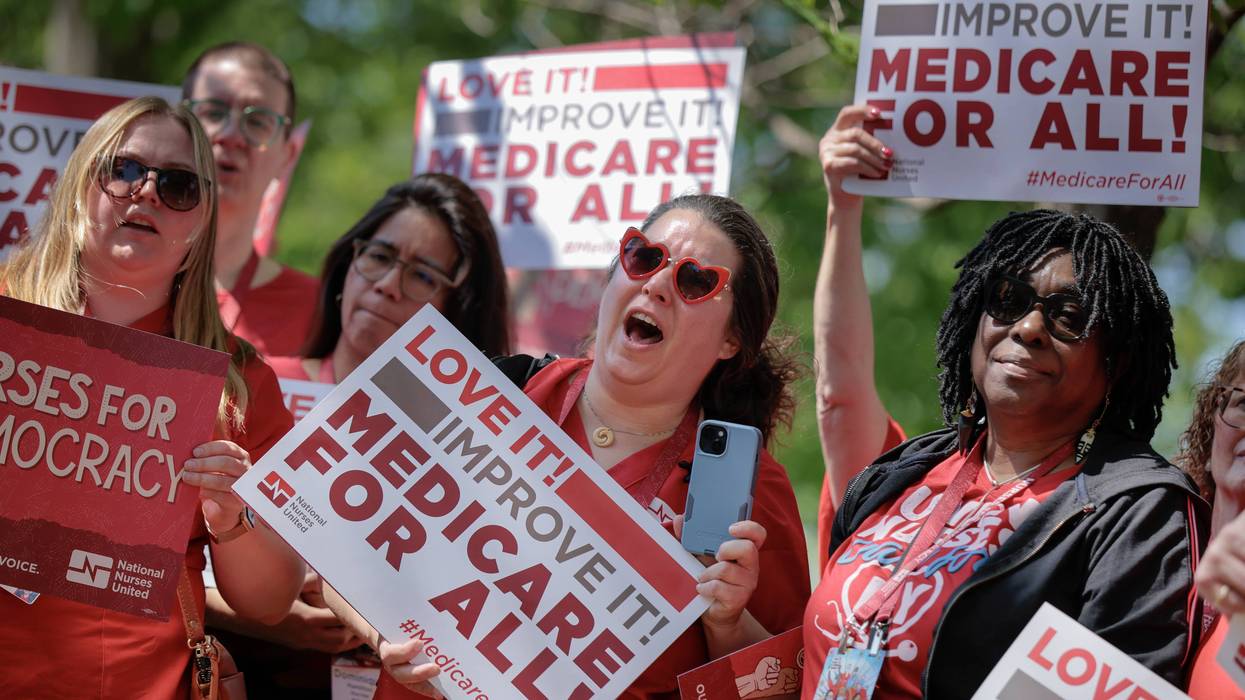
As The Guardian reported Sunday, 1,500 unionized nurses gathered in San Francisco last week to rally for Medicare for All, a policy their unions have championed for many years.
Michigan Democratic Senate nominee Abdul El-Sayed, one of the proposal's most prominent 2026 advocates, asked the nurses: “Medicare for who?”
"All!” they shouted back.
El-Sayed then described Medicare for All as addressing “the very simple idea that in the richest, most powerful country in the world you should not have to suffer for your healthcare.”
I believe in Medicare for All like I believe in public schools. There for you no matter what.
[image or embed]
— Abdul El-Sayed (@abdulelsayed.bsky.social) October 4, 2026 at 6:16 AM
The California Nurses Association's Michelle Gutierrez Vo, meanwhile, pointed to the costs and failures of the existing system.
“There’s too many unnecessary illnesses and unnecessary costs,” she said. “What are we doing?”
"Here’s a tip: Always bet that he did the thing."
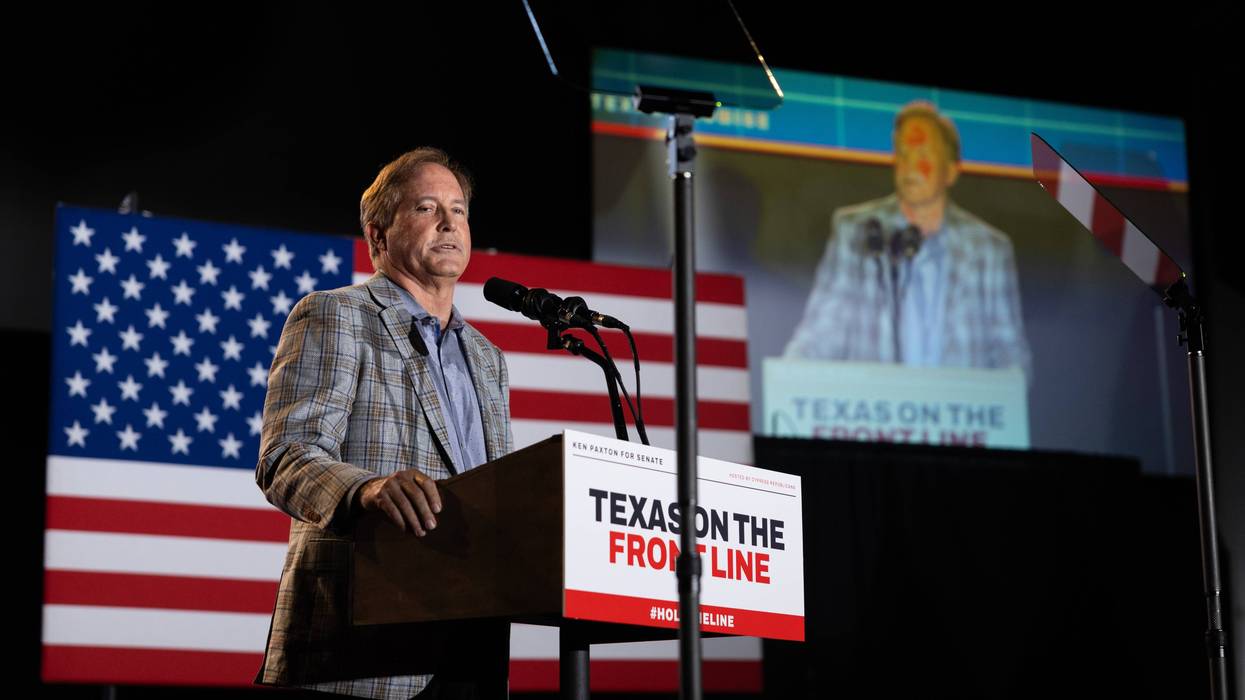
The campaign of Texas Democratic US Senate candidate James Talarico on Tuesday unleashed a new attack ad against his Republican rival, Texas Attorney General Ken Paxton, that targeted his long history of outrageous scandals.
The ad, titled "ScanDuel," is a parody of mobile betting apps such as FanDuel and DraftKings, and it invites viewers to place bets on whether Paxton really engaged in a wide range of scandalous behavior.
In an unsurprising twist, the narrator of the mock ad suggests would-be bettors will always make money if they wager that the Paxton scandal is true.
NEW AD: Introducing SCANDUEL! The only betting app where you can parlay Ken Paxton’s scandals — and get paid! Here’s a tip: Always bet that he did the thing. 💰 https://t.co/Hir2F2UALC
— Team Talarico (@TeamTalaricoHQ) October 6, 2026
The ad starts by touting ScanDuel as "the only betting app where you can parlay Ken Paxton offering a plea deal to a pedophile with Ken Paxton voting to protect puppy abusers."
The plea deal mentioned in the ad refers to the case of Adam Hoffman, an attorney based in Waco, Texas, who had been indicted on a charge of continuous sexual abuse of a minor.
After Hoffman's first trial ended with a hung jury, Paxton's office reached a bargain with the accused child molester in which he would plead guilty to lesser charges and serve a single day in prison. Additionally, Hoffman would not have to register as a sex offender.
The judge overseeing the case mandated that Hoffman serve 60 days in jail, but he ultimately served only half that time.
Paxton's protection of puppy abusers, meanwhile, refers to Paxton's 2015 legal opinion used by university Texas A&M to deny public records requests from animal rescue organizations about hundreds of dogs that faced abusive treatment at one of its research labs.
As reported by The Houston Chronicle at the time, Paxton's opinion held that Texas A&M was under no obligation to release its records because doing so would violate "the confidential relationship between the veterinarian and the veterinarian's client."
Legal experts raised objections to this reasoning, given that the animals obtained by the research lab came from shelters, and thus had no owners who could give consent for the records' release.
Other Paxton scandals referenced in the Talarico ad include sworn testimony from a process server who said the Texas AG fled in a truck driven by his wife to avoid being served a subpoena, and Paxton mysteriously receiving regular income cumulatively worth more than $1 million from a cellphone tower located on the property of a hospital where he was previously a board member.
"Here's a tip," the ad says. "Always bet that he did the thing."
“We don’t have to choose between protecting our most endangered animals and plants and building a clean energy future."
More than 200 environmental groups are calling on US lawmakers to halt a bipartisan permitting reform bill they say would gut protections for endangered species.
The Bipartisan American Affordability and Jobs Act of 2026—introduced last week by Sens. Sheldon Whitehouse (D-RI), Martin Heinrich (D-NM), Shelley Moore Capito (R-WV), and Mike Lee (R-Utah)—is aimed at speeding up the federal permitting process to accelerate clean energy and infrastructure development.
One way the bill does this is by shortening permitting and environmental consultation timelines, including reviews under Section 7 of the Endangered Species Act, which are meant to ensure government-approved projects don't jeopardize endangered species or their habitats.
The 215 signatories of a letter sent Tuesday—which include the Center for Biological Diversity, Friends of the Earth, WildEarth Guardians, the Western Environmental Law Center, and the International Fund for Animal Welfare—said that the bill includes “sweeping attacks on the Endangered Species Act."
If passed, the groups said, it would raise the evidentiary bar under the law's “best available science” mandate, making it much harder to protect species when the science is less than 100% settled.
It would also allow states—many of which do not recognize the same protections as the federal Endangered Species Act—to take over Section 7 consultations currently handled by federal wildlife authorities.
"What happens when Utah, which does not protect insects under state law, must complete a consultation on the Silverspot butterfly?" the groups asked. "It is unconscionable that this Senate would condemn endangered species to extinction by handing over authority to states that have fought federal protections and lack even the most basic legal and institutional safeguards."
The groups said the bill's most "insidious" feature was that it would redirect all Section 7 challenges away from district courts and into the DC Circuit Court of Appeals, which they warned would "result in significantly more backlog, strained judicial capacity, and make meaningful review far more difficult."
The Democrats who have supported the bill have argued for its environmental benefits, including that it will speed up permitting for clean energy projects, including wind and solar, as well as transmission lines to rapidly deliver the energy they produce.
“If we can pass this bill, we will flood the grid with clean, affordable energy," Whitehouse said as he announced it last week.
But the environmental coalition said this should not come at the expense of protecting vulnerable species and warned that it would also be used to speed up permitting for energy sources that pollute the environment.
“We don’t have to choose between protecting our most endangered animals and plants and building a clean energy future," said Stephanie Kurose, deputy director of government affairs at the Center for Biological Diversity. “Hollowing out the Endangered Species Act only benefits energy-hungry data centers and the fossil fuel industry while leaving monarchs, manatees, and countless other species to pay the ultimate price.”
“Everyone should be alarmed that ICE is preparing to deploy a tool designed to inflict, at best, intense pain," said one watchdog.
When US Immigration and Customs Enforcement ordered 6,000 pairs of shock gloves this summer, the agency knew that they could cause such "intense pain" that victims stopped fighting immediately and became fearful of more shocks.
That's according to The Associated Press, which on Tuesday revealed the existence of a US Army study on the gloves. ICE put in a $17 million order for the product, known as the Generated Low Output Voltage Emitter (GLOVE), in August.
In October 2024, the GLOVE was tested on Army employees at the military prison in Fort Leavenworth, Kansas, to see if it could be incorporated into their practices to move noncompliant prisoners between cells.
According to the AP:
The shocks had a profound impact on Army employees who played the role of combative prisoners during the exercise... The participants, several of whom were large-statured men, stopped resisting seconds after officers applied shocks by touching gloves to their skin, and were left with “fatigue, soreness and excessive apprehensiveness to being shocked again,” the study found.
After experiencing the effects of the GLOVE, ... ["]participants stated just seeing the GLOVE was enough to make them want to comply,” the authors wrote.
The report later noted that unlike a taser, which is designed to cause the body of a noncompliant person to freeze, the GLOVE is meant to elicit pain. It "works by overloading the peripheral nerve endings,” the study said. It also noted that participants with water or oil on their skin experienced more severe shocks and that one was left in pain for 30 minutes afterward.
The full report has not yet been released to the public; however, a four-page memo from the Department of the Army's Office of the Project Manager for Close Combat Systems summarizing its findings can be found on the website of the GLOVE's manufacturer, Compliant Technologies.
ICE has described the shock gloves as a tool to "de-escalate" conflicts in the street with targets of the Trump administration's mass deportation campaign, as well as protesters against the policy—it has said the gloves would be used to subdue those “actively or passively resisting” agents' commands.
In the wake of several fatal shootings by agents that lacked clear justification, the agency has described the gloves as a “low-impact tool” that will allow agents to avoid escalating to more extreme uses of force.
When politicians have called to restrict access to the gloves, ICE's parent agency, the Department of Homeland Security (DHS), accused them of trying to deprive federal officers of "safety equipment."
The user manual of the GLOVE notes that the "pain stimulus" it delivers can produce psychological changes associated with sudden death, including increased blood pressure, heart rate, and adrenaline, as well as changes in blood chemistry and heart rhythm. It also notes that those shocked with the gloves could face serious injuries from falling after suddenly losing control of their extremities.
The manual recommends that the gloves not be used against older people, small children, people who are pregnant, and people with certain disabilities.
As Reagan Williams, a researcher at Human Rights Watch's Crisis, Conflict and Arms Division, noted in August, agency operations have regularly targeted these groups.
"Electric shock devices have long been abusively deployed around the globe, including as a method of torture and other ill-treatment. Given these risks, the European Union has implemented trade restrictions on these devices," Williams said. "The scale of this technology’s potential harm in the hands of ICE, an abusive agency whose recruits are deployed with minimal training, could be considerable."
Chioma Chukwu, executive director of American Oversight, which provided the report to the AP, noted that while the Army report concluded the gloves were effective, it said little about their safety.
“The military assessment in ICE’s own files shows that these gloves can cause ‘intense pain’ and force compliance. It does not establish that they are safe,” Chukwu said. “Everyone should be alarmed that ICE is preparing to deploy a tool designed to inflict, at best, intense pain, without showing that it is safe for the people who will be subjected to it.”
While tasers can leave severe burns and welts on subjects, the shock gloves being adopted by ICE can deliver a painful shock without leaving a mark, making it much harder to prove their use. For law enforcement agencies, this is one of their most alluring features.
“I highly recommend these gloves to anybody that’s looking for a utility they can use that is conducive to not leading to lawsuits," said Bob Couey, chief deputy of the Floyd County Sheriff’s Office in Georgia, in a promotional video posted by Compliant Technologies in 2024 and resurfaced in August by Mother Jones.
Even a former ICE acting director, John Sandweg, has warned that because the gloves are so easy to use, agents might feel compelled to deploy them haphazardly.
“It’s too easy for this to get misused, against a population that doesn’t pose a threat,” Sandweg, who led the agency for about six months during the Obama administration, told MS NOW in August.
The gloves have drawn substantial criticism from Democratic members of Congress. In late August, Rep. Delia Ramirez (D-Ill.) led a group of 49 members of the US House of Representatives to demand the contract be canceled.
“Introducing low-visibility electric shock weapons into our immigration enforcement system is an unacceptable escalation that prioritizes physical intimidation and unaccountable force over human safety and administrative accountability," they said in a letter to DHS Secretary Markwayne Mullin.
ICE, meanwhile, has been less than forthcoming about what guardrails will govern the use of the shock gloves. In late August, Sen. Catherine Cortez Masto (D-Nev.) and 15 other Democratic senators asked the agency to answer questions about how the gloves will be used, who they'll be used against, and whether it has conducted safety evaluations.
Cortez Masto told the AP that over a month later, the agency has not answered her and her colleagues' questions.
The president also met with election denier and former county clerk Tina Peters and discussed "plans" for the election on Monday.
International election observers who have monitored US federal elections since 2002, in line with the practices of the vast majority of countries across North America, Europe, and Asia, said Tuesday that President Donald Trump's refusal to invite the Organization for Security and Cooperation in Europe to observe the November midterms was "regrettable" and "not in line" with the United States' commitments.
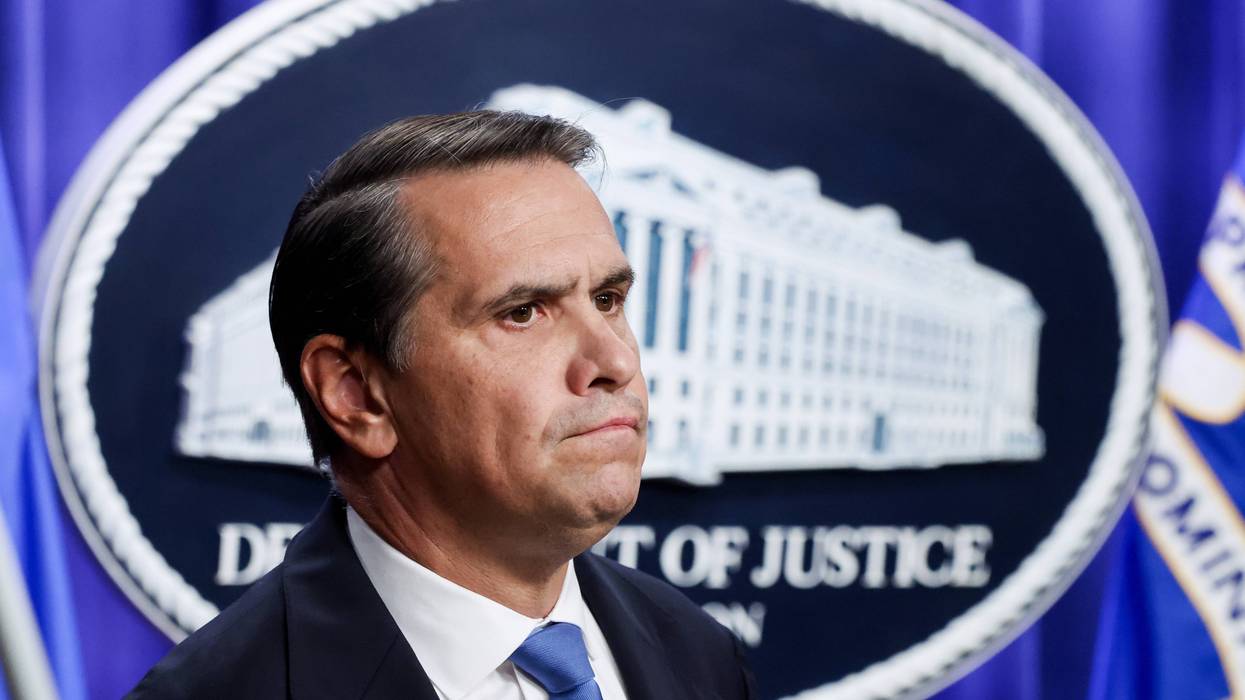
The decision was announced as the US Department of Justice defended the administration's plans to send its own election monitors to the polls, with Attorney General Todd Blanche insisting in an interview with Fox News on Sunday that Trump "is doing the same thing that every single administration has done in our generation and in multiple generations."
In a letter to Blanche and Harmeet K. Dhillon, the assistant attorney general for civil rights, US Reps. Jamie Raskin (D-Md.) and Joe Morelle (D-NY) wrote last week that Congress authorized federal election observers in 1965 under the Voting Rights Act, with observers determining "whether persons who are entitled to vote are being permitted to vote” and “whether votes cast by persons entitled to vote are being properly tabulated."
The DOJ's Civil Rights Division also sends its attorneys to monitor elections, with observers required to remain outside polling places and notify local authorities of their presence.
But the DOJ deployed monitors to eight states over the summer to observe primary elections, and Wyoming Gov. Mark Gordon, a Republican, complained of "aggressive" and "disruptive" behavior, including demands to interview voters and attempts to access voting machines.
"In light of the DOJ’s announcement that it intends to deploy an unprecedented 1,000 monitors to polling places throughout the
country for the general election," wrote Raskin and Morelle, "the DOJ must demonstrate that it is not misusing its election monitoring program in any way and that its monitors are being used for appropriate purposes."
Some Republican officials have alluded to plans for US Immigration and Customs Enforcement (ICE) to go to polling places during the midterms. The Department of Homeland Security has denied there is such a plan, but Trump, who has persistently claimed US elections are rife with so-called "voter fraud," has said he would "do anything necessary to make sure we have honest elections."
The news that the OSCE is not being invited to observe the midterms only heightened concerns that the administration may try to intimidate people who go to vote in elections that Republicans are widely expected to lose, as Trump's approval rate plummets to 32% and Americans express disdain for his war on Iran, soaring prices of everyday goods, and the violent mass deportation agenda that has turned communities upside down.
“The Trump administration’s decision not to invite international observers to the United States is deeply antithetical to the spirit of freedom, democracy, and transparency that defines our elections," said Sen. Jeanne Shaheen, ranking member of the Senate Foreign Relations Committee. “I was an official election monitor in the country of Georgia in 2012 and most recently in Bosnia and Herzegovina in 2022, so I know firsthand the importance of showing up for Allies and partners to improve the public’s confidence in election integrity. The OSCE does just that."
"I urge the Trump administration to respect the role of independent election observers and ensure that the United States holds itself to the same standards that we would expect of any other democracy," said Shaheen.
The decision to keep the OSCE from observing the elections makes the US one of only three countries in the organization, along with Russia and Belarus, to do so.
“Refusing election observers is usually something that countries in a position of weakness do, when they know that they have corrupt or unfair elections,” said Dan Baer, a former US ambassador to the OSCE during the Obama administration, told MS NOW on Tuesday. “It’s very strange for the United States, which has been historically a standard setter in free and fair elections, to refuse observers.”
On Monday, Trump also met with former Mesa County, Colorado clerk Tina Peters, who was convicted on charges of trying to breach the state's voting machines in a search for evidence that election had been committed in the 2020 election Trump lost. Democratic Gov. Jared Polis granted Peters clemency after repeated calls from Trump.
Former acting US Attorney Ed Martin told Real America's Voice that Trump and Peters were "talking about the plans" for the elections, and claimed voting machines are "compromised" because parts of them are manufactured in China and Russia.
Ed Martin says that Tina Peters met with Trump in the Oval Office today to discuss election integrity and “the plans” for the upcoming midterms elections. https://t.co/NsGuZ4UNSO
— Anna Bower (@AnnaBower) October 6, 2026
"If she's meeting with Trump to talk about the midterms," said journalist Pedro L. Gonzalez, "then there is a real non-zero chance that Trump is going to try or wants to try to do something to upend them."
A 15-year-old's hand was blown off, a 16-year-old suffered a devastating eye injury, and a 14-year-old reportedly lost most of his teeth as Amnesty International accused French police of using disproportionate force.
Young people across France suffered horrifying injuries this week as riot police attacked high school and university students, faculty, and parents who were joined by striking workers in the latest nationwide mobilization over the country's underfunded education system.
Hundreds of thousands of students, workers, and their supporters rallied at more than 170 demonstrations across France Tuesday, with the arrest total topping 6,000 people—including roughly 4,400 minors—since the current wave of demonstrations began on September 28, according to the country's Interior Ministry.
The school blockades and other protests began in blue-collar Parisian suburbs and rapidly spread across the country as students and their supporters demanded more teachers and staff, smaller classes, improved school buildings, an end to socially discriminatory university admissions, and an education system that does not force working-class youth to bear the cost of government austerity.
The Confédération Générale du Travail (CGT), one of France's largest unions, urged its members to join Tuesday's mobilization alongside students and educators. The union said it would stand with high school and university students "including through strikes," while demanding major investment in public education.
"Beyond the issue of resources, students are demanding greater equality and social justice, aware that the policies of [President] Emmanuel Macron and his successive governments have deliberately damaged the principles of the French public education system," a coalition of unions including CGT said in a statement of solidarity.
Such solidarity was visible on the streets Tuesday as students from Épinay-sur-Seine marched alongside SUD-Rail railway employees, while education workers formed human chains to protect young protesters from police. Workers also joined students blockading a high school in Montpellier.
Protesters in some cities were met with police violence.

"The repression is the same as that employed against the Yellow Vests except that now it's our kids who are in the streets," said Julien, a CGT Total refinery worker and union activist, referring to the 2018 economic protests that swept the nation. "The high school and university students have opened the way, and we have to follow them."
Coline, a high school student in Le Havre, said that workers physically placed themselves between young protesters and police.
"Union members formed a human chain between us and the CRS," she said. "All workers should do it because our demands are theirs. They portray us as rioters when we just want a future."
Alarming scenes of police terror shocked many observers.
In Lens, a 15-year-old student suffered a devastating hand injury during clashes near his high school Monday. According to La Voix du Nord, the teenager lost his hand after a police grenade exploded. The precise circumstances remain under investigation, chiefly by the Inspection Générale de la Police Nationale (IGPN).
A fellow student, Chloé, rejected the authorities' claims that the teenager was injured when he picked up the grenade.
"The police started coming toward us," she told La Voix du Nord. "So we all started running in the opposite direction. They threw smoke grenades at us... We were running. We couldn't see. And my high schoolmate got it in his hand."
She said the injured student began shouting, "My hand! My hand!"
"I turn around and see that he doesn't have a hand anymore," she recounted. "We all gathered around him."
"We're students, we're young," Chloé added. "There's no need to do that. It was useless; we were already leaving."
A 14-year-old in Saint-Ouen-l'Aumône reportedly suffered a double jaw fracture after being struck by a tear gas grenade fired at close range. Le Monde said the incident is among several cases being investigated by the IGPN.
Another 14-year-old reportedly lost most of his teeth after a police officer apparently fired a grenade at his face at close range during a protest northwest of Paris.
“His jaw is sealed shut, he can no longer speak, and he eats through a straw,” his mother told reporters.
In Tours, a 16-year-old reportedly suffered a severe eye injury when police fired "less-lethal" projectiles, including rubber-coated steel bullets, into a crowd of protesters during a high school blockade.
Another student, 16-year-old Isabella, connected the police crackdown to the class inequalities underlying the movement.
"Everybody told us that school was the great leveler, but today that is not the case at all," she told The Guardian. "A teenager in the suburbs of Paris is never going to have the same opportunities as a student from the city center."
The protests have also become a political flashpoint, with Jean-Luc Mélenchon and his left-wing La France Insoumise party openly backing the students while rejecting government accusations that they are responsible for the unrest. LFI lawmakers have appeared alongside protesters, while Mélenchon has condemned the police response and called on his supporters to nonviolently resist what he called police “savagery.”
On Tuesday, French Interior Minister Laurent Nuñez refused to apologize for the police violence, drawing calls from the left for his resignation.
Amnesty International accused French authorities of answering protests with "disproportionate" force.
“Footage and testimonies widely reported over the last week raise alarming concerns about the dangerous use of tear gas, batons, and restraint techniques by police," Amnesty International France president Anne Savinel-Barras said Monday. "Tear gas grenades have been discharged recklessly, and rubber bullets have been fired, causing serious injuries."
“Authorities must ensure that any response to demonstrations is necessary and proportionate, and that children and young people peacefully demanding their right to education are protected rather than being beaten, tear-gassed, or arbitrarily detained," she added. "The priority should be the de-escalation of tensions, and authorities must take all available precautionary measures to avoid the need to use force.”
At least dozens of protesting educators, parents, and labor unionists have also been injured by police during the demonstrations.
Some police also reportedly refused to attack protesters.
Workers interviewed during the protests appeared undaunted and focused on their own demands, as well as those of the students.
“We’re sick of wage freezes; 60% of low-wage public sector workers are paid less than the minimum wage for a full workweek,” CGT Poitiers official Vincent Bohan told World Socialist Web Site during a march in Paris last week. “More and more people rely on us, but there are not enough of us to meet the population’s needs.”
“When you hear Macron’s speeches, each one more provocative than the last, with billions of euros spent on killing, while people in France are starving, one feels like telling him: Stop... help people struggling here rather than killing people elsewhere," Bohan said, referring to rising tensions with Russia and France's testing of a new generation of nuclear missiles. "Frankly, we are very worried.”
"It's so hard... to imagine a worse failure than losing two national elections to Donald Trump."
A Democratic senator who has long been associated with the party's establishment is now conceding that its old approach to doing politics has failed.
In an interview with David Sirota of The Lever published on Tuesday, Sen. Michael Bennet (D-Colo.) described "the establishment Democratic Party" as "a failed enterprise."
"It is so hard to lose two general elections to [President] Donald Trump, in political terms, to imagine a worse failure than losing two national elections to Donald Trump," he said. "And yet the establishment Democratic Party did, and I think of it as a failed party."
What’s newsy is Bennet slamming the establishment faction that twice lost to Trump.Hes a moderate-coded Dem, which means the call is now coming from inside the house — a devastating repudiation of the Neera Tanden/DC faction that destroyed the party. https://t.co/ZZrER0CSz0
— David Sirota (@davidsirota) October 6, 2026
Bennet added that nobody "should feel an obligation to defend the party as it existed in the form that lost to Donald Trump."
Elsewhere in the interview, Sirota asked Bennet about how his political thinking had changed over the past 18 years as a US senator and why he no longer believes the politics of the status quo are tenable.
"There's something fundamentally wrong with the nature of our capitalist system that is delivering these outsize gains for the people at the very top at the expense of everybody else in the economy," Bennet said. "So I guess, from that vantage point, I think I've changed."
Bennet also chided fellow Democrats who are trying to force Democratic Socialists of America (DSA) candidates to leave the party for being "too extreme."
"I think that's a huge mistake," he said. "Look: We don't have to agree on everything. We don't, and by the way, that shouldn't be the cost of admission to the Democratic Party or to America."
Bennet added that the goal of policymaking shouldn't be to "come to some moderate view of the world," but "to unleash the imagination of the American people to solve their own problem. And that's what they did 100 years ago in the last Progressive Era, and I think that's what they're going to do again."
"Rampant corporate control of our water systems and federal disinvestment in aging infrastructure are driving up bills, forcing households to pick up the tab."
A report published Tuesday by a leading environmental group shows that household drinking water bills in the United States have surged faster than inflation over the past decade, with privatized systems charging significantly more than public ones.
The new research, conducted by Food & Water Watch (FWW), shows that for-profit water corporations charged typical US households 67% more on average than publicly owned water systems, prompting the group to urge state and local governments to ban water privatization and roll back all pro-privatization bills.
“Rampant corporate control of our water systems and federal disinvestment in aging infrastructure are driving up bills, forcing households to pick up the tab," said Mary Grant, FWW's water policy director. "Policymakers must rein in corporate abuses, hold polluters accountable, and provide dedicated funding for water systems. Everyone should have access to safe and affordable water."
The report shows that, overall, household drinking water bills surged by an average of 62% for typical American households over the past decade—increasing twice as much as grocery prices and 19% faster than median household incomes on average.
"A water affordability crisis is rapidly expanding throughout America," said Grant. "While struggling to pay for other essentials like food and energy, many households are grappling with water costs that are rising even faster."
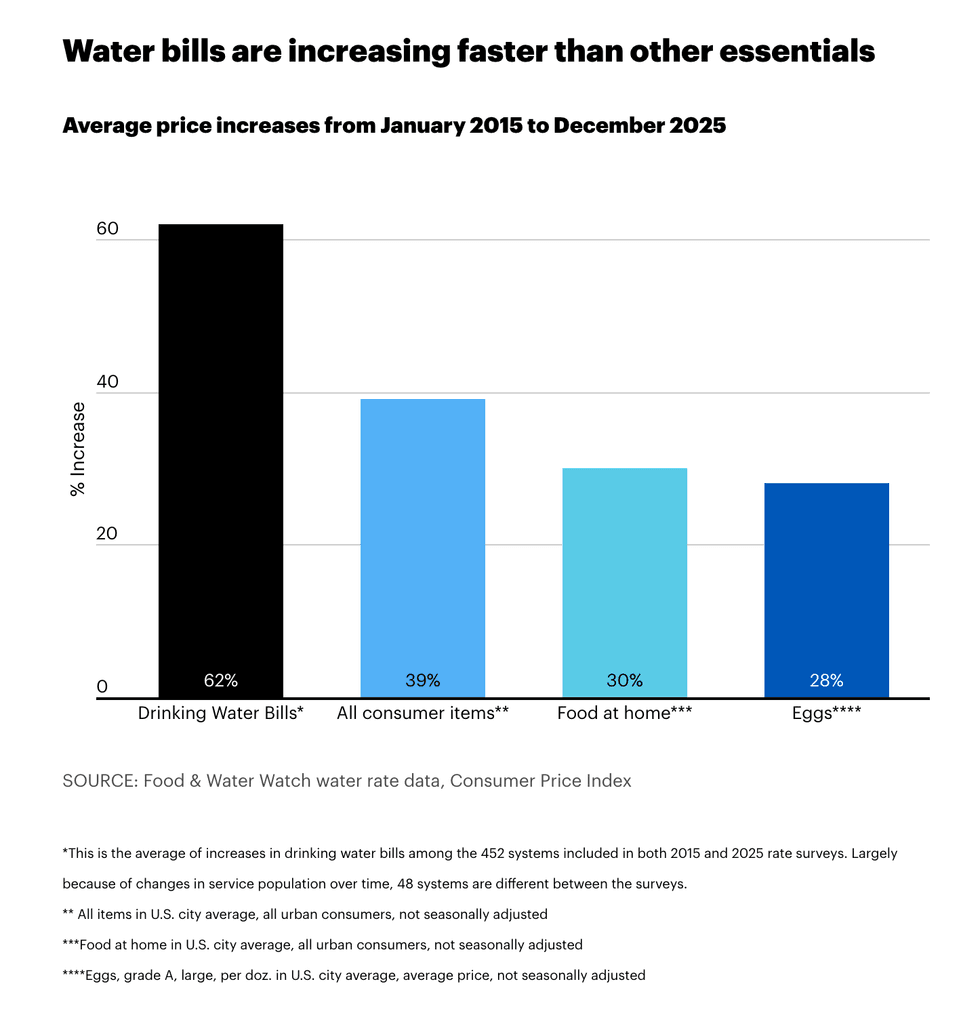
More than half of the 25 most expensive water systems in the US were located in California. The most expensive water bills in the country between 2015 and 2025 were issued by San Jose Water Company, a private utility.
"In the list of the top 10 most expensive water systems in the study, California and Pennsylvania stood out with numerous appearances," FWW said. "However, in Louisiana, Maryland, New Hampshire, and West Virginia, water bills grew about twice as fast as their corresponding statewide median household incomes. West Virginia, a state with one of the lowest average household incomes in the country, had the highest average water cost, at $1,383/year."
"Overall," the group added, "water bills were unaffordable for low-income households in nearly all (93%) of the surveyed water systems."
In addition to calling on state and local governments to ban water privatization and support local control of water systems, FWW urged the US Congress and federal government to:
"Water bills will continue to increase faster than households can keep up with," FWW warned, "unless all levels of government take action to stop corporate abuses and support water affordability."