January, 24 2017, 09:30am EDT
CREDO Staetment on KXL and DAPL Executive Orders
WASHINGTON
CREDO released the statement below in response to reports that Pres. Trump plans to sign executive orders to advance construction of the Keystone XL and Dakota Access pipelines:
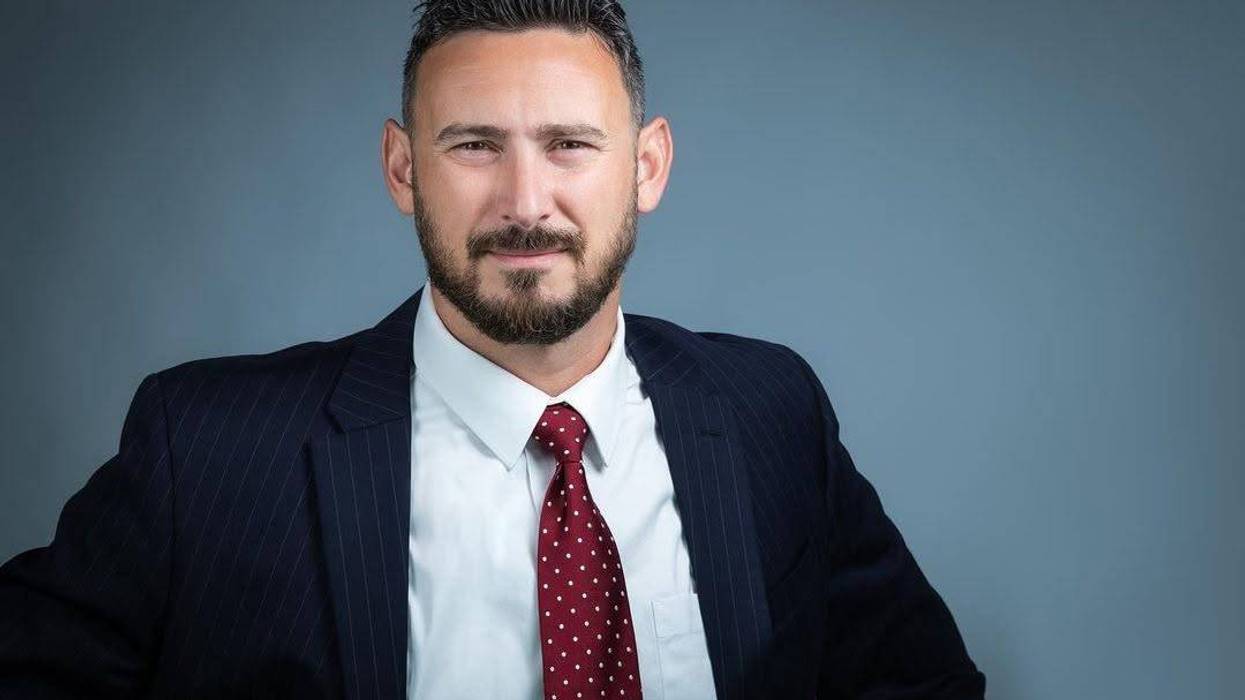
"President Trump is showing that he's in the pocket of big corporations and foreign oil interests," said CREDO Deputy Political Director Josh Nelson. "Approving these dirty oil pipelines would poison American air and water, supercharge climate change and trample Native American rights," Nelson continued. "Fierce grassroots activism has stopped these pipelines over and over again," he added. "CREDO will do everything in its power to stop the Dakota Access and Keystone XL pipelines, and keep dirty fossil fuels in the ground where they belong."
CREDO has played a major role in the fights against the Keystone XL and Dakota Access pipelines. CREDO's work against the Keystone XL pipeline includes:
97,000 ACTIVISTS SIGNED THE KEYSTONE XL PLEDGE OF RESISTANCE: During the Obama administration, more than 97,000 people signed the Keystone XL Pledge of Resistance, committing to risk arrest in peaceful, dignified civil disobedience, if needed to stop the Keystone XL pipeline. As part of the Pledge of Resistance, thousands of activists have been trained to lead or participate in direct actions where they would risk arrest.
MORE THAN 4 MILLION PETITION SIGNATURES: CREDO Activists generated more than 4.3 million petition signatures in opposition to Keystone XL.
MORE THAN 500,000 PUBLIC COMMENTS: CREDO activists submitted 511,000 public comments to President Obama's state department in opposition to Keystone XL.
MORE THAN 40,000 PHONE CALLS IN OPPOSITION TO KEYSTONE XL: CREDO Activists made 42,804 phone calls to the White House, the State Department, the EPA, Members of Congress and others in opposition to Keystone XL.
283 PROTEST VIGILS ATTENDED BY MORE THAN 10,000 ACTIVISTS: Just 72 hours after the release of the State Department's final environmental impact statement, CREDO organized 283 protest vigils in 49 states, with more than 10,000 total participants. It was the biggest, rapid-response, on-the-ground demonstration of Obama's presidency to date.
CREDO's work against the Dakota Access pipeline includes:
400,000+ PETITION OBAMA TO REJECT PIPELINE: More than 418,000 CREDO members signed CREDO's petition demanding that President Obama intervene and stop the Dakota Access pipeline. Specifically, the petition calls on the president to "direct the U.S. Army Corps of Engineers to revoke the permits under 'Nationwide Permit 12' and stop the Dakota Access pipeline once and for all." The full petition can be found here:https://act.credoaction.com/sign/NoDAPL/
NEARLY 3,000 #NoDAPL CALLS TO THE WHITE HOUSE: CREDO members made more than 2,800 calls to the White House urging President Obama to stop the Dakota Access pipeline. View the current number of calls and call script here:https://act.credoaction.com/call/call_obama_dapl/
180,000+ PETITION OBAMA AND GOV. DALRYMPLE TO UPHOLD FIRST AMENDMENT RIGHTS: More than 189,000 CREDO members signed a petition urging Pres. Obama and North Dakota Gov. Dalrymple to "uphold the rights of Native Americans and their allies to peacefully resist the Dakota Access pipeline without threat of violence." The full petition can be found here:https://act.credoaction.com/sign/dapl_assault/
CREDO Action, part of CREDO Mobile, is a social change network of over five million activists, sending tens of millions of petition signatures and hundreds of thousands of phone calls to decision-makers each year. CREDO Action members also participate in meetings, protests and other direct action for progressive change.
LATEST NEWS
600+ Workers Protest as Google Signs $200 Million Secret Pentagon AI Warfare Deal
“Human lives are already being lost and civil liberties put at risk at home and abroad from misuses of the technology we’re playing a key role in building."
Apr 28, 2026
As Google on Monday became the latest player in the artificial intelligence arms race to sign a classified deal with the US Department of Defense, hundreds of workers at the Silicon Valley giant demanded that its CEO prevent the Pentagon from using the company's AI models for covert work.
Reuters reported that the $200 million agreement includes safety filters and allows the Pentagon to use Google's AI "for any lawful purpose" but not for the development of lethal autonomous weapons systems—commonly known as "killer robots"—or domestic surveillance without human oversight and control.
According to The Information's Erin Woo, the deal does not give Google “any right to control or veto lawful government operational decision-making."
The agreement also reportedly requires Google to adjust its AI safety settings at the government's request.
“We are proud to be part of a broad consortium of leading AI labs and technology and cloud companies providing AI services and infrastructure in support of national security,” a Google spokesperson told The Information.
More than 600 Google employees—many of them from the company's DeepMind AI laboratory—sent a letter Monday to CEO Sundar Pichai demanding that he block the US military from using the firm's artificial intelligence technology for classified projects.
“We want to see AI benefit humanity; not to see it being used in inhumane or extremely harmful ways," the letter says, according to The Washington Post. "This includes lethal autonomous weapons and mass surveillance but extends beyond."
“The only way to guarantee that Google does not become associated with such harms is to reject any classified workloads," the workers stressed. "Otherwise, such uses may occur without our knowledge or the power to stop them."
Thousands of AI experts have called for a pause on the development and deployment of advanced AI technology. However, tech companies and military officials have argued—much as the military-industrial complex did with nuclear weapons during the Cold War—that if the US does not pursue advanced AI, rivals like China will, leaving the US irrecoverably behind.
As US and allied forces from Israel to Ukraine use AI to make life-and-death wartime decisions—including selecting attack targets at a rate unfathomable just a few years ago—use of such technology is expediting Israel's massacres in Gaza and Lebanon and US-Israeli killings in Iran.
“Human lives are already being lost and civil liberties put at risk at home and abroad from misuses of the technology we’re playing a key role in building,” the Google workers' letter states.
The policies and actions of the humans in charge of the US government and military have also stoked fears about their use of AI.
US Defense Secretary Pete Hegseth, for example, has overseen the dismantling of initiatives aimed at reducing wartime harm to civilians—hundreds of thousands of whom have been killed in US-led wars during this century, according to experts. Hegseth has instead promoted "maximum lethality" for US forces while expressing disdain for what he called "stupid rules of engagement" designed to minimize civilian harm.
Critics say their concerns have been validated by actions including the US cruise missile strike on a girls' school in Iran that killed 168 children and staff and Israeli airstrikes, many of them using US-supplied bombs, that have killed tens of thousands of Palestinian civilians in Gaza.
Companies that have run afoul of the Trump administration for refusing military AI use requests also risk getting left behind. Anthropic—maker of the AI assistant Claude—lost a $200 million Pentagon contract and is facing a government blacklist and legal battles after the company refused to loosen safety restrictions on autonomous weapons and surveillance.
Meanwhile, OpenAI, which makes the generative AI platform ChatGPT, rewrote its "no military use" policy to allow "national security" applications of its products, opening the door to lucrative Pentagon contracts.
Not wanting to get left behind as President Donald Trump returned to office last year, Google quietly pulled back its commitment to not use artificial intelligence for harmful purposes, marking a stark departure from the company's long-standing founding motto of "Don't be Evil," which it ditched in 2018.
Pentagon contracts followed, and Google reportedly hopes to add $6 billion in AI deals by next year.
Most AI experts agree that it's not a matter of if, but when, artificial intelligence surpasses human capabilities. Experts are increasingly viewing AI as a new emerging species, and prominent industry voices—including philosopher Nick Bostrom, Machine Intelligence Research Institute co-founder Eliezer Yudkowsky, and "Godfather of AI" Geoffrey Hinton—have noted that when a more intelligent species' goals conflict with those of a less intelligent one, the less intelligent species tends to lose, and usually catastrophically.
Hinton is so concerned that he quit Google in 2023 so he could speak openly about the remote but growing risk of AI one day wiping out humanity.
The perceived probability of existentially catastrophic outcomes from AI—known as p(doom)—was once the stuff of jokes. Now, AI experts' p(doom) predictions are watched like weather or market forecasts. Yudkowski has said there's a greater than 95% chance of AI-driven catastrophe.
Hinton—who was awarded the 2024 Nobel Prize in physics for his work on the neural networks, the foundational technology behind AI—is relatively more optimistic, putting the odds at 10-20%.
"There are very few examples of more intelligent things being controlled by less intelligent things," he said after winning the Nobel Prize.
Keep ReadingShow Less
Oil Giants' Profits Soar as Trump's Iran War Estimated to Deliver $1 Trillion Hit to World Economy
"Gas prices have jumped to the highest level in four years," said Rep. Ted Lieu. "What are Trump and Republicans focused on? Spending $400 million dollars of taxpayers' money for a White House ballroom."
Apr 28, 2026
A fossil fuel industry watchdog is estimating that US President Donald Trump's illegal war with Iran could deliver a $1 trillion hit to the global economy—while oil and gas giants reap the benefits.
According to a Tuesday report in The Guardian, climate advocacy group 350.org is estimating that the Iran war will impose between $600 billion and over $1 trillion in additional costs to households, businesses, and governments, depending on how long the Strait of Hormuz remains closed.
The Guardian noted that even this eye-popping economic cost "is likely to be an underestimate because it does not include the substantial knock-on effects of inflation, particularly higher fertilizer and food costs, lower economic activity, and rising employment."
350.org's analysis came on the same day that US gas prices rose to their highest level since Trump launched the Iran war in late February.
As reported by The New York Times, the average price for a gallon of gas jumped by 1.6% to $4.18 on Tuesday, the highest price for a gallon of gas since April 2022, shortly after Russia disrupted global energy markets with its invasion of Ukraine.
While consumers are paying more at the pump, fossil fuel companies are raking in massive profits. British oil giant BP on Tuesday posted a profit of $3 billion for the first quarter of 2026, which exceeded Wall Street analysts' expectations and was more than double the profit it reported in the first quarter of 2025.
Clémence Dubois, global campaigns director at 350.org, said that BP's blowout earnings report showed how Big Oil's business model depends on the suffering of working people.
"Families are being pushed to the brink by spiraling energy bills, while fossil fuel companies turn a war into a windfall," said Dubois. "This is not just unjust, it’s unacceptable. Fossil fuels companies don’t just heat the planet, they fuel and thrive on geopolitical tension, insecurity, and human suffering. The solutions exist, what’s missing is the political will to stop polluters [from writing] the rules."
In a Tuesday social media post, Sen. Elizabeth Warren (D-Mass.) more succinctly echoed Dubois' message.
"It's day 59 of Trump's war with Iran," she wrote. "Gas prices are 40% higher since the war began."
Rep. Sylvia Garcia (D-Texas) similarly pinned the blame on Trump for high gas prices, and took at shot at her Republican colleagues who have spent the last two days lobbying to build the president's proposed $400 million luxury ballroom with public funds.
"Gas is $4.18 and rising because of Trump’s war with Iran," Garcia wrote. "Republicans are ripping away healthcare and pushing millions off SNAP. And their priority? $400 million in taxpayer money for Trump’s ballroom. They don’t give a damn about helping working people."
Rep. Tim Lieu (D-Calif.) expressed a similar sentiment.
"Gas prices have jumped to the highest level in four years," he wrote. "What are Trump and Republicans focused on? Spending $400 million dollars of taxpayers' money for a White House ballroom that most Americans will never be able to access, and building a giant arch in DC for Trump."
Dylan Williams, vice president for government affairs at the Center for International Policy, marveled at the political tone deafness of Republicans pushing to fund Trump's ballroom amid a cost-of-living crisis.
"Republicans seem to be betting that Americans will stop worrying about the Iran war and high gas prices," he wrote, "when they hear the good news that they’ll also be paying for Trump’s ballroom."
Keep ReadingShow Less
Sharing 'Grim' Survivor Stories, Amnesty Renews Call for War Crimes Probe of US Strike in Yemen
"I have nothing left that keeps me going," said a survivor who lost a leg. "I want them to provide any type of reparation that will help with our life in any way possible. Something that will revive my hope."
Apr 28, 2026
A week after Democratic senators launched an investigation into US Defense Secretary Pete Hegseth's assault on federal efforts to mitigate civilian harm, Amnesty International on Tuesday renewed its call for a war crimes probe of the American airstrike on a migrant detention center in Yemen that killed dozens of people last April.
While the United States has been bombing Yemen since 2002 as part of the so-called War on Terror, the Trump administration stepped up attacks last spring, in response to Houthi rebels' resistance to Israel's genocidal war on the Gaza Strip.
"The Trump administration's approach to its airstrikes in Yemen from March to May 2025 should have set off alarm bells in the USA and around the world, clearly signaling an urgent need to strengthen measures to protect civilians," Amnesty International USA director Nadia Daar said in a statement exactly one year after the bombing in Saada.
"Instead, the US administration has systematically weakened safeguards, shrinking offices aimed at reducing civilian harm, while simultaneously displaying a dangerous disregard for the lives of civilians endangered by armed conflicts," she continued. "Against that backdrop, attacks such as the US attack on a school in Minab in Iran, which killed [155] people, including 120 children, were a tragically foreseeable consequence of a failure to implement robust civilian-harm mitigation efforts."
Amnesty concluded last month that the US bombing of the Iranian school "packed full of children" on February 28 was "a serious breach of international humanitarian law" and those responsible "must be held accountable."
Erika Guevara Rosas—Amnesty International's senior director of research, advocacy, policy, and campaigns—stressed at the time that "the US authorities could, and should, have known it was a school building. Targeting a protected civilian object, such as a school, is strictly prohibited under international humanitarian law."
In a potential preview of what Iranian families impacted by that strike will face, Guevara Rosas noted Tuesday that one year after the attack in Yemen, "US officials have failed to hold anyone accountable or even to clarify the status or outcome of the investigations they had announced a year earlier."
"Families of those killed in the attack on the detention center in Yemen are still being denied basic information about what happened, [and] remain without justice for their loved ones," she explained. "Survivors continue to struggle, lacking the means to secure a decent living or even receive adequate medical treatment."
Amnesty interviewed over a dozen survivors identified by pseudonyms, including Araya, a 22-year-old Ethiopian man, who sustained a serious arm injury and said: "If I don't take a painkiller, I feel hopeless and wish to die. I think about how, at such a young age, I can't even support myself and still rely on help from others. The metal rod inside me is very painful and uncomfortable. It drives you insane."
Jirata, a 30-year-old Ethiopian man, has a metal rod in one of his legs, and lost the other in the attack. He told Amnesty that "I have lost hope and I have nothing left that keeps me going. I came here [to Yemen] to work like everyone else to help my family and change mine and their life for the better... Now people carry me to the toilet."
"The US government caused all this and as a result [of the airstrike], I can no longer work and support myself," he detailed. "I want them to provide any type of reparation that will help with our life in any way possible. Something that will revive my hope."
Another Ethiopian man, 32-year-old Abay, similarly said that "I went to Yemen to change my family's life, but now I made my family's life even harder than it was before," due to his leg and hand injuries.
"I feel broken whenever I see their faces," said Abay, who returned to Ethiopia. "You can see the sadness on their faces. I hoped for a better life, to work and change our lives, but everything turned upside down."
Guevara Rosas said that "the story of these migrants is grim and heartbreaking. Traveling to Yemen in search of better opportunities, they were detained by the Houthis, denied their freedom, then attacked in a US airstrike. Those who survived have been left in limbo, with no justice or reparation in sight, nor an explanation for why this happened to them, an acknowledgment of the wrong done to them, or any support offered to help them carry on with their lives."
She argued that "they must receive full, effective, and prompt reparation, including restitution, compensation, rehabilitation, satisfaction, and guarantees of nonrepetition, through an effective and accessible mechanism."
According to Airwars, US forces have killed 443-642 people in Yemen since 2009. The official government estimate for civilian deaths in that time is just 13. The deadline for the Pentagon's next annual report on civilian casualties is May 1.
Guevara Rosas declared that "in order to stop this deadly spiral, the USA must ensure prompt, transparent, impartial, independent, and effective investigations into attacks that have resulted in civilian casualties, including those in Yemen and Iran."
"The US Congress must also urgently step up its oversight role and demand answers, including a public accounting of these strikes and the adequate and prompt provision of reparation to the civilians that have been harmed, and ensure it is not appropriating funds that may contribute to breaches of international law," she added.
So far, both Republican-controlled chambers of Congress have declined to pass a war powers resolution reining in President Donald Trump's illegal war on Iran, invasion of Venezuela, or bombings of boats allegedly transporting drugs on the high seas. Still, Democratic Sens. Ruben Gallego (Ariz.), Tim Kaine (Va.), and Adam Schiff (Calif.) intend to force a Tuesday vote on a measure aimed at blocking the president's use of US forces in unauthorized hostilities against Cuba.
Keep ReadingShow Less
Most Popular