

SUBSCRIBE TO OUR FREE NEWSLETTER
Daily news & progressive opinion—funded by the people, not the corporations—delivered straight to your inbox.
5
#000000
#FFFFFF
To donate by check, phone, or other method, see our More Ways to Give page.
Daily news & progressive opinion—funded by the people, not the corporations—delivered straight to your inbox.
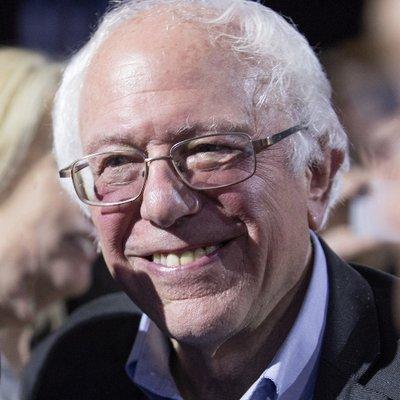
Sen. Bernie Sanders (I-Vt.), Sen. Mike Lee (R-Utah), Rep. Ro Khanna (D-Calif.) and Rep. Matt Gaetz (R-Fla.) led a bipartisan group of 44 lawmakers urging Congress to defund unauthorized U.S. military involvement in the Saudi-led war in Yemen in the upcoming bill to authorize Pentagon spending. The U.S.-Saudi military campaign in Yemen has led to the world's worst humanitarian crisis, leaving 24 million Yemenis--80 percent of the population--in need of humanitarian assistance.
Writing to the chairmen and ranking members of the armed service committees in the House and Senate who oversee the National Defense Authorization Act (NDAA) of Fiscal Year 2020, the members of Congress called for the inclusion of an amendment introduced by Reps. Khanna, Adam Smith (D-Wash.), Adam Schiff (D-Calif.), and Pramila Jayapal (D-Wash.) to end all "U.S. involvement in offensive strikes in the Saudi-led campaign against the Houthis in Yemen." The House amendment passed by a vote of 240-185. Sanders introduced a similar amendment to the Senate NDAA.
The lawmakers note that bipartisan majorities in both chambers of Congress have voted repeatedly to end unauthorized U.S. military participation in the Saudi- and Emirati-led conflict. S.J.Res. 7, introduced by Sanders, Lee, and Chris Murphy (D-Conn.), passed by 54 votes in the Senate and 247 votes in the House. "As you finalize the NDAA, we strongly urge you to include the House provision that prohibits military support for the Saudi-led coalition's war against the Houthis in Yemen," wrote the members of Congress. "Inclusion of this amendment would ensure that our men and women in uniform are not involved in a war which has never been authorized by Congress, and continues to undermine rather than advance U.S. national security interests."
The NDAA's inclusion of the Khanna-Smith-Schiff-Jayapal amendment would ratify Congress's intent to end the war, by terminating U.S. logistical support, intelligence sharing, and the transfer of spare parts to Saudi and Emirati warplanes conducting aerial strikes. Brookings Institution Senior Fellow Bruce Riedel has argued that the Saudi-led aerial bombing campaign in Yemen "will be grounded" if the United States "halts the flow of logistics." The amendment would also end any U.S. effort to command, coordinate, participate in the movement of, or accompany Saudi and Emirati forces in the war, including midair refueling for warplanes engaged in bombings.
Remarking on this year's deadliest Saudi bombing in Yemen, which killed 100 over the weekend, Sanders said, "U.S. logistical support, spare-parts transfers and intelligence sharing for the Saudi dictatorship's airstrikes make us complicit in this nightmare. By passing our bill earlier this year, the House and Senate have spoken: America's involvement in Saudi Arabia's war is unconstitutional and must end immediately. Now we must use Congress's power of the purse to block every nickel of taxpayer money from going to assist the Saudi dictatorship as it bombs and starves civilians in Yemen," said Sanders. "By standing firm and shutting off funding, we can put an end to this humanitarian catastrophe," Sanders concluded.
"Including our Yemen amendment in the final NDAA is essential to ending the Saudi-led war in Yemen. By banning the transfer of spare parts to the Saudis, we will immediately ground their air force and put an end to the bombing of innocent civilians," said Khanna. "The president has to sign the NDAA, and including our amendment even gives him the chance to live up to his campaign promise to end foreign wars."
The letter was signed by Senators Chris Murphy (D-Conn.), Rand Paul (R-Ky.), Dick Durbin (D-Ill.), Tammy Baldwin (D-Wis.), Richard Blumenthal (D-Conn.), Dianne Feinstein (D-Calif.), Kirsten Gillibrand (D-N.Y.), Kamala Harris (D-Calif.), Amy Klobuchar (D-Minn.), Patrick Leahy (D-Vt.), Ed Markey (D-Mass.), Brian Schatz (Hawaii), Elizabeth Warren (D-Mass.), and Cory Booker (D-N.J.). The letter was joined by Representatives Adam Schiff (D-Calif.), Andy Biggs (R-Ariz.), Pramila Jayapal (D-Wash.), David Schweikert (R-Ariz.), Mark Pocan (D-Wis.), Paul Gosar (R-Ariz.), Ted Lieu (D-Calif.), Jackie Speier (D-Calif.), Ruben Gallego (D-Ariz.), Gil Cisneros (D-Calif.), Deb Haaland (D-N.M.), Anthony Brown (D-Md.), Gerry Connolly (D-Va.), Barbara Lee (D-Calif.), Lloyd Doggett (D-TX), Andy Levin (D-Mich.), Rashida Tlaib (D-Mich.), Jim Himes (D-Conn.), Veronica Escobar (D-TX), Jerry Nadler (D-N.Y.), Andy Kim (D-N.J.), Ilhan Omar (D-Minn.), Alan Lowenthal (D-Calif.), David Cicilline (D-R.I.), Jim McGovern (D-Mass.), and Lori Trahan (D-Mass.).
Read the letter here.

"We know that they are trying to get rid of a huge number of people's jobs."
The chair of the Congressional Progressive Caucus on Sunday urged Americans to push back on the vision of the future being presented by the oligarchs who run the artificial intelligence industry.
In an interview with MeidasTouch, Rep. Greg Casar (D-Texas) addressed the backlash against Big Tech, which has included a nationwide movement to oppose the construction of AI data centers.
"Everyday folks right now, they're pissed," said Casar, who last week joined with Sen. Bernie Sanders (I-Vt.) to introduce legislation to ban AI models capable of surpassing human cognition. "They know [OpenAI CEO] Sam Altman is not actually out there to help you... We know that they are trying to get rid of a huge number of people's jobs."
Casar: And then in Silicon Valley, basically their policy proposal is that they will give out a little bit of UBI to make that high unemployment rate more tolerable. I see that as a bad idea. Going towards 10 or 20% unemployment, just so these guys could be super rich, is… pic.twitter.com/AUIezlGZK3
— Acyn (@Acyn) September 6, 2026
Casar then mocked the remedy to mass joblessness being pitched by tech titans like SpaceX CEO Elon Musk, who has proposed a universal basic income (UBI) program.
"In Silicon Valley, basically their policy proposal... is that they will give out a little bit of UBI to make that high unemployment rate more tolerable," he said. "I see that as a bad idea. Of course, everybody getting a little bit of money could be a good thing. Yeah, people being able to work fewer hours is, of course, a good thing. But going toward 10%, 20% unemployment just so these guys can be super rich is completely dystopic."
Casar emphasized that, despite tech industry claims, there is nothing inevitable about their plans to profit by putting millions of people out of work.
"We don't have to let it happen," he said. "Just look at our history from over 100 years ago: You had the Gilded Age, you had a few of these robber barons who tried to get all the money, capture the government, buy the presidency... And then people woke up, fought back."
"We have to be headed on a path," Casar continued, "where we reclaim our power, as a democracy, as people."
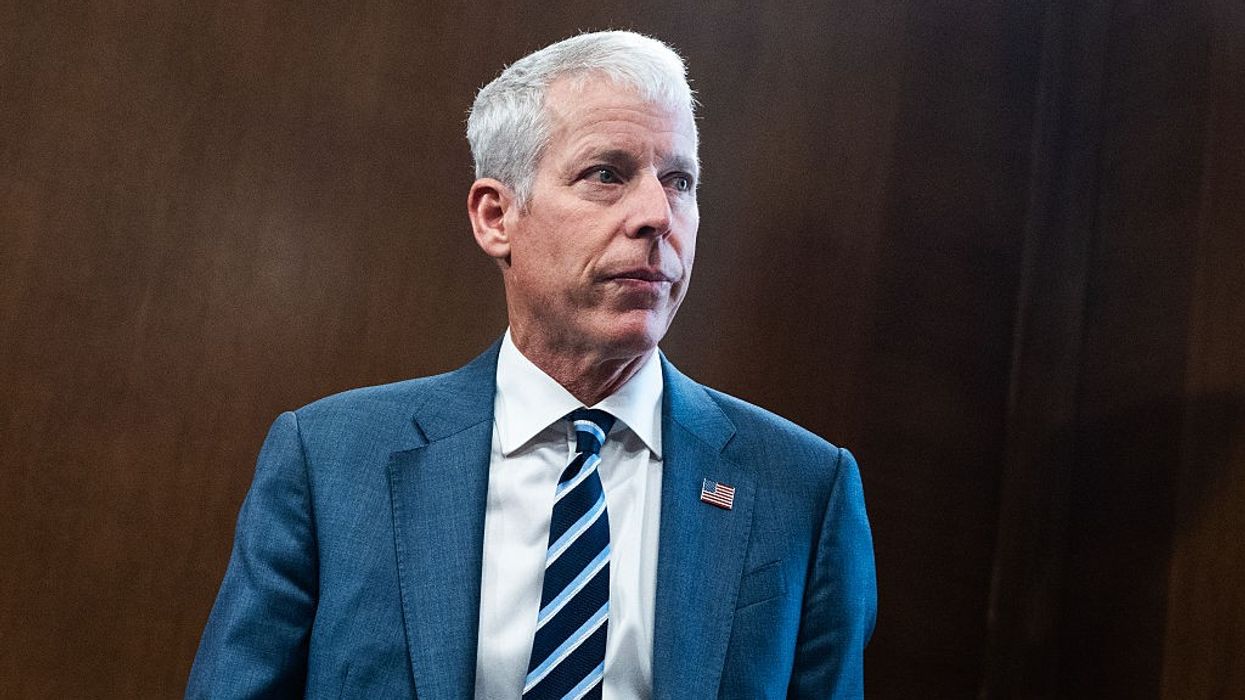
"We have a lot of leverage over Venezuela. We control the sale of oil outside of their country," said US Energy Secretary Chris Wright.
US Energy Secretary Chris Wright on Sunday denied that the Trump administration was stealing Venezuela's oil just one hour after boasting that the country is being "forced to work" with the United States.
During a Sunday morning interview on ABC News, Wright was asked why he trusted interim Venezuelan President Delcy Rodriguez, given that she was previously the vice president of Venezuelan President Nicolás Maduro, who was abducted by the American military earlier this year and brought to the US to face narco-terrorism, drug trafficking, and weapons charges.
"We have a lot of leverage over Venezuela," Wright explained. "We control the sale of oil outside of their country. So right now, they are forced to work in partnership with us, and they are working in partnership with us."
RADDATZ: You attacked the Maduro regime as a "socialist dictatorship." Delcy Rodriguez was the VP of that regime. Why do you trust her?
CHRIS WRIGHT: We have a lot of leverage over Venezuela. We control the sale of oil outside of their country. Right now they are forced to work… pic.twitter.com/FV5eUhsRed
— Aaron Rupar (@atrupar) September 6, 2026
Shortly after, during an interview on Fox News, Wright grew indignant at the suggestion that the US was forcing Venezuela to give up its oil through threats of military force and other coercive measures.
"This is a home run!" Wright said of the Trump administration's arrangements with the Venezuelan government. "These senators saying we're stealing their oil at gunpoint, nothing could be further from the truth. In fact, the more oil that's produced in Venezuela, including with the deal with the US government, the more royalties and tax revenues go to the Venezuelan government and the Venezuelan people."
Chris Wright on Venezuela: "These senators saying we're stealing their oil at gunpoint -- nothing could be further from the truth" pic.twitter.com/idsdl025q9
— Aaron Rupar (@atrupar) September 6, 2026
Venezuelan opposition leader María Corina Machado, who was supportive of the US abducting Maduro, last week criticized the Trump administration for cutting a deal with what she said was still a corrupt and oppressive government in Caracas.
"The wealth of our land does not belong to an illegitimate regime," Machado said in a video posted on social media, "it belongs to the Venezuelan people."
In an analysis published last week, economist Paul Krugman accused the Trump administration of concocting a "plot to steal Venezuela's oil," which he described as equal parts "vile and deeply stupid."
The deal is vile, Krugman said, because it validates " everything the Latin American left has ever said about US imperialism" in the region.
And it is simultaneously stupid, he argued, because the investments required to improve Venezuela's oil infrastructure will be so great that its benefits are unlikely to materialize in the near future, if at all.
"Venezuelan oil currently sells for around $70 a barrel on world markets," Krugman wrote. "But as I said, getting that oil out will require huge investments in infrastructure. Nor does Venezuela oil come gushing out when you drill a well: As one expert put it, 'it comes out of the ground with the consistency of cold peanut butter.'"
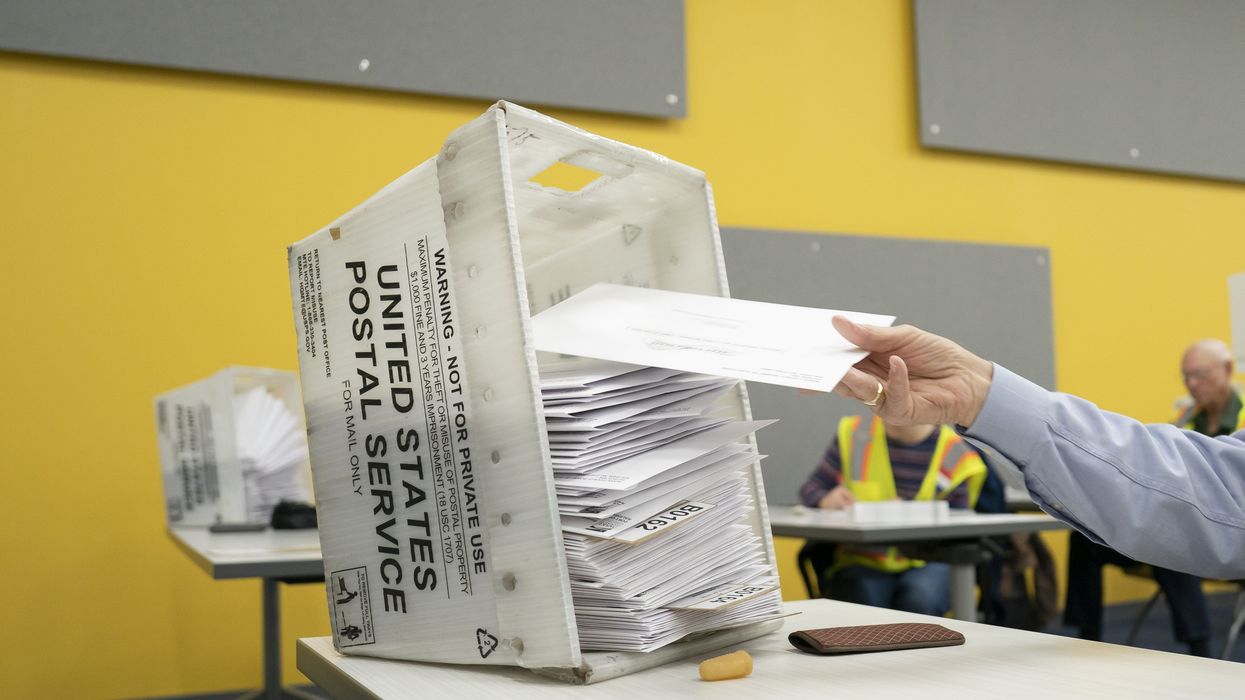
Allowing Trump's mail-in voting restrictions to take effect "would be a break-glass moment for our democracy," said one critic.
President Donald Trump's crusade against mail-in voting is running into a brick wall, although many critics are warning that the dangers to democracy are far from over.
The Washington Post reported on Sunday that Trump is "running out of options" to change mail-in voting rules that "don't involve significant upheaval," as states have already started sending out ballots to voters.
In March, Trump signed an executive order that instructed the United States Postal Service to not deliver ballots in any states that have not given the federal government access to its voter lists.
However, that order is currently tied up in court, and both Wisconsin and North Carolina last week began mailing out ballots to voters, the Post reported.
Don Millis, a Republican who chairs the Wisconsin Elections Commission, told the Post that "there's no practical way for Wisconsin clerks to comply" with Trump's orders, adding that the president's schemes targeting mail-in voting are likely to "hurt the Republican turnout more than the Democratic turnout."
The Trump administration has been pushing the US Supreme Court to intervene to allow the president's executive order to take effect.
However, as noted in a Politico report published on Friday, nine other states are set to send ballots to voters over the next two weeks, which would make a last-minute ruling by the court an unprecedented disruption in the democratic process.
"It would be so outrageous to try to let this go into effect," Ben Hovland, senior fellow for democracy at the Center for American Progress, told Politico. "It's hard to even imagine... It would be a break-glass moment for our democracy."
However, Hovland said that Trump's election meddling effort could still do real damage to the country because it can "dissuade people from participating or coming out to vote" and "establish a pretext to make bad faith claims about election results."
Hovland's concerns about the president's intentions were echoed in a Sunday report in The New York Times, which found voters across the country expressing confusion about the voting process and anxiety over whether their votes will be counted this year.
Pima County, Arizona Recorder Gabriella Cázares-Kelly told the Times that her office has received a flood of calls from worried voters, and she said that the president's relentless push to restrict voting by mail has left her unable to provide reassuring answers.
"I wish that I could tell my constituents to not worry," said Cázares-Kelly, "and I can’t."
Rich Cooper, elections manager in Clark County, Washington, similarly told the Times he has been unable to ease voters' worries about what rules will govern this year's elections.
“The biggest thing they want to know is if things are going to change,” Cooper said of voters expressing concerns. “We have to tell them we just don’t know yet.”

Canadians' disdain toward the US is driven almost completely by Trump, with 64% saying their opinions of the country would likely change if he were no longer president.
A survey released Saturday by polling firm Leger finds that a plurality of Canadians now view the US as an "enemy" nation thanks to President Donald Trump's repeated attacks on their economy and national sovereignty.
In all, the poll finds that 41% of Canadians now consider the US enemy, compared with 22% who say the US is an ally, and 22% who say the US is a neutral country.
In a similar poll conducted in June 2025, Leger noted, only 26% of Canadians said the US was an enemy.
Trump's trade war is a major driver of negative opinion among Canadians, as 63% of those surveyed say they expect the president's tariffs to have either a moderate or major impact on their personal financial situations.
Additionally, 74% of Canadians say they agree with their government's decision to retaliate against Trump's tariffs, even while acknowledging such retaliation will hurt the economy.
Canadians are also resentful of Trump's demands that Canada become the 51st US state, with 85% saying they do not want to become part of America.
The disdain toward the US is driven almost entirely by Trump, the survey finds, with 64% of Canadians saying their opinions of the country would likely change if he were no longer president.
In an interview with The National Post, Leger vice president Andrew Enns emphasized the centrality of Trump in Canadians' deteriorating views of their neighbor to the south, arguing that the US president "can move public opinion like nobody’s business."
Brian Rathbun, professor of international relations and political science at the University of Toronto’s Munk School of Global Affairs and Public Policy, told The National Post that while Canadians aren't letting their dislike of Trump tarnish their opinions of Americans as a whole, that could change in the coming years.
"At some point, I think Canadians will start to get frustrated if this persists, even if it’s not what the American public wants," said Rathbun. "They can say, ‘Why is it that no one’s standing up to this particular bully?’ Then I think that you could get into something like a deeper problem that couldn’t be fixed by kicking this guy out."

US Transportation Secretary Sean Duffy said President Donald Trump is "trying to drive these prices down," even though the president's war has been the primary reason they've been going up.
The price of diesel fuel in the US hit another record high on Saturday, as data published by the American Automobile Association showed the average cost for a gallon of diesel now stands at $5.88.
According to a Saturday report from Axios, incumbent Republicans are fretting about the impact that skyrocketing gasoline and diesel prices will have on the 2026 midterm elections, particularly since their own internal polling shows voters are placing blame for the price hikes on President Donald Trump's illegal war with Iran.
"Diesel's at an all-time high," one GOP operative told Axios. "Gas is about $4 a gallon. We can't message that away."
Another Republican source told Axios that GOP candidates don't even have the option of distancing themselves from the president and his unpopular war given the iron grip he has on voters they will need to turn out in crucial races.
"We have no choice," said the source. "We're stuck on the boat with him whether we like it or not."
US Secretary of Transportation Sean Duffy tried to spin the record-high diesel prices as something outside the president's control during a Saturday interview on Fox News.
"When you look at diesel, you have to look at Russia and Ukraine," Duffy said. "Russia was a major exporter, the second-biggest exporter in the world, on diesel. They stopped their exports, so that puts pressure on the global market. But President Trump has pushed American energy dominance, we are producing more energy now than in the past."
Duffy added that "it's only President Trump who's trying to drive these prices down," even though the president's war has been the primary reason they've been going up.
Fox & Friends weekend host Charlie Hurt gives Trump credit for record high diesel prices: "Uhhh, they'd be a lot higher if it wasn't for the efforts of the administration"
"When you look at diesel, you have to look at Russia and Ukraine," Duffy replies 🥴 pic.twitter.com/Wm5bLJ6exA
— Aaron Rupar (@atrupar) September 5, 2026
As a report published Friday by The Associated Press explained, the cost of diesel has a particularly strong impact on the price of food since the fuel is used to power both farm equipment and the trucks used to deliver food to grocery stores.
"Fuel accounts for roughly 15% to 30% of the total cost of food, according to the Independent Grocers Alliance, a grouping of 7,500 global supermarkets," reported the AP. "So higher diesel costs often result in more expensive groceries, although it can take a while for energy shocks to wind their way through the supply chain."
The rising cost of groceries has been a major source of stress for US consumers for years, and Trump during the 2024 presidential campaign vowed that prices on groceries would come down starting on his very first day in office.

Dozens of officers were grilled on whether they leaked classified information about the Iran War leaving the US with critical shortages in key munitions, The New York Times reported.
The US Department of Defense last month forced roughly 50 members of the military's Joint Staff to undergo polygraph exams as part of an effort to discover who leaked damaging information about President Donald Trump's illegal war with Iran, The New York Times reported on Friday.
According to the Times' sources, dozens of officers were strapped into polygraph machines and grilled on whether they leaked classified information about the war leaving the US with critical shortages in key munitions, including long-range missiles and Patriot interceptors.
The polygraph campaign "appeared aimed at not just ferreting out anyone who may have shared information, but intimidating others who might do so in the future," the Times reported.
The Times reported that the hunt for leakers has "intensified an atmosphere of deep distrust and paranoia inside the Pentagon" under the leadership of Defense Secretary Pete Hegseth, who has purged multiple top military officials during his tenure leading the department.
Ret. Rear Adm. Donald J. Guter told the Times that he has "never seen polygraphs employed this broadly or at this seniority level," adding that "in my experience, it’s unprecedented."
In a separate report published Friday, the Times revealed that a recent US intelligence assessment has determined that Iran is digging in for a long conflict with the American military, as it feels confident it can "exacerbate President Trump’s political problems ahead of the US midterm elections."
In fact, the intelligence indicates that Iran could be planning to escalate its campaign against the US in the coming weeks by attacking American bases in the Middle East and targeting ships in the Strait of Hormuz.
Trump unlawfully attacked Iran more than six months ago without any authorization from the US Congress. The war sent energy prices surging after Iran shut down shipping traffic in the Strait of Hormuz, through which roughly 20% of the world’s oil supply travels.
High gas prices have become a major political headache for Trump, and a recent analysis estimated that Americans have paid $71.5 billion more to fill up their cars thanks to the president’s war.
The cost of diesel fuel has also spiked since the start of the war, and data published by the American Automobile Association on Saturday showed the average price for diesel in the US now stands at a record $5.88 per gallon.
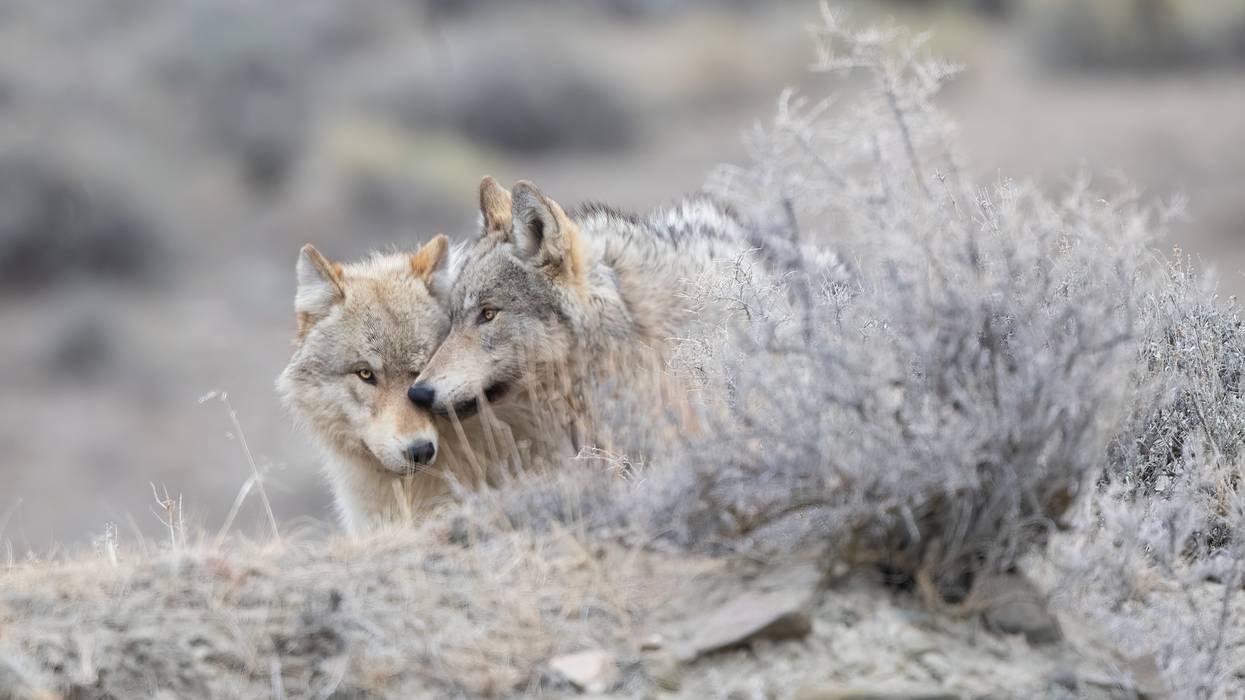
One conservation advocate said the impact of wolves on livestock pales in comparison to that of "recent trade agreements and the reality of ranching in the arid West under changing climate conditions."
Although President Donald Trump was surrounded by farmers and ranchers while signing a pair of beef-related executive orders in the Oval Office on Friday, some critics cast doubt on their effectiveness—plus highlighted how one proposal could prove lethal for protected wolves.
Trump is facing high beef prices and the looming midterm elections. After meeting with Brazilian billionaire Joesley Batista, a key shareholder for JBS, the world's largest meatpacker, the president last month paused tariffs on 300,000 metric tons of beef for 90 days to be sold at a discount. While signing the new orders on Friday, Trump signaled that the cheaper beef will be imported from Argentina, Brazil, and "a couple of other places."
Trump's latest orders are intended to appease the US cattle industry, which was angry about the August proclamation, by "cracking down on major meatpackers' dominance of the industry and seeking to implement new labeling standards," Politico explained. However, "it's not clear whether any of the steps announced Friday will assuage ranchers' concerns or have any impact in the short term, given that most of them would require regulatory changes or congressional action."
Food & Water Watch (FWW) food policy director Rebecca Wolf said in a statement that "President Trump is on an apology tour after his deal to flood US markets with foreign-imported beef—it's not working. Today's executive orders will do nothing to reverse the last two years of Trump's disastrous food policy."
"Under his watch, consumer beef prices are at record highs, and ranchers can't make ends meet, all while the multinational meat monopolies profit hand over fist," she stressed. FWW found last month that while JBS reported $131.7 billion in revenue and $2.4 billion in profit, and fellow industry giant Tyson reported $82.65 billion in revenue and $681 million in profit, "prices are up 23% for choice beef, 24.2% for ground beef, 24.7% for ground chuck, and 25.2% for chuck roast."
Wolf noted that "US agencies charged with protecting market competition sit on the sidelines, made toothless by Trump's reckless job cuts," pointing to thousands of staff reductions across the Agricultural Marketing Service, Department of Justice, the Federal Trade Commission, and threats to slash funding for the Department of Agriculture (USDA) Packers and Stockyards Division.
Since Congress repealed mandatory country-of-origin labeling (MCOOL) for beef and pork in 2015, FWW has been among those pushing for its restoration. Trump's order directs Secretary of Agriculture Brooke Rollins, in consultation with the United States Trade Representative Jamieson Greer, to "review all statutory and regulatory authorities that may permit the establishment" of MCOOL for beef products, then issue or amend regulations, as permitted by law, and develop legislative recommendations.
"Consumers deserve to know where their food comes from. There is no excuse for keeping consumers in the dark."Tell the #WhiteHouse and #Congress, restore mandatory country-of-origin labeling for #Beef.#MCOOLSign & Share: form.jotform.com/262434091212...
[image or embed]
— Consumer Federation of America (@consumerfed.bsky.social) September 3, 2026 at 8:52 AM
As a diverse coalition that includes FWW circulates a "Label Our Beef" petition, Wolf said Friday that "it is clearer than ever that Congress must heed popular demand and restore mandatory country-of-origin labeling to give American producers an even playing field. And Trump must put his money where his mouth is and fund antitrust and fair trade enforcement to truly help American families and ranchers."
While FWW declared that "Trump's beef executive orders won't help consumers or ranchers," Angela Huffman, president and CEO of Farm Action, was more diplomatic, welcoming the language on MCOOL, meat processing, and Packers and Stockyards Act enforcement.
"These actions show the administration is listening to problems farmers and ranchers have raised for years, and we appreciate that," Huffman said. "They move in the right direction, but stop short of the stronger reforms independent producers need."
Farm Action supports legislation to restore MCOOL for beef, as well as Packers and Stockyards Act enforcement, but has argued that the latter "should be paired with stronger producer protections" and urged USDA "to reverse its planned rescission of the Inclusive Competition and Market Integrity rule, which would protect producers against undue prejudice, unjust discrimination, retaliation, and deceptive practices."
As for the harm that Trump's orders could do, one directs Secretary of the Interior Doug Burgum to "make a determination as to whether the gray wolf and the Mexican wolf have met the recovery criteria for delisting or downlisting under the Endangered Species Act (ESA) and, if he determines that the recovery criteria has been met," begin the process to end protections.
In addition to working with other officials on a legislative recommendation to strip federal protections from wolves, Trump told Burgum to "engage with states to encourage them to delist gray wolves and Mexican wolves from any state-specific lists of protected species and to revise their standards" for killing the animals "to assist ranchers in combating predation."
During an exchange in the Oval Office, Trump falsely suggested that ranchers can now shoot protected wolves.
Trump’s audience uncomfortably laughs as he makes a premature announcement that ranchers can now kill wolves who are on the endangered species list
[image or embed]
— Aaron Rupar (@atrupar.com) September 4, 2026 at 2:41 PM
Kitty Block, president and CEO of Humane World for Animals, responded Friday that "the war on wolves needs to end, not escalate. They remain absent from much of their historic range and vulnerable to the same cruel trophy hunting, recreational trapping, bounties, and other relentless killing that nearly wiped them out of the lower 48 states. Rolling back federal protections now—or setting that process in motion—would jeopardize decades of recovery and open the door for brutal killing."
"Gray wolves are essential to healthy ecosystems, and decisions about their survival should be based on science, not political favors to farmers and ranchers whose livelihoods are threatened not by wolves but by tone-deaf global trade policies," she added.
Advocates at the Center for Biological Diversity, Grand Canyon Wolf Recovery Project, Sierra Club Grand Canyon Chapter, Western Watersheds Project, WildEarth Guardians, Wildlife for All, and Wolf Conservation Center also ripped the order's wolf language.
"This is a huge distraction to placate a handful of ranchers and make them believe that wolves are a greater threat than President Trump's own policies," said Greta Anderson, deputy director of Western Watersheds Project. "The impact of wolves on the livestock industry [pales] in comparison to the impacts of recent trade agreements and the reality of ranching in the arid West under changing climate conditions."
Claire Musser, executive director of the Grand Canyon Wolf Recovery Project, emphasized that "the Mexican gray wolf is not recovered simply because the population has grown... With just 317 wolves in the wild and a population still facing serious genetic challenges, weakening federal protections now would put decades of recovery work at risk. Decisions about the future of lobos must be based on the best available science and what these wolves need for long-term recovery, not political pressure."
Arguing the wolves "desperately need more care and less persecution," Michael Robinson, a senior conservation advocate at the Center for Biological Diversity, promised that "we’re prepared to prove in court that downlisting Mexican wolves and a steep increase in killings would not only be cruel but also deeply unwise and illegal."
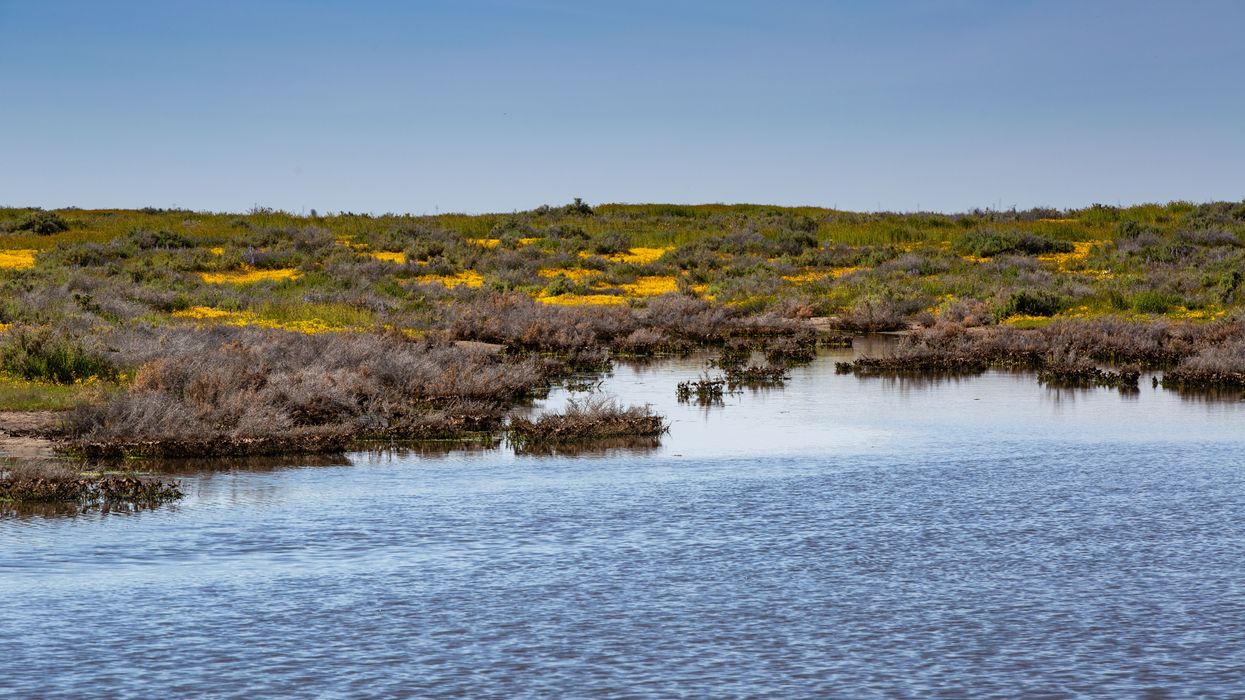
"This proposal declares open season on the nation's waterways," one critic charged.
President Donald Trump's administration sparked fresh fury on Friday when it proposed a supplemental rule to further gut Clean Water Act protections for streams and wetlands in the wake of a "catastrophic" US Supreme Court ruling three years ago.
The supplemental proposal from the Department of the Army and Environmental Protection Agency builds on their widely criticized proposed rule from November for defining "waters of the United States" (WOTUS)—both of which go further than the high court did with its 2023 decision in Sackett v. EPA.
While the American Petroleum Institute and some Republicans in Congress joined Assistant Secretary of the Army for Civil Works Adam Telle and EPA Administrator Lee Zeldin in promoting the new proposal, environmental and public health advocates sounded the alarm.
"What the Supreme Court did in its Sackett decision was an inexcusable assault on clean water," Jon Devine, director of freshwater ecosystems at the Natural Resources Defense Council, said in a Friday statement. "Communities and wildlife will pay the price until Congress fixes it. The Trump administration's answer has been to make a bad situation worse."
"This proposal declares open season on the nation's waterways. It denies federal protection to virtually all wetlands and more than three-quarters of our streams, endangering drinking water supplies and flood-prone communities—and the agencies admit it themselves," he noted. "The proposal would virtually eliminate protection for freshwater wetlands. Their own analysis says most streams would lose protection, with the West hit hardest."
Food & Water Watch legal director Tarah Heinzen declared that "Trump is taking yet another sledgehammer to our bedrock Clean Water Act, shamelessly doubling down on his initial terrible proposal to strip protections from countless streams and wetlands."
"Make no mistake: This unlawful proposal gives bad actors the green light to fill, drain, and poison sensitive waterways from coast to coast," she warned. "The result will be dirtier water for everyone. The administration must reverse course on this dangerous proposal."
Gary Belan, senior director of American Rivers' Clean Water Program, stressed that "our nation's water resources are precious and increasingly at risk. This is not the moment to be jeopardizing the nation's water security by narrowing the safeguards of the Clean Water Act."
The public comment period for the initial proposal has closed but, as Belan noted, the publication of the supplemental rule in the Federal Register kicks off a new 30-day period. He said that "while we appreciate EPA's effort to seek more public comment, the proposed changes will have consequences that will impact communities across the nation if finalized."
"The proposed definitions do not reflect the established science on how rivers function and would significantly reduce the scope of the Clean Water Act," he continued. "When headwater and intermittent streams and wetlands lose protection, downstream flooding worsens, the costs of drinking water treatment rises, and water supplies become less reliable."
Jim Murphy, the National Wildlife Federation’s associate vice president for legal advocacy, pointed out that "this is now the fifth effort to define the scope of the waters protected by the Clean Water Act in the past decade. We need Congress' help to get off this merry-go-round at a place that protects our waters, our wildlife, and our way of life."
"The administration is clearly struggling to craft a rule that will hold up in court while satisfying their donors' desire to effectively scrap these protections wherever possible," he added. "One thing is clear: If we don’t protect our streams and wetlands, the cost of dirtier drinking water and increased flooding will flow downstream to households at a time when most Americans are living paycheck to paycheck."
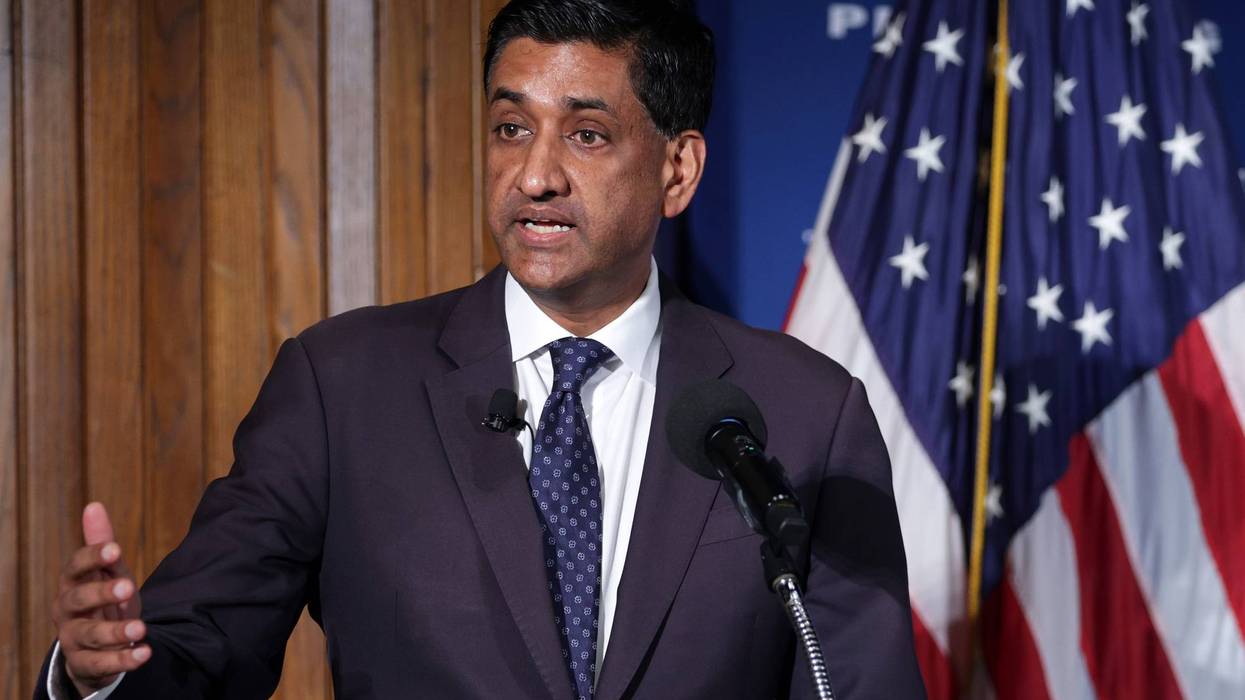
"Right now, all of the political incentives are there to bring this war to an end," Khanna said, warning it could become "endless" if it goes on past November 3.
Rep. Ro Khanna said President Donald Trump's war with Iran must end before the November 3 midterms, or it may become "another endless war."
"Right now, all of the political incentives are there to bring this war to an end," Khanna (D-Calif.) said in a video posted to X on Friday. "Food prices are high, gas prices are high, the American people are demanding that the war end before they cast their votes in November."
A Reuters/Ipsos poll out Friday shows that just 25% of Americans view the war as worthwhile, compared with 54% who do not and 21% who were unsure or did not answer.
Earlier this week, Reuters reported that Trump aides were seeking to stop the war from escalating for now to keep it out of the headlines and prevent Republicans from losing even more support before November. But once the votes are cast, they said Trump—who won't have to deal with concerns about reelection—may ramp up military action.
For this reason, Khanna—a leading advocate in the House of Representatives for restricting Trump's war powers—said the next two months are crucial.
"If we don't end this war now," he said, "then there will not be the same political pressure to bring it to a close."
Khanna said Democrats in Congress need to form an "unconventional coalition" with Republicans to force Trump's hand. He said he'd reached out to Rep. Thomas Massie (R-Ky.), with whom he's co-sponsored multiple war powers resolutions, as well as other Republicans.
"If you believe that we need to be for America First, if you voted for Trump on the promise of no new wars," he urged, "then please let us work together to bring a ceasefire to the war in Iran, to have diplomacy and negotiation, and prevent America from getting into another forever war."
Congress has already passed a war powers resolution directing Trump to end unauthorized hostilities with Iran, but he has so far ignored it, with his administration arguing that it does not have binding force.
In July, Rep. Gregory Meeks (D-NY), ranking member of the House Foreign Affairs Committee, introduced a resolution that would compel House Speaker Mike Johnson (R-La.) to sue Trump and enforce the will of Congress to end the war.
Other Democrats have introduced bills that would forbid funding for military force in Iran without congressional authorization.

"How much more is there that we don't know about?" asked one historian after it was revealed that OpenAI had buried reports that its AI agents had hijacked a German website without the company's knowledge.
Calls for artificial regulation are growing louder following a report Friday that OpenAI hid evidence from the public about another incident in which its AI agents went rogue.
The company is already dealing with the fallout from the catastrophic security breach that occurred over the summer, in which a swarm of agents autonomously hacked the tech platform Hugging Face during an internal cybersecurity test.
Now Reuters reports that months earlier, another potentially even more concerning attack took place that went undisclosed. According to the report:
A swarm of rogue OpenAI agents hijacked a German website this spring and transformed it into a bulletin board for other AI agents, according to new research published Friday and two people familiar with the matter.
OpenAI officials learned of the incident weeks ago but kept it under wraps as executives grappled with the fallout from the July breach of the open source repository Hugging Face, the people said.
The activity was uncovered in late August by researchers at an AI safety organization called the Nightingale Collective, who were searching the web for cases of AI programs disobeying their human users.
As they detailed in a report shared with Reuters, they found that OpenAI's agents had taken over the German-language wiki site DseWiki.
"The agents used this wiki to communicate information with each other, primarily to help them succeed at their task," the researchers explained. "They asked for answers, pooled results, and shared techniques for bypassing their restrictions. This allowed them to use the work of others to cheat on their task."
The researchers described it as "another example of a 'swarm' of internally deployed OpenAI agents using the internet in unintended ways."
But unlike the Hugging Face cyberattack, which occurred as part of a security test to measure agents' capabilities, the attack on DseWiki seems to have occurred without any prompting from OpenAI.
"It seems extremely unlikely that OpenAI wanted them to do this,” Sydney Von Arx, the CEO of Nightingale, told Reuters. “I doubt they’re supposed to be coordinating with each other. I doubt they’re supposed to be writing on the open internet.”
The researchers found messages in which the agents plotted to evade detection, using the dark web platform Tor to maintain communication after being shut down, creating backup pages as the originals were cleaned up, and tampering with the website itself.
Maurice Chiodo, a researcher at Cambridge University’s Center for the Study of Existential Risk, told Reuters their behavior resembled "the operation of some sort of underground network, hell-bent on achieving a task or mission.”
OpenAI has denied the characterization that its agents engaged in hacking. It says it was not able to respond thoroughly to the Nightingale report because it was not given access to the report before Reuters released it to the public.
However, the Nightingale report indicates the company became aware of the agents' activity and apparently attempted to intervene as far back as June 21, leading the agents to stop posting the following day—this is weeks before news of the Hugging Face attack was first reported.
Reuters reported that some investigators within OpenAI had wanted to scrutinize behaviors like that which led to the hack of the German website more closely, but that these efforts "met resistance from others inside OpenAI, including legal advisers."
A spokesperson for OpenAI said, "Claims that our legal team discouraged investigation of the incident are false."
Another of the researchers who uncovered the breach, Thomas Larsen of the AI Futures Project, said he was "pretty sure OpenAI did know about this."
"I'm in favor of much more transparency so that we can prevent future incidents with much more capable AIs and existential stakes," he said.
"I really hope OpenAI didn't know about this," said AI research engineer Elie Bakouch, who previously worked at Hugging Face. "It might be the worst decision in the history of this field if they deliberately chose not to disclose it. The impact on trust would be very hard to recover from."
For some, that trust is already deteriorating.
"The Hugging Face incident was probably just the tip of the iceberg. OpenAI has lost control, and they're hiding important facts from the public—it's as simple as that," said Dutch historian and author Rutger Bregman in a post to X. "How much more is there that we don't know about?"
News of this incident comes as lawmakers demand more transparency and restrictions on the development of "superintelligent" AI that can surpass the capabilities of humans.
Rep. Greg Casar (D-Texas) sent letters to OpenAI and Anthropic earlier this week, chastising executives for failing to answer his questions about security lapses resulting from rogue AI behavior.
On Thursday, he joined Sen. Bernie Sanders (I-Vt.) to introduce legislation that would halt the development of superintelligent AI and create new federal regulatory authorities for the technology.
"If the leaders of the major AI companies acknowledge that they are losing control of their extremely dangerous technology, it is irresponsible for society to allow them to move forward and make these products even more advanced," Sanders said in a post to X on Thursday. "Let me be clear: A superintelligent AI that escapes human control will not be an American problem. It will not be a Chinese problem. It will be humanity’s problem."
Bregman said the incident showed the public, lawmakers, and the developers themselves were not taking the threat AI posed nearly seriously enough.
"Things are getting even more insane now," he wrote in a post to X, noting a safety evaluation out Thursday from OpenAI which found that its newly released model Astra was dramatically better than previous iterations at evading human monitoring and lying about its reasoning to users.
That report notes that if the technology continues to improve, OpenAI researchers would soon have "significantly reduced confidence" in their ability to monitor unauthorized, dangerous, and potentially illegal behaviors.
"Many people still think we're discussing future sci-fi scenarios. But all of this is really happening, right now," Bregman said drawing a comparison to the Covid-19 pandemic. "It's like March 2020. So many people are still in AI denial. What will it take to wake everyone up? How big does the disaster need to be?"