

SUBSCRIBE TO OUR FREE NEWSLETTER
Daily news & progressive opinion—funded by the people, not the corporations—delivered straight to your inbox.
5
#000000
#FFFFFF
To donate by check, phone, or other method, see our More Ways to Give page.
Daily news & progressive opinion—funded by the people, not the corporations—delivered straight to your inbox.
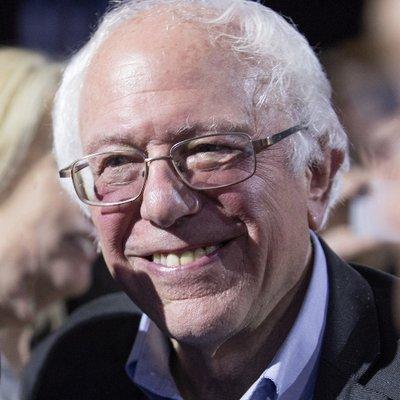
Today, Sen. Bernie Sanders (I-Vt.) introduced the No War Against Iran Act, which denies the Pentagon of any funds for unauthorized use of military force against Iran. A measure to prohibit funds for an unconstitutional war with Iran passed by a bipartisan 251-member vote in the House of Representatives last year, though it was later stripped from the National Defense Authorization Act enacted in December.
In the Senate, the No War Against Iran Act is cosponsored by Senators Schumer (D-N.Y.), Leahy (D-Vt.), Markey (D-Mass.), Wyden (D-Ore.), Gillibrand (D-N.Y.), Baldwin (D-Wis.), Cantwell (D-Wash.), Warren (D-Mass.), Van Hollen (D-Md.), Harris (D-Calif.), Blumenthal (D-Conn.), and Merkley (D-Ore.).
Rep. Ro Khanna (D-Calif.) introduced a companion measure to defund unauthorized military action against Iran in the House of Representatives, with 58 cosponsors. The two lawmakers previously partnered on a bipartisan War Powers Resolution to end unconstitutional U.S. military participation in the Saudi-led war in Yemen last year, the first directive of its kind to be adopted by Congress in the 47-year history of the War Powers Act.
"The American people are sick and tired of endless wars. Nonetheless, the Trump administration has impulsively brought us to the brink of a disastrous and unnecessary war with Iran," said Sanders. "The war in Iraq was the worst foreign policy blunder in the modern history of our country. We must learn from our mistakes, not repeat them. We need to invest our financial resources in improving lives here in America, not waste trillions more on wars. The Congress and the American people must do everything possible to prevent a war with Iran."
"We must never forget that under our Constitution, Congress has the responsibility for making war--not the president," Sanders continued. "Our Founding Fathers understood that it was only too easy for a president to lead the country into a disastrous military conflict. That is why they gave the exclusive power over war and peace to the people's elected representatives. We cannot remain bystanders right now. It is imperative that the United States Congress provide the kind of leadership that our country needs by passing this legislation and defending the Constitution and the rule of law. President Trump does not have the right to go to war with Iran without authorization from the representatives of the American people."
"This president promised to put an end to endless wars, but instead has prolonged current conflicts and even risks creating new ones," said Rep. Ro Khanna. "Last year, Senator Sanders and I led the effort to end the Trump-backed Saudi-led war in Yemen by passing a historic War Powers Resolution. Now, we are introducing this legislation to block funds for yet another unconstitutional war against Iran. Our legislation passed the House last year with 27 Republican votes and should have never been stripped out of the Defense bill. We have another chance to pass this legislation and avoid the next trillion-dollar war in the Middle East. It's a necessary step to preserve our constitution and represent our constituents' desire to avoid another catastrophic war."
"The president's erratic, reckless foreign policy is making America less safe and this Administration's brazen willingness to undermine Congress's war powers only underscores the need for this legislation," said Leader Schumer. "The last thing the American people want is another endless war in the Middle East, and this legislation would provide a much-needed check on the president's dangerous impulses. I urge my colleagues to lend their support."
"An armed conflict with Iran would not only risk the lives of countless American servicemen and women, it would likely ignite another endless and enormously costly war in the Middle East," said Sen. Patrick Leahy. "Diplomacy should always be our preferred option, with military force occurring only if negotiations fail. With this bill, we make clear that an armed conflict with Iran requires the approval of the peoples' representatives, after exhausting every other means."
"We must stop a dangerous escalation with Iran," said Sen. Maria Cantwell. "Congress has the power of the purse and we should use it by reminding the president he cannot go to war without authorization."
"The Constitution is very clear that Congress has the authority to declare war and I am supporting this legislation to prevent the start of an unauthorized war with Iran. I am always guided by the hard lessons that should be learned when America chooses to go to war in the Middle East," said Sen. Tammy Baldwin. "After decades of U.S. military engagement in Middle East conflicts, Congress must not allow this administration to repeat the mistakes of the past. We have a constitutional responsibility to prevent the President from going to war with Iran and sending more American troops into harm's way without congressional authorization."
"I am concerned about the potential consequences of conflict with Iran and the president's apparent lack of a coherent strategy going forward," said Sen. Kamala Harris. "Make no mistake: Soleimani was an enemy of the United States, but Trump's actions have further enflamed tensions and destabilized the region. It is essential that Congress take its constitutional responsibility seriously and work to de-escalate the situation."
"Congress shouldn't be forced to foot the bill for a war that it has not authorized," said Sen. Richard Blumenthal. "The Constitution gives Congress the right and responsibility to both authorize and fund military operations. We are a co-equal branch of government, not a blank checkbook the Trump Administration can turn to after failing to provide transparent reasoning for its unauthorized military action."
"This crisis was unnecessary and avoidable. Make no mistake--President Trump has made us less safe," said Sen. Kirsten Gillibrand. "Without seeking congressional authorization or presenting a clear strategy, President Trump brought us to the brink of war with Iran. President Trump must not take further military action unless he notifies Congress immediately and obtains authorization based on a clear explanation. That's why I'm sponsoring the No War With Iran Act, and I urge my colleagues to support this critically needed bill."
"At this dangerous moment in history, Congress must make something crystal clear to the Trump Administration: the Constitution gives Congress, not the Executive, the power to declare war with Iran," said Sen. Chris Van Hollen. "This legislation will rein in the reckless actions of the President and should be considered in the Senate without delay."
Read the bill text here.

"If Graham Platner and all of you find a way to build that redemption through this campaign," Congressman Ro Khanna told a Maine crowd, "maybe you would show a way for this country to start to redeem itself."
Since The New York Times on Thursday published reporting about some of US Senate candidate Graham Platner's past relationships—including allegations of physical aggression that the Democrat denied—Mainers have continued to rally with and donate to the political newcomer's disruptive campaign, which has focused on promoting working-class priorities and defeating the oligarchy.
Maine's primary is on Tuesday, but Platner has been the presumptive Democratic nominee to challenge Republican Sen. Susan Collins in November since Gov. Janet Mills suspended her campaign over a month ago, citing a lack of financial resources.
In the wake of the Times reporting, Platner "raised more money than on any day since Gov. Mills' withdrawal from the race," according to his campaign. Specifically, as of 7:00 pm ET Friday, the 41-year-old oyster farmer and combat veteran had collected "over $200,000, from over 5,000 donors, with an average contribution of $40."
A Graham for Maine spokesperson said in a statement that "the people of Maine know what's on the ballot Tuesday: not Graham Platner's past, but whether their voice in the Senate works for them—or billionaires and special interests."
The Times spoke with more than two dozen people, including six women who had been romantically involved with Platner. The interviews arranged by his campaign were with three exes who now support his candidacy. The other three "offered a far more complicated assessment, describing volatile and 'toxic' relationships that were unsettling and at times emotionally wrenching."
Much of the coverage and commentary has focused on Lyndsey Fifield, who dated Platner from roughly 2013-15. The 40-year-old previously worked for former Republican South Carolina Gov. Nikki Haley's 2024 presidential campaign and right-wing organizations such as the Heritage Foundation, the US Chamber of Commerce, the Independent Women's Forum, and Ladies for Kavanaugh—a group she co-founded to support the US Supreme Court nomination of Brett Kavanaugh, who faced sexual misconduct allegations but was still confirmed as a justice by a majority of senators, including Collins.
"I know it looks like a bitter ex-girlfriend Republican trying to take down a Democrat—it has nothing to do with that," she told the Times. "If he was running as a Republican, I would be doing this exact same thing."
Fifield said that Platner's offensive posts on Reddit—an early controversy in his campaign—"reminded me of just how much he hated women," and she challenged his insistence that he did not know the skull and crossbones tattoo he got with fellow Marines in Croatia closely resembled a Nazi symbol until last fall, when it became another campaign controversy, and he got it covered up.
According to the Times:
Mr. Platner could be rough with her, Ms. Fifield said, particularly when they were drinking, leaving her shaken and sometimes afraid. In the interviews, Ms. Fifield grappled with how to process her experiences. She was quick to note that he "never hit me, he never punched me."
But she said he regularly grabbed her by the shoulders—sometimes hard enough to leave marks—and, on one occasion, yanked her out of a cab by her wrist after an argument when she wanted to stay in the car.
During one argument, she recalled, he twisted her arm behind her back, shoved her into a bedroom, and held the door closed from the other side so she couldn't get out, telling her to remain there until she was "calm." Eventually, Ms. Fifield said, she fell asleep and left the next morning.
"It hurt," she said. But she added: "It didn't cause an injury, it didn't break my arm."
Platner acknowledged to the newspaper that he had "too often self-medicated with alcohol, and was a far from perfect boyfriend" during what he called a "very dark period of my life," but he also strongly denied any claims of physical intimidation or altercations with past partners or knowing about the tattoo's Nazi ties.
Phil Proschko, who served with Platner in the Marines and also got the symbol tattooed on him, said in a brief interview with Zeteo on Friday: "No, we did not purposely get hateful fucking shit because we're racist people... We got matching tattoos because we were in our 20s, drunk in Croatia, and that's it. That's all that fucking happened."
Platner reiterated his responses to the Times during a nearly 25-minute interview with Chris Hayes on MS NOW. After the host read portions of Fifield's allegations, Platner said that "anything alleging physicality" and "anything alleging that I knew what my tattoo was" is "simply not true," and is coming from "someone who's politically motivated."
"I've been very upfront since the beginning of this campaign that that was a pretty dark period of my life after I came back from my combat service," added Platner, a veteran of the Afghanistan and Iraq wars.
Hayes also invited the candidate to discuss reporting by the Times and The Wall Street Journal late last month that during an internal vetting process, Platner's wife, Amy Gertner, told campaign staff that he had exchanged sexual messages with multiple other women early in their marriage, and they had addressed it in counseling—plus Gertner's video response supporting her husband, which Platner shared on social media.
Since Thursday, some have criticized the Times, with reporters from other outlets saying that the paper "breezed past" the full scope of Fifield's right-wing work history for an article seen by critics as "a hit job against an anti-oligarchy, anti-Israel populist."
Fifield also spoke out against the final product, writing in a long social media post on Friday that "it dawned on me that this really was a setup all along. The journalists I trusted who convinced me to share a story I never wanted to tell methodically delayed and twisted this into a gift to the Platner campaign."
Responding to Fifield's post, a spokesperson for the Times told Newsweek: "We published accounts provided by several women who were in romantic relationships with Graham Platner. Our story accurately presents each of these accounts as told to our reporters and according to our standards. We stand by our reporting of the accounts from Ms. Fifield and the other women, who provided a revealing look at the behavior of a major candidate for the US Senate."
After the sexting reports, Mills said that "people have the impression that I 'withdrew' or 'dropped out,' but I simply suspended active campaigning. I am still on the ballot." The newer reporting on Platner's exes has directed fresh attention toward the governor.
As NBC News detailed late Friday:
A source close to Mills told NBC News: "The governor remains on the ballot, and in the wake of this week's stories, people across Maine are reaching out to tell her they're voting for her and encouraging her to get fully back into the race."
One Democrat who had been involved in Mills' campaign said she would move forward anew only if Platner were to step aside, not to challenge him. The Democrat said losing to him "especially now" would serve as an embarrassment to the outgoing governor.
That person, and others, noted that Tuesday's primary was not the deadline they are looking at, but rather a mid-July deadline under state law. That's when Platner would have to step aside to be replaced as the nominee.
Platner made clear during his interview with Hayes that he hasn't considered stepping aside, and since the Times' Thursday reporting, MS NOW and Fox News have spoken with various voters on Maine streets who continue to back the candidate:
Actual Maine voters stand by Graham Platner:
“Does he have a problematic past? Yes, but I would rather have a redemption story than somebody telling you how wonderful they are, how much research they do, and yet they still make the wrong decision for the people of Maine”
“Would… pic.twitter.com/sTbOiElBrp
— Marco Foster (@MarcoFoster_) June 5, 2026
Actual Maine voters continue to back Graham Platner:
“The Democratic party’s come up short in a lot of ways in terms of like whitewashing our candidates and being so morally elitist and kind of entitled at times. We have to be willing to get dirty”
“His baggage is nowhere near… pic.twitter.com/CrSzvJ7pdb
— Marco Foster (@MarcoFoster_) June 6, 2026
“He’s the best candidate by far. And probing into the minutia of his personal relationships when you don't do that for any other candidate is ridiculous” pic.twitter.com/FUDTqkCf1M
— Acyn (@Acyn) June 5, 2026
Platner has stayed on the campaign trail, joining Maine gubernatorial candidate Troy Jackson; Matt Dunlap, who is running for the state's 2nd Congressional District; and Congressman Ro Khanna (D-Calif.), a potential 2028 presidential candidate, for a "Changing the Tides" rally in Bar Harbor on Friday.
Platner stressed that "we are up against one of the most powerful political systems in the history of the world. It is a system of billionaires and special interests. It is a system of corrupted politicians like Susan Collins... who for years has given us some charade that she's a moderate, that she stands up against her party, that she cares more about her constituents more than she cares about those that donate money to her. We see through it."
He also addressed the various controversies throughout his campaign, saying: "Since the beginning, Maine, you had my back. When hurtful things I said on the internet a decade ago came out into the public, as I shared my personal journey through PTSD and darkness, of recovery and accountability and growth, Maine had my back."
"Now, as every single piece of that past and journey gets dug up, litigated, and weaponized, you have my back," he told a cheering crowd. "And when politically motivated, serious, and false accusations are made against me, Maine, you have my back. The state of Maine raised me, and the state of Maine saved me. And to all of you out there, Maine, I will always have your back."
Meanwhile, Khanna, a Philadelphia-born son of immigrants, said during the event that "sometimes I think we're broken right now as a country," with so many Americans who "feel unseen, unheard, undervalued."
"We can barely talk to each other. Sometimes it feels like we're having different conversations, even about the situation we see with Graham and Amy... no ability to have dialogue," he continued. "For this country to heal, we need to find some way of having grace. We need to find some way of having redemption. We need to find some way of saying that if someone... felt hurt by Graham in a past relationship, we can listen to them, and we can listen to Graham, and we can have conversations as mature Americans, as fellow citizens."
"If Graham Platner and all of you find a way to build that redemption through this campaign, through this transformation," he added, "maybe you would show a way for this country to start to redeem itself, because we sure need that as we approach this 250th anniversary."
From Senate Minority Leader Chuck Schumer (D-NY), who initially backed Mills in the Maine primary, to Sen. Bernie Sanders (I-Vt.), an early supporter of Platner who caucuses with Democrats and twice sought their presidential nomination, the party "is united" behind "a single goal," Khanna also told the crowd. "We will defeat Susan Collins in November."
Sanders renewed his support for Platner in a Saturday social media post highlighting key campaign issues:
US Sen. Brian Schatz (D-Hawaii) is set to help rally donors for Platner during a virtual event on Sunday. As Politico noted: "The event is the first public stamp of approval from Schatz, who has not endorsed Platner previously. Making it even more notable is Schatz’s status as a rising leader in the party: He is currently deputy conference secretary and chief deputy whip for the Senate Democratic Caucus, and he has secured the votes—and Chuck Schumer's endorsement—to take over the No. 2 role next year."

"This protects every Oregon family who depends on these programs to put food on the table," said the state's attorney general, who is among the 21 AGs behind the case.
A federal judge on Friday temporarily blocked an attempt by the US Department of Agriculture to force state governments to comply with President Donald Trump's positions on gender and immigration or lose out on billions of dollars in funding, including for food assistance.
The attorneys general of the District of Columbia and 20 Democrat-led states sued the department and Secretary of Agriculture Brooke Rollins in March, arguing that "USDA has now thrown unconstitutional and unlawful roadblocks between the programs created by Congress and the states that rely on them, threatening critical nutrition support, vital agricultural research, and the safety of our national food chain and communities."
Specifically, the Trump administration imposed "a vague set of funding conditions relating to USDA's purported anti-discrimination 'policies,' 'gender ideology,' 'fair athletic opportunities' for women and girls, and immigration," without specifying the policies or even confirming "that certification is limited to currently existing policies," says the complaint, filed in the District of Massachusetts.
The March filing also makes the case that "even if USDA went back and cured its vagueness problem and conducted a reasoned analysis before taking final agency action, the challenged conditions would still be unlawful."
While US District Judge Myong Joun has not explicitly agreed, the appointee of former President Joe Biden granted a preliminary injunction sought by the AGs and said he would issue a memorandum explaining his decision at a later date.
Welcoming the judge's unexplained decision on social media, Oregon Attorney General Dan Rayfield highlighted that the move safeguards funding for school lunches, emergency aid, the Supplemental Nutrition Assistance Program (SNAP), and the Special Supplemental Nutrition Program for Women, Infants, and Children (WIC).
"This protects every Oregon family who depends on these programs to put food on the table," Rayfield said. "The court rejected the Trump administration's attempt to hold school lunches, WIC, and SNAP hostage to its political agenda. These are lifelines for 86,000 Oregon kids, working families, seniors, and rural communities—and they will remain protected."
New York Attorney General Letitia James also celebrated that "we won a court order protecting billions of dollars in USDA funding as our lawsuit continues," and pledged that "my office will keep fighting to protect New Yorkers and stop the federal government from punishing our state for refusing to bend."
NEW: When Trump tried to gut billions in USDA funding for states refusing to comply with his anti-immigrant agenda, we sued.The court just ruled in our favor, blocking his cuts while our case continues.These grants are a lifeline - I'll always fight to protect food assistance for families.
— AG Andrea Joy Campbell (@massago.bsky.social) June 5, 2026 at 4:58 PM
The other states involved in the case are California, Colorado, Connecticut, Delaware, Hawaii, Illinois, Maine, Maryland, Massachusetts, Michigan, Minnesota, New Jersey, New Mexico, Rhode Island, Vermont, Virginia, Washington, and Wisconsin. Collectively, according to the complaint, "'plaintiff states receive over $74 billion annually in funding from USDA."
The judge's decision came on the heels of four Democrats in the US House of Representatives voting with Republicans to approve legislation that the Center on Budget and Policy Priorities (CBPP) has estimated would strip modest fruit and vegetable benefits from "nearly 5.4 million toddlers, preschoolers, and pregnant and postpartum WIC participants."
Already, since congressional Republicans passed and Trump signed the One Big Beautiful Bill Act last year, at least hundreds of thousands of Americans have lost federal food assistance. Last month, Trump's USDA chief suggested that some of them were receiving SNAP benefits fraudulently—without offering evidence—while others are "moving into the American dream and off of welfare."
Katie Bergh, a senior policy analyst at CBPP, responded that "unless the Trump administration has redefined 'the American dream' to mean 'losing the help your family needs to afford groceries because of federal cuts,' I have some bad news for Secretary Rollins."

"The murder of a 7-month-old baby by Israeli forces in the illegally occupied West Bank and an Israeli massacre at a wedding in Gaza are horrific crimes that should shock the conscience of every person," said a US-based group.
Gunfire from at least one Israeli soldier killed a 7-month-old Palestinian boy and injured his parents, who were traveling in their vehicle in the occupied West Bank on Friday, according to the Palestinian Ministry of Health.
The Palestinian National Authority's WAFA reported that Sam Fahd Abu Haikal lived in Bethlehem with his mother and father, Fahd Abdul Aziz Abu Haikal, a lecturer at Bethlehem University. The family—which also included the baby's grandmother and 11-year-old sibling—intended to visit Hebron when they were struck by at least one bullet that left both parents with "moderate injuries" and ultimately killed the infant, who "succumbed on Friday evening to critical wounds."
As Reuters detailed:
The baby's grandmother said the family was driving near Checkpoint 17 when they saw Israeli military vehicles and soldiers in the distance and stopped the car. She said shots were then fired toward them, which they initially believed were warning shots.
"One bullet struck my grandson, traversed his face and crossed his head, striking his mother's cheek where it lodged," she said, adding that the bullet had also grazed the father's finger, and that the mother was in hospital.
A spokesperson for the Israel Defense Forces told CBS News that soldiers "perceived a vehicle accelerating toward them" and responded by firing single shots, which injured three Palestinians who were evacuated for medical treatment. The spokesperson added that an initial inquiry "found that those injured were uninvolved civilians," and that the IDF "expresses deep sorrow for any harm caused to uninvolved individuals."
Fahd Abdul Aziz Abu Haikal told the Israeli newspaper Haaretz that "the soldier was about 10 meters away from me. He saw me, he saw my wife, and the children. The car windows were not dark, it was daylight, and everything was clear. You can't say he didn't see that it was a family."
The father added that "this case must not be closed without an investigation and without accountability. At least I don't intend to give up."
The baby's death sparked a fresh wave of criticism against the IDF, which is widely accused of committing genocide against Palestinians in the wake of the Hamas-led October 7, 2023 attack on Israel. The Israeli assault on the Gaza Strip has killed over 72,000 people.
Since October 2023, Israeli forces and settlers have also ramped up attacks in the illegally occupied West Bank, killing over 1,000 Palestinians, including at least 240 children, according to the United Nations.
In a Saturday statement, the Council on American-Islamic Relations (CAIR), the largest Muslim civil rights and advocacy organization in the United States, condemned the baby's killing as well as a deadly Israeli attack on a wedding in Gaza.
"The murder of a 7-month-old baby by Israeli forces in the illegally occupied West Bank and an Israeli massacre at a wedding in Gaza are horrific crimes that should shock the conscience of every person," CAIR said. "No military force that repeatedly kills children, medical workers, journalists, and civilians—using American taxpayer-supplied weapons—should continue to enjoy impunity or the support of our own government."
"We call on our government and the international community to stop enabling these atrocities," the group said, "and to take concrete action to protect Palestinian civilians, end the occupation, and uphold international law."
This post was updated with a newly available photo and reporting from Haaretz.