

SUBSCRIBE TO OUR FREE NEWSLETTER
Daily news & progressive opinion—funded by the people, not the corporations—delivered straight to your inbox.
5
#000000
#FFFFFF
To donate by check, phone, or other method, see our More Ways to Give page.
Daily news & progressive opinion—funded by the people, not the corporations—delivered straight to your inbox.
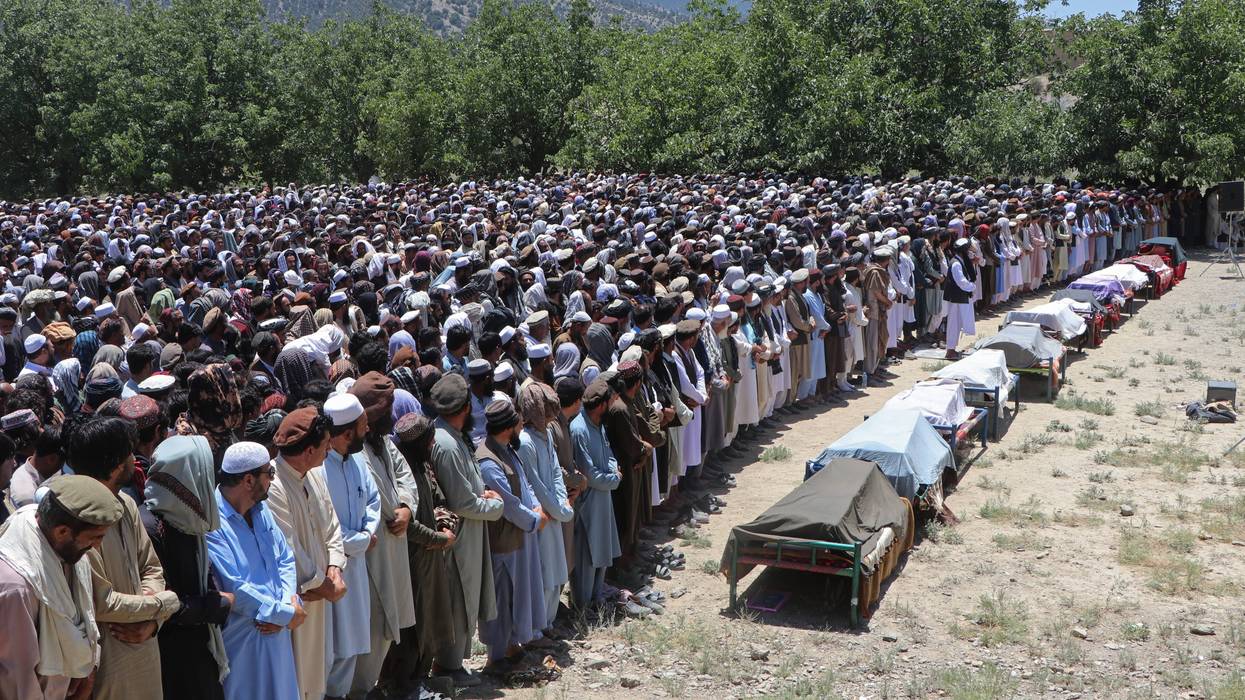
Women and children were reportedly among the at least 28 civilians killed and 49 others wounded on Sunday by airstrikes targeting Pakistani Taliban fighters in Afghanistan's Paktia, Paktika, and Kunar provinces.
United Nations Secretary-General António Guterres on Monday called for “an immediate cessation of hostilities and the protection of civilians” after Pakistani airstrikes killed and wounded scores of Afghans, including women and children.
Pakistani forces bombed targets in Afghanistan's Paktia, Paktika, and Kunar provinces and launched a ground invasion of the neighboring nation.
The attacks—which Afghanistan's Taliban government called "cowardly" and an "atrocity"—reportedly killed at least 28 civilians and wounded 49 others.
"We call on all parties to uphold their obligations under international humanitarian law and continue to stress that civilians and civilian infrastructure must be protected at all times," Guterres said in a statement read in New York by his spokesperson, Stéphane Dujarric.
Dujarric also said that the UN Assistance Mission in Afghanistan (UNAMA) “just confirmed that many civilians were killed and injured in these airstrikes carried out by Pakistan," and that “humanitarian colleagues tell us that the latest attacks have also reportedly triggered displacement, and humanitarian partners on the ground are assessing needs and preparing to provide emergency assistance.”
Paktia elder Adam Khan told Agence France-Presse that those killed in one of the strikes "were innocent civilians, including children, elderly people, and women" sleeping in a house.
Pakistani officials say the military operations are aimed at militant groups that it says operate from Afghan territory and launch attacks into Pakistan, not at Afghanistan's government. Islamabad accuses Tehreek-e-Taliban Pakistan—also known as the Pakistani Taliban—and Jamaat-ul-Ahrar of having recently attacked Pakistani security forces and civilians.
Last October, Pakistan and Afghanistan agreed to a now-imploded ceasefire after weeks of border clashes that killed dozens of civilians and wounded hundreds more.
"These judges are being punished for discharging their judicial duties independently by rendering decisions with which the Trump administration disagrees."
Three judges at the International Criminal Court on Thursday sued the Trump administration over sanctions placed on them by a 2025 executive order.
The three plaintiffs—Judges Kimberly Prost of Canada, Solomy Bossa of Uganda, and Reine Alapini-Gansou of Benin—have served on ICC panels related to alleged crimes committed by either the American or Israeli militaries, and are among the eight ICC judges who have so far been hit with sanctions by the US State Department.
The ICC drew ire of US President Donald Trump for issuing an arrest warrant for Israeli Prime Minister Benjamin Netanyahu and opening a case into alleged war crimes by US troops in Afghanistan.
The judges' lawsuit contends that Trump's executive order establishing the sanctions was manifestly unlawful and in direct violation of the Administrative Procedure Act, which prohibits the government from making arbitrary and capricious policy changes.
The suit also claims that the US sanctions, which were invoked under the International Emergency Economic Powers Act, are illegal because their work at the ICC does not pose an "emergency" to the country's national security.
Andrew Loewenstein, attorney at Foley Hoag and lead counsel in the lawsuit, said the sanctions were designed to intimidate the ICC into dropping investigations related to the US and Israel.
"This sanctions regime is the antithesis of the rule of law,” Loewenstein said. "By targeting their financial and other personal interests, the sanctions are designed to exert extra-judicial pressure on Judges Prost, Bossa, and Alapini-Gansou and their colleagues on the ICC bench, with the objective of punishing them for past judicial decisions and coercing them into prioritizing their private interests over deciding cases on the basis of the law and facts."
Loewenstein also noted that "the sanctions obstruct the ability of victims and witnesses of genocide, war crimes, and crimes against humanity, as well as their lawyers, from being able to present evidence or argument in the judges’ courtrooms or otherwise participate in proceedings before them."
James Goldston, executive director of the Open Society Justice Initiative and a co-counsel representing Judge Prost in the complaint, described the Trump administration's sanctions as "an unprecedented attack on judicial independence and the rule of law."
"These judges are being punished for discharging their judicial duties independently by rendering decisions with which the Trump administration disagrees," Goldston added. "This is an effort to pressure them to render future decisions more to the administration's liking."
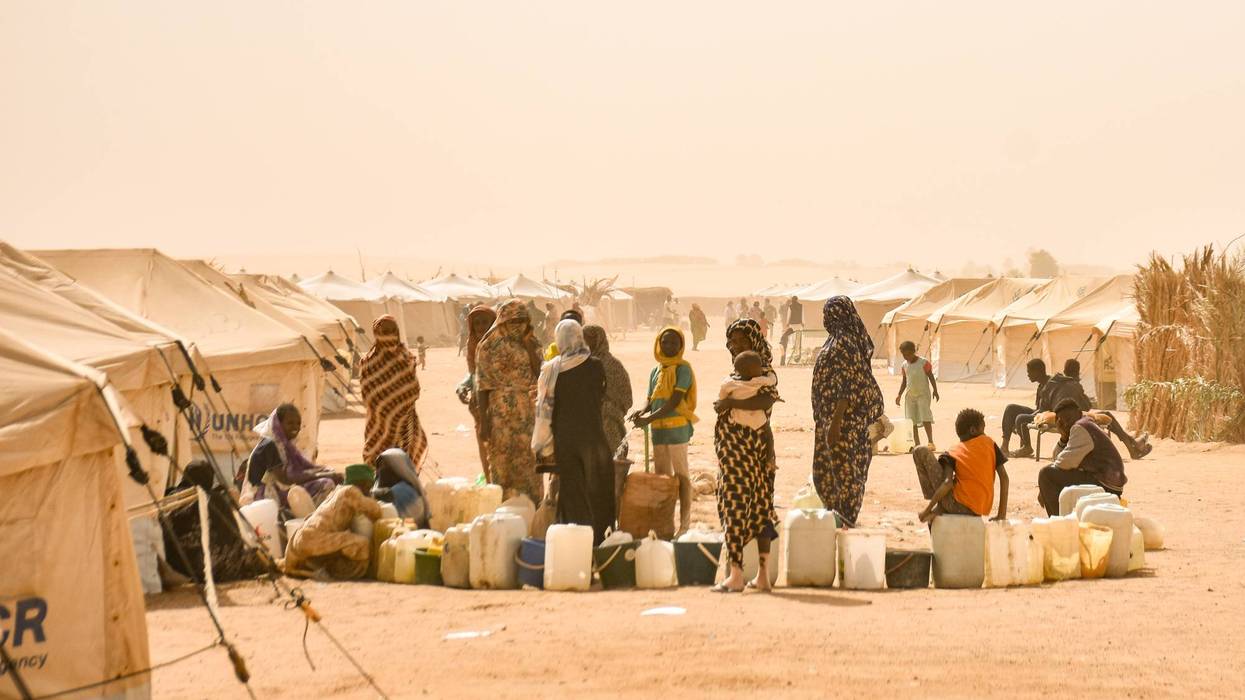
The number of people who were forcibly displaced at the end of last year dropped from 2024 levels, but that change was largely driven by people who were forced to return home, sometimes to precarious conditions.
The number of people forcibly displaced around the world fell last year for the first time in years, dropping by more than 5 million—but with that trend driven in part by countries that have forced refugees to return home, often to precarious or dangerous conditions, advocacy groups warned that the world's refugee and displacement crises are far from being solved.
At the end of last year, 117.8 million people were forcibly displaced around the world, according to data released Thursday by the United Nations High Commissioner for Refugees (UNHCR). That number includes 41.6 million refugees, 9 million asylum-seekers, and 68.7 million internally displaced people.
While the number of displaced people fell from 123.2 million in 2024, the UNHCR emphasized that the change reflected "a sharp increase in the returns of refugees, mostly to Afghanistan, Syria, and Sudan."
"Many of the returns occurred under adverse circumstances and the reintegration conditions remain extremely challenging," said the agency.
Jan Egeland, secretary general of the Norwegian Refugee Council (NRC), said that "in Afghanistan, millions were forcibly returned from neighboring Pakistan and Iran, and in [the Democratic Republic of] Congo some displacement camps were evacuated at gunpoint, sending thousands of families back to homes that no longer exist."
Of 2.9 million Afghans who were no longer considered forcibly displaced last year, most of their returns to their home country were "involuntary in nature due to changes in the policies of host countries."
In the US, the Trump administration last year terminated Temporary Protected Status for Afghan nationals, between 9,500 and 11,700 of whom were legally residing in the US. Hundreds of thousands of Afghans were deported from Iran, Pakistan, and Tajikistan last year.
"The first fall in global displacement in over a decade should be good news. Instead, it reflects misery on a historic scale," said David Milliband, president of the International Rescue Committee. "These numbers tell a story of both forced returns and forced displacement. People are returning to countries mired in crisis, most with no choice, with every route to safety collapsed around them."
The number of refugees who were successfully resettled dropped precipitously last year along with the number of people who were classified as displaced. Just 81,800 people found new homes through resettlement programs or sponsorship pathways, representing a year-on-year drop of more than half.
The top countries that continued to host refugees last year were Colombia, Turkey, and Germany, and more than 70% of refugees came from just six countries: Afghanistan, South Sudan, Sudan, Syria, Ukraine, and Venezuela.
Egeland emphasized that while the number of forcibly displaced people fell last year, "the number of people who have fled their home because of violence and conflict has nearly tripled over the last 15 years."
"The 117.8 million people now violently displaced around the globe would constitute the world’s 13th-largest country by population. Larger than Egypt, Germany, or the UK. A human toll of vast proportions, and a collective failure of humanity," said Egeland.
The numbers released by UNHCR indicated that while millions "continued to be uprooted" last year, "many more endured protracted crises with no solution in sight. The world continues to fail civilians caught by conflict and violence."
UNHCR warned that among those who remain forcibly displaced, 7 in 10 refugees have been exiled from their homes for at least five years with little prospect of ever leaving refugee camps with precarious living conditions.
“For too many refugees, displacement starts as a lifeline but lasts a lifetime," said Barham Salih, the UN high commissioner for refugees. "Humanitarian aid saves lives, but it is not the end point and does not enable refugees to become active agents in control of their futures. We need a paradigm shift that creates a new sense of hope and opportunity for people fleeing war and persecution."
Salih called for a reduction by more than half, over the next decade, in the number of refugees who are reliant on humanitarian assistance and are living in temporary shelters.
"The initiative would expand opportunities for voluntary returns, humanitarian visas, and relocation, while transitioning refugees from aid dependency to self-reliance through access to education, healthcare, financial services, and labor markets," said the UNHCR.
The large numbers of people who have been forced from their homes—and in a rising number of cases, forced to return home under duress—"are almost impossible to comprehend," said Egeland. "And as an increasingly nationalistic world becomes increasingly desensitized to what it truly means to be forced to flee home, the gap between decision makers and donors and displaced people continues to widen. This cannot be accepted as the new normal."
“As humanitarians our work is to support displaced people in their hour of greatest need," he added. “But we cannot do this without a world that is willing to stand up for humanity... We must support diplomatic solutions to end crisis, and fund aid to relieve suffering. We must protect civilians and stand up for international humanitarian law. We must all remember our humanity.”

"The poorest families around the world, far from the center of the crisis, are being hit the hardest."
The United Nations World Food Program on Friday warned that President Donald Trump's illegal war with Iran is pushing millions of people across the world into hunger.
A report published by the WFP on Friday finds that the Iran war, which has resulted in the months-long closure of the Strait of Hormuz, is "generating significant spillovers, particularly through fuel, food price, and income shocks, and trade disruptions."
The impacts of the war are being felt most in some of the world's poorest countries, particularly those that rely on shipments from the Persian Gulf region for essential commodities.
The report projects that 2.3 million more people in Afghanistan will face severe hunger in 2026 due to the impact of the war, along with 2.5 million people in Somalia, and 1.3 million people in Sri Lanka.
"Extensive dependence on energy and food imports and external trade corridors has left the countries we studied exposed to the effects of the crisis," the report states. "In Afghanistan, Sri Lanka, and Somalia, impacts include supply chain disruptions and the pass through of higher global energy prices to domestic prices. Governments’ fiscal space is constrained by reduced revenue from falling import duties and the burden of high public debt."
The report also warns that the conflict is harming WFP's operational capabilities and its inability to provide relief to people suffering from hunger will only grow the longer the war continues.
"WFP estimates it will now serve 1.5 million fewer people that it originally planned to in 2026," the report explains. "If the conflict continues for six months, more than 9 million people could lose assistance, driven by a combination of higher operational costs and rising local food prices, which also increases the cost of cash-based assistance. In the meantime, funding for WFP operations have also decreased."
WFP's analysis also expresses concerns about political instability caused by rising hunger, pointing to the increased number of anti-government demonstrations in recent months as a sign of "increasing popular discontent."
Jean-Martin Bauer, Director of WFP’s Food Security and Nutrition Analysis Service, noted that the current crisis was predicted to happen by WFP months ago, but that its warnings went unheeded.
“Early warnings only matter if the world acts on them,” said Bauer. "We warned that this crisis could push millions more people into hunger; now we are watching it happen in real time. In many cases, the poorest families around the world, far from the center of the crisis, are being hit the hardest."
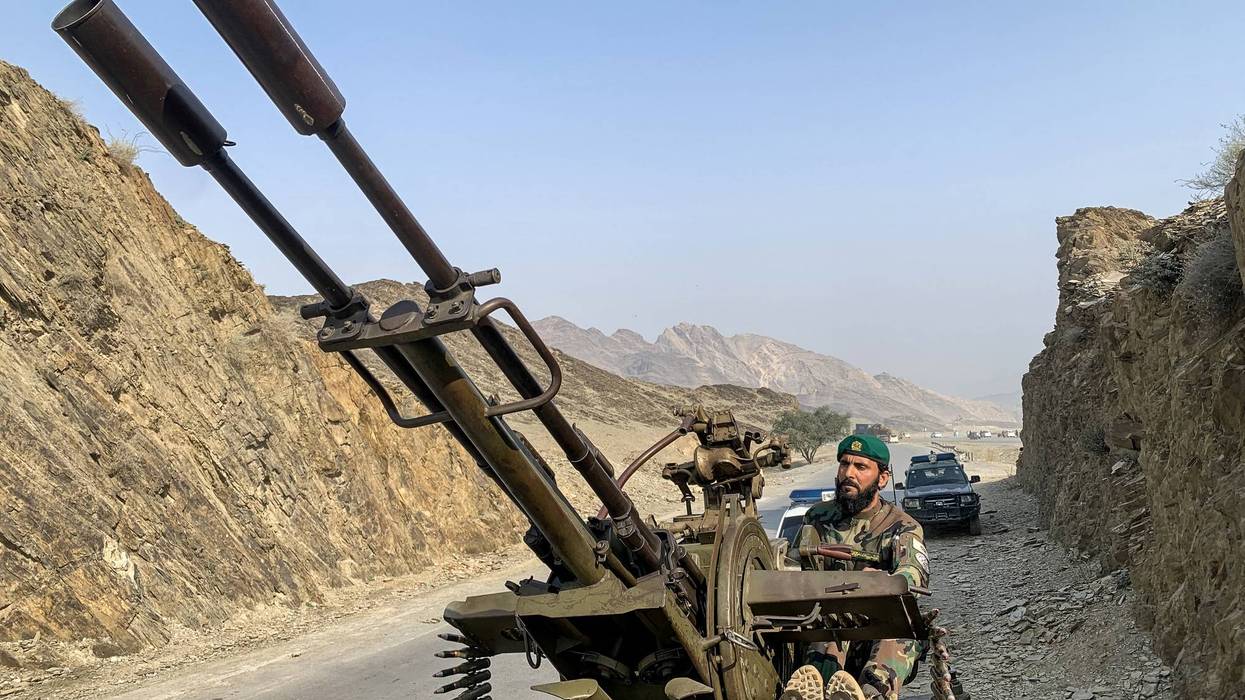
A spokesperson for the head of the United Nations implored both sides to "seek to resolve any differences through diplomacy."
This is a developing story... Please check back for updates...
Pakistan's defense minister said Friday that his country and Afghanistan are in an "open war" after Afghan forces attacked Pakistani border troops in what Kabul characterized as retaliation for recent airstrikes.
Pakistan, which has nuclear weapons, responded to the attack on its border troops with airstrikes on at least three Afghan provinces early Friday, reportedly killing more than 220 people. A spokesperson for Afghanistan's Taliban government said its forces killed dozens of Pakistanis in Thursday's onslaught.
Al Jazeera’s Kamal Hyder, reporting from Pakistan on Friday, said that "we were able to see and hear outgoing fire from the Pakistani side that appears to be heavy artillery, which means that the clashes are still continuing."
Stéphane Dujarric, a spokesperson for United Nations Secretary-General António Guterres, said the UN chief is alarmed by the escalating hostilities and urged the "parties to continue to seek to resolve any differences through diplomacy."
"Exploiting a single incident to cast suspicion on Afghans—people who have already endured decades of displacement and America's forever wars—is both irresponsible and cruel."
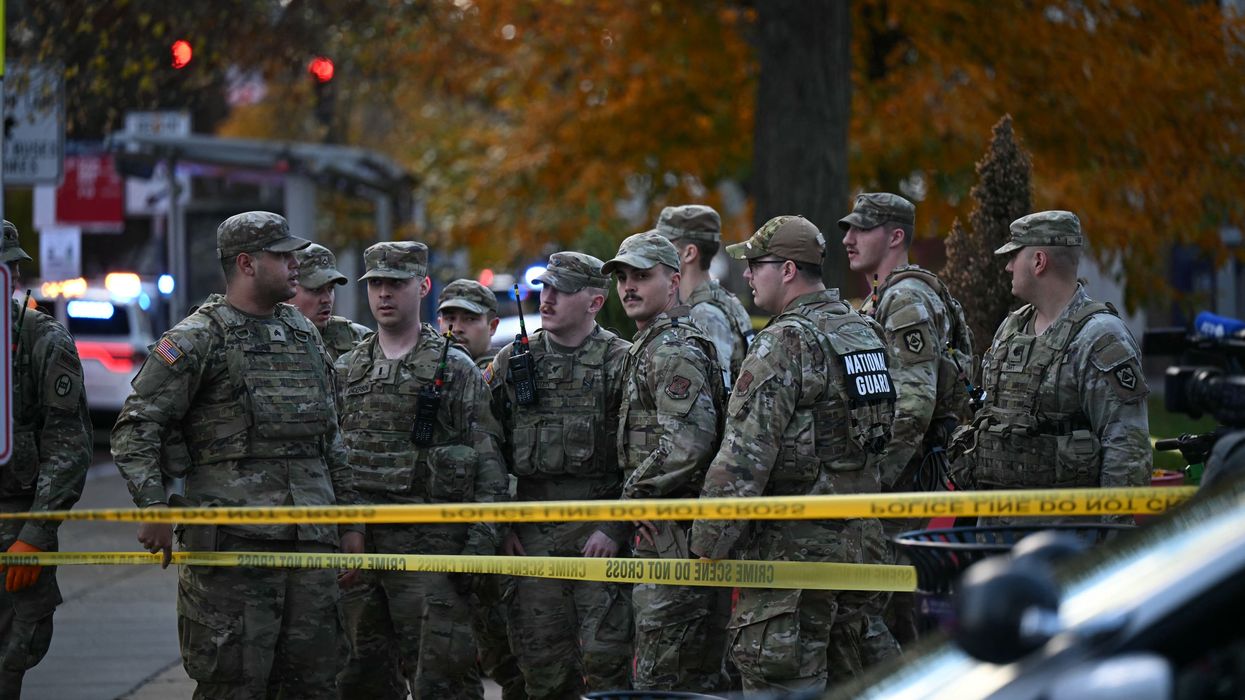
Advocates for refugees in the United States continued to raise alarm Friday after President Donald Trump moved quickly to exploit the murder of one National Guard soldier and the wounding of another—allegedly shot by a national from Afghanistan who worked for the US military and CIA during the war there before seeking asylum in the US—by issuing a sweeping ban against asylum-seekers and halting all immigration from what he termed "all Third World countries" in response to Wednesday's shooting in Washington, DC.
“Regardless of the alleged perpetrator’s nationality, religion or specific legal status," said Matthew Soerens, a vice president with the faith-based World Relief, speaking with the Associated Press, "we urge our country to recognize these evil actions as those of one person, not to unfairly judge others who happen to share those same characteristics.”
Shawn VanDiver, president of the San Diego-based group AfghanEvac, a group that helps resettle Afghans who assisted the US during the war in Afghanistan, explained to the AP that many people in the Afghan refugee community that he knows are terrified by the tone which has been set by Trump after the shooting, afraid to leave their homes for fear of being snatched up by federal agents or otherwise targeted.
“They’re terrified. It’s insane,” VanDiver told AP. “People are acting xenophobic because of one deranged man. He doesn’t represent all Afghans. He represents himself.”
"The perpetrator should face accountability, but the entire Afghan community must not be punished due to the actions of one individual." —Richard Bennett, the UN special rapporteur on the situation of human rights in Afghanistan
On Thursday, it was announced that Specialist Sarah Beckstrom, deployed with the National Guard under orders from Trump, had died from her injuries while Staff Sgt. Andrew Wolfe, 24, remained in critical condition in a local hospital.
While heartbreak and mourning were widely shared for the victims of the shooting, Trump's xenophobic response to the violent assault, including his racist social media posts on Truth Social that critics said echoed white nationalist rhetoric, proved, for many observers, once again his shortcomings as a national leader during times of crisis, but also as a human being.
"The perpetrator should face accountability, but the entire Afghan community must not be punished due to the actions of one individual," said Richard Bennett, the UN special rapporteur on the situation of human rights in Afghanistan, on Thursday. "That would be terribly unjust and complete nonsense. Cool heads must prevail."
Arash Azizzada, co-director of Afghans For A Better Tomorrow, which long-opposed the US war in Afghanistan in the wake of 9/11 and continues to advocate on behalf of the Afghan-American community, condemned Trump for "using this tragedy as a pretext to demonize, criminalize, and target an entire community. Exploiting a single incident to cast suspicion on Afghans—people who have already endured decades of displacement and America's forever wars—is both irresponsible and cruel."
Azizzada also pointed out how the alleged gunman now in police custody, identified as 29-year-old Rahmanullah Lakanwal, "worked alongside US Special Operations forces and served in a CIA-backed covert paramilitary group known as 'Zero Units' that functioned outside the purview of any accountability and has a documented history of widespread human rights abuses against Afghan civilians over two decades."
"We both condemn the violence by one individual on the streets of Washington, DC, as well as the violence perpetrated by the US in Afghanistan and elsewhere," said Azizzada. "America must confront the decades of violence it inflicted on Afghanistan and acknowledge that its forever wars are a major reason why Afghans seek safety here. Blaming refugees for the consequences of those actions is unjust, and we call for the promises to Afghans to be honored, not abandoned."
Journalist Ryan Grim, co-founder of Drop Site News, put it this way: "The idea that we should freeze all migration because one of the CIA’s death squad recruits went on a rampage is absurd. Smarter would be to stop training death squads."
Evacuate Our Allies, a group that advocates on behalf of Afghans who helped the US during the war and now seeking to resettle, expressed deep sympathies for the victims of the shooting and their families and condemned the "reprehensible attack." The group also denounced the "alarming vilification of an entire community based on the actions of a lone individual."
"No community, Afghan or otherwise, should be judged, demonized, or collectively punished for the behavior of one person," the group said. "Such narratives cause real harm, inflame tensions, and overlook the truth: one individual does not represent millions. Collective blame is not only unjust but dangerous. It undermines the immense sacrifices our nation's Afghan allies made, sacrifices that cost many their safety, their homes, their loved ones, and, in too many cases, their lives."
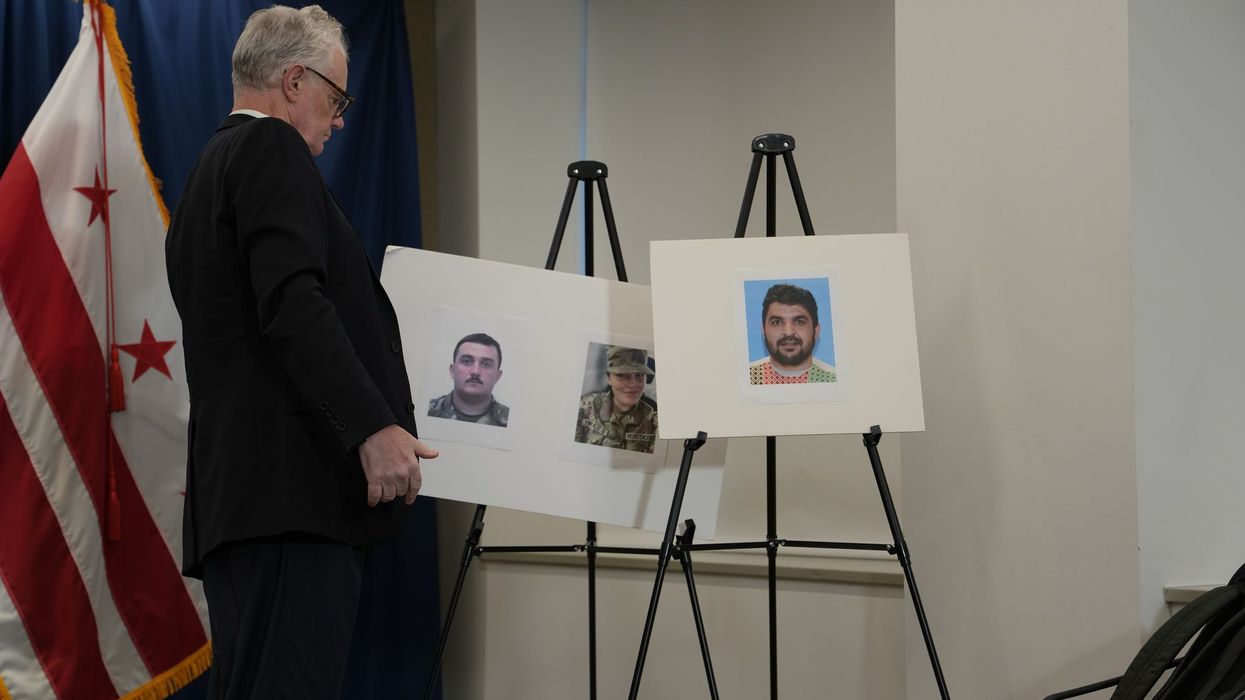
"We have no idea what this man’s motive was at this point, and yet the Trump administration is already moving to paint every Afghan as a threat to this country," said one immigrant rights advocate.
Following Wednesday's shooting of two National Guard troops in Washington, DC, President Donald Trump has responded with a pair of authoritarian measures: flooding the city with hundreds more guard members and pledging a crackdown against Afghan immigrants.
A suspect is in custody after firing at the two guard members outside the White House, which left them in critical condition. The suspect—who was also shot and is now hospitalized—has been identified by law enforcement as 29-year-old Rahmanullah Lakanwal, who relatives say served alongside US troops in Afghanistan during America's two-decade war. According to senior law enforcement agents, the shooting is being investigated as a potential act of terrorism.
Within hours of the shooting, Defense Secretary Pete Hegseth announced that the Trump administration was deploying an additional 500 National Guard troops to DC, adding to the 2,200 that are already present as part of what Trump has claimed is a crackdown on surging crime.
In reality, crime had fallen to record lows in the city for over a year before Trump sent in the troops this past August over the objections of DC officials. This week the president falsely claimed that the city had not had a single homicide since his troop surge began.
In comments to the Guardian, Gary Goodweather, a Democratic candidate in next year's mayoral election and a former US Army captain who served in the National Guard, said Trump's deployment of troops against US citizens made such a backlash inevitable.
"If I’m completely honest, we’ve been expecting this. It hurts me to the core,” he said. “Look around us. These are citizens, they’re residents, they’re human beings. Activating the United States military against people within our own country, within Washington, DC, is the wrong message.”
He added that he feared sending even more troops would just "inflame" tensions further.
David Janovsky, acting director of the Constitution Project at the Project on Government Oversight, described the response as an unnecessary overreach.
"No one should be harmed just for doing their job, and our thoughts are with them and their families," he said of the two guard members. "At the same time, we do not believe that sending even more troops into the city is the solution. By sending more troops in, the administration risks inflaming tensions and undermining civil rights. As more information comes to light about this despicable tragedy, we urge against the administration putting more armed troops on our street corners.”
The new surge of federal troops follows a court ruling issued last week by US District Judge Jia Cobb, who wrote that the Trump administration “exceeded the bounds of their authority” and “acted contrary to law” by deploying the National Guard “for nonmilitary, crime-deterrence missions in the absence of a request from the city’s civil authorities.”
That ruling barred the Trump administration from sending any more troops to DC. However, it is delayed from going into effect until December 11 to give the administration time to appeal.
Thus far, no motive for the attack has been determined. But Trump has already begun to use it to stoke fears about Afghan immigrants.
“We must now reexamine every single alien who has entered our country from Afghanistan under [former President Joe] Biden,” Trump said in an address Wednesday night in which he called the shooting an “act of terror.” The US Citizenship and Immigration Services (USCIS) then announced that "effective immediately, processing of all immigration requests relating to Afghan nationals is stopped indefinitely pending further review of security and vetting protocols.”
Secretary of Homeland Security Kristi Noem claimed via social media that Lakanwal, the alleged shooter, was "mass paroled into the United States under Operation Allies Welcome," the program to allow Afghans who served alongside the US military to seek refuge in the US following the Taliban's return to power in 2021. According to a June 2025 audit by the Office of the Inspector General, around 90,000 "vulnerable" Afghans were admitted to the US under the program.
While Noem said those admitted under the program were "unvetted," this is untrue. As the audit shows, the program assigned several agencies to screen evacuees, check terror watch lists and criminal history, and attempt identity verification. It stated that in cases where it discovered evacuees on terror watch lists, "in each of these cases, we determined that the FBI notified the appropriate external agencies at the time of watch list identification and followed all required internal processes to mitigate any potential threat."
Trump's pledge to reexamine every Afghan who entered the US under Biden came just days after his administration announced that it was freezing the distribution of green cards for over 235,000 refugees for what it said was “detailed screening and vetting,” even though residents who arrive through the refugee process are already among the most heavily vetted immigrants who enter the United States.
Speaking of the alleged DC shooter, Aaron Reichlin-Melnick, a senior fellow at the American Immigration Council, said: "We have no idea what this man’s motive was at this point, and yet the Trump administration is already moving to paint every Afghan as a threat to this country. This comes as the country has dealt with dozens of mass shootings this year alone, carried out by people of varied origins."
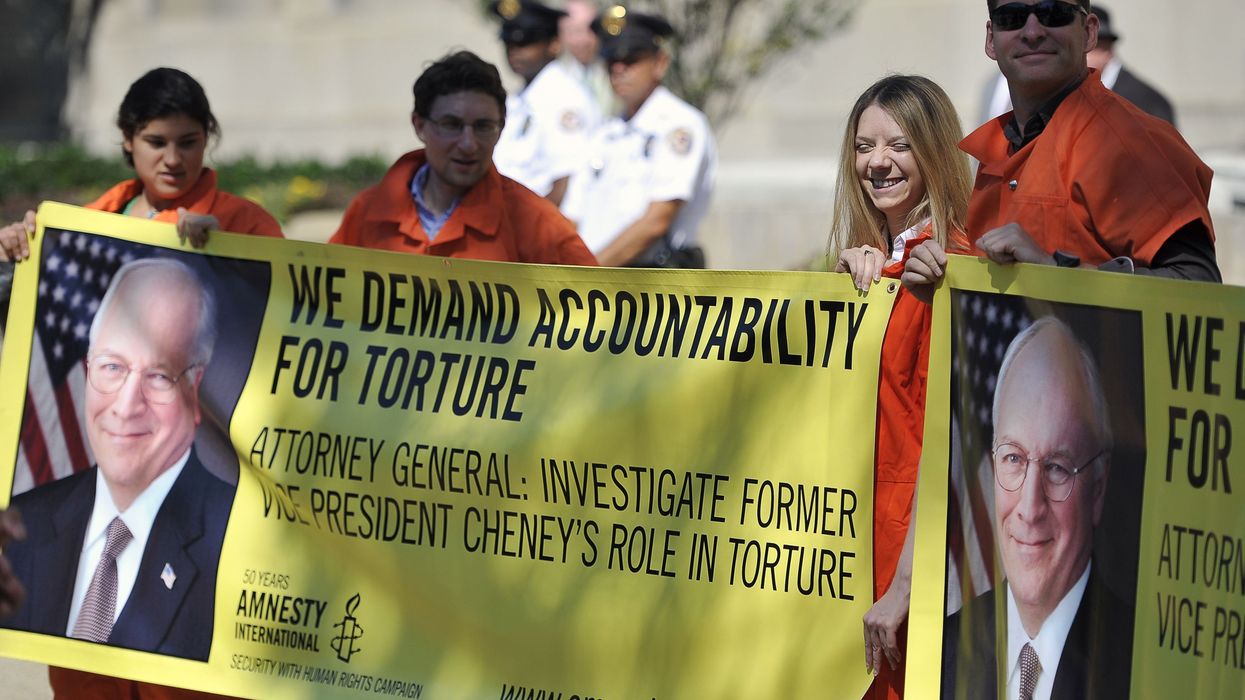
"The only legacy we have to remember," said the Maine candidate for US Senate about the former vice president, "is that he wasted thousands of young American lives, hundreds of thousands of Iraqi lives, and trillions of dollars for absolutely nothing."
Graham Platner, the US combat veteran and oyster farmer running for the Democratic nomination to defeat Republican US Senator Susan Collins of Maine in next year's election, is not interested in mourning the life and legacy of reviled war criminal Dick Cheney, though he does have "some thoughts" on the subject.
While Democratic leaders of the old guard such as Barack Obama and Kamala Harris issued statements Tuesday fawning over Cheney's service to country, contributing to the familiar hagiography that typically follows the demise of even the worst American leaders the nation has inflicted on the world, Platner stuck a distinctly different tone.
"Usually, when a former vice president passes, we all take some time to mourn," Platner says in a video posted to social media Tuesday. "As a veteran of the Iraq war, I’m going to say: No, not this time."
Platner, who served in the US Marines and in the US Army during multiple combat tours in both Iraq and Afghanistan, pushed back against the pattern of whitewashing the misdeeds of the dead, especially for elected leaders never held to account.
"Over the next couple days, I'm sure there are going to be thousands of think pieces about his legacy," said Platner, "but the only legacy we have to remember is that he wasted thousands of young American lives, hundreds of thousands of Iraqi lives, and trillions of dollars for absolutely nothing."
Some thoughts on Dick Cheney and his legacy. pic.twitter.com/vY7S3nu2nt
— Graham Platner for Senate (@grahamformaine) November 4, 2025
"If we take anything" from Cheney's death, continued Platner, "it should be that we need to build a politics that keeps the politicians, like Susan Collins, who support illegal foreign wars like the one in Iraq, accountable and get them out of office."
Platner has spoken at length about his time on the battlefields of Iraq and Afghanistan and how, after multiple tours, he became not only disillusioned with the wars but also incredibly angry over the foreign policy decisions that started them.
Cheney, who served as VP under former President George W. Bush, has long been seen as the chief architect and driving force behind the effort to manipulate the US public into backing the invasion of Iraq in the wake of the 9/11 attacks, despite Iraq having nothing to do with the plot.
Cheney infamously said after 9/11 it would be time to "take off the gloves," which resulted in a torture regime operated by the CIA and war crimes across the Middle East, Afghanistan, Pakistan, and beyond at the direction of the Bush administration.
Bob Brigham, a self-identified progressive from Montana, was among those who applauded Platner for his statement.
"Dick Cheney was a war criminal who cost my buddy his life in Iraq," said Brigham in a social media post. "Platner has a pitch-perfect remembrance of the a-hole. May Dick Cheney roast in hell!"
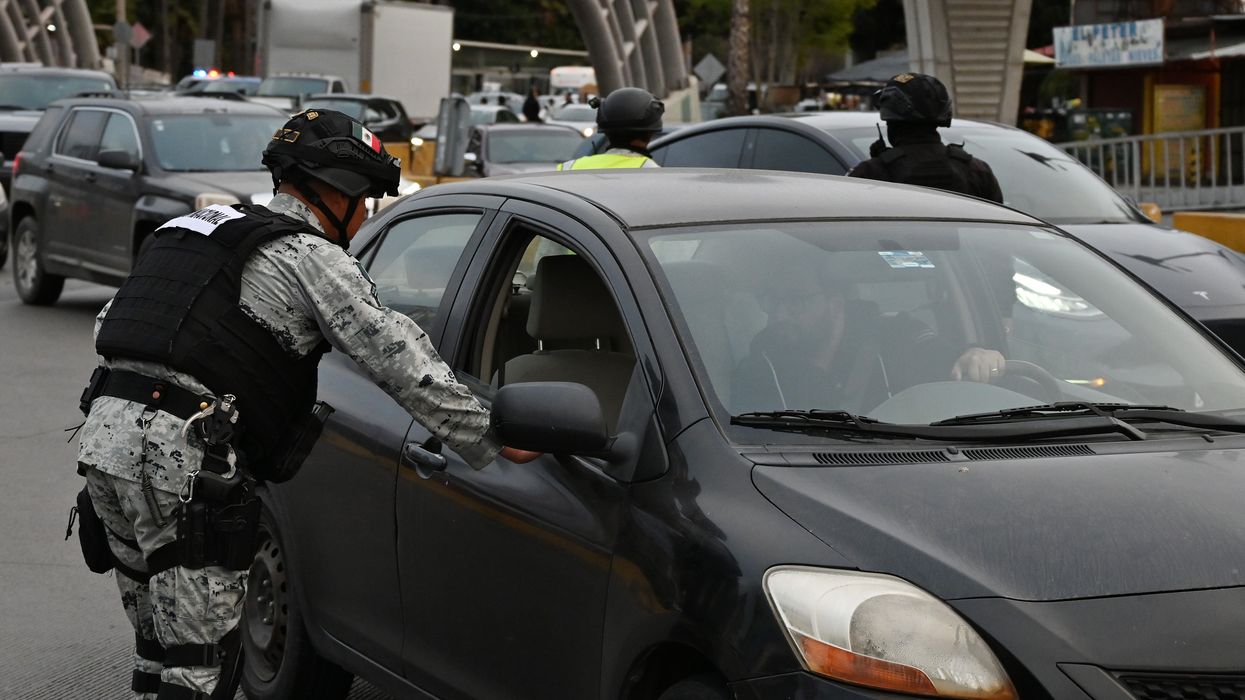
The Trump administration may present this as some magic solution that will win the drug war once and for all, but the reality is bullets and bombs have been lobbed at the narco traffickers repeatedly to little positive effect.
In 2020, during the last year of the Trump administration’s first term, U.S. President Donald Trump asked then-Defense Secretary Mark Esper a shocking question: Why can’t the United States just attack the Mexican cartels and their infrastructure with a volley of missiles?
Esper recounted the moment in his memoir, using the anecdote to illustrate just how reckless Trump was becoming as his term drew to a close. Those missiles, of course, were never launched, so the entire interaction amounted to nothing in terms of policy.
Yet five years later, Trump still views the Mexican cartels as one of Washington’s principal national security threats. His urge to take offensive action inside Mexico has only grown with time. Unlike in Trump’s first term, using the U.S. military to combat these criminal organizations is now a mainstream policy option in Trump’s Republican Party. According to The New York Times, Trump has signed a presidential directive allowing the Pentagon to begin using military force against specific cartels in Latin America, and U.S. military officials are now in the process of studying various ways to go about implementing the order.
While this may come as a shock to some foreign policy commentators, it shouldn’t. Trump, Vice President JD Vance, Defense Secretary Pete Hegseth, U.S. Ambassador to the United Nations (and short-lived national security adviser) Mike Waltz, and U.S. Ambassador to Mexico Ron Johnson have all left the door open to military force, whether it takes the form of striking fentanyl-production facilities by air or deploying U.S. special operations forces to take out top cartel leaders on Mexican soil.
Effectively declaring war on Mexico, America’s top trading partner and neighbor with which we share a nearly 2,000 mile-long border, presents the illusion of progress without actually making any.
The Trump administration wasted no time going down this road. The Central Intelligence Agency is engaging in more surveillance flights along the U.S.-Mexico border, and inside Mexican airspace, to gather information on key cartel locations. The U.S. national security bureaucracy was already in preliminary discussions about the possible use of drone strikes against the cartels as well. And on February 20, the U.S. State Department designated six Mexican cartels as foreign terrorist organizations, which is designed to deter Americans from working with the cartels and lay the foundation for future strikes.
This is all good politics for Trump, who recognizes implicitly that getting tough on Mexico economically and politically is red meat for his base. But politics isn’t nearly as important as policy, and the policy implications of U.S. military operations in Mexico—even if the purpose is a noble one—is riddled with costs and make managing the problems the Trump administration ostensibly cares about even harder.
First, we should remember one thing right off the bat: Using the military to tackle cartels is not a new phenomenon. The Trump administration may present this as some magic solution that will win the drug war once and for all, but the reality is bullets and bombs have been lobbed at the narco traffickers repeatedly to little positive effect. Successive Mexican governments since the turn of the century, from the conservative Felipe Calderón to the leftist Andres Manuel López Obrador (AMLO), have relied on the military under the presumption this was the best way the Mexican state could pressure criminal organizations into extinction.
Calderón, for instance, declared a full-blown war on the cartels immediately after his election in 2006, deploying tens of thousands of Mexican troops into some of the country’s most violent states. Despite lambasting the military-first strategy during his own presidential campaign, Enrique Peña Nieto largely continued Calderón’s strategy with a special emphasis on targeting so-called “kingpins” of the narco-trafficking world. When AMLO entered office in 2018, he tried to get the Mexican army back into the barracks but wound up expanding their authority and rushing Mexican soldiers into hot spots, like Culiacan, whenever large-scale violence broke out.
The result was a bloodbath. Rather than submit to the state’s diktats, the cartels fought the Mexican state with ever greater levels of force. Politicians, police officers, and soldiers were all targeted and killed with greater frequency. Areas of Mexico previously insulated from cartel violence were suddenly drawn into the maelstrom. Although senior narco traffickers were killed and captured in the process, Mexico’s cartel landscape was shattered into a million different pieces; as my colleague Christopher McCallion and I wrote in July, the demise of the cartel’s senior leadership merely opened up these organizations to extreme bouts of infighting between replacements who sought to grab the crown.
The end product was a massive uptick in Mexico’s homicide rate, which is now three times greater than it was before Calderón declared war almost two decades ago.
Of course, the Trump administration is unlikely to mimic the Mexican government’s past strategy entirely. It’s hard to envision tens of thousands of U.S. troops deploying to Tamaulipas, Guanajuato, or Sinaloa, sealing off neighborhoods, establishing checkpoints, and conducting offensive operations against cartels that in some instances have more firepower than the Mexican army. If Washington is going to do anything militarily, it’s more likely to come in the form of air power. Bombing fentanyl manufacturing plants would be more economical and wouldn’t involve U.S. ground forces, so the risk to U.S. personnel would be much lower.
Still, if the objective is to bomb the cartels into submission or convince them to stop producing and shipping drugs across America’s southern border, then an air campaign will fall flat. We can say this with a reasonable degree of certainty because there’s first-hand experience to go by. The U.S. Air Force did something similar in Afghanistan in 2017-2018, taking out opium labs in Taliban-controlled areas to deprive the Taliban insurgency of the revenue it needed to wage the war.
But as the Special Inspector General of Afghanistan Reconstruction reported, the bombing campaign failed to do anything of significance. The U.S. air campaign didn’t dent the Taliban’s revenue streams to the point where it made a negotiated resolution on U.S. terms possible. As David Mansfield, the world’s leading expert on Afghanistan’s drug patterns, wrote in a 2019 report, “It is hard to see how the campaign offered anything in terms of value for money, with the cost of the strikes and ordnance used far outweighing the value of the losses to those involved in drugs production or potential revenues to the Taliban.”
Why would Mexico be any different than Afghanistan? If anything, denting cartel revenue via an air campaign would be even more difficult than it was with respect to the Taliban. Unlike heroin, fentanyl is a synthetic drug that can be easily produced, isn’t particularly labor intensive, and doesn’t require acres upon acres of poppy fields that can be easily located. Sure, the United States is bound to find some of these facilities, but the cartels responsible for production will still have a monetary incentive to set up shop somewhere else. Fentanyl nets the cartels billions of dollars every year; this is a very large financial resource that the Sinaloa and New Jalisco Generation cartels—or frankly anyone in the business—will be hard pressed to pass up.
And if even if they magically did find a new line of work, other players would step into the void to increase their own market share.
These are only several problems associated with treating the U.S. military as a panacea to the drug problem. But the important thing to take away is that effectively declaring war on Mexico, America’s top trading partner and neighbor with which we share a nearly 2,000 mile-long border, presents the illusion of progress without actually making any. And it will inject immense tension in a U.S.-Mexican relationship that Washington should be strengthening, not undermining.
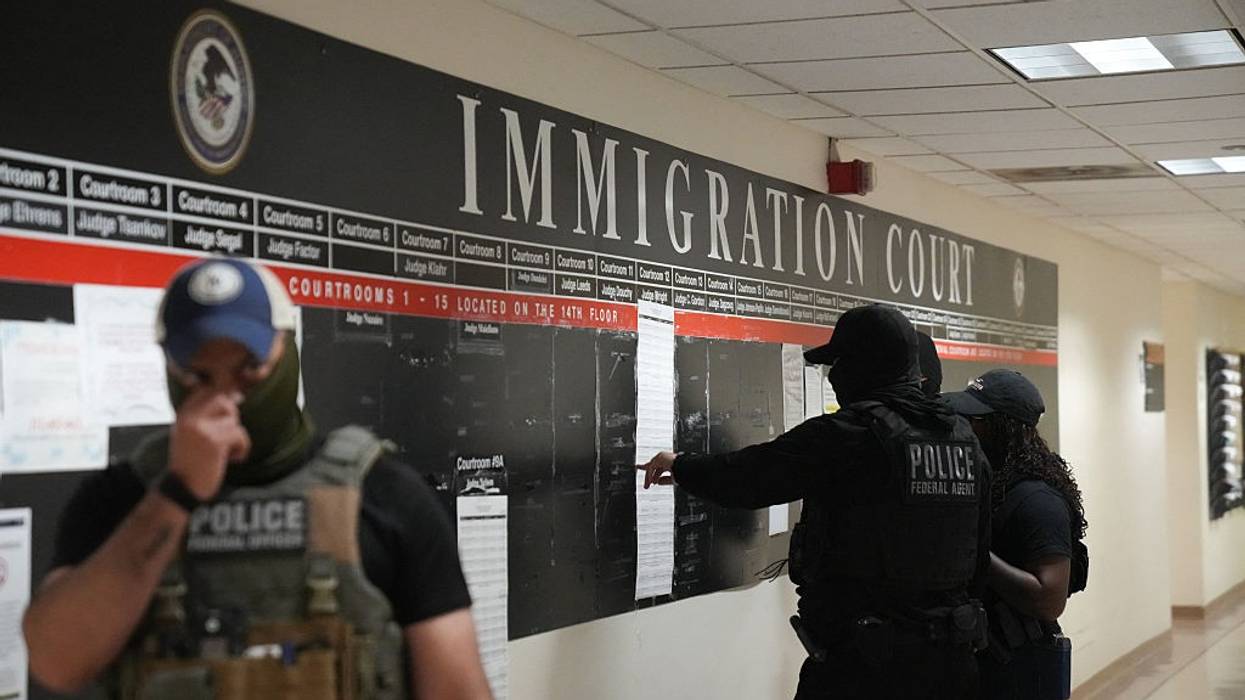
"This isn't political. This is personal," said one veteran. "For many of us, these are people that we served with."
Hundreds of U.S. military veterans have signed up to accompany Afghans who took part in the American-led invasion and occupation of their homeland to their asylum court hearings, where they face possible arrest and deportation by the Trump administration, despite having entered the United States legally and the risk of deadly Taliban retribution against them and their families should they be forced back to Afghanistan.
#AfghanEvac and Iraq and Afghanistan Veterans of America (IAVA) said Tuesday that over 220 veterans have volunteered for Battle Buddies, "an initiative to support our wartime allies as they go through their immigration processes—because no one who stood with us in war should have to stand alone in court."
"Afghan wartime allies were promised a pathway to immigration to the United States based on their service to our mission over the course of our longest war," Battle Buddies said on their website. "They came through legal channels. They showed up to court as required. And now they are being targeted, arrested, and detained by ICE—with no warning, no due process, and no justification."
"That's not just wrong—it's un-American," the groups argued. "Battle Buddies brings veterans, advocates, and everyday Americans to courtroom doors—standing quietly, legally, and deliberately to witness and affirm that our promises still stand."
Speaking at a Monday press conference, IAVA CEO Kyleanne Hunter said: "This isn't political. This is personal. For many of us, these are people that we served with."
Battle Buddies was launched after the June 12 arrest by Immigration and Customs Enforcement (ICE) agents of former Afghan interpreter and logistics contractor Sayed Naser Noori at a San Diego courthouse following a routine asylum hearing. When U.S. forces withdrew from Afghanistan in 2021, Naser went into hiding in his home country while awaiting the issuance of a special U.S. visa for Afghans who helped the American military.
After the Taliban murdered one of his brothers in 2023 for collaborating with the occupation, Naser applied for U.S. asylum and was granted humanitarian parole to enter the United States while his asylum case was processed. But he was arrested anyway under the Trump administration's mass deportation effort after a judge dismissed his asylum case. The administration then fast-tracked his deportation.
An Afghan ally who served alongside U.S. forces was legally paroled into the U.S. and showed up for his first hearing.DHS detained him anyway—using a vague “improvidently issued” excuse.He followed the rules.We have the video.This must stop.#AfghanEvac #DueProcess
[image or embed]
— afghanevac.bsky.social (@afghanevac.bsky.social) June 13, 2025 at 3:06 PM
As Military.com reported Monday, Naser's last hope is a so-called "credible fear" interview, which he has requested. Although immigration officials have acknowledged his right to such a hearing—without which he cannot be legally deported—one has noto yet been scheduled.
"To the American government: I believed in you. I worked with you. I helped you for years, side by side. I trusted your words and followed your rules," Naser said in a statement read at Monday's news conference. "You say that people like me should come legally. I did. And now I am locked away."
"To President Trump, I love America, and I was building a life here," Naser's statement continued. "I had a car. I had a bank account. I had a job. Who will take care of all that now that I'm in detention? Instead of locking us away with no warning, why not offer us a shelter or some support?"
"There are better ways than treating people like criminals," he added, "especially those who stood with you during war."
"You say that people like me should come legally. I did. And now I am locked away."
The Department of Homeland Security (DHS) falsely claimed last month that "there is *no* record to show that [Naser] assisted the U.S. government in any capacity."
Speaking at Monday's news conference, #AfghanEvac founder Shawn VanDiver said that DHS is "full of shit."
VanDiver noted that DHS "has said Sayed was not vetted, DHS has said that there's no evidence that Sayed served alongside our country."
"Both of those things are lies—knowable lies," he added. "They know that they're not telling the truth."
Indeed, media outlets including Military.com and San Diego's KPBS reported that they have verified that Naser and his brothers worked with the U.S. military during the occupation.
While Naser is the first publicly known Afghan collaborator to be arrested while following procedure at a courthouse, he is far from the only one facing removal from the U.S. under the Trump administration's draconian deportation drive. Thousands of Afghans who fled the Taliban reconquest of their homeland now fear they will be forcibly returned to Afghanistan, where at least hundreds of people who served as soldiers, government officials, police, contractors, or other collaborators have been killed by the Taliban, according to United Nations officials and human rights groups.
The situation worsened after the Trump administration in May revoked temporary protected status (TPS) for more than 8,000 Afghans and then designated Afghanistan as one of the countries subject to a new travel ban.
Shir Agha Safi, executive director of Afghan Partners in Iowa, a Des Moines-based nonprofit, recently told The Guardian that some Afghans facing deportation "would choose suicide over being tortured and killed by the Taliban."
"They have said this because the Taliban is still there and if you send an Afghan back to Afghanistan that would mean a death penalty," Safi added.
"This decision endangers thousands of lives, including Afghans who stood by the United States."
However, ignoring the many Afghan collaborators killed by the Taliban, U.S. Homeland Security Secretary Kristi Noem claimed in a recent statement that "Afghanistan has had an improved security situation, and its stabilizing economy no longer prevent[s] them from returning to their home country."
The termination of TPS for Afghans prompted bipartisan rebuke, with U.S. Sens. Lisa Murkowski (R-Alaska) and Jeanne Shaheen (D-N.H.) appealing last month to Noem and Secretary of State Marco Rubio.
"This decision endangers thousands of lives, including Afghans who stood by the United States," the senators wrote. "This decision represents a historic betrayal of promises made and undermines the values we fought for far more than 20 years in Afghanistan."
Murkowski and Shaheen warned that cutting off TPS status for Afghans "exposes these individuals to the very real threat of persecution, violence, and even death under Taliban rule."