SUBSCRIBE TO OUR FREE NEWSLETTER
Daily news & progressive opinion—funded by the people, not the corporations—delivered straight to your inbox.
5
#000000
#FFFFFF
To donate by check, phone, or other method, see our More Ways to Give page.


Daily news & progressive opinion—funded by the people, not the corporations—delivered straight to your inbox.
The end of the legal saga for the Wikileaks' founder should not be seen as the end. It should be seen as a warning.
CD editor's note: The original Swedish language version of this op-ed first appeared in Sweden's Dagens Nyheter newspaper and this English translation is provided by the author.
After fifteen years, it appears that the Julian Assange case has reached a conclusion. But, as with almost everything to do with Assange, that conclusion may end up creating more problems than it solves, and raising more questions than it answers.
This was man who, on the back of material leaked by whistleblower Chelsea Manning, and by leveraging the possibilities presented by rapidly-evolving digital technologies, challenged the might of the U.S. military and the authority of the U.S. government. And, he did so through an innovative collaboration between WikiLeaks and major European and U.S. news outlets that for a brief period suggested the possibility of a new model for whistleblowing, data-gathering, and journalism.
The conclusion to the Assange case sends a clear and chilling message to journalists around the world... that you challenge U.S. power at your own peril.
WikiLeaks released the Collateral Murder video, showing a U.S. attack helicopter killing people in Baghdad, including two Reuters journalists. Some of those killed were blown to pieces as they lay injured on the ground. U.S. politicians and commentators, Democrats and Republicans alike, saw Assange and WikiLeaks as the enemy and as people who should, at best, be tried for espionage or treason or, at worst, assassinated. In 2010, none other than Donald Trump said there should be the “death penalty” for what WikiLeaks had done.
Then, the tide turned. In multiple directions. Because, after all, this was Assange.
The allegations of sexual assault made in Sweden in 2010 marked the start of a period where the support Assange and WikiLeaks had developed among some progressives rapidly began to fade. No charges were ever leveled against Assange for sexual assault or rape, but the fallout from the incident was stark. Assange called Sweden “the Saudi Arabia of feminism,” and his followers smeared his accusers as being lying tools of the U.S. government who had set Assange up. The misogyny was obvious and aggressive.
Assange sought asylum in the Ecuadorian embassy in London, and the Ecuadorian embassy years saw WikiLeaks rapidly disintegrate into a farcical side-show, marked by an increasingly close relationship between the Trump administration, a clear opposition to Hillary Clinton, the amplification of right-wing conspiracy theories and potentially dangerous acts such as linking to unredacted emails revealing private information about female voters in Turkey.
Assange, once considered by many to be a symbol of transparency, anti-Americanism and anti-militarism was now seen as doing the bidding of elites on the U.S. political right. He was hailed by right-wing politicians and commentators such as Tucker Carlson. In 2016, Trump, who just six years earlier said Assange and Manning should be put to death, now said, “I love WikiLeaks.”
The WikiLeaks account on Twitter became a steady mix of opinion, hyperbole, half-truths, and disinformation. The lifeblood of organizations that work with whistleblowers is a combination of trust, competence, and solidity. But, just the few short years after the leak of material from Chelsea Manning that shook the U.S. establishment and led to thousands of news articles across the globe, it was impossible to imagine any serious whistleblower deciding to work with WikiLeaks.
So, when Assange faced extradition to the U.S. to stand trial for his role in obtaining and publishing the material from Chelsea Manning, many shrugged their shoulders. The Assange/WikiLeaks image had been permanently tarnished. If he wasn’t guilty of espionage, the reasoning went, then the sexual assault allegations, the suggested support for Trump and the disintegration of WikiLeaks into amplifying right-wing conspiracy theories clearly made him unworthy of sympathy or attention.
And yet.
All of the distaste for Assange the person, and for what WikiLeaks had become in the years after the Manning leaks, overshadowed a fundamental yet powerful truth. The Assange case was, and is, absolutely fundamental to the working of critical investigative journalism in the U.S. and globally. Whatever dislike one may have for Assange or WikiLeaks, the fact remains that his pleading guilty to one felony count of "conspiring to unlawfully obtain and disseminate classified information relating to the national defense of the U.S." might enable Assange to leave prison, but is nevertheless a victory for the United States government and military, and a loss for freedom of information and the critical examination of power.
The conclusion to the Assange case sends a clear and chilling message to journalists around the world—Assange isn’t American, remember—that you challenge U.S. power at your own peril. This, in turn, sends a message to citizens that they are not worthy of knowing what the state does in their name. Which is pretty ironic, given that democracy is supposed to be about the rule of the people.
So, the end of the Assange case has given us one final twist, namely that the end is not the end.
It’s a warning.
"We thank all who stood by us, fought for us, and remained utterly committed in the fight for his freedom," said WikiLeaks. "Julian's freedom is our freedom."
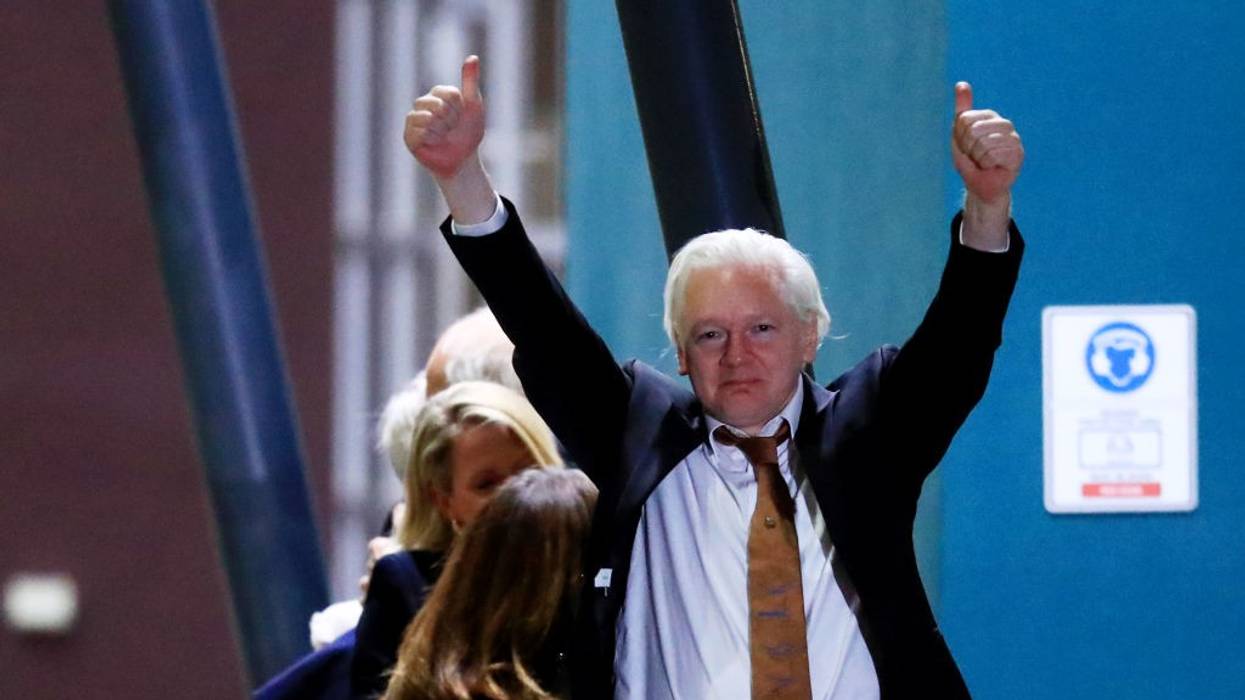
WikiLeaks founder Julian Assange on Monday reached a deal with the U.S. government, agreeing to plead guilty to one felony related to the disclosure of national security information in exchange for his release from Belmarsh Prison in the United Kingdom.
A related document was filed in federal court in the Northern Mariana Islands, a U.S. commonwealth. Under the plea agreement, which must still be approved by a judge, the Department of Justice (DOJ) will seek a 62-month sentence, equal to the time that the 52-year-old Australian has served in the U.K. prison while battling his extradition to the United States.
Assange faced the risk of spending the rest of his life in U.S. prison if convicted of Espionage Act and Computer Fraud and Abuse Act charges for publishing classified material including the "Collateral Murder" video and the Afghan and Iraq war logs. Before Belmarsh, he spent seven years in the Ecuadorian Embassy in London with asylum protections.
"Julian Assange is free," WikiLeaks declared on the social media platform X, confirming that he left Belmarsh Monday "after having spent 1,901 days there," locked in a small cell for 23 hours a day.
"He was granted bail by the High Court in London and was released at Stanstead Airport during the afternoon, where he boarded a plane and departed the U.K.," WikiLeaks said. "This is the result of a global campaign that spanned grassroots organizers, press freedom campaigners, legislators, and leaders from across the political spectrum, all the way to the United Nations."
"He will soon reunite with his wife Stella Assange, and their children, who have only known their father from behind bars," the group continued. "WikiLeaks published groundbreaking stories of government corruption and human rights abuses, holding the powerful accountable for their actions. As editor-in-chief, Julian paid severely for these principles, and for the people's right to know. As he returns to Australia, we thank all who stood by us, fought for us, and remained utterly committed in the fight for his freedom. Julian's freedom is our freedom."
The news of Assange's release was celebrated by people around the world, who also blasted the U.S. for continuing to pursue charges against him and the U.K. for going along with it.
"Takeaway from the 12 years of Assange persecution: We need a world where independent journalists work in freedom and top war criminals go to prison—not the other way around," the progressive advocacy group and longtime Assange supporter RootsAction said on social media.
Seth Stern, advocacy director at the Freedom of the Press Foundation, said that "it's good news that the DOJ is putting an end to this embarrassing saga. But it's alarming that the Biden administration felt the need to extract a guilty plea for the purported crime of obtaining and publishing government secrets."
"That's what investigative journalists do every day," Stern noted. "The plea deal won't have the precedential effect of a court ruling, but it will still hang over the heads of national security reporters for years to come. The deal doesn't add any more prison time or punishment for Assange. It's purely symbolic."
"The administration could've easily just dropped the case but chose to instead legitimize the criminalization of routine journalistic conduct and encourage future administrations to follow suit," he added. "And they made that choice knowing that [former U.S. President] Donald Trump would love nothing more than to find a way to throw journalists in jail."
Leftist Colombian President Gustavo Petro said in a statement: "I congratulate Julian Assange on his freedom. Assange's eternal imprisonment and torture was an attack on press freedom on a global scale. Denouncing the massacre of civilians in Iraq by the U.S. war machine was his 'crime'; now the massacre is repeated in Gaza I invite Julian and his wife Stella to visit Colombia and let's take action for true freedom."
Australian Greens leader Adam Bandt, who represents Melbourne in Parliament, said on social media that "Julian Assange will finally be free. While great news, this has been over a decade of his life wasted by U.S. overreach."
"Journalism is not a crime," Bandt added. "Pursuing Assange was anti-democratic, anti-press freedom, and the charges should have been dropped."
After more than five years in the maximum-security Belmarsh Prison in the UK, WikiLeaks founder Julian Assange reached a plea deal with the U.S. government. The deal allows for his release and return to his home country of Australia after a formal sentencing at a US court in the… pic.twitter.com/5S3xdbZnG2
— CODEPINK (@codepink) June 25, 2024
The women-led peace group CodePink said in a statement:
Without Julian Assange's critical journalism, the world would know a lot less about war crimes committed by the United States and its allies. He is the reason so many anti-war organizations like ours have the proof we need to fight the war machine in the belly of the beast. CodePink celebrates Julian's release and commends his brave journalism.
One of the most horrific videos published by WikiLeaks was called "Collateral Murder," footage of the U.S. military opening fire on a group of unarmed civilians—including Reuters journalists—in Baghdad. While Julian has been in captivity for the past 14 years, the war criminals that destroyed Iraq walked free. Many are still in government positions today or living off the profits of weapons contracts.
While Julian pleads guilty to espionage—we uphold him as a giant of journalistic integrity.
Vahid Razavi, founder of Ethics in Tech and host of multiple NSA Comedy Nights focusing on government mass surveillance, told Common Dreams that "they took a hero and turned him into a criminal."
"Meanwhile, all of the war criminals in the files exposed by WikiLeaks via Chelsea Manning are free and never faced any punishment or even their day in court," he added. "You can kill journalists with impunity, just like Israel is doing right now in Gaza."
Former United Nations human rights official Craig Mokhiber, who
resigned from his job last year over the world body's refusal to prevent Israel's slaughter of Palestinian civilians in Gaza, said on social media that "political prisoner Julian Assange, persecuted for years for the crime of journalism, simply for telling the truth about U.S. war crimes, is free."
Mokhiber hailed what he called "a moment of light in an age of darkness."
British journalist Afshin Rattansi said, "Let no one think that any of us will ever forget what the British state did to the most famous journalist of his generation."
"They tortured him—according to the United Nations special rapporteur on torture—at the behest of the United States," Rattansi noted.
Andrew Kennis, a professor of journalism and social media at Rutgers University, told Common Dreams that "Julian Assange is nothing less than the Daniel Ellsberg of our time."
"His journalism revealed more war crimes by the U.S. than any other publisher in the world, and far more extensively than what Ellsberg was able to pull off with a photocopy machine," he added. "But as opposed to receiving a deserved pardon... the persecution of Assange has been indicative of the guiding principle of U.S. foreign policy these days: Prosecute the whistleblowers exposing war crimes while funding Israeli war criminals in an ongoing attempt at genocide against occupied Palestine."
"How is it acceptable that perpetrators of the illegal invasion of Iraq are the ones who get to decide if the man who exposed their crimes is a journalist?" asked Abby Martin.
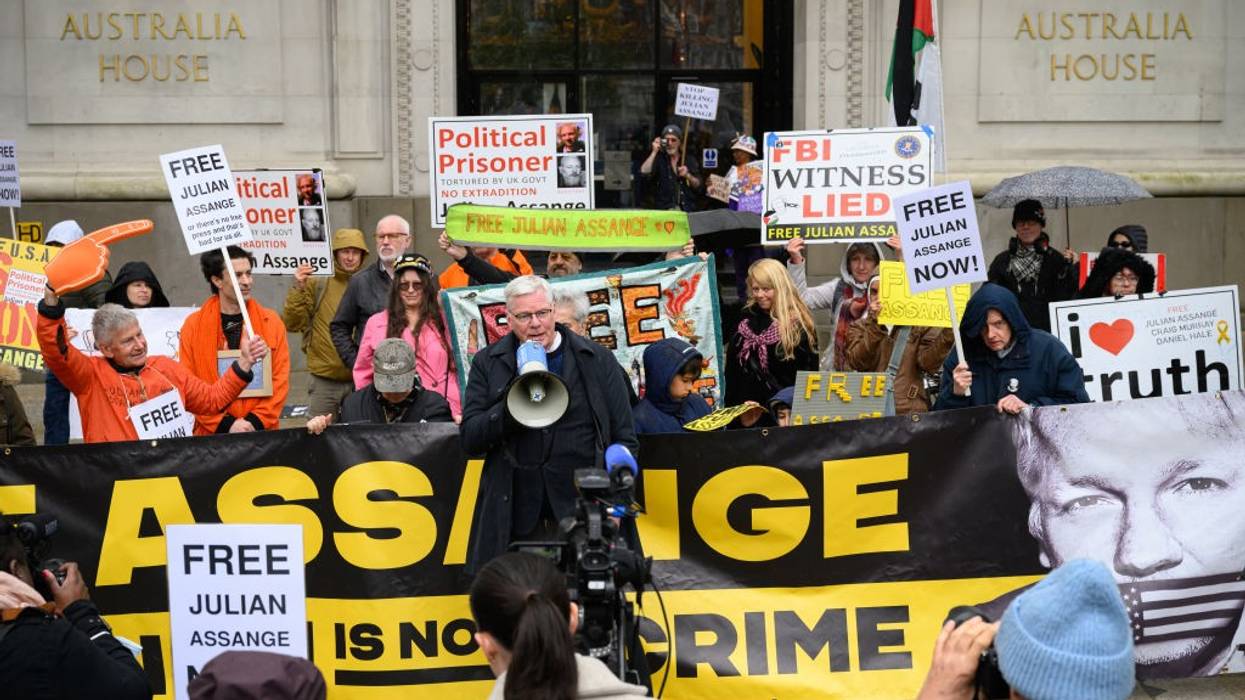
Seeking to pressure the Biden administration into dropping charges against jailed Australian WikiLeaks publisher Julian Assange, human rights and press freedom defenders gathered in Washington, D.C. over the weekend for the second U.S. session of the Belmarsh Tribunal.
The tribunal—organized by Progressive International in partnership with the Wau Holland Foundation—was held Saturday at the National Press Club, where Assange first premiered "Collateral Murder," a video showing a U.S. Army helicopter crew killing a group of Iraqi civilians and then laughing about it.
"As long as the Espionage Act is deployed to imprison those who expose war crimes, no publisher and no journalist will be safe. It is time to free the truth."
The Belmarsh Tribunal was first convened in London in 2021. The event is inspired by the Russell Tribunal, a 1966 event organized by philosophers Bertrand Russell and Jean-Paul Sartre to hold the U.S. accountable for its escalating war crimes in Vietnam.
Saturday's gathering was co-hosted by Democracy Now! host Amy Goodman and The Intercept D.C. bureau chief Ryan Grim.
"Believe it or not, there are only two persons in the world who have been punished for the war crimes that were revealed by WikiLeaks: Chelsea Manning and Julian Assange," Grim told attendees.
Srećko Horvat, the Croatian author, philosopher, and activist who co-founded the Belmarsh Tribunal,
said that "the pressure is mounting on the Biden administration to free Julian Assange."
"More than one man's life is at stake, but the First Amendment and freedom of the press itself," he added. "As long as the Espionage Act is deployed to imprison those who expose war crimes, no publisher and no journalist will be safe. It is time to free the truth."
Rebecca Vincent, director of campaigns at Reporters Without Borders, warned that "if the U.S. government succeeds to extradite Julian Assange to this country, he will become the first publisher imprisoned under the Espionage Act—but he will not be the last."
According to Progressive International:
U.S. congresspeople from both parties are lobbying U.S. Attorney General Merrick Garland, Secretary of State Antony Blinken, and President Joe Biden to stop pursuing Assange under the Espionage Act. At the same time, Australian members of Parliament are making a major bipartisan push to demand the U.S. Justice Department end its legal campaign against Australian national Assange.
Assange—who suffers from physical and mental health problems including heart and respiratory issues—published classified materials, many of them provided by Manning, exposing U.S. and allied nations' war crimes, including the Afghan War Diary, the Iraq War Logs, and "Collateral Murder."
Since Assange's apprehension 13 years ago in London, he has been confined for seven years in the Ecuadorean Embassy while he was protected by the administration of former Ecuadorean President Rafael Correa, and jailed in the U.K. capital's maximum-security Belmarsh Prison. He's currently being held on remand in the notorious lockup pending extradition to the United States after the U.K. High Court rejected his final appeal earlier this year.
If fully convicted, Assange—who is 52 years old and is married with two children—could be sentenced to up to 175 years behind bars.
"How is it acceptable that perpetrators of the illegal invasion of Iraq are the ones who get to decide if the man who exposed their crimes is a journalist?" asked American journalist Abby Martin during the event.
Pivoting to Israel's current war on Gaza—which many experts and observers around the world are calling a genocide as over 70,000 Palestinians have been killed, maimed, or left missing and 80% of the strip's population has been forcibly displaced—Martin asserted that "the people of Gaza have risked and lost their lives to expose the war crimes of the U.S. and Israel."
"The people of Iraq did not have that chance," she added. "They had WikiLeaks."
"The bottom line is that journalism is not a crime," said Rep. Jim McGovern. "The stakes are too high for us to remain silent."
Imploring the Biden administration to "not pursue an unnecessary prosecution that risks criminalizing common journalistic practices," a bipartisan group of 16 U.S. lawmakers have signed a letter dated Wednesday to President Joe Biden urging him to end the attempted extradition of Julian Assange and drop all charges against the jailed publisher.
"Assange, the founder of WikiLeaks, faces multiple charges under the Espionage Act due to his role in publishing classified documents about the U.S. State Department, Guantánamo Bay, and wars in Iraq and Afghanistan," states the letter, which is led by Reps. Jim McGovern (D-Mass.) and Thomas Massie (R-Ky.). "He has been detained on remand in London since 2019 and is pending extradition to the U.S., having lost his appeal of the extradition order in the courts of the United Kingdom."
Assange—who suffers from physical and mental health problems including heart and respiratory issues—published materials, many of them provided by whistleblower Chelsea Manning, exposing U.S. and allied war crimes, including the "Collateral Murder" video showing a U.S. Army helicopter crew killing a group of Iraqi civilians, the Afghan War Diary, and the Iraq War Logs.
"Deep concerns about this case have been repeatedly expressed by international media outlets, human rights, and press freedom advocates, and members of Congress," the lawmakers wrote. "In April of this year... members of the House argued to Attorney General Merrick Garland that 'every day that the prosecution of Julian Assange continues is another day that our own government needlessly undermines our own moral authority abroad and rolls back the freedom of the press under the First Amendment at home.'"
The new letter has been signed by Reps. Alexandria Ocasio-Cortez (D-N.Y.), Jamaal Bowman (D-N.Y.), Ayanna Pressley (D-Mass.), Greg Casar (D-Texas), Ilhan Omar (D-Minn.), Cori Bush (D-Mo.), Rashida Tlaib (D-Mich.), Eric Burlison (R-Mo.), Marjorie Taylor Greene (R-Ga.), Paul Gosar (R-Az.), Jesús "Chuy" García (D-Ill.), Pramila Jayapal (D-Wash.), Matthew Rosendale (R-Mont.), and Sen. Rand Paul (R-Ky.).
In a message last month inviting congressional colleagues to sign the letter, McGovern and Massie explained that their goal is "to strongly encourage the Biden administration to withdraw the U.S. extradition request currently pending against Australian publisher Julian Assange and halt all prosecutorial proceedings against him as soon as possible."
McGovern said last month in a statement to The Intercept that "the bottom line is that journalism is not a crime."
"The work reporters do is about transparency, trust, and speaking truth to power," he added. "When they are unjustly targeted, we all suffer the consequences. The stakes are too high for us to remain silent."
The new letter follows last month's official state visit of Australian Prime Minister Anthony Albanese, an Assange supporter who raised the jailed journalist's case with President Joe Biden, insisting that "enough is enough." A cross-party delegation of Australian lawmakers also traveled to the U.S. ahead of Albanese's visit in an effort to pressure the Biden administration "to cease its pursuit and prosecution of Julian Assange."
Imploring Americans to put themselves in Australian shoes, former Australian Deputy Prime Minister Barnaby Joyce told reporters after meeting with U.S. officials during the lawmakers' trip: "Imagine if the Australian government said, 'Hey you in Murfreesboro, Tennessee, as far as we're concerned, you committed a crime, and you're going to Canberra where we're going to send you to jail for 175 years,' you'd be up us like a rat up a drainpipe."
According to the United Nations Working Group on Arbitrary Detention, Assange has been arbitrarily deprived of his freedom since he was arrested on December 7, 2010. Since then he has been held under house arrest, confined for seven years in the Ecuadorean Embassy in London while he was protected by the administration of former Ecuadorean President Rafael Correa, and jailed in London's notorious maximum-security Belmarsh Prison, where he is now.
If fully convicted of the Espionage Act charges, Assange—who fathered two children with attorney Stella Morris, whom he married last year, while holed up in the Ecuadorean Embassy—could be sentenced to 175 years in prison.
I worry about how much more extreme and violent this country has become in this century of failed wars.
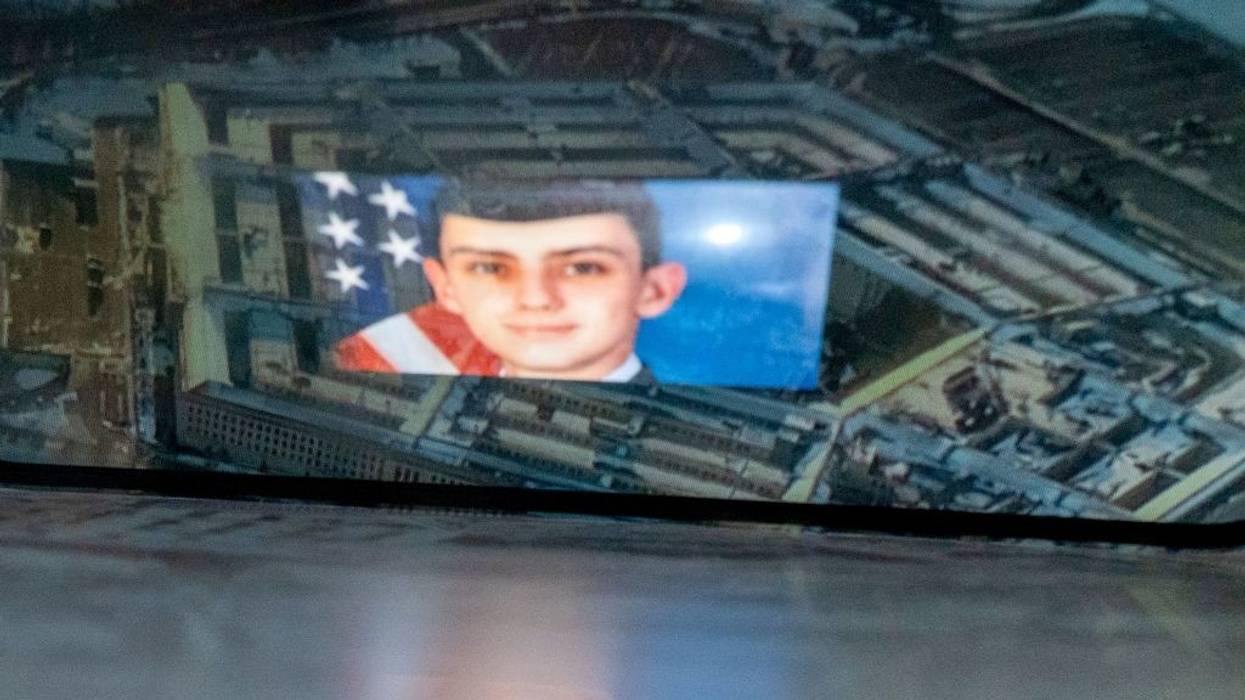
In April, when Jack Teixeira, a 21-year-old Massachusetts Air National Guardsman with a top-secret clearance, was arrested for posting a trove of classified documents about the Russia-Ukraine war online, the question most often asked was: How did such a young, inexperienced, low-level technician have access to such sensitive material? What I wanted to know was: How did he ever get accepted into the Air Force in the first place?
Teixeira seems to have leaked that secret information for online bragging rights rather than ideological reasons, so his transgression probably wouldn’t have fallen under the military’s newly reinforced regulations on extremist activities. After he was indicted, however, perturbing details about his behavior emerged, including his online searches for violent extremist events, an outsized interest in guns, and social media posts that an FBI affidavit called “troubling” and I’d call creepy.
Ideological zealotry is disruptive wherever it takes root, even if it never erupts into violence, but it’s particularly chilling inside the military. After all, servicemembers have access to weapons and the training to use them. Even more significant, a kind of quid pro quo exists between the military and civilians. Trust is paramount within the military, and every service member is supposed to abide by a code of ethics, as well as by the Constitution, to which all of them swear an oath.
In theory, a democratic civil society invests its military with the authority to use force in its name in exchange for the principled conduct of its members.
In theory, a democratic civil society invests its military with the authority to use force in its name in exchange for the principled conduct of its members. Military service is supposed to be a higher calling and soldiers better (or at least better behaving) people. So when active-duty personnel or veterans use violence against the system they’re sworn to protect, the sting of betrayal is especially sharp.
In a photo of Teixeira in a neat dress uniform that accompanied media reports, he’s a bright-eyed kid with stick-out ears and a sweet half-smile. He looks young and promising, the kind of guy people offer thanks to when they see him in uniform at an airport. In reality, however, everything else about him was a red flag.
The Washington Post found videos and chat logs that suggested he was getting ready for a race war. Former classmates told CNN that he had been obsessed with guns and war. He was suspended from high school for comments he made about Molotov cocktails. His first application for a gun license was denied, but he kept trying and was eventually approved, over time amassing a trove of handguns, rifles, shotguns, high-capacity weapons, and a gas mask, which he kept in a gun locker about two feet from his bed.
Granted, some of this activity didn’t begin until he enlisted in 2019 and no one’s advocating that military recruiters make bedroom checks. Still, recruits are supposed to go through a careful vetting process. Family, friends, teachers, and classmates may be interviewed to assess a recruit’s character and fitness. Such background checks are designed to detect things like racist tattoos, drug use, gang affiliation, or arrest records, but are inevitably limited in what they can discover about young people without much life experience, including the teenage gamers the Air Force woos for their up-to-the-minute technical skills who may not prove to be the most level-headed crew—people, in fact, like Jack Teixeira.
The vetting of service members for handling the top-secret or sensitive-compartmentalized-information security clearances he received in 2022 is supposed to be particularly thorough.
In his case in particular, the vetting of service members for handling the top-secret or sensitive-compartmentalized-information security clearances he received in 2022 is supposed to be particularly thorough. I was first faced with this reality when a government agent showed up at my door, flashed a badge, and asked me about a neighbor applying for a clearance. He inquired all too casually about whether I had noticed anything telling, like lots of liquor bottles in his trash. (That left me wondering how many people check their neighbor’s garbage.)
Teixeira’s posts of classified material taken from the computers of the intelligence unit at the Cape Cod air base where he was stationed first appeared on Thug Shaker Central, a small, obscure chat group which appealed largely to teenage boys through adolescent humor, a fetishistic love of guns, and extreme bigotry. It was hosted on the gamer-centric platform Discord. At first, he posted transcribed documents, then began photographing hundreds more in his parents’ kitchen and started uploading copies of them filled with secret materials on the U.S., its allies, and its enemies. Someone at Thug Shaker began sharing those posts more widely and they made their way to Russian Telegram channels, Twitter, and beyond—and Teixeira was in big trouble.
Since he seems to have made no effort to hide who he was, no one could call him the world’s smartest criminal. He made it all too easy for the FBI to track him down. By then, Air Force officials had already admonished him for making suspicious searches of classified intelligence networks, but allowed him to stay in his job. That’s where the Justice Department charged him with the retention and transmission of classified information under the Espionage Act of 1917, which had already caught in its maw journalists, dissidents, whistleblowers (including Daniel Ellsberg, who, to the end of his life, wanted to challenge the act in court on First Amendment grounds), and most recently, another hoarder of classified documents, former President Donald Trump.
In June, Teixeira pleaded not guilty on six counts, each carrying a maximum penalty of 10 years in prison and a fine of up to $250,000. Probably just as happy to let the civilians handle it, the Air Force removed the intelligence division from his unit, but it hasn’t yet brought charges against him.
Meanwhile, Secretary of Defense Lloyd Austin ordered a policy and procedure review to assess how bad Pentagon security really was. The results, made public on July 5, gave the military a passing grade but, with a firm grasp of the obvious, recommended more careful monitoring of the online activities of personnel with security clearances.
Rhetoric and regulations addressing extremism in the military date back to at least 1969 and have been tinkered with since, usually in response to hard-to-ignore events like the murder of 13 people at Fort Hood by Army psychiatrist Nidal Hasan in 2009. In reaction to the material Chelsea Manning (who was anything but an extremist) leaked to WikiLeaks to reveal human-rights abuses connected to the wars in Afghanistan and Iraq, the Department of Defense created a counter-insider threat program around 2014. Six years later, the Army revised its policies for the first time to face the potential role of social media in extremist activities.
Tracking and reporting on extremism in the military has not been without controversy, which tended to be of the let’s-not-air-our-dirty-laundry-in-public variety. In 1986 when, for instance, the Southern Poverty Law Center informed the Department of Defense (DoD) that active-duty Marines were participating in the Ku Klux Klan, the Pentagon responded that the “DoD does not prohibit personnel from joining such organizations as the Ku Klux Klan.” (It still doesn’t name or ban specific organizations in its regulations.) And when, in 2009, a Department of Homeland Security assessment warned of right-wing extremists recruiting veterans, conservative politicians and veterans groups killed the report which, they claimed, was insulting to veterans.
Then came the invasion of the Capitol on January 6, 2021. A striking number of participants proved to have military connections or histories—13.4% to 17.5% of those charged, depending on who’s counting—and the Pentagon could no longer ignore the problem. Defense Secretary Austin ordered an unprecedented, day-long stand-down to educate all military personnel on extremist activity and then created the Countering Extremist Activity Working Group, or CEAWG, to come up with a plan for dealing with that anything-but-new reality.
The New York Times estimated that active-duty military personnel and veterans accounted for at least 25% of antigovernment militias.
It’s not possible to pin down the true scope of the phenomenon, but the Center for Strategic and International Studies found active-duty and reserve personnel were linked to seven of the 110 terrorist attacks and plots the FBI investigated in 2020. That same year, The New York Times estimated that active-duty military personnel and veterans accounted for at least 25% of antigovernment militias. In 2022, the Anti-Defamation League identified 117 active-duty service personnel and 11 reservists on a leaked membership list from the Oath Keepers, the far-right antigovernment militia prominently involved in January 6 events. CEAWG, on the other hand, claimed that, in 2021, there were fewer than 100 substantiated cases of military personnel involved in officially prohibited extremist activity in the past year.
While such reckonings suggest that just a small number of servicemembers are actively involved in extremist violence, even a relative few should be concerning for obvious reasons.
Opportunities to identify and prevent extremism arise at three junctures: during recruitment, throughout the active-duty years, and in the discharge process when those transitioning back to civilian life may be especially susceptible to promises of camaraderie and ready action from extremist groups. As 2021 ended, the Pentagon’s working group reported that it had addressed such vulnerabilities by standardizing questionnaires, clarifying definitions, and—that old bureaucratic fallback—commissioning a new study.
The revised rules included a long list of banned “extremist activities” and a long definition of what constitutes “active participation.” In addition to the obvious—violence, plans to overthrow the government, and the leaking of sensitive information—prohibited acts include liking, sharing, or retweeting online content that supports extremist activities or encouraging DoD personnel to disobey lawful orders with the intention of disrupting military activities.
Active participation includes organizing, leading, or simply attending a meeting of an extremist group and distributing its literature on or off base. Commanders may declare places off-limits where “counseling, encouraging, or inciting Service members to refuse to perform duty or to desert” occurs. That also sounds like it could apply to gatherings of antiwar groups like Veterans for Peace, where supporting war resisters is part of their mission. And therein lies the rub.
Anti-extremism may prove but one more victim of anti-diversity and, even without that, if money is a measure of commitment, the military’s commitment to fighting extremism is looking lukewarm at best.
As in the past, the updates focus on activity, rather than speech, which is a good thing, but figuring out how to suppress extremism without turning into the thought police is challenging, particularly in light of the prominence of social media and the impossibility of monitoring everyone’s online activity. The result: regulations that are both too vague and too restrictive and a recipe for implementing the rules unfairly.
In military culture, reporting is often equated with snitching and retaliation is common. Since it’s not practicable to draw bright lines between what’s allowed and what isn’t, that determination rests ultimately (and sometimes ominously) with commanders. The regulations urge them to balance First Amendment rights with “good order and discipline and national security.” In reality, however, such decisions too often fall prey to bias, distrust, self-interest, racial disparities, and a history of bad faith.
Then there’s the issue of paying for the extra work the rules require. The only relevant funding seems to be a puny $13.5 million for the insider-threat program. Meanwhile, the Pentagon budget that recently exited the Republican-controlled House Appropriations Committee makes it a “conservative priority” to defund the position of Deputy Inspector General for Diversity and Inclusion and Extremism in the Military. So anti-extremism may prove but one more victim of anti-diversity and, even without that, if money is a measure of commitment, the military’s commitment to fighting extremism is looking lukewarm at best.
Recently, the Center for New American Security, a D.C.-based think tank, damned the military’s efforts to address domestic violent extremism historically as being all too often “reactionary, sporadic, and inconsistent” when it comes to recognizing the problem to be solved, or even admitting there is one. Though harsh, it’s not an unfair assessment.
The National Consortium for the Study of Terrorism and Responses to Terrorism (START), a Department of Homeland Security research center at the University of Maryland, analyzed an extensive database of extremist activity in the U.S. called PIRUS and found that 628 Americans with military backgrounds were involved in such criminal activity from 1990 to March 2023. Almost all of them were male veterans, with Marines showing up in disproportionately large numbers (as they did among the January 6 arrestees). A slight majority of the cases considered involved violence and a large majority involved white supremacist militias. And here’s an intriguing fact that probably won’t surprise anyone who’s followed the U.S. military’s dismal war record in this century: Extremists with a military background were less successful in carrying out violent attacks than those without it.
Indeed, the extremist threat appears to be growing. A chart in a research brief looking at PIRUS data shows little blips for extremist cases in most years until the past six, including not only the (hopefully) unrepeatable 2021, but the years on either side of it.
Almost 18% of the veterans surveyed who agree with one of four cited extremist ideologies also support violence as a means of political change.
Activities that rise to the level of criminal conduct, however, tell only part of the story.
The RAND Corporation interviewed a large, demographically representative sample of veterans—mostly older, white, middle-class men who joined the military before 9/11—to assess sympathy for extremist organizations and ideas. The researchers found no evidence that veterans support violent extremist groups or their ideologies more than the rest of the American public does.
If you find that reassuring, however, think again. After all, according to the 2022 Yahoo! News/YouGov poll Rand used for comparison, a little more than a third of the U.S. population agrees with the Great Replacement Theory that “[a] group of people in this country are trying to replace native-born Americans with immigrants and people of color who share their political views.” Am I supposed to be comforted because only about 5% fewer veterans think that?
Then there’s the finding that almost 18% of the veterans surveyed who agree with one of four cited extremist ideologies also support violence as a means of political change. That finding is scary, too, because extremist groups can take advantage of such veterans’ support for political violence to recruit them for their often all-too-violent purposes.
All of this leaves me very uneasy, both about what is being done and what should or even could be done. I worry about how much more extreme and violent this country has become in this century of failed wars. And I worry about anti-extremism policies sliding into prosecuting—and persecuting—people for disfavored beliefs, while immediate danger glides in from some unexpected source—like a 21-year-old techie, who, for reasons no one anticipated, pulled off one hell of a breach of national security right under the military’s nose.
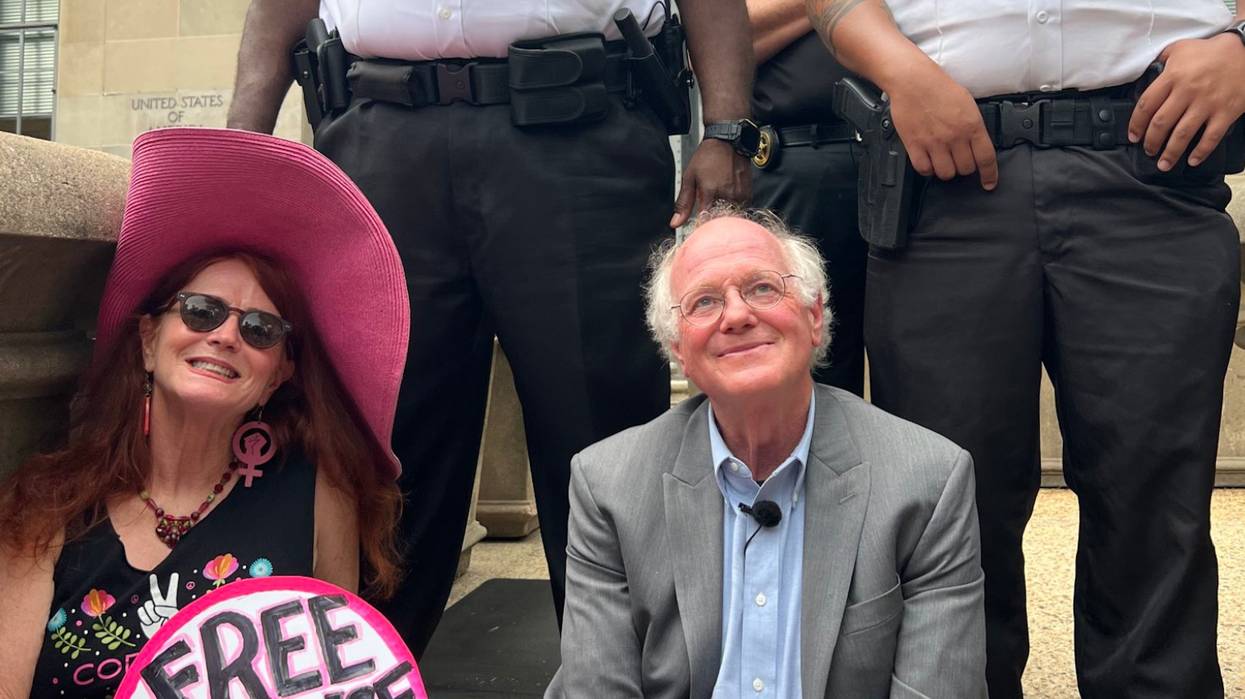
"It seems to me," said Ben Cohen, "that, right now, unless things change, and unless we change them, freedom of the press is going up in smoke."
Ben Cohen, the co-founder of the ice cream company Ben & Jerry's, and Jodie Evans, who co-founded the peace group CodePink, were arrested Thursday outside Department of Justice headquarters in Washington, D.C. for blocking an entrance to the building to protest the U.S. government's prosecution of WikiLeaks publisher Julian Assange.
Cohen and Evans were arrested while other demonstrators chanted slogans demanding freedom for Assange, the 52-year-old Australian facing extradition from the United Kingdom to the U.S., where he has been charged with Espionage Act violations and could be imprisoned for up to 175 years if convicted on all counts.
"It's outrageous. Julian Assange is nonviolent. He is presumed innocent. And yet somehow or other, he has been imprisoned in solitary confinement for four years."
"It's outrageous. Julian Assange is nonviolent. He is presumed innocent. And yet somehow or other, he has been imprisoned in solitary confinement for four years. That is torture," Cohen said during the protest. "He revealed the truth, and for that he is suffering, and... we need to do whatever we can to help him, and to help preserve democracy, which is based on freedom of the press."
"It seems to me that, right now, unless things change, and unless we change them, freedom of the press is going up in smoke," Cohen asserted before lighting an effigy of the Bill of Rights in four places.
"One for each year that... Assange has been held in solitary confinement," he explained.
Evans asked, "Why do we have freedom of the press?"
"Because there needs to be someone reporting the truth about the violence of power," she said. "When you don't have freedom of the press and no one's telling the truth, it weaponizes your capacity to feel, to have compassion and empathy."
"If you don't have the full story and if your heart is being manipulated with lies, then we're all lost," Evans added. "How can we have peace in the world if we're just drowning in lies?"'
According to the United Nations Working Group on Arbitrary Detention, Assange has been arbitrarily deprived of his freedom since he was arrested on December 7, 2010. Since then he has been held under house arrest, confined for seven years in the Ecuadorean Embassy in London while he was protected by the administration of former Ecuadorean President Rafael Correa, and jailed in Belmarsh Prison, where he is now.
After a U.K. court last month rejected Assange's appeal against his extradition order to the United States, press freedom groups renewed calls for U.S. President Joe Biden to drop the charges against him.
His life and legacy are reminders that individual acts of moral courage depend on examples set by others, and they have the potential to spark more, far into the future.
In 1971, when Daniel Ellsberg arrived at a federal court in Boston, a journalist asked if he was concerned about the prospect of going to prison for leaking a 7,000-page top-secret history of the Vietnam War. Ellsberg responded with a question of his own: “Wouldn’t you go to prison to help end this war?”
The classified documents Ellsberg released to The New York Times and 18 other newspapers were quickly dubbed the Pentagon Papers. They exposed more than two decades of government deceit about U.S. involvement in Vietnam, from 1945 to 1968.
Ellsberg died June 16, 2023, three months after announcing that he had been diagnosed with terminal cancer. To millions of Americans who opposed the war, his whistleblowing was an act of patriotism – but millions of others regarded it as treason. In Ellsberg’s own papers at UMass Amherst, where I teach history and direct the Ellsberg Initiative for Peace and Democracy, you can read hundreds of letters to him from ordinary citizens expressing both extremes: the highest possible praise, and vitriolic, often antisemitic, hostility.
How a young war planner became a peace activist is one of the most striking conversion stories in American history. But Ellsberg’s political and moral transformation did not happen in a vacuum.
How a young war planner became a peace activist is one of the most striking conversion stories in American history. But Ellsberg’s political and moral transformation did not happen in a vacuum. It reflected a titanic shift in public attitudes about the Vietnam War. The massive anti-war movement inspired and reinforced Ellsberg’s dissent – and, in turn, his example has emboldened activists and whistleblowers in the decades since.
Once a fervent Cold Warrior, Ellsberg joined the Marine Corps in the mid-1950s, earned his doctorate in economics from Harvard and in 1959 became a nuclear war analyst for the Rand Corp., a think tank that, at the time, was funded mostly by the Air Force. In 1964, he was one of the brainy young analysts, dubbed “whiz kids” by the media, that Defense Secretary Robert McNamara recruited to the Pentagon.
Throughout his 20s and early 30s, Ellsberg believed that serving the president was a “knightly calling,” even if it required lying to the public. So how did he come to believe that loyalty to truth-telling superseded loyalty to the chief of state?
From 1965 to 1967, Ellsberg went to Vietnam for the State Department, believing the war was a challenging but necessary part of a global struggle to contain communism. Yet he became deeply disillusioned, convinced that the war could not be won. He was particularly disturbed by indiscriminate U.S. bombing and shelling, most of it on South Vietnam, the land the U.S. claimed to be protecting. About 20,000 American lives had already been lost, and roughly a million Vietnamese people had been killed, about half of them civilians. By the war’s end eight years later, 58,000 Americans and 3 million Vietnamese had died.
By 1968, Ellsberg was trying to persuade U.S. leaders to seek a negotiated end to the war. On his own time, meanwhile, he was beginning to meet anti-war activists who advocated a bottom-up effort to demand immediate U.S. withdrawal.
One of them, a Gandhian pacifist named Janaki Natarajan, convinced Ellsberg that he should study leading advocates of nonviolent resistance, such as Martin Luther King Jr., Henry David Thoreau and Barbara Deming. To this day, one of Ellsberg’s favorite quotations comes from Thoreau’s “Civil Disobedience”: “Cast your whole vote, not a strip of paper merely, but your whole influence.”
But most galvanizing for Ellsberg were the Pentagon Papers, which he helped compile for McNamara. Full of technocratic euphemisms for lethal policies, the documents convinced him that the entire history of U.S. involvement in Vietnam was marked by deception: that it was an aggressive counterrevolution that denied the Vietnamese people the right of self-determination, disguised as a battle for democracy.
Ellsberg had first viewed the Vietnam War as a just cause to be won, then as an unwinnable stalemate to be gradually abandoned. By late 1969, however, he saw it as an immoral war to be ended unilaterally and immediately.
Millions of Americans had already come to that conclusion. Back in 1965, in fact, Ellsberg’s future wife, Patricia Marx, agreed to a first date only if it included an anti-war demonstration in Washington.
Just as he finished reading the Pentagon Papers, Ellsberg attended a War Resisters League conference that proved pivotal to his decision to leak the documents. There he met a few of the 3,250 young Americans who were sentenced to up to three years in prison for resisting the draft. Deeply moved by their courage, Ellsberg asked himself what he could do if he were willing to risk prison and his career.
A month later, with help from his friend and Rand colleague Anthony Russo, Ellsberg began photocopying the Pentagon Papers.
For the next year and a half, Ellsberg tried to get anti-war members of Congress to put the documents into the congressional record and hold hearings. None was willing, so he eventually offered them to war correspondent Neil Sheehan at The New York Times – the first newspaper to report on the papers’ revelations.
Public interest was scant, however, until President Richard Nixon began attacking the press and Ellsberg. Although the Pentagon Papers did not include Nixon’s time in office, the White House feared that Ellsberg might leak more documents – especially about Nixon’s 1968 effort to sabotage the Vietnam peace talks to improve his odds of winning the presidential election.
The government indicted Ellsberg on a dozen felony counts with a possible 115-year prison sentence. He was the first American ever criminally charged under the Espionage Act of 1917 for disclosing classified documents to the press and public rather than to a foreign agent or nation.
Ellsberg was spared prison. Late in his 1973 trial, Watergate prosecutors discovered that the White House had authorized crimes against him, including a break-in at his psychiatrist’s office, in a failed search for incriminating information. The judge had little choice but to declare a mistrial.
Ellsberg was a free man, but the personal cost of his dissent was severe. He lost many friends and had to forge a new career as a writer and lecturer. For more than five decades he has been an activist and has been arrested for nonviolent civil disobedience some 80 times on behalf of peace, nuclear disarmament, government accountability, and First Amendment rights.
In early March 2023, Ellsberg made public a letter to friends and supporters announcing that he had only months to live. He closed by thanking fellow activists whose “dedication, courage, and determination to act have inspired and sustained my own efforts.”
Ellsberg’s life and legacy are reminders that individual acts of moral courage depend on examples set by others, and they have the potential to spark more, far into the future. As Ellsberg often said, “civil courage is contagious.”
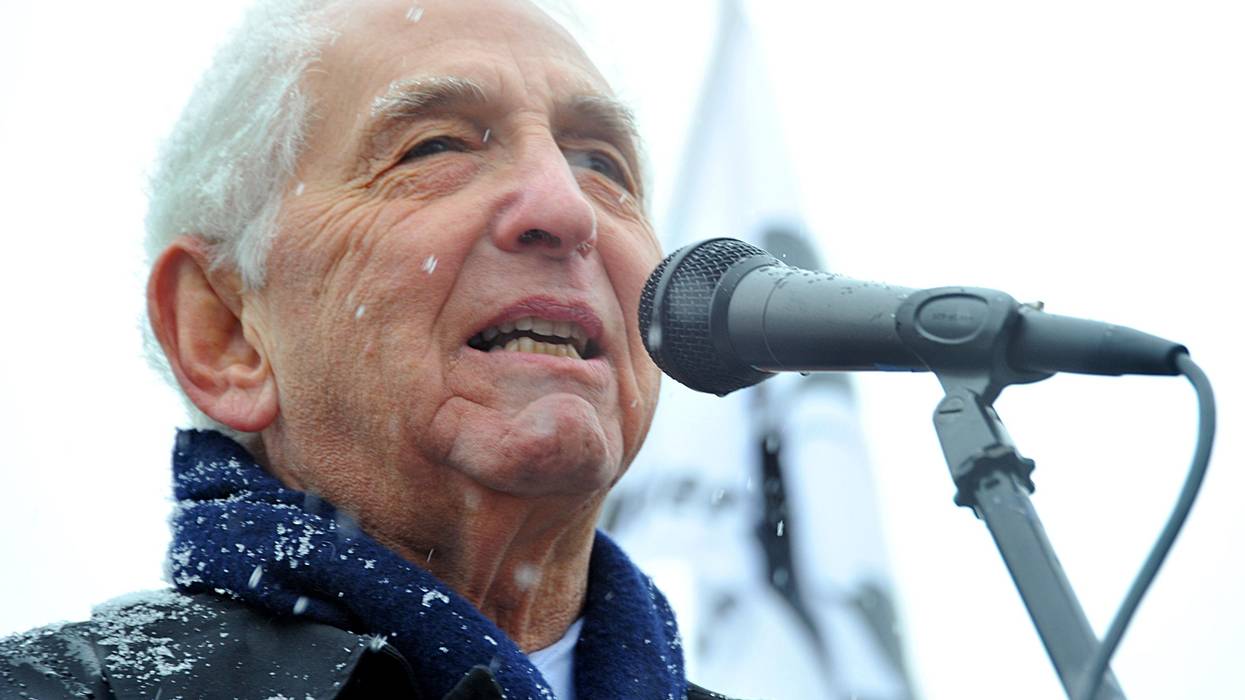
Pentagon Papers whistleblower Daniel Ellsberg on Tuesday dared U.S. prosecutors to come after him like they have Julian Assange by revealing in a BBC News interview that the WikiLeaks publisher sent him a backup of leaked materials from former military analyst Chelsea Manning.
"Let me tell you a secret. I had possession of all the Chelsea Manning information before it came out in the press," Ellsberg said to BBC's Stephen Sackur in the on-camera interview. "I've never said that publicly."
Assange had sent him the materials--which include evidence of U.S. war crimes--in case "they caught him and they got everything," the 91-year-old explained. "He could rely on me to find some way to get it out."
Australian-born Assange is currently detained in London and fighting in British and European courts against his extradition to the United States, where he could spend the rest of his life in prison if convicted under Espionage Act charges.
Inviting action by the U.S. Department of Justice (DOJ), Ellsberg said that "I am now as indictable as Julian Assange and as everyone who put that information out--the papers, everybody who handled it."
"Yes, I had copies of it and I did not give them to an authorized person. So, if they want to indict me for that, I will be interested to argue that one in the courts--whether that law is constitutional," he continued, referring to the Espionage Act.
Highlighting that the highest U.S. court has never held that it is constitutional to use the Espionage Act as if it were a British Official Secrets Act, Ellsberg said that "I'd be happy to take that one to the Supreme Court."
The Espionage Act, "used against whistleblowers, is unconstitutional," he asserted. "It's a clear violation of the First Amendment."
Ellsberg's public confession comes after editors and publishers at five major media outlets that collaborated with WikiLeaks in 2010 for articles based on diplomatic cables from Manning released a letter late last month arguing that "it is time for the U.S. government to end its prosecution of Julian Assange for publishing secrets."
"This indictment sets a dangerous precedent, and threatens to undermine America's First Amendment and the freedom of the press," the letter states. "Obtaining and disclosing sensitive information when necessary in the public interest is a core part of the daily work of journalists. If that work is criminalized, our public discourse and our democracies are made significantly weaker."
The new Ellsberg interview also follows the European Court of Human Rights (ECHR) confirming earlier this month that 51-year-old Assange has asked the tribunal to block his extradition to the United States.
Assange's brother Gabriel Shipton told Reuters last week that "I would imagine the U.S. wants to avoid" a case going before the ECHR for "trying to extradite a publisher from Europe for publishing U.S. war revelations when the U.S. is asking Europe to make all sort of sacrifices for the war in Ukraine."
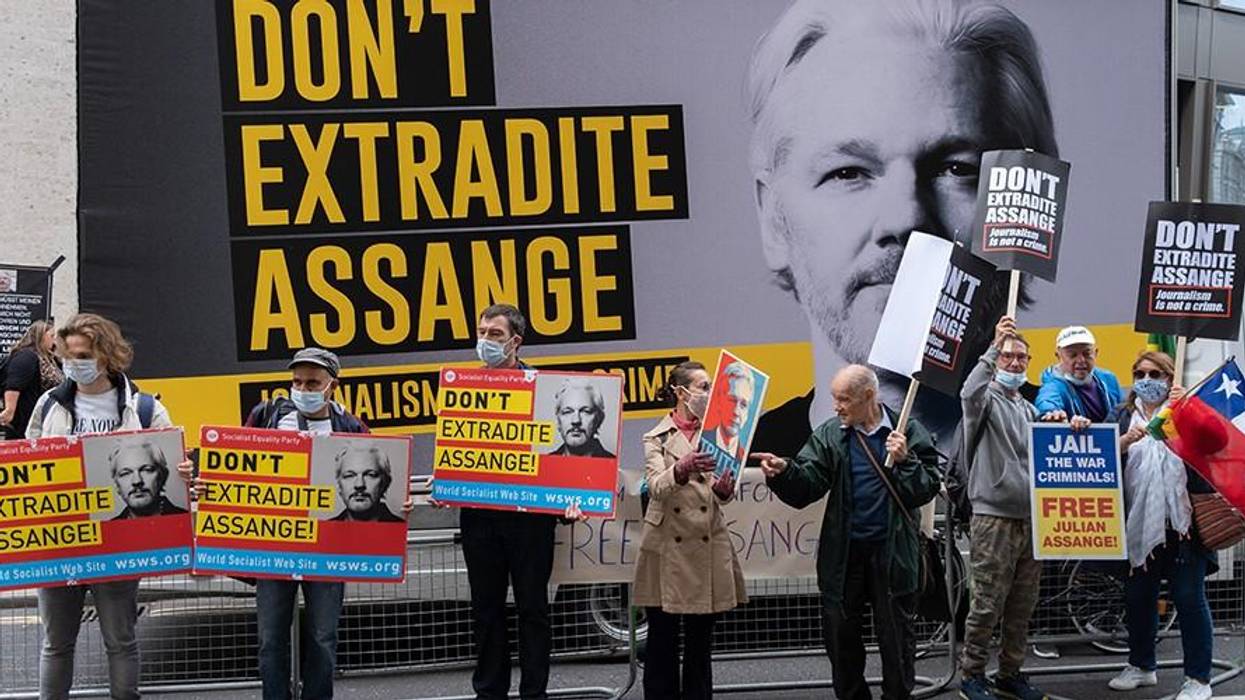
In a last-ditch effort to avoid extradition to the United States, lawyers for jailed WikiLeaks founder Julian Assange on Friday appealed to the United Kingdom's High Court to block the transfer.
"We also urge the Australian government to intervene immediately in the case to end this nightmare."
Assange's brother, Gabriel Shipton, told Reuters that the Australian publisher's legal team appealed his extradition, which was formally approved by U.K. Home Secretary Priti Patel last month.
"We also urge the Australian government to intervene immediately in the case to end this nightmare," Shipton said.
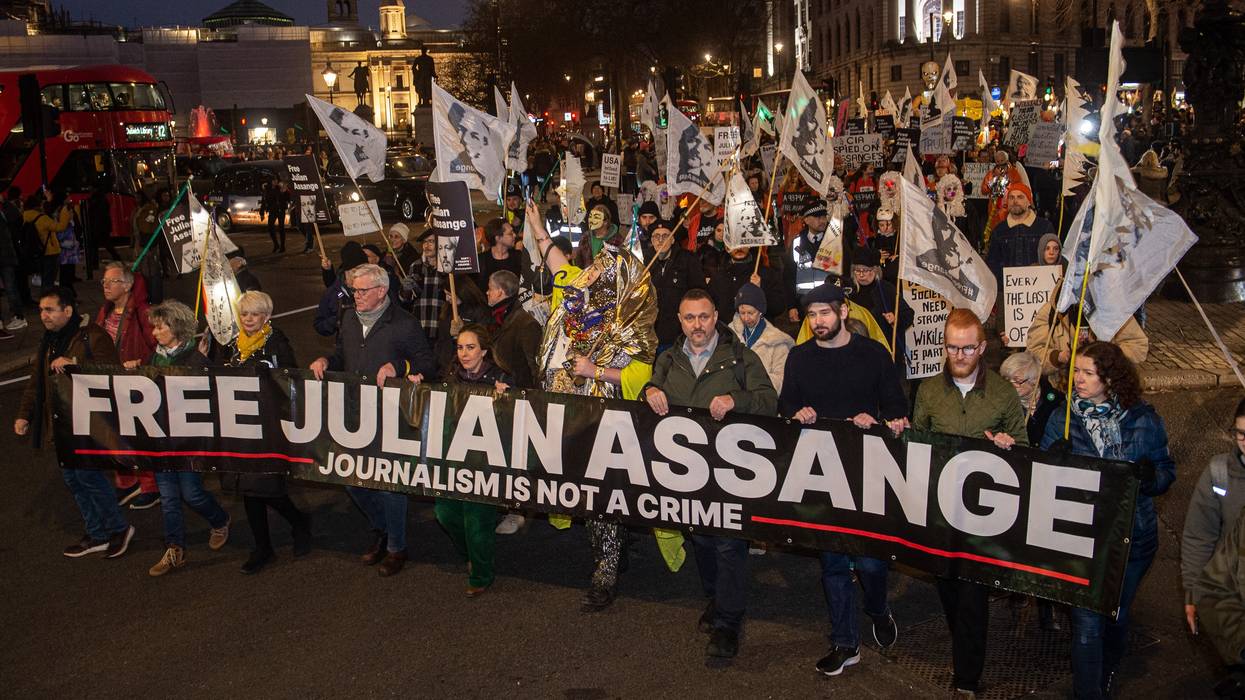
Supporters of Assange held protests ahead of his 51st birthday on Saturday, including one in an open-top double-decker London tour bus that passed by British government buildings in Westminster on Friday. One of the demonstrators, 79-year-old Gloria Wildman, told Agence France-Presse that Assange has "been in prison for telling the truth."
"If Julian Assange is not free, neither are we; none of us is free," she added.
Myriad human rights, journalistic, and other groups have condemned Assange's impending extradition and the U.S. government's targeting of a journalist who exposed American war crimes. In a Thursday statement, the Australian Journalists Union said that "the charges against Assange are an affront to journalists everywhere and a threat to press freedom."
Assange--who suffers from physical and mental health problems including heart and respiratory issues--faces U.S. charges including Espionage Act violations for which he faces up to 175 years behind bars if fully convicted.
Among the classified materials published by WikiLeaks--many provided by whistleblower Chelsea Manning--are the infamous "Collateral Murder" video showing a U.S. Army helicopter crew killing a group of Iraqi civilians, the Afghan War Diary, and the Iraq War Logs, which revealed American and allied war crimes.
According to the United Nations Working Group on Arbitrary Detention, Assange has been arbitrarily deprived of his freedom since he was arrested on December 7, 2010. Since then he has been held under house arrest, confined for seven years in the Ecuadorean Embassy in London while he was protected by the administration of former Ecuadorean President Rafael Correa, and jailed in London's notorious Belmarsh Prison.
Advocates contested Patel's assurance that the extradition would not be "incompatible with his human rights, including his right to a fair trial and to freedom of expression."
In a video published by WikiLeaks on Friday, Conservative British parliamentarian David Davis said that "the simple truth is, Assange won't get what we think of as a fair trial in the U.S."
"And in addition to that, there's a wider issue of imbalance in the U.K.-U.S. extradition treaty," he asserted. "When America requests an extradition from Britain, they have to have reasonable suspicion and the home secretary must process the request."
"When Britain requests an extradition to America, we have to demonstrate probable cause, and the American secretary of state may process our request, he's not forced to process that request," Davis noted. "The effect of this shows up in the statistics: Many, many more people are sent to America than are sent to Britain to face criminal trial."
The MP added that extradited Britons "face an alien justice system" in which "they're frog-marched in chains, they're jailed with hardened criminals, they're denied access to legal papers, they face really coercive plea-bargain systems which essentially say either plead guilty or face a huge length of time in prison."
"That sort of thing," Davis said, "does not give the sort of justice system that we're used to in the United Kingdom."
A judge on Spain's highest court has summoned former U.S. Secretary of State and Central Intelligence Agency Director Mike Pompeo to testify about an alleged Trump administration plot to kill or kidnap jailed WikiLeaks founder Julian Assange, according to a report published on Friday.
Spain's ABC reports National High Court Judge Santiago Pedraz issued the summons, which compels Pompeo to testify as part of an investigation of alleged illicit spying on Assange by Spanish security firm U.C. Global while the Australian was exiled in the Ecuadorean Embassy in London.
Pompeo and former U.S. National Counterintelligence and Security Center Director William Evanina are also being called to testify about an alleged plot revealed last year by Yahoo! News to abduct or possibly murder Assange to avenge WikiLeaks' publication of the "Vault 7" documents exposing CIA electronic warfare and surveillance activities.
According to Yahoo! News' Zach Dorfman, Sean D. Naylor, and Michael Isikoff, discussions over kidnapping or killing Assange occurred "at the highest levels" of the Trump administration, with senior officials requesting "sketches" or
"options" for assassinating him.
"They were seeing blood," one former Trump national security official told the reporters. "There seemed to be no barriers," said another.
U.C. Global whistleblowers allege company founder David Morales worked with the CIA to surveil Assange and Ecuadorean diplomats who worked at the London embassy. Former Ecuadorean President Rafael Correa had angered the Obama and Trump administrations by granting Assange asylum as he resisted going to Sweden to face sex crime allegations over fears he would be extradited to the United States.
Assange is charged in the U.S. with violating the 1917 Espionage Act and the Computer Fraud and Abuse Act for conspiring with whistleblower Chelsea Manning to publish classified documents--which revealed U.S. and allied war crimes and other misdeeds in Afghanistan, Iraq, and around the world--on WikiLeaks over a decade ago.
According to the United Nations Working Group on Arbitrary Detention, Assange has been arbitrarily deprived of his freedom since he was first arrested in London on December 7, 2010. Since then, he has been held under house arrest, confined for seven years in the Ecuadorean Embassy, and jailed in London's Belmarsh Prison, where he currently awaits his fate after a judge recently approved a U.S. extradition request.
Related Content

A decision by U.K. Home Secretary Priti Patel on whether to extradite Assange to the U.S. is reportedly imminent. Press freedom, anti-war, and other advocacy groups have urged Patel to reject the U.S. government's request.
"Assange would be unable to adequately defend himself in the U.S. courts, as the Espionage Act lacks a public interest defense," 20 groups wrote in an April joint letter to Patel. "His prosecution would set a dangerous precedent that could be applied to any media outlet that published stories based on leaked information, or indeed any journalist, publisher, or source anywhere in the world."
Pompeo, who is also wanted in Iran for his role in the January 2020 extralegal assassination of Iranian Gen. Qasem Soleimani in Iraq, is widely considered to be a possible 2024 Republican presidential candidate.