

SUBSCRIBE TO OUR FREE NEWSLETTER
Daily news & progressive opinion—funded by the people, not the corporations—delivered straight to your inbox.
5
#000000
#FFFFFF
To donate by check, phone, or other method, see our More Ways to Give page.
Daily news & progressive opinion—funded by the people, not the corporations—delivered straight to your inbox.
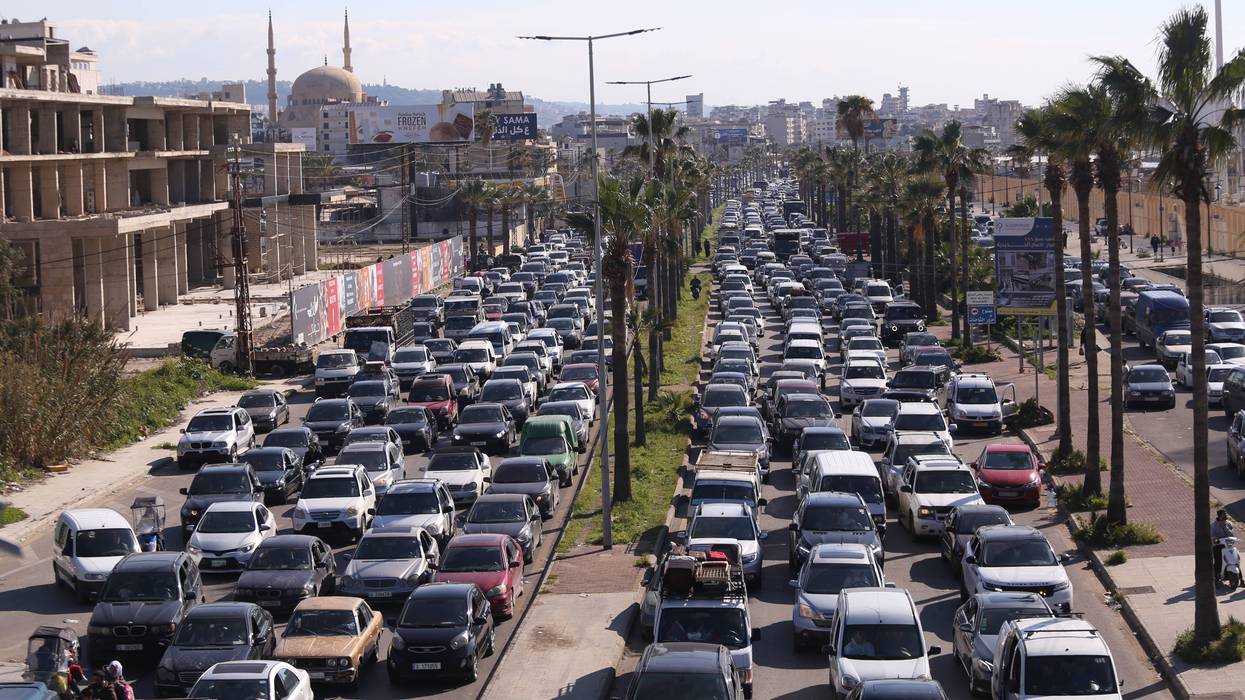
As it pushes further into Lebanon, Israel ordered around 200,000 people living south of the Litani River to "immediately" flee.
Israel ordered residents in southern Lebanon to "immediately" leave their homes as it advanced troops further into the country on Wednesday, prompting "serious concern" from the United Nations as its assault on the country ramps up.
"Residents of southern Lebanon—you must move immediately to areas north of the Litani River," Israeli military spokesperson Avichay Adraee posted in Arabic on X as Israel escalated a campaign of airstrikes and moved troops into several villages.
The region south of the Litani River spans hundreds of square kilometers and makes up about 9% of Lebanon's total territory, according to the Associated Press.
Around 200,000 people live in the area south of the river, which has served as the beginning of a buffer zone between Israel and Hezbollah since Israel's withdrawal from Lebanon in 2006 as part of United Nations Resolution 1701.
On Monday, Israel's Defense Minister Israel Katz said that he and Prime Minister Benjamin Netanyahu "have approved for the military to advance and seize additional controlling areas in Lebanon and to defend the border settlements from there."
According to Nora Ingdal, Save the Children’s Country Director for Lebanon, evacuation orders given by Israel as it entered villages in the past three days have created a situation of "pure chaos" for civilians forced to flee their homes.
Lebanon's Ministry of Social Affairs reported that about 58,000 people, including an estimated 16,000 children, had already been displaced as of Tuesday.
"Our team is hearing cases of children across Lebanon sleeping in cars, on cold pavements, and in partially damaged classrooms with cracks in the walls, while parents are sitting on the side of the streets crying, exhausted from little sleep after being unable to get into proper shelters with their children," Ingdal said.
Sana Kawtharani, a community health educator for Doctors Without Borders, described the impossible choice that over 12,000 people had to make after being ordered to leave the town of Sarafand on Tuesday, after having sought shelter there earlier.
"We know how hard it is to leave our home, our people, our villages, and our memories," Kawtharani said. "Around us in the neighborhood, some were forced to leave because they have children and elderly who are terrified by the sound of Israeli shelling."
"They carried what they could and left in cars, not knowing where they were going," she said. "There are children, the elderly, and the sick stuck on the road in very harsh conditions."
Israeli attacks in Lebanon since 2023 have killed more than 4,000 people and injured more than 16,000, according to the Lebanese health ministry, which says most of the victims have been civilians. More than 370 have been killed since a ceasefire in November 2024.
"This war began 15 months ago, and until today, it hasn't stopped," Kawtharani said. "Every day there is shelling, despite everything we hear about a ceasefire, but this has not been implemented on the ground."
Israel’s evacuation order for all of southern Lebanon came following an intensification of airstrikes overnight around Beirut the previous evening, which killed at least 12 people according to state media.
On Tuesday, Israel also reportedly carried out another "double-tap" strike in the Tyre district of southern Lebanon, killing three paramedics with the World Health Organization (WHO) and injuring six more who were in the process of helping others wounded in a previous strike.
Though Lebanon was already being struck by Israel on a near-daily basis despite the 2024 ceasefire, hostilities exploded over the weekend following Israel and the United States' attack on Iran, sparking retaliatory strikes on Israel from the Iranian-aligned militia Hezbollah.
According to Middle East Eye, Israel had authorized a barrage of strikes on Lebanon even before the first retaliatory rockets and drones were fired by Hezbollah following the killing of Iranian Supreme Leader Ayatollah Ali Khamenei on Saturday.
Israel has not reported any deaths from Hezbollah's attacks, though two soldiers sustained moderate injuries on Wednesday from anti-tank fire in southern Lebanon.
According to Lebanese authorities, Israeli strikes on dozens of sites across the country have killed at least 72 people and wounded 437 as of Wednesday.
Lebanese media reported on Wednesday that Israeli troops have pushed into the town of Khiam, which is roughly six kilometers from Israel’s border, marking their furthest advance into the country since the war broke out in 2024.
The United Nations Interim Force in Lebanon (UNIFIL), the peacekeeping force that has operated in southern Lebanon for nearly 50 years, said on Wednesday that it had “serious concern” about Israel’s order “demanding evacuation of the civilian population from UNIFIL’s area of operations to north of the Litani River.”
UNIFIL said on Wednesday that “peacekeepers observed today several [Israel Defense Forces] movements and military activities, including near El Khiam, Beit Lif, Yaroun, Houla, Kfar Kila, Kherbeh, and Kfar Shouba. All of these are happening while Israeli airstrikes and other air activities continue.”
It said these actions "not only violate Resolution 1701, but also Lebanon’s sovereignty and territorial integrity."
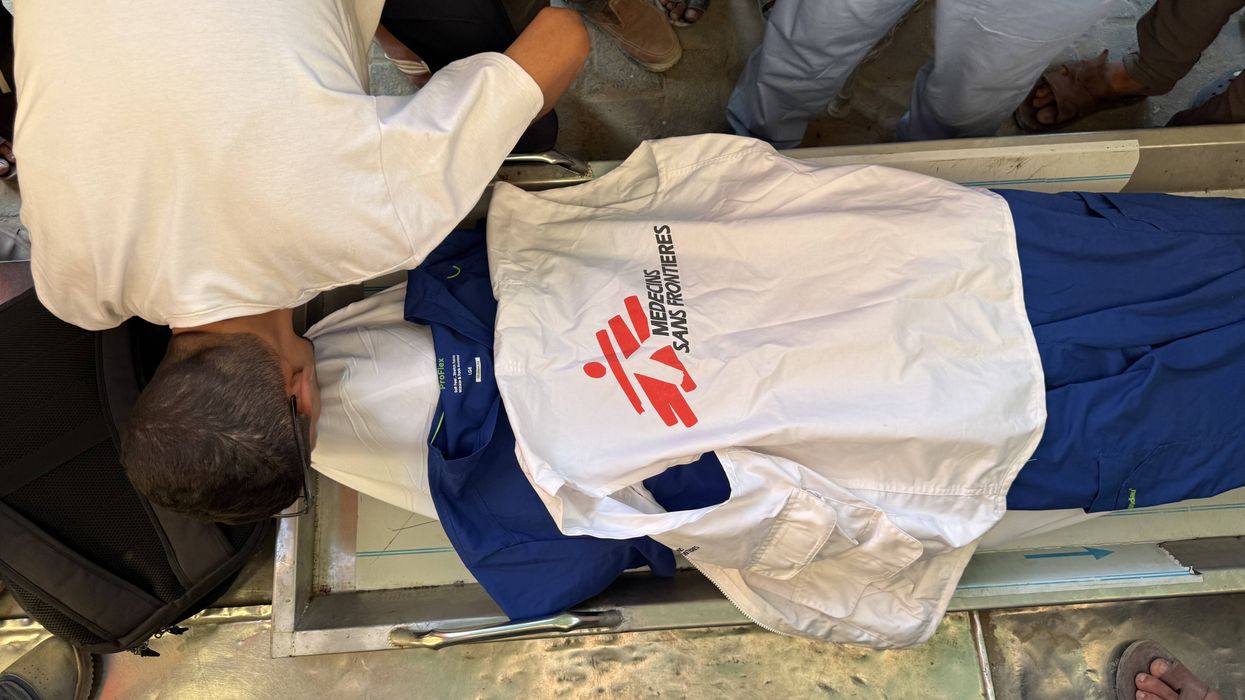
What emerges is a coherent strategy: first, producing dependency through siege, destruction, and institutional dismantling; then, weaponizing that dependency by controlling or withdrawing the means of staying alive.
Israel’s decision to halt the operations of 37 international aid groups marks a dangerous escalation in its ongoing genocidal campaign, which has destroyed Gaza’s capacity to sustain life through bombardment and siege, and now moves to deprive survivors of the last remaining forms of assistance.
While framed as an administrative measure, this latest move cannot be understood in isolation. It is the culmination of a longer process that has unfolded over the past two years, as Israel has systematically dismantled the humanitarian and medical infrastructure sustaining Gaza’s civilian population.
By defunding and delegitimizing The United Nations Relief and Works Agency for Palestine Refugees in the Near East (UNRWA), the primary agency tasked with aiding Palestinian refugees; and by leveling accusations against humanitarian and health personnel, in the absence of meaningful global pushback, Israel has further entrenched a longstanding system of weaponized aid.
While the Israeli government initially framed the suspension of aid groups as being linked to their failure to comply with new registration requirements, it later noted in a statement that the process was “intended to prevent the exploitation of aid by Hamas, which in the past operated under the cover of certain international aid organizations, knowingly or unknowingly.”
Such criteria not only regulate aid work; they effectively silence dissent, conditioning the ability to deliver humanitarian assistance on political conformity.
Israel has long accused Hamas of exploiting humanitarian aid, despite such claims having repeatedly been debunked, including by senior Israeli military officials themselves.The new regulatory framework extends well beyond technical compliance. It introduces explicitly political and ideological conditions for aid delivery, disqualifying organisations that have supported boycotts of Israel or engaged in “delegitimization campaigns.”
Such criteria not only regulate aid work; they effectively silence dissent, conditioning the ability to deliver humanitarian assistance on political conformity.
The dismantling of UNRWA was a critical test case. For decades, the agency served as the backbone of civilian life for Palestinian refugees, providing healthcare, education, food assistance, and social services, under conditions of Israeli occupation and siege.
After October 7, 2023, Israel intensified its efforts to recast UNRWA not as a humanitarian agency operating under an international mandate, but as a political problem to be neutralized.
Allegations that a limited number of UNRWA employees were affiliated with Hamas, or involved in the October 7 attacks, were rapidly generalized into claims about the organisation as a whole. These claims triggered sweeping donor suspensions—including the immediate freezing of US funding, among UNRWA’s largest sources of support—illustrating how fast states are willing to act on evidence-free allegations from Israel, whose overall goal is to avoid global scrutiny of its crimes.
The persecution of UNRWA thus demonstrated how easily a central pillar of the humanitarian system can be dismantled, setting the stage for what would come next, as Israel launched a broader attack on international aid groups operating in Gaza.
In the months that followed, Israel blocked UNRWA’s operations on the ground and passed legislation criminalizing its activities across historic Palestine.
The response from the international community was striking in its weakness: While some donors ultimately resumed funding to UNRWA, no binding enforcement mechanisms were activated, nor were any serious political costs imposed on Israel.
The persecution of UNRWA thus demonstrated how easily a central pillar of the humanitarian system can be dismantled, setting the stage for what would come next, as Israel launched a broader attack on international aid groups operating in Gaza.
The consequences of this latest move are devastating. For decades, such organizations have provided essential services, amid the systematic degradation of civilian infrastructure and repeated assaults on healthcare in Gaza. Groups like Doctors Without Borders and Medical Aid for Palestinians offer vital resources for emergency and trauma care, along with other key services to sustain Gaza’s fragile health system, at a time when many hospitals are damaged or out of service.
The centrality of international aid groups to Gaza’s survival is itself a measure of the depth of destruction imposed on Palestinian society. Such actors have long operated in spaces where Palestinian institutions have been dismantled, and political solutions deferred.
In the absence of an end to Israel’s occupation and siege, their presence has become one of the few remaining buffers against total collapse. In the context of an ongoing genocide and the destruction of the infrastructure required to sustain life in Gaza, stripping away the remaining humanitarian presence amounts to a direct assault on survival itself.
The Israeli government has sought to downplay the impact of the suspensions by asserting that the targeted organisations “did not bring aid into Gaza throughout the current ceasefire, and even in the past their combined contribution amounted to only about 1% of the total aid volume.”
In Gaza, where Israel has already destroyed the material conditions of life, the suspension of humanitarian operations completes this logic.
But this calculation of material aid fails to capture the nature of the work and services these groups have provided, including specialized medical care, trauma surgery, rehabilitation for injured and disabled people, psychosocial and mental health services, and sustained institutional support to keep Gaza’s collapsing health system functioning.
In 2025 alone, Doctors Without Borders carried out nearly 800,000 outpatient consultations and treated more than 100,000 trauma cases in Gaza, while Medical Aid for Palestinians made many critical interventions, including through expanded cancer care in the territory’s north.
Israel’s 1% calculation, which has not been independently verified, reduces humanitarian impact to quantitative supply indicators, rather than lifesaving capacity. To present these organizations as marginal is not a factual assessment, but a narrative designed to normalize their removal.
What emerges is a coherent strategy: first, producing dependency through siege, destruction, and institutional dismantling; then, weaponizing that dependency by controlling or withdrawing the means of survival.
In Gaza, where Israel has already destroyed the material conditions of life, the suspension of humanitarian operations completes this logic. This is not a failure of humanitarianism, but part of a broader genocidal strategy, where the regulation and withdrawal of aid is used to render survival itself increasingly impossible.
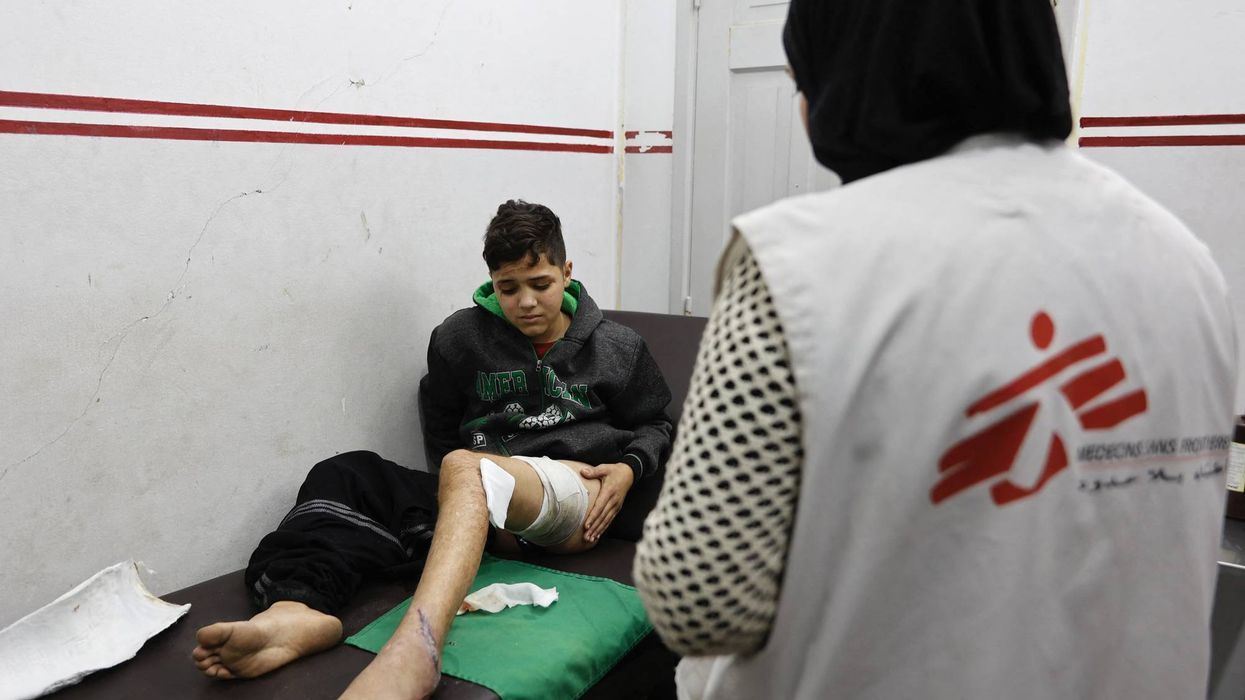
"Such arbitrary suspensions make an already intolerable situation worse for the people of Gaza," said the United Nations human rights chief.
Human rights defenders warned Wednesday that a new Israeli ban on dozens of international humanitarian groups from operating in Gaza will have a "catastrophic" impact on Palestinians already reeling from more than two years of Israel's genocidal war and siege.
The government of fugitive Israeli Prime Minister Benjamin Netanyahu—who is wanted by the International Criminal Court (ICC) for alleged war crimes and crimes against humanity in Gaza—announced Tuesday that 25 humanitarian groups would be suspended from operating in Gaza starting January 1 if they did not comply with new requirements including providing detailed information on their staff, funding, and operations.
Israeli authorities say, largely without evidence, that the new rules are needed because some humanitarian workers are terrorists, and because Hamas is diverting aid—a claim refuted by Israeli military officials.
By Wednesday, the number of banned groups increased to 37. Targeted groups include ActionAid, Handicap International, Doctors Without Borders sections from six European countries, two Oxfam chapters, International Rescue Committee, American Friends Service Committee, World Vision International, Norwegian Refugee Council, Mercy Corps, Defense for Children International, two Caritas branches, and CARE.
"Israel’s suspension of numerous aid agencies from Gaza is outrageous," United Nations human rights chief Volker Türk said Wednesday in Geneva. "This is the latest in a pattern of unlawful restrictions on humanitarian access, including Israel’s ban on UNRWA, the UN Relief and Works Agency for Palestinian Refugees in the Near East, as well as attacks on Israeli and Palestinian NGOs amid broader access issues faced by the UN and other humanitarians."
"I urge all states, in particular those with influence, to take urgent steps and insist that Israel immediately allows aid to get into Gaza unhindered," Türk continued. "Such arbitrary suspensions make an already intolerable situation even worse for the people of Gaza."
"I remind the Israeli authorities of their obligation under international law to ensure the essential supplies of daily life in Gaza, including by allowing and facilitating humanitarian relief," he added.
European Commissioner for Equality, Preparedness, and Crisis Management Hadja Lahbib said Wednesday that Israel's move "means blocking life-saving aid."
"The [European Union] has been clear: The NGO registration law can not be implemented in its current form," Lahbib added. "All barriers to humanitarian access must be lifted."
British Member of Parliament Andrew Pakes (Labour-Peterborough) said on social media that "the Israeli government banning desperately needed aid from Gaza is not a sign of a working ceasefire."
"This, at a time of extreme weather and lack of shelter," he added. "We need accountability more than ever. And immediate help to save lives."
Doctors Without Borders—which also goes by its French acronym, MSF—told Reuters Tuesday that "if MSF is prevented from working in Gaza, it will deprive hundreds of thousands of people from accessing medical care."
Norwegian Refugee Council spokesperson Shaina Low said, "At a time when needs in Gaza far exceed the available aid and services, Israel has and will continue to block life-saving aid from entering."
British emergency physician Dr. James Smith—a health activist with Medact and the People's Health Movement and member of the Global Sumud Flotilla—told Al Jazeera Wednesday that many of the proscribed groups "have been working in Gaza for decades."
Smith noted that Doctors Without Borders this year "managed more than 22,000 operations," adding that "if international NGOs were de-registered, then approximately a third of healthcare facilities" in Gaza "would be forced to immediately close."
This, after Gaza's healthcare infrastructure has been systematically obliterated by Israel's assault and siege.
"It's going to be catastrophic," warned Smith. "A situation that is already horrific will be made more horrific. The changes will be immediate, and they will be ruthless."
Smith called the aid group ban "an extension of Israel's longstanding strategy of titrating humanitarian access and humanitarian services as a core pillar of the occupation and of the genocide."
Since 2007, Israel has maintained a blockade of Gaza, severely limiting the entry and exit of people and goods into the Palestinian exclave. The blockade was tightened even further when Israel imposed a "complete siege" on the strip following the Hamas-led attack of October 7, 2023.
According to UN data, Israeli forces have killed at least 579 aid workers—including nearly 400 UNRWA staffers—since October 2023. Israeli bombs and bullets have also killed over 1,700 health and medical workers, upward of 140 civil defense personnel, and more than 250 journalists.
Overall, Israel's war and siege have left more than 250,000 Palestinians dead, wounded, or missing in Gaza, and most Gazans forcibly displaced, starved, or sickened.
In recent weeks, more than a dozen Palestinians, including numerous children and infants, have died of hypothermia.
On Tuesday, Red Crescent Society in Gaza warned of a growing outbreak of hepatitis A and gastroenteritis caused by contaminated drinking water.
The International Court of Justice—which is currently weighing a genocide case against Israel filed by South Africa—last year issued a provisional ruling ordering Israel to allow humanitarian aid into Gaza and affirming an earlier order to prevent genocidal acts. Israel has been accused of ignoring these and other ICJ orders.
Responding to the Israeli ban, Refugees International vice president for programs and policy Hardin Lang said in a statement Tuesday that "this action will cost the lives of Palestinians."
"Gaza is in the heart of winter, with hundreds of thousands of people living in makeshift shelters, damaged buildings, or the open air after repeated displacement," Lang noted. "Removing these humanitarian organizations now will deepen exposure, illness, and preventable deaths. The targeted organizations provide much of the core relief capacity in Gaza, particularly on healthcare services."
"The suspension is not motivated by a sincere desire to prevent diversion of aid; it is a pretext to further restrict aid to Gaza while silencing independent aid organizations," he continued. "The Israeli government’s broad claims about systemic aid diversion have never been backed up with credible evidence—as even senior US government officials have publicly acknowledged."
"Under US and international law, parties to a conflict must allow and facilitate the rapid and unimpeded passage of impartial humanitarian relief," Lang added.