

SUBSCRIBE TO OUR FREE NEWSLETTER
Daily news & progressive opinion—funded by the people, not the corporations—delivered straight to your inbox.
5
#000000
#FFFFFF
To donate by check, phone, or other method, see our More Ways to Give page.
Daily news & progressive opinion—funded by the people, not the corporations—delivered straight to your inbox.
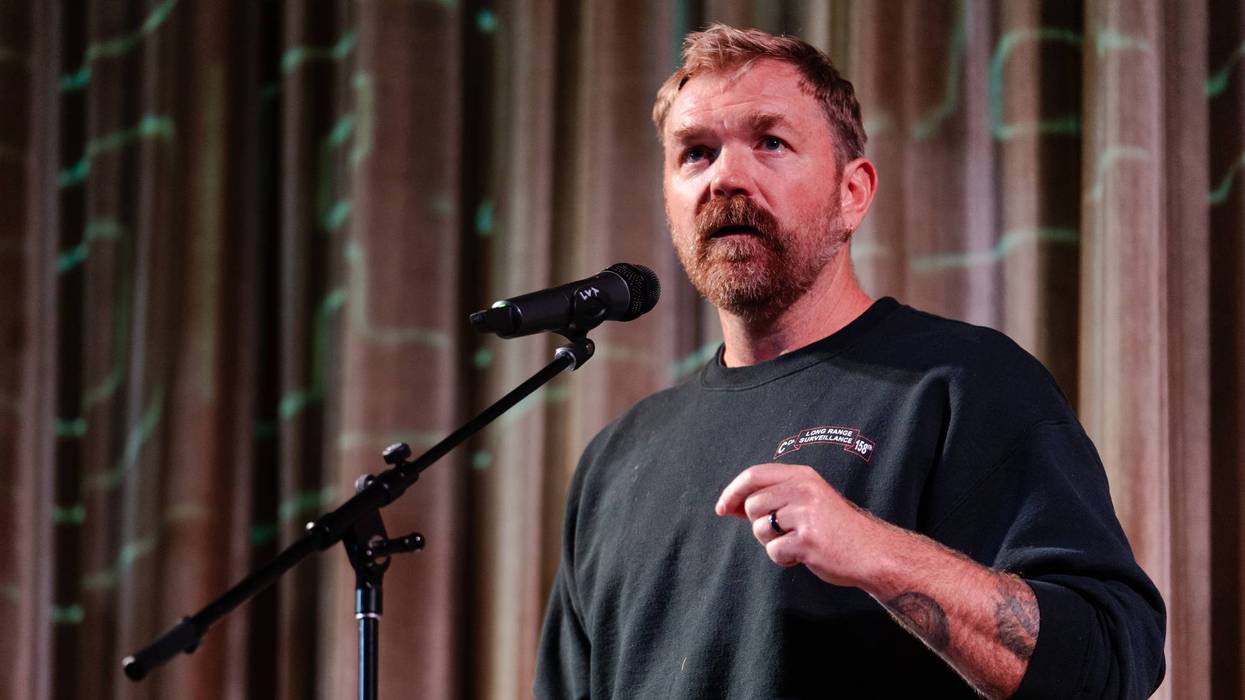
"We need to elect people to the Senate who want to wield power like that," the Maine Democratic candidate said.
US Senate hopeful Graham Platner wants Democrats to "deal with" the Supreme Court if they retake power in November and launch oversight and possible impeachments to remove justices from office.
Amid President Donald Trump's historic unpopularity, Democrats are heavily favored to retake the House of Representatives and have gained momentum in the Senate, where Platner's bid to unseat five-term incumbent Sen. Susan Collins (R-Maine) could prove decisive.
But the Supreme Court's 6-3 conservative majority has the potential to effectively veto any significant actions a future Democratic Congress or president may seek to take, despite increasing doubts among the American public about its legitimacy and impartiality.
Its image as an independent arbiter of justice has come under further scrutiny as multiple justices have been embroiled in corruption scandals. This is where Platner believes Democrats could have options.
"There is structural power in the Senate to deal with the Supreme Court," the 41-year-old Marine-turned-oyster farmer told a crowd of supporters during an event this weekend.
He said that if Democrats get a majority, "at that point, I very much think that we need to be exercising ethics oversight over the court."
Unlike lower court judges, who must comply with a binding ethics code by avoiding partisan campaigning, disclosing conflicts of interest, and recusing themselves in cases where impartiality may be called into question, Supreme Court justices do not have to adhere to these rules.
Although the Supreme Court did adopt an ethics code for the first time in 2023, it is voluntary, and legal groups like the New York City Bar have described it as unenforceable and far short of what is necessary.
Platner said that "if we held Supreme Court justices to the same standards that we held federal judges, there is a compelling case for the impeachment and removal of at least two."
While he did not specify which two justices he believed could be impeached, it is highly likely that he was referring to Clarence Thomas and Samuel Alito, two of the furthest right justices, whom he has said have helped transform the court into a "political action wing... of conservatism."
In 2023, ProPublica published an investigation exposing that Thomas had, for years, accepted gifts from GOP megadonor Harlan Crow, including trips on his private jet and superyacht, as well as $6,000-per-month tuition for his grandnephew. None of these were reported on the justice's ethics disclosures.
It was also revealed that his wife, Ginni Thomas, was heavily involved with right-wing activist groups with business before the Supreme Court, including those that pushed discredited voter fraud claims to overturn Trump's loss in the 2020 election.
Alito, meanwhile, was revealed to have taken a luxury fishing trip to Alaska with the billionaire hedge fund tycoon Paul Singer, who was directly involved or had financial ties to several entities with business before the court, including a right-wing pro-business group that was pushing to have the court block then-President Joe Biden's student loan forgiveness policy.
The justice has also been accused of expressing support for Christian nationalism after a flag was seen flying outside his residence that appeared to express solidarity with the movement and with those who stormed the US Capitol on January 6, 2021. A documentarian has also published recordings of the justice speaking about how America must be returned to a "place of Godliness."
Some Democrats have also raised the possibility of impeaching Justice Brett Kavanaugh, who has been accused of lying during his confirmation hearings in 2018 when he was faced with allegations of sexual assault from a former classmate.
Right-wing control of the Supreme Court over the past decade has fundamentally altered the American political landscape by rolling back advancements to reproductive and LGBTQ+ rights, gutting the Voting Rights Act, and hindering environmental regulation.
And as Trump has expressed open contempt for constitutional limits on his power, the court has often indulged him, siding with his administration more than 80% of the time in emergency docket rulings during his second term while granting him broad "immunity" from prosecution for crimes committed while in office.
In addition to impeaching justices, Platner has called for Congress to expand the Supreme Court's size the next time a Democrat is in the White House, which can be done with a simple majority vote provided the filibuster is suspended.
"But to make that happen," Platner said, "we need to elect people to the Senate who want to wield power like that, who understand that power matters, that it's real and you can use it."
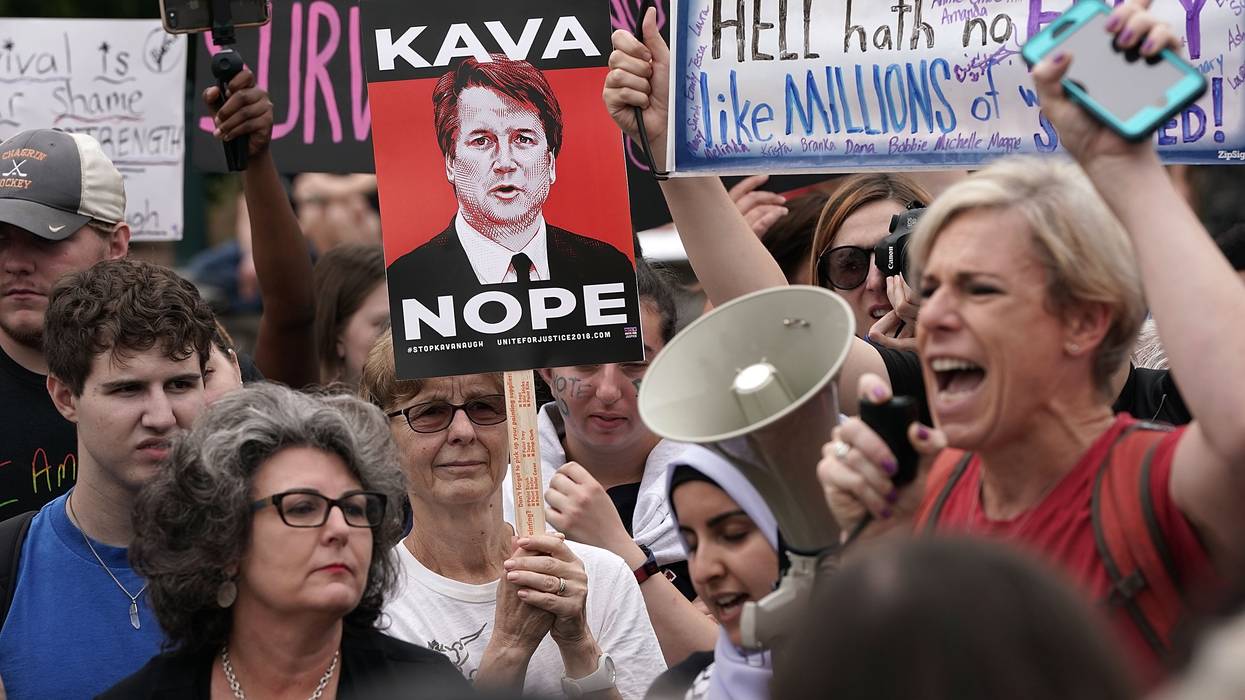
It’s frightening but indisputable: The future of American law may rest in his ideological, incompetent hands.
If I asked you to name the most unpopular Supreme Court justice, you might choose the venal Clarence Thomas or the perpetually enraged Samuel Alito. In either event, you’d be wrong. Americans’ least popular member of the high tribunal is Brett “I like beer” Kavanaugh. Poll after poll has shown Kavanaugh taking the honor since his nomination in 2018.
Kavanaugh also holds the honor of being President Donald Trump’s favorite justice, an accolade he earned with his dissenting opinion from the court’s February invalidation of Trump’s worldwide “reciprocal tariffs.” Kavanaugh is now poised to deliberate on pending voting rights cases and a ruling on birthright citizenship under the 14th Amendment. It’s frightening but indisputable: The future of American law may rest in his ideological, incompetent hands.
Kavanaugh’s initial low public standing stemmed from his snarling televised response to the testimony of psychologist Cristine Blasey Ford, who credibly accused him during his confirmation hearing of sexually assaulting her at a boozy high school party. Declaring his innocence and choking back tears, Kavanaugh described the allegations as “a calculated and orchestrated political hit, fueled with apparent pent-up anger about President Trump [and] millions of dollars in money from outside left-wing opposition groups.” Trump quickly came to his embattled nominee’s rescue in a tweet posted hours after the hearing, calling his testimony “powerful, honest, and riveting.”
Long before Senate Republicans approved his nomination by a vote of 50-48, Kavanaugh had built a well-earned reputation as a credentialed and loyal Republican hitman, highlighted by his decision to join Ken Starr’s Office of Independent Counsel in 1997 to assist in the investigations that eventually led to the impeachment of President Bill Clinton.
Since taking his place on the Supreme Court, Kavanaugh has proven a reliable Trump flunky. But unlike Thomas and Alito, he’s also proven to be an intellectual lightweight.
While in Starr’s service, Kavanaugh penned a lurid memorandum that suggested 10 questions for prosecutors to ask Clinton about his relationship with Monica Lewinsky when he testified before a federal grand jury. Among them:
After a brief stint in private practice, Kavanaugh joined the GOP’s legal team in the run-up to the Supreme Court’s infamous Bush v. Gore decision, which handed the presidency to George W. Bush. In 2001, he was rewarded with an associate’s position in the White House counsel’s office, and two years later he was nominated to the US Court of Appeals for the District of Columbia Circuit.
Senate Democrats were alarmed at the thought of an enrobed Kavanaugh, and they managed to put the nominee through two confirmation hearings. “As I look through all of the different issues that you have been involved in as an attorney in public service and the private sector, it seems that you are the Zelig or Forrest Gump of Republican politics,” the normally mild-mannered Sen. Dick Durbin (D-Ill.) remarked in 2004. “You show up at every scene of the crime. You are somehow or another deeply involved, whether it is Elian Gonzalez or the Starr Report, you are there.” In the end, the Democrats failed to stop Kavanaugh’s confirmation in 2006.
During his 12 years on the circuit court, Kavanaugh won praise from right-wing advocacy organizations for a record of overtly pro-business rulings that routinely undercut federal regulations on air quality, consumer protections, and other issues.
Since taking his place on the Supreme Court, Kavanaugh has proven a reliable Trump flunky. But unlike Thomas and Alito, he’s also proven to be an intellectual lightweight, penning few consequential majority opinions of his own and generally following the lead of Chief Justice John Roberts, with whom he voted more than 95% of the time in his first few years on the court.
Recently, however, Kavanaugh has begun to break with Roberts to more closely align with Trump—sometimes to comical effects.
Consider the interim “shadow docket” ruling issued last September, Noem v. Perdomo. The court’s decision lifted a lower-court injunction that had barred Immigration and Customs Enforcement (ICE) agents in Los Angeles from detaining suspected undocumented immigrants based solely on their ethnicity, language, geographic location, and occupations. Like most shadow docket decisions, the Perdomo order was bare-bones, comprising a single paragraph that failed to explain the court’s rationale, but permitted litigation to continue in the lower courts. Kavanaugh, however, took it upon himself to write a 10-page concurrence filled with misstatements of fact and law, in which he argued without evidence that because 10% of people in the Los Angeles region are illegally present, the “totality of circumstances”—including race, location, and language—indicated a high probability that such stops would enable ICE to fulfill its important core mission.
He also added, again without evidence, that any such detentions would be basically benign, reasoning:
The Government sometimes makes brief investigative stops to check the immigration status of those who gather in locations where people are hired for day jobs; who work or appear to work in jobs such as construction, landscaping, agriculture, or car washes that often do not require paperwork and are therefore attractive to illegal immigrants; and who do not speak much if any English. If the officers learn that the individual they stopped is a US citizen or otherwise lawfully in the United States, they promptly let the individual go.
The concurrence was widely panned as authorizing violations of the Fourth Amendment’s requirements of individualized suspicion and probable cause—which soon became known as “Kavanaugh stops.” The criticism became so intense that Kavanaugh was compelled to add a footnote to his concurring opinion in the court’s December shadow docket ruling that struck down the deployment of the National Guard in Chicago (Trump v. Illinois). “The Fourth Amendment requires,” he wrote,
that immigration stops must be based on reasonable suspicion of illegal presence, stops must be brief, arrests must be based on probable cause, and officers must not employ excessive force. Moreover, the officers must not make interior immigration stops or arrests based on race or ethnicity.
The mea culpa did little to restore Kavanaugh’s jurisprudential standing or dignity. In February, his career hit a humiliating low when Chief Justice Roberts publicly rebuked him for essentially cutting and pasting the Trump administration’s arguments for tariffs into his dissenting opinion.
It’s not easy to imagine Kavanaugh sinking much lower than he already has, but one thing remains constant: Trump’s favorite Supreme Court justice has no business casting votes on the most powerful judicial body in the world.
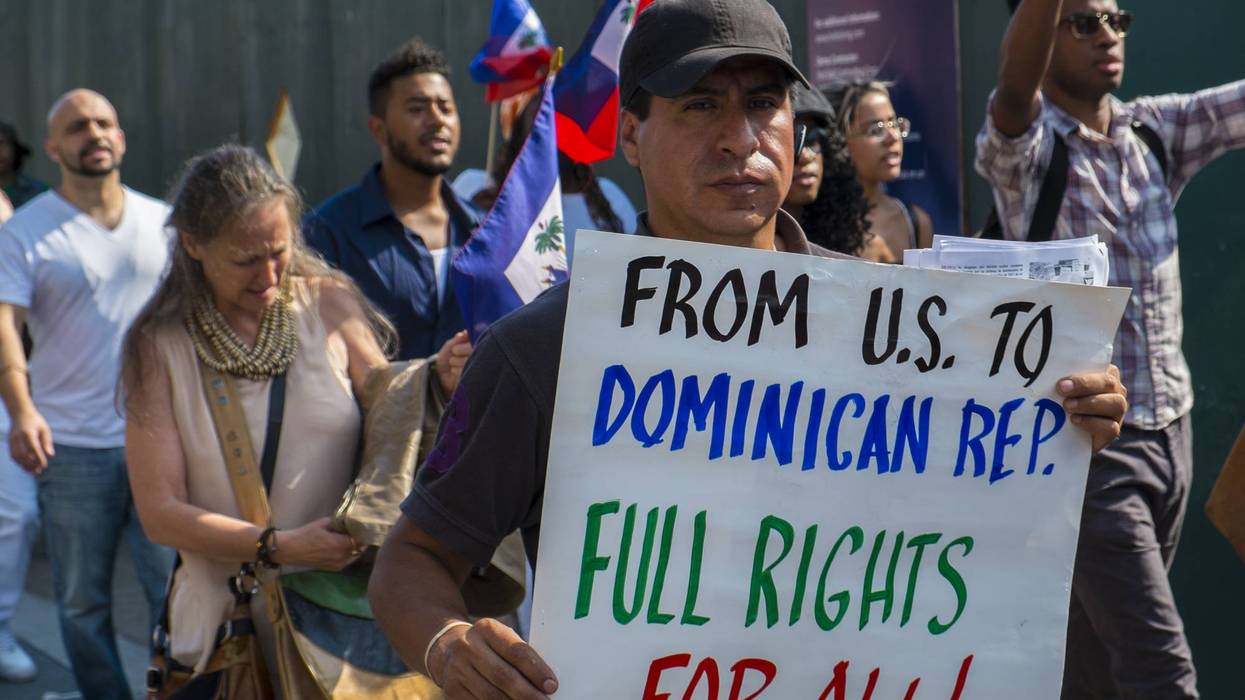
Racism and bigotry can never become the basis for deciding who gets rights and who belongs; families should never be stripped from their homes for the sake of violently manufacturing an ethnostate.
On April 1, the Supreme Court began hearing arguments in Trump v. Barbara, a class-action lawsuit challenging the Trump administration’s executive order to ban birthright citizenship for the children of undocumented immigrants.
Every lower court that has ruled on this issue thus far has found this executive order to be straightforwardly unconstitutional—and they are correct. The 14th Amendment is clear: “All persons born or naturalized in the United States, and subject to the jurisdiction thereof, are citizens of the United States and of the State wherein they reside.”
The Trump administration contends that to be “subject to the jurisdiction thereof” means one must owe “direct and immediate allegiance” to the United States and receive “protection” from it. Solicitor General D. John Sauer argues that the children of US citizens and formerly enslaved persons meet this test by virtue of having “a permanent domicile”—a permanent home they intend to stay indefinitely. By contrast, the children of undocumented immigrants “do not owe primary allegiance to the United States by virtue of domicile” because their parents “lack the legal capacity to establish domicile here.”
This reading adds much to the Citizenship Clause that is clearly not present. No plausible interpretation would assume that the drafters meant anything about loyalty, allegiance, or domiciles.
Ultimately, Trump’s birthright restrictions, like those implemented in the DR, are nothing more than racism and xenophobia masquerading as legitimate policy.
Those challenging the Trump administration argue: “The government is asking for nothing less than a remaking of our Nation’s constitutional foundations. The Order may be formally prospective, applying to tens of thousands of children born every month, and devastating families around the country. But worse yet, the government’s baseless arguments—if accepted—would cast a shadow over the citizenship of millions upon millions of Americans, going back generations.”
This warning should be taken seriously. We have already seen similar events play out in the Dominican Republic (DR).
In 1997, the mothers of Dilcia Yean and Violeta Bosico requested that the local registry office provide them with a copy of their daughters’ birth certificates. Without it, the children could not enroll in school and were at risk of deportation. While both Yean and Bosico were born in the DR to Dominican mothers, their fathers were Haitian temporary workers. On that basis, the registry denied their mothers’ request. This blatantly discriminatory denial effectively rendered the girls rightless and stateless.
Under the 1994 Dominican Constitution, both girls were entitled to birthright citizenship. Per the Constitution, citizenship is granted to “all persons born within the territory of the Republic, with the exception of the legitimate children of foreigners residing in the country in a diplomatic capacity or those who are in transit therein.” Important here is the “in transit” clause. As Ernesto Sagás notes, “This clause was originally designed to address the issue of children born on ships passing through Dominican ports, and whose parents were not intending to settle in the Dominican Republic.” However, over the years, politicians had argued (and at times acted as if) that clause extended to the children of temporary workers, like Yean and Bosico.
After years of obstruction from government officials, the mothers finally succeeded in obtaining their daughters’ birth certificates in 2001.
In 2003, the case was submitted to the Inter-American Court of Human Rights (IACHR). In court, the DR denied any wrongdoing. Rather, they defended a broad definition of “persons in transit” based on its 2004 General Migration Law (Ley No. 285-04). Under that Law, “temporary workers” were formally classified as “persons in transit.” The DR argued that Yean and Bosico were not Dominican nationals themselves because their fathers were Haitian temporary workers—their fathers were “in transit,” thus they too were “in transit.” The IACHR rejected this reasoning.
If the Supreme Court has any legitimacy left, they will do the right thing and end Trump’s birthright madness.
In September 2005, the IACHR ruled that the DR had violated several of the girls’ rights under the American Convention of Human Rights, including their right to a nationality, equal protection, and humane treatment. The IACHR ordered the Dominican government to award the girls $8,000 USD each, issue a public apology, and amend their domestic laws to make the procedure for acquiring birth certificates “simple, accessible, and reasonable since, to the contrary, applicants could remain stateless.”
In October 2005, the Senate of the Dominican Republic issued a resolution rejecting the IACHR’s decision. In December 2005, the Supreme Court of Justice of the Dominican Republic, in further defiance of the IACHR, upheld the General Migration Law’s broad definition of “persons in transit.”
In 2010, the DR took matters one step further by formally amending their Constitution. Under the 2010 Constitution, citizenship is granted to “persons born within the national territory, with the exception of the children of foreign nationals who are members of diplomatic and consular missions, of foreigners who are in transit or residing illegally within Dominican territory. Any foreigner defined as such under Dominican laws shall be considered a person in transit.” Importantly, this redefinition divorced the concept of “person in transit” from any notion of temporary stay. A person could, for instance, live continuously in the DR for years and still be considered “in transit.”
Initially, this did not impact people who already had Dominican citizenship. But in 2013, that too changed. The Constitutional Court of the Dominican Republic retroactively applied the new standard to all persons born between 1929 and 2010. The Court ordered the government to thoroughly review all birth registries within that period and remove any persons who no longer count as Dominican under the new guidelines. In the decade that followed, this ruling would strip as many as 245,000 Dominicans of their citizenship and trigger a humanitarian crisis.
Up to 86% of those impacted have been Dominicans of Haitian descent. This is no accident. It reflects the historical and persistent discrimination against Haitians rampant across the DR. The 2013 ruling made legal what people like Santiago Riverón, the mayor of Dajabón, at the Dominican-Haitian border, have long since thought. In an interview with journalist Marius Loiseau, Riverón claims that, “Haitians and Dominicans are like water and oil.” He continues, “They have already begun to invade us for good.”
Dominican President and Trump ally Luis Abinader echoes these sentiments. He remarks: “The rights of Dominicans will not be displaced. Our identity will not be diluted. Our generosity will not be exploited. Here, solidarity has limits.” He insists that stricter penalties against undocumented migrants are necessary to ensure that the “violence that is destroying Haiti will not cross over to the Dominican Republic.”
In October 2024, his administration announced plans to deport up to 10,000 undocumented migrants per week. Between then and March 2025, more than 180,000 people were forcibly deported to Haiti by Dominican officials. These mass deportations have fueled discrimination and racial profiling, excessive violence, arbitrary detention, and family separation as well as numerous human rights violations.
While there are many important differences between the DR and US, on the issue of immigration, the parallels are unmistakable. The Trump administration is also motivated by the belief that immigrants, including Haitians, pose an existential threat to the nation’s identity; that they are a serious risk to public safety; as well as a strain on social, political, and economic resources. Like Riverón and Abinader, President Trump insists that, given the scale of the “invasion,” aggressive immigration enforcement is necessary. This includes imposing denaturalization and immigrant arrest quotas. Even the formal justification for restricting birthright citizenship is similar. For both the Trump administration and the Dominican government, no matter how many years they have lived in the country or how long they intend to stay, an undocumented immigrant is always “in transit.” They never obtain a “permanent domicile.” The Dominican government does and the Trump administration aims to extend the purported ‘transientness’ of the parents to their children as a justification for denying them citizenship.
Ultimately, Trump’s birthright restrictions, like those implemented in the DR, are nothing more than racism and xenophobia masquerading as legitimate policy. If the Trump administration succeeds in restricting birthright citizenship, it—or a future MAGA presidency—will likely seek to build upon this ruling. Like the Constitutional Court of the DR, the Supreme Court may eventually rule to retroactively apply their decision to all persons born after the ratification of the 14th Amendment.
Racism and bigotry can never become the basis for deciding who gets rights and who belongs; families should never be stripped from their homes for the sake of violently manufacturing an ethnostate. What happened in the DR should be a cautionary tale for those of us in the US.
If the Supreme Court has any legitimacy left, they will do the right thing and end Trump’s birthright madness. That said, Trump cares little for democracy or the rule of law; regardless of how they decide, we will need to remain vigilant to protect ourselves, our loved ones, and our communities.