

SUBSCRIBE TO OUR FREE NEWSLETTER
Daily news & progressive opinion—funded by the people, not the corporations—delivered straight to your inbox.
5
#000000
#FFFFFF
To donate by check, phone, or other method, see our More Ways to Give page.
Daily news & progressive opinion—funded by the people, not the corporations—delivered straight to your inbox.
The House Judiciary Committee voted unanimously to advance the Fourth Amendment Is Not For Sale Act, which would ban the government from purchasing Americans’ data from data brokers instead of obtaining the required warrant. The committee also voted to advance the PRESS Act, a bill that would provide strong protections to journalists and their sources. The American Civil Liberties Union has been an ardent supporter of both bills for many years.
On the PRESS Act, Jenna Leventoff, senior policy counsel at ACLU, issued the following statement:
“The PRESS Act creates critical protections for the fearless journalists who act as government watchdogs and keep all of us informed. While the majority of states already have shield laws in place that protect journalists from compelled disclosure of their sources, the PRESS Act provides uniform protections to journalists all across the country. We thank the House Judiciary Committee for protecting our constitutional right to a free press and urge the full House to swiftly pass this bipartisan legislation.”
On the Fourth Amendment Is Not For Sale Act, Kia Hamadanchy, senior federal policy counsel at ACLU, issued the following statement:
“Both Democrats and Republicans recognize that government agencies should not be allowed to circumvent core constitutional protections by purchasing access to data that they would otherwise need a warrant to obtain. The full House should now vote on this legislation, and it should be included in any reform effort involving reauthorization of Section 702 of the Foreign Intelligence Surveillance Act.”
Groups Challenge Portion of Anti-Voter Law that Blocks Georgians from Providing Food and Water to Voters Waiting in Long Lines at Polls
ATLANTA—Voting rights organizations filed an emergency preliminary injunction motion today to lift part of the restriction in Georgia’s anti-voter law, S.B. 202, that blocks Georgians from providing food and water to voters waiting in long lines at the polls.
The motion was filed as part of ongoing litigation in AME Church v. Kemp, which challenges S.B. 202 for unconstitutionally creating barriers to voting that diminish the voices of communities of color, women, and people with disabilities. If granted, the preliminary injunction would allow volunteers to provide food and water to voters in lines that extend beyond 150 feet from the polling place.
The American Civil Liberties Union (ACLU), ACLU of Georgia, Southern Poverty Law Center (SPLC), Legal Defense Fund (LDF), and the law firms WilmerHale and Davis Wright Tremaine LLP (DWT) filed the motion on behalf of the plaintiffs.
Plaintiffs are the Sixth District of the American Methodist Episcopal Church, Delta Sigma Theta Sorority, Georgia ADAPT, and the Georgia Advocacy Office, represented by the ACLU of Georgia, ACLU, LDF, and Wilmer Hale, as well as the Georgia Muslim Voter Project, Women Watch Afrika, Latino Community Fund of Georgia, and the Arc of the United States, represented by SPLC and DWT.
“Our clients used to be able to offer a bottle of water or a snack to voters waiting in long lines at the polls,” said Rahul Garabadu, senior voting rights staff attorney at the ACLU of Georgia. “S.B. 202 largely banned these activities, adding to the burdens that many voters, including voters of color and voters with disabilities, face when casting a ballot. Last year, the court found that there were serious constitutional concerns with portions of the ban on line relief. We’re now asking the court to strike down the unlawful provisions of the ban so that our clients can provide crucial support to voters across our state.”
“This restriction on providing food and water to voters waiting in long lines is a brazen attempt to make voting more difficult in Georgia. It stifles our clients’ First Amendment right to express, through action, the important message that voting is vital, and that Georgians, particularly Black Georgians and Georgians of color, should persist through obstacles laid in their path as they have throughout the state’s history,” said Davin Rosborough, senior staff attorney with the ACLU’s Voting Rights Project.
“The cruel barriers to voting enacted by S.B. 202 target both the basic needs and basic rights of Georgians. There can be no reason for denying food or water to people waiting in long polling lines, other than trying to prevent them from exercising their freedom to vote,” said Poy Winichakul, SPLC’s senior staff attorney for voting rights. “These barriers to voting must be removed so all Georgians can have a voice to advocate for their communities in the crucial 2024 elections.”
“S.B. 202’s provisions restricting line relief activities are cruel and discriminatory,” said Rhonda Briggins, chair, Strategic Partnerships Taskforce for Delta Sigma Theta Sorority, Inc. “These restrictions prevent Deltas from providing necessities like food and water to voters experiencing long lines, which impact significant numbers of Black Georgia voters. We are hopeful the court will block the unlawful restrictions it has already recognized may be unlawful so that we can resume some of our line relief efforts for upcoming elections.”
“Georgia’s cruel line relief ban makes it harder for Black voters to fully participate in elections,” said John Cusick, assistant counsel at LDF. “The court has already found constitutional concerns with certain aspects of the line relief ban. We’re asking the court to block those provisions in upcoming elections so that the organizations we represent and other groups throughout Georgia can resume modest line relief efforts like passing out food and water to Georgia voters who continue to stand in unacceptably long lines.”
“S.B. 202’s line relief ban imposes unjustifiable and unconstitutional burdens on voters at the polls,” said George P. Varghese, a partner at WilmerHale. “We are filing this motion to ensure that our clients’ fundamental right to vote, and their right to support fellow Georgians who vote, are not compromised — including in the upcoming 2024 elections.”
“Instead of making it easier for folks to cast a ballot in sweltering heat or blistering cold, S.B. 202 makes it a crime for a neighbor to offer these voters a bottle of water or warm cup of coffee,” said Adam S. Sieff, counsel at Davis Wright Tremaine. “That’s not only inhumane, it’s also a clear violation of the First Amendment and these citizens’ rights as voters. The court has already found that aspects of S.B. 202’s line relief ban raises serious constitutional problems, and we’re filing this motion to ensure that these fundamental rights are respected in future elections, including in 2024.”
Filing: https://www.aclu.org/documents/ame-church-v-kemp-pi-motion-on-georgia-line-relief-4-24-2023
Case background: https://www.aclu.org/cases/sixth-district-african-methodist-episcopal-church-v-kemp

"Not having her around, especially during Christmas, will be very difficult," said sister Lina Abu Akleh. "There will be an empty seat around the table."
Relatives of Shireen Abu Akleh, the Palestinian-American Al Jazeera reporter shot dead by Israeli occupation forces in May, marked their first Christmas without their beloved family member Sunday by vowing to "make sure her legacy continues to be remembered."
Lina Abu Akleh, Shireen's sister, told Al Jazeera that December was always a "happy month," a time when the busy journalist usually took a break from work to spend time with family.
"I still feel like I'm in this nightmare. And it's just not ending."
"Not having her around, especially during Christmas, will be very difficult… There will be an empty seat around the table," Shireen's 27-year-old sibling said.
"I still feel like I'm in this nightmare. And it's just not ending," she added. "She was so present in our lives that for us to lose her in this sudden and heinous way makes it so difficult to comprehend."
Abu Akleh's colleagues also lamented their first Christmas without her.
"The joy is missing, but hope in a better tomorrow will never die," tweeted Al Jazeera English producer Rania Zabaneh. "We'll never stop talking about you, demanding #JusticeForShireen, 227 days on and every day."
Abu Akleh—known throughout the Middle East as the "voice of Palestine"—and other journalists were covering a May 11 Israel Defense Forces (IDF) raid on Jenin in the illegally occupied West Bank when she was shot dead by a sniper. Al Jazeera producer Ali Samodi was shot in the back but survived.
After initially trying to deny that its forces killed Abu Akleh, Israel admitted that there was a "high possibility" that the journalist was "accidentally hit" by army fire. Israeli officials declined to launch a criminal investigation of the killing.
An independent probe by London-based Forensic Architecture and the Palestinian human rights group Al-Haq in September revealed evidence that an Israeli sniper repeatedly shot at Abu Akleh—who was wearing a helmet and flak vest clearly identifying her as a journalist—and for two minutes also fired at anyone who tried to come to her aid.
Investigations by international media outlets, rights groups, the United Nations Human Rights Office, and others concluded that Abu Akleh was killed by Israeli fire. In the United States, the Biden administration said in July that Abu Akleh was "likely" but unintentionally shot by an Israeli soldier, a move critics condemned as a "whitewash."
Last month, the FBI launched its own probe into Abu Akleh's killing.
Abu Akleh's relatives and Al Jazeera are seeking justice at the International Criminal Court, where the Qatar-based news network earlier this month filed a lawsuit against the Israeli military over the killing.
Lina Abu Akleh told Al Jazeera that knowing Shireen would be fighting for justice if she were still alive is what keeps her going.
"She was optimistic, always, that justice will prevail," she said.

The United Nations' latest annual ranking of nations by "sustainable development goals" will come as a shock for many Americans. Not only aren't we "Number One," we're not even close. The top four countries are Scandinavian democracies. The United States ranks forty-first, just below Cuba (that's right, below our Communist neighbor). Countries that outrank us include Estonia, Croatia, the Slovak Republic, Romania, and Serbia.
The goal of the report is to measure countries' progress, or development, toward a civilized and sustainable future.
Every ranking contains some element of subjectivity. But the seventeen "sustainable development goals" (SDGs) developed by economist Jeffrey Sachs and his team are well chosen. They include the absence of poverty and hunger, good health and education, gender equality, clean air and water, and reduced inequality.
The goal of the report is to measure countries' progress, or development, toward a civilized and sustainable future. As historian Kathleen Frydl points out, "Under this methodology ... the U.S. ranks between Cuba and Bulgaria. Both are widely regarded as developing countries." Frydl's essay was widely circulated under the headline, "US is becoming a 'developing country' on global rankings that measure democracy, inequality."
To Frydl's point, the US picture does look like that of a developing country. But how, exactly, does a country that was once "developed" become "developing"? The phrase "developing country" implies that there are countries that have achieved development, and countries that are on their way. It leaves no room for the possibility that a nation, once it developed, can "un-develop" itself. It's like saying that a "growing child" can become "un-grown." And yet, that's exactly what is happening to the United States.
The language of "developed" and "developing" countries carries with it the idea that Western European and North American countries reached an endpoint in the 20th century, one that other nations naturally aspire to and are on the road to achieving. It is the language of post-colonialism (which suggests the United States is now colonizing itself). The words are heavily freighted with assumptions about globalism, capitalism, and liberal democracy. Among them is the idea that these forces bring with them a stability, the kind of benign stasis that Francis Fukuyama once called "the end of history."
Fukuyama has since renounced that idea, and understandably so. The declining status of the United States undermines the historical assumptions about progress that have guided political and financial elites for many decades. Countries like the United States and United Kingdom look less and less like the end-state of history and more and more like declining world powers, like so many that have gone before them.
Perhaps for this reason, the public debate has moved away from the quasi-Utopian ideals of Westernized development and back toward the idea that history is a cyclical process in which empires rise and fall. Anthropologists like Marshall Sahlins and David Graeber find positive qualities in 'primitive' societies. Journalists like Chris Hedges adopt the decline of the American empire as a major theme. In To Govern the Globe, historian Alfred McCoy forecasts the decline of American power and speculates that imperial nation-states may soon cease to exist altogether.
The historian Marc Bloch, quoted in Harvey Kaye's book on the British Marxist historians, sounds prophetic when he writes that history is "the science of eternal change."
Where does that leave the people of the United States? Other measurements and reports may not place the US below Cuba or Serbia, but most major measurements seem to point one way: down. Life expectancy is declining. Economic inequality is rising. Other measurements are flat at best.
Progress isn't like rain. It does not, as the Bible says of rainfall, "fall on the just and unjust alike." Progress, real progress, is made by people working together for the common good. If they don't work together it slows down, or stops, or reverses itself. The language of "development" is obsolete. We need a new language of cooperation, democracy, and justice. And we need it now, before it's too late, before the forces of climate change carry us away on the tides of eternal change.
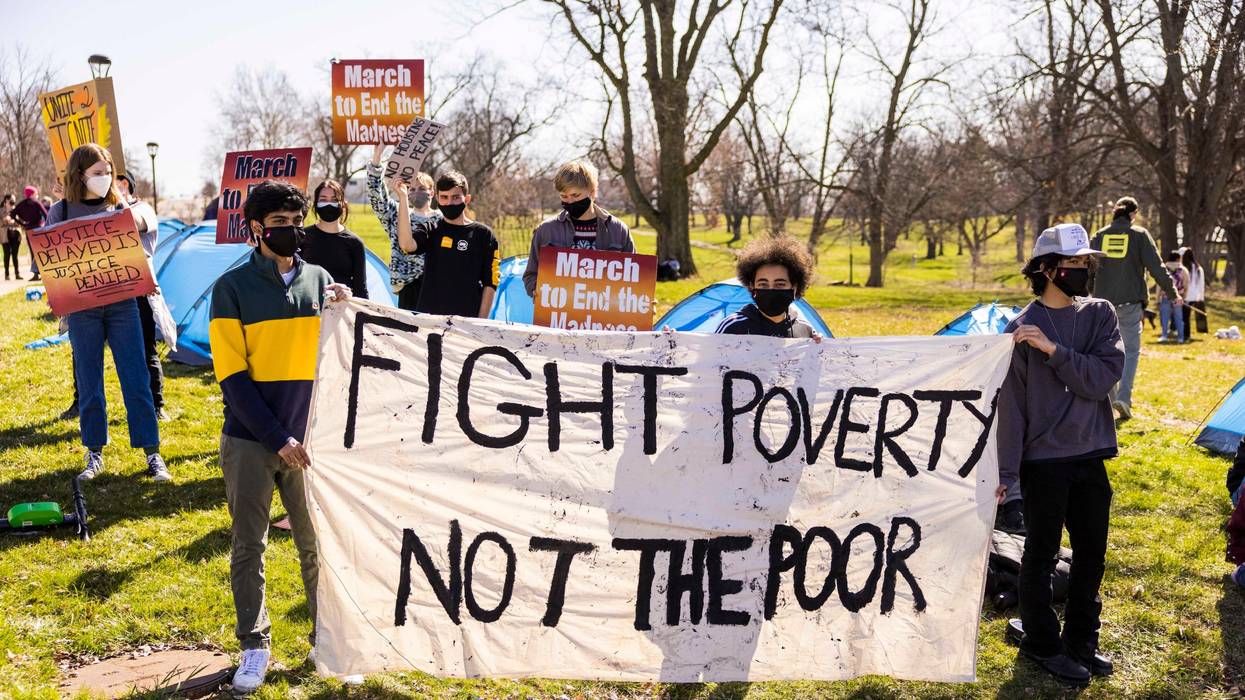
In the American ethos, sacrifice is often hailed as the chief ingredient for overcoming hardship and seizing opportunity. To be successful, we're assured, college students must make personal sacrifices by going deep into debt for a future degree and the earnings that may come with it. Small business owners must sacrifice their paychecks so that their companies will continue to grow, while politicians must similarly sacrifice key policy promises to get something (almost anything!) done.
It's time for us to fight for a comprehensive, intersectional, bottom-up approach to the injustices that continually unfold around us.
We have become all too used to the notion that success only comes with sacrifice, even if this is anything but the truth for the wealthiest and most powerful Americans. After all, whether you focus on the gains of Wall Street or of this country's best-known billionaires, the ever-rising Pentagon budget, or the endless subsidies to fossil-fuel companies, sacrifice is not exactly a theme for those atop this society. As it happens, sacrifice in the name of progress is too often relegated to the lives of the poor and those with little or no power. But what if, instead of believing that most of us must eternally "rob Peter to pay Paul," we imagine a world in which everyone was in and no one out?
In that context, consider recent policy debates on Capitol Hill as the crucial midterm elections approach. To start with, the passage of the Biden administration's Inflation Reduction Act (IRA) promises real, historic advances when it comes to climate change, health care, and fair tax policy. It's comprehensive in nature and far-reaching not just for climate resilience but for environmental justice, too. Still, the legislation is distinctly less than what climate experts tell us we need to keep this planet truly livable.
In addition, President Biden's cancellation of up to $20,000 per person in student loans could wipe out the debt of nearly half of all borrowers. This unprecedented debt relief demonstrates that a policy agenda lifting from the bottom is both compassionate and will stimulate the broader economy. Still, it, too, doesn't go far enough when it comes to those suffocating under a burden of debt that has long served as a dead weight on the aspirations of millions.
In fact, a dual response to those developments and others over the past months seems in order. As a start, a striking departure from the neoliberal dead zone in which our politics have been trapped for decades should certainly be celebrated. Rather than sit back with a sense of satisfaction, however, those advances should only be built upon.
Let's begin by looking under the hood of the IRA. After all, that bill is being heralded as the most significant climate legislation in our history and its champions claim that, by 2030, it will have helped reduce this country's carbon emissions by roughly 40% from their 2005 levels. Since a reduction of any kind seemed out of reach not so long ago, it represents a significant step forward.
Among other things, it ensures investments of more than $60 billion in clean energy manufacturing; an estimated $30 billion in production tax credits geared toward increasing the manufacture of solar panels, wind turbines, and more; about $30 billion for grant and loan programs to speed up the transition to clean electricity; and $27 billion for a greenhouse gas reduction fund that will allow states to provide financial assistance to low-income communities so that they, too, can benefit from rooftop solar installations and other clean energy developments.
The IRA also seeks to lower energy costs and reduce utility bills for individual Americans through tax credits that will encourage purchases of energy-efficient homes, vehicles, and appliances. Among other non-climate-change advances, it caps out-of-pocket costs for prescription drugs, reduces health insurance premiums for 13 million Americans, and provides free vaccinations for seniors.
As the nation's biggest investment in the climate so far, it demonstrates the willingness of the Biden administration to address the climate crisis. It also highlights just how stalled this country has been on that issue for so long and how much more work there is to do. Of course, given our ever hotter planet and the role this country has played in it as the historically greatest greenhouse gas emitter of all time, anything less than legislation that will lead to net-zero carbon emissions is a far cry from what's necessary, as this country burns, floods, and overheats in a striking fashion.
Pipelines and Sacrifice Zones
Earlier iterations of what became the IRA recognized a historic opportunity to enact policies connecting the defense of the planet to the defense of human life and needs. Because of the resistance of Democratic Senators Joe Manchin and Kyrsten Sinema, as well as every Senate Republican, the final version of the reconciliation bill includes worrying sacrifices. It does not, for instance, have an extension or expansion of the Child Tax Credit, a lifeline for poor and low-income families, nor does it raise the minimum wage to $15 an hour, even though that was a promise made in the 2020 election. Gone as well are plans for free pre-kindergarten and community college, in addition to the nation's first paid family-leave program that would have provided up to $4,000 a month to cover births, deaths, and other pivotal moments in everyday life.
And don't forget to add to what's missing any real pain for fossil-fuel companies. After all, coal baron Manchin seems to have succeeded in cutting a side deal with Senate Majority Leader Chuck Schumer for a massive natural gas pipeline through his home state of West Virginia and that's just to begin a list of concessions. Indeed, the sacrificial negotiations with Manchin to get the bill passed ensured significantly more domestic fossil-fuel production, including agreement that the Interior Department would auction off permits to drill for yet more oil and gas in the Gulf of Mexico, Alaska, and possibly elsewhere, all of which will offset some of the emissions reductions from climate-change-related provisions in the bill.
It's important to note as well that, although progress was made on reducing fossil-fuel emissions, expanding health care, and creating a fairer tax system, for the poor in this country, "sacrifice zones" are hardly a thing of the past. As journalist Andrew Kaufman suggests, "One thing that does seem assured, however, is that the arrival--at last--of a federal climate law has not heralded an end to the suffering [of] communities living near heavy fossil-fuel polluters." And as Rafael Mojica, program director for the Michigan environmental justice group Soulardarity, put it, the IRA "is riddled with concessions to the big carbon-based industries that at present prey on our communities at the expense of their health, both physically and economically."
Keep in mind that Michigan is already anything but a stranger to sacrifice zones. Case in point: the water crisis in the city of Flint as well as in Detroit. The Flint Democracy Defense League and the Michigan Welfare Rights Organization have battled lead-poisoning and water shut-offs for years in the face of deindustrialization and the lack of a right to clean water in this country. Such grassroots efforts helped sound the alarm during the Flint water crisis that began in 2014 and have since linked community groups nationwide dealing with high levels of toxins in their water supply so that they could learn from that city's grassroots organizing experience. Meanwhile, so many years later, Michiganders are still protesting potential polluters like Enbridge's aging Line 5 oil pipeline.
And there are many other examples of frontline community groups protesting the ways in which their homes are being sacrificed on the altar of the fossil-fuel industry. Take, for example, the communities in the stretch of Louisiana between New Orleans and Baton Rouge that contain hundreds of petrochemical facilities and has, eerily enough, come to be known as Cancer Alley. There, among a mostly poor and Black population, you can find some of the highest cancer rates in the country. In St. James Parish alone, there are 12 petrochemical plants and nearly every household has felt the impact of cancer. For years, Rise St. James and other local groups have been working to prevent the construction of a new plastics facility near local schools on land that once was a slave burial ground.
Then, of course, there are many other sacrifice zones where the issue isn't fossil fuels. Take the city of Aberdeen in Grays Harbor County, Washington, once home to a thriving timber and lumber economy. After its natural landscape was stripped and the local economy declined, that largely white, rural community fell into endemic poverty, homelessness, and drug abuse. Chaplains on the Harbor, one of the few community organizations with a presence in homeless encampments across the county, has now started a sustainable farm run by formerly homeless and incarcerated young people in Aberdeen as part of an attempt to create models for the building of green communities in places rejected by so many.
Or take Oak Flat, Arizona, the holiest site for the San Carlos Apache tribe. There, a group called the Apache Stronghold is leading a struggle to protect that tribe's sacred lands against harm from Resolution Copper, a multinational mining company permitted to extract minerals on those lands thanks to a midnight rider put into the National Defense Authorization Act in 2015. Along with a growing number of First Nations people and their supporters, it has been fighting to protect that land from becoming another sacrifice zone on the altar of corporate greed.
On the east coast, consider Union Hill, Virginia, where residents of a historic Black community fought for years to block the construction of three massive compressor stations for fracked gas flowing from the Atlantic Coast Pipeline. Those facilities would have potentially subjected residents to staggering amounts of air pollution, but early in 2020 community organizers won the fight to stop construction.
Consider as well the work of Put People First PA!, which, in Pennsylvania communities like Grant Township and Erie, is on the tip of the spear in the fight against an invasive and devastating fracking industry that's ripping up land and exposing Pennsylvanians to the sort of pollutants that leaders in Union Hill fought to prevent. Note as well that, in many similar places, hospitals are being privatized or shuttered, leaving residents without significant access to health care, even as the risk of respiratory illnesses and other industrially caused diseases grows.
Such disparate communities reflect a long-term history of suffering--from the violence inflicted on indigenous people, to the slave plantations of the South, to the expansion (and then steep decline) of industrial production in the North and West, to pipelines still snaking across the countryside. And now historic pain inflicted on low-income and poor Americans will increase thanks to a growing climate crisis, as the people of flooded and drinking-water-barren Jackson, Mississippi, discovered recently.
In a world of megadroughts, superstorms, wildfires, and horrific flooding guaranteed to wreak ever more havoc on lives and livelihoods, poor and low-income people are beginning to demand action commensurate with the crisis at hand.
Dark Clouds Blowing in from the "Equality State"
While reports on the passage of the IRA and student debt relief dominated the news cycle, another major policy announcement at the close of the summer and far from Capitol Hill slipped far more quietly into the news. It highlights yet again the "sacrifices" that poor Americans are implicitly expected to make to strengthen the economy. Just outside of Jackson, Wyoming, one of the wealthiest and most unequal towns in this country, Federal Reserve Chair Jerome Powell committed his organization to take "forceful and rapid steps to moderate demand so that it comes into better alignment with supply and to keep inflation expectations anchored."
Couched in typically wonkish language, his comments--made in the "equality state"--may sound benign, but he was suggesting capping wages, an act whose effects will, in the end, fall most heavily on poor and low-income people. Indeed, he warned, mildly enough, that this would mean "some pain for households and businesses"--even as he was ensuring that the livelihoods of poor and low-income people would once again be sacrificed for what passes as the greater good.
What does it mean, for instance, to "moderate demand" for food when more than 12 million families with children are already hungry each month? It should strike us as wrong to call for "some pain" for so many households facing crises like possible evictions or foreclosures, crushing debt, and a lack of access to decent health care. It should be considered inhumane to advocate for a "softer labor market" when one in three workers is already earning less than $15 an hour.
It is disingenuous to say that the economy is "overheating," as if what's being experienced is some strange, abstract anomaly rather than the result of decades of disinvestment in infrastructure and social programs that could have provided the basic necessities of life for everyone. Nonetheless, Powell continues to push a false narrative of scarcity and the threat of inflation to smother the powerful resurgence of courageous and creative labor organizing that we've seen, miraculously enough, in these pandemic years.
At this point, as a pastor and theologian, I can't resist quoting Jesus's choice words in the Gospel of Matthew about how poor people so often pay the price for the further enrichment of the already wealthy. In Matthew 9, Jesus asserts: "I desire mercy, not sacrifice." The Greek word "mercy" is defined as loving kindness, taking care of the down and out. In Jesus's parlance, mercy meant acts of mutual solidarity and societal policies that prioritized the needs of the poor, which would today translate into cancelling debts, raising wages, and investing in social programs.
Despite the encouraging policy-making that hit the headlines this summer, America remains a significant sacrifice zone with economic policies that justify their painful impact on the poor and marginalized as necessary for the greater good. It's time for us to fight for a comprehensive, intersectional, bottom-up approach to the injustices that continually unfold around us.
The Center for Biological Diversity and Sierra Club filed an appeal today challenging a federal plan authorizing the killing of up to 72 grizzly bears to accommodate livestock grazing in Wyoming's Bridger-Teton National Forest, near Yellowstone National Park.
Today's filing appeals a May ruling by the U.S. District Court of Wyoming, which backed the Trump administration-approved plan allowing the bears to be killed.
The Center for Biological Diversity and Sierra Club filed an appeal today challenging a federal plan authorizing the killing of up to 72 grizzly bears to accommodate livestock grazing in Wyoming's Bridger-Teton National Forest, near Yellowstone National Park.
Today's filing appeals a May ruling by the U.S. District Court of Wyoming, which backed the Trump administration-approved plan allowing the bears to be killed.
"We're determined to stop this terrible plan, which could be a death sentence for dozens of Yellowstone grizzly bears," said Andrea Zaccardi, carnivore conservation legal director at the Center. "The federal government shouldn't be killing native species so the livestock industry can graze cattle on public lands for next to nothing. We believe the court's decision was flawed, and we'll continue to fight for the lives of these magnificent bears."
The court's opinion contained several legal flaws. For example, the court erred when it determined that the U.S. Fish and Wildlife Service's analysis discussing the project's impacts to bears was legally sufficient, even after acknowledging that the agency's analysis lacked a discussion of how many females could be killed under the project.
The plaintiffs argued that the mitigation measures contained within the biological opinion were insufficient to protect grizzly bears because they were vague, unenforceable, and uncertain to occur. The court held that the project would not jeopardize the grizzly bear population even if the mitigation measures do not occur, even though the agency never made such an assertion and explicitly relied on the measures when making its no-jeopardy determination.
"The intentional killing of dozens of grizzly bears is a slap in the face to decades of recovery efforts in the Greater Yellowstone region," said Bonnie Rice, senior representative for the Sierra Club in the Greater Yellowstone region. "We cannot allow these bears to be killed when a wide range of effective, non-lethal measures are available to livestock producers. The priority should be requiring and enforcing conflict prevention measures and promoting coexistence and safety for bears and people."
The parties and court will next set a briefing schedule in the hopes of receiving an appellate decision before the grazing season begins next spring.
The 9th Circuit Court of Appeals just upheld a previous court's decision and ruled against the telecom industry in their attempt to prevent the California net neutrality law SB 822--widely regarded as the strongest net neutrality legislation in the nation--from going into effect.
The 9th Circuit Court of Appeals just upheld a previous court's decision and ruled against the telecom industry in their attempt to prevent the California net neutrality law SB 822--widely regarded as the strongest net neutrality legislation in the nation--from going into effect.
Telecom giants like AT&T and Comcast spent millions of dollars lobbying against SB 822. They even funded astroturf groups that spammed senior citizens with robocalls. And surely they spent big money on the attorneys who just lost this case for them.
The California net neutrality law is now clearly enforceable, and bars telecom companies from blocking, throttling, and paid prioritization, abusing their gatekeeper power in interconnection, or engaging in "zero rating" scams. The court's decision also clearly paves the way for other states to impose their own net neutrality protections.
Digital rights group Fight for the Future, which played a crucial role mobilizing grassroots support for the California net neutrality law, issued the following statement, which can be attributed to the group's Director, Evan Greer (she/her):
On Friday, the U.S. Court of Appeals for the Ninth Circuit affirmed a California federal district court's order denying a phone-and-cable-industry effort to prohibit enforcement of the state's landmark Net Neutrality law.
The California Internet Consumer Protection and Net Neutrality Act passed the Sacramento legislature and was signed into law by then-Gov. Jerry Brown in 2018. Industry groups representing companies like AT&T, Comcast, and Verizon sought to prevent California from implementing the law, which the state put in place to fill the void left by the Trump FCC's 2017 repeal of federal open-internet rules.
The district court concluded that California was within its rights to step into the vacuum created by the Trump FCC ruling and to pass a law that prevents internet service providers from blocking or discriminating against websites, apps, and content chosen by internet users in California. In 2020 and 2021, Free Press joined Access Now, Mozilla, New America's Open Technology Institute, and Public Knowledge to file amicus briefs at the district-court and appellate-court levels in defense of California's legislation.
Lawyers representing ISPs had made meritless claims that the Trump FCC's decision preempted state laws in this field, preventing states from stepping in to protect internet users exposed by the 2017 federal repeal. The Trump FCC repeal also ditched the agency's Title II authority to treat broadband as an essential telecommunications service, jeopardizing its ability to make broadband more affordable, ubiquitous, and competitive.
Free Press Vice President of Policy and General Counsel Matt Wood said:
"More than three years ago, California passed a strong and bipartisan Net Neutrality bill restoring vital nondiscrimination protections that the Trump administration had jettisoned on the federal stage. Now the Ninth Circuit has affirmed the state's ability to move forward with this law. The judges dismissed a bevy of pointless phone-and cable-company arguments that have now been rejected by courts on both coasts.
"This decision is a huge step forward, but the California law had an impact even before it cleared this latest court hurdle. Industry lobbyists and other Net Neutrality opponents have argued, loudly but cynically, that the repeal of the FCC's rules had no impact. But the passage of this strong state law meant ISPs still had to respect open-internet principles even before this latest victory, because they knew their stall tactics in the Ninth Circuit were likely to fail, as they now have twice.
"But while today's ruling is great news, the job isn't done. This win is significant because it offers protections to people in our most populous state and drives the national conversation forward. Yet tremendous as it is, we still need the Biden FCC to reclaim its authority not just for nationwide open-internet rules, but for policies promoting affordable, resilient, just, and reasonable internet connections for everyone.
"That starts with the U.S. Senate moving quickly to confirm Gigi Sohn as the FCC's fifth commissioner so the agency can begin to restore these essential safeguards. After the Commerce Committee vote on her nomination next Wednesday, we need swift action on the floor to put the FCC fully back to work."
Stosh Cotler, CEO of Bend the Arc: Jewish Action released the following statement on Saturday evening in response to all four hostages at Congregation Beth Israel in Colleyville, Texas being released and safe:
"We are grateful that all hostages at Congregation Beth Israel have been released and we send our prayers for peace and healing to them, their families, their congregation, and their community.
During this long day and night, Jewish people across the country have taken comfort in the outpouring of support for our community from our neighbors of Muslim, Christian, and other faiths who stood united in condemning this attack and antisemitism in all forms.
Today we have felt the all too familiar sinking in our hearts, the outrage and horror of witnessing yet another antisemitic attack on a synagogue on Shabbat. Whether we are walking down the streets of our neighborhoods or through the doors of our holy spaces, no one should experience fear or be targeted for their faith.
We worry that in the days ahead there will be those who try to use our community's pain and trauma to fuel division or incite violence against other communities -- we will not let them. We will reject any attempt, rooted in anti-Muslim bigotry, to hold an entire community responsible for the actions of one individual.
We are sending our love to Jewish communities in Colleyville and across the country. We all deserve to be safe in our places of worship and in this country, where every single one of us belongs."

A Christmas holiday parade themed 'comfort and joy' in the town of Waukesha, Wisconsin turned deadly Sunday evening after a driver plowed into participants and observers, killing at least five people and injuring more than 40.
According to the Greater Milwaukee Today, a local paper:
Multiple people were struck by a red SUV in downtown Waukesha partway through the Waukesha Christmas Parade this evening around 4:40 p.m.
Before the parade began, the vehicle was seen swerving around parade participants on Whiterock Avenue, including The Freeman van. Police vehicles with sirens and lights activated followed soon after, and then a fire truck.
The crowd that had gathered to watch the parade began dispersing suddenly and with urgency. People were heard calling for family members in a panicked state--a man was shouting a girl's name from the historic courthouse building's steps.
As of this writing, police have not identified by name a "person of interest" in custody believed to be the driver of the red SUV and officials have said the death and injury count could both rise. Police gave no details about the individual and Waukesha Police Chief Dan Thompson, who briefed reporters, refused to speculate about any possible motives.
"At this time, we can confirm that 5 people are deceased and over 40 are injured," said a statement from the City of Waukesha on Sunday night. "However, these numbers may change as we collect additional information."
The Milwaukee Journal Sentinel reports that the tragic incident "occurred during one of the city's biggest and most cherished annual events. A joyous crowd lined both sides of the road, people bundled against the cold."
Videos circulating on social media offered various angles of the incident as marchers in the parade were overtaken by the speeding vehicle and onlookers reacted with horror as people in the street--including elderly performers and children--were struck.
According to the Associated Press, the parade held annually "on the Sunday before Thanksgiving, is sponsored by the city's Chamber of Commerce. This year's, the 59th, had the theme of 'comfort and joy.'"
Witnesses expressed grief and called for prayers for those killed and injured as well as their families.
"There were pom-poms and shoes and spilled hot chocolate everywhere," Corey Montiho, a School District of Waukesha board member, who saw the events unfold as his daughter's dance troupe performed, told the Sentinel. "I had to go from one crumpled body to the other to find my daughter. My wife and two daughters were almost hit. Please pray for everybody. Please pray. My family is safe but many are not. I held one little girl's head in my hand, she was seizing and she was bleeding out of her ears. I held her mother as she collapsed. Please pray."
On Tuesday, media outlets reported that President Biden will nominate Jessica Rosenworcel as the chair of the Federal Communications Commission and former FCC staffer and longtime public-interest advocate Gigi Sohn as an FCC commissioner.
The president reportedly will nominate Alan Davidson of Mozilla, a former head of New America's Open Technology Institute, as director of the National Telecommunications and Information Administration.
On Tuesday, media outlets reported that President Biden will nominate Jessica Rosenworcel as the chair of the Federal Communications Commission and former FCC staffer and longtime public-interest advocate Gigi Sohn as an FCC commissioner.
The president reportedly will nominate Alan Davidson of Mozilla, a former head of New America's Open Technology Institute, as director of the National Telecommunications and Information Administration.
Free Press President and Co-CEO Craig Aaron said:
"Jessica Rosenworcel is a tremendous choice to lead the FCC at this crucial moment. She has proven in her years at the agency to be a champion of the public interest, with political savvy and an incredible depth of legal and technical knowledge. A smart and experienced leader, she knows how to both use the bully pulpit -- and make sure all the details are right.
"She has a proven track record of getting big things done, whether it's the key role she played in safeguarding and strengthening Net Neutrality protections as commissioner or leading the rollout of the Emergency Broadband Benefit to help people get and stay connected to high-speed internet during the pandemic. She knows the ins and outs of the agency and as interim chair already has talented staff in place -- which is crucial given how long we have waited for the full commission to be seated. Rosenworcel is the first woman to be named permanent chair of the FCC, and we congratulate her on this historic accomplishment.
"Gigi Sohn is a devoted advocate for policies and programs that will help people and actually improve their lives. She brings significant experience inside the FCC and has long been a clarion voice outside of the building for what needs to change. Having worked alongside her on so many crucial issues, I know firsthand the passion and intelligence she will bring to this job. She is a strong leader and willing collaborator. Time and again, she has built broad and bipartisan coalitions to accomplish important goals. But she also knows how to fight for what's right.
"Alan Davidson brings a wealth of experience to this essential role within the Commerce Department. Whether working in industry or with public-interest groups, Alan has been a champion of the free and open internet throughout his career. He is an excellent, tech-savvy choice who will take a collaborative approach to his work across the government.
"This is a dream team for anyone who cares about the future of the internet and the media. Nominating Rosenworcel, Sohn, and Davidson would demonstrate the Biden administration's commitment to making media and tech policy that will actually serve people.
"While these choices were worth the wait, there's no time to waste and so much to get done: ensuring the billions being invested in broadband actually reach those who need it most, restoring Net Neutrality and Title II, reckoning with media regulators' history on race and repairing the damage of the Trump years. We urge the Senate to move as quickly as possible to advance all of these nominees."