Brazil Impeachment Brings to Mind Thailand's 2014 Military Coup
Q: What's the difference between the coup that overthrew the elected government in Thailand in Thailand in 2014 and the coup that has now removed the elected government in Brazil?
A: The coup-makers in Thailand wore uniforms.
The Brazilian Senate has just voted 55 to 22 to impeach President Dilma Rousseff. She will be suspended for the next 180 days while the same body tries her on the charge of understating the size of the budget deficit before the last election.
If two-thirds of the senators find her guilty, she will be permanently removed from office. Since they have just voted to impeach her by a bigger majority than that, we may take it for granted that she is a goner.
As the long evening droned on, it was quite clear that most senators were only interested in the outcome, not the evidence. On several occasions the Speaker even had to tell them to stop talking and put their phones away. This was about politics, not about justice, and the deal was already done.
Two justifications have been offered for this unseating of an elected president, but both of them are pretty flimsy. The first is the legal justification, which is that Rousseff's government tweaked the accounts a bit to make Brazil's financial situation look less bad before the last election in 2014.
She did, but which elected government anywhere does not try to put the best face on its figures? Anyway, nobody believes that this is the real reason for her removal from power.
The broader political justification is that she has made a mess of the economy. The economy certainly is in a terrible mess - in each of the last two years it has shrunk by 4 percent, one-tenth of the population is unemployed, and inflation is exploding - but every big commodity-exporting country has been in the same mess since the global financial crash of 2008. The demand for their exports simply collapsed.
Rousseff didn't create this crisis, but inevitably she gets the blame for it. That, rather than some obscure legal issue, is why nearly two-thirds of Brazilians think she should be impeached. But while she might done better at managing the crisis, in a democracy political questions like this are normally settled by elections, not by impeachment.
The 55 senators who voted to impeach her all know that, but they couldn't resist the temptation to take her down. Which brings us to the real motive behind all this, and the worrisome comparison with Thailand, where the generals took over in 2014.
The Thais, like the Brazilians, evicted their military rulers from power in the 1980s by non-violent political action. As is bound to happen in a democracy, both countries then developed powerful political movements that demanded a redistribution of wealth in favour of the impoverished half of the population. And in both countries the prosperous urban middle classes mobilised against this threat.
The hopes of the Thai poor were focussed on Thaksin Shinawatra (prime minister 2001-2006) and later, after the military forced him into exile, his sister Yingluck Shinawatra (prime minister 2011-2014). In Brazil the left-wing leader was Luiz Inacio "Lula" da Silva of the Workers' Party (president 2002-2010), and subsequently his close ally Dilma Rousseff (president 2010-2016).
In Thailand the struggle between the rural and urban poor (the 'yellow shirts') and the defenders of the economic status quo (the 'red shirts') descended into the streets early, and had got quite bloody by the time the generals seized power in 2014. They intervened in favour of the 'red shirts', of course, but they seem determined to hold on to power themselves for the forseeable future.
Brazil's politics have been less violent and the military have not intervened (yet), but it is just as much a class struggle - made more intractable by the fact that in Brazil social class is colour-coded. The white half of the population is mostly prosperous, the "pardo"(mixed-race) and black half mostly poor.
The most important single measure of the Workers' Party government is the famous Bolsa Familial, a straight cash paymen to those whose income is below the poverty line. To qualify, they must only ensure that their children attend school 85 percent of the time and are fully vaccinated. It has lifted 45 million people, a quarter of the population. out of poverty.
Nobody will admit that this crisis is about ending government subsidies for the poor, but the crowds demonstrating against Rousseff's government have been almost entirely white. So is the cabinet sworn in by the new interim president, Michel Temer. But Temer is going to have a very hard time running the country.
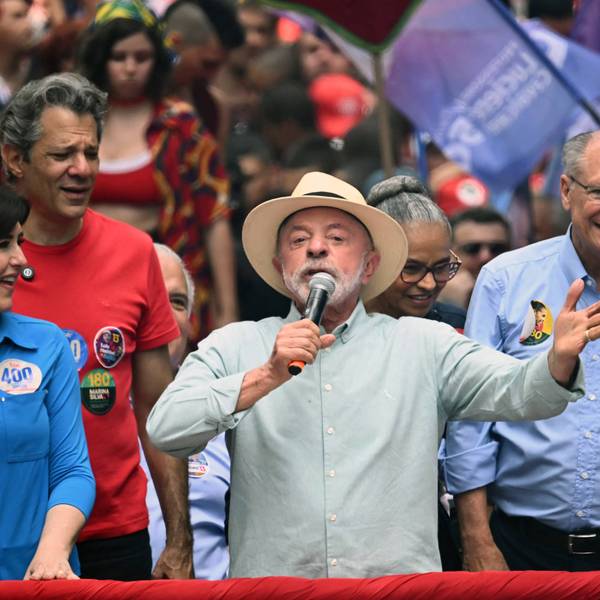
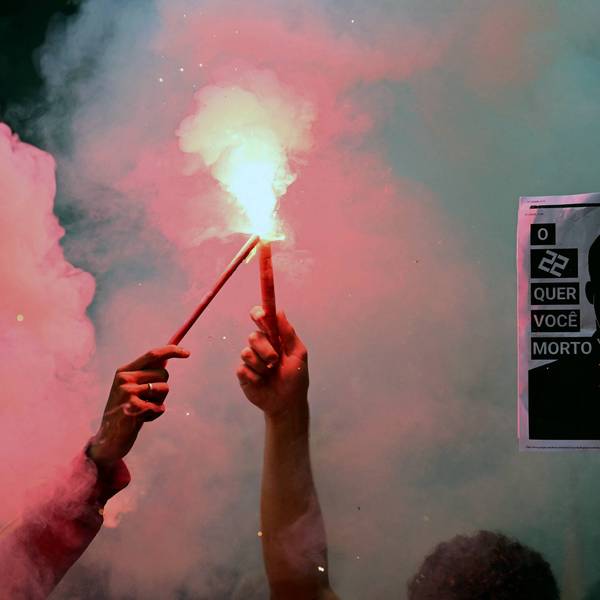
Outraged Workers' Party supporters are already being radicalised by the "coup" that has driven Dilma Rousseff from power and the struggle is moving into the streets. Mass demonstrations and barricades are now a common sight, and the protesters will find it hard to resist disrupting the Olympic Games that start in Rio de Janeiro in early August.
Which may provide the excuse for the Brazilian right to welcome the military back into power.
We are at a crossroads
This country and this world are at a monumental crossroads. In a few short weeks, US voters will have an opportunity to beat back the forces of fascism and confront the billionaires who are rigging the economy, our media system, and our democracy, making it increasingly impossible for ordinary people to get by. We’re not just talking about the election. We’re talking about what must be done once these fascist elements are vanquished from power. We need a bolder set of solutions than what either major party has so far been willing to offer and a working-class movement ready to fight like hell for it. Trump didn't emerge from nowhere. The conditions that fueled MAGA authoritarianism were created by decades of radical neoliberal economic policies and a corrupt political system dominated by corporate interests. They slashed taxes on the super-rich, promising that the benefits would trickle down. They said giveaways to the corporate titans would make life more affordable for the rest of us. It was all bullshit. And when a bitter, betrayed populace searches for someone to blame, right-wing demagogues have little trouble finding scapegoats. People know when they're being lied to, but you won't hear any of this from the corporate media. Only independent journalism—powered and funded by people who believe in building a better world—can deliver truly trustworthy daily news. Our Fall Campaign is underway, and we need your help. To power our newsroom through the rest of the year, we need to raise $125,000 by midnight on October 31. So if you share our vision, please contribute whatever you can to sustain our work. |
Q: What's the difference between the coup that overthrew the elected government in Thailand in Thailand in 2014 and the coup that has now removed the elected government in Brazil?
A: The coup-makers in Thailand wore uniforms.
The Brazilian Senate has just voted 55 to 22 to impeach President Dilma Rousseff. She will be suspended for the next 180 days while the same body tries her on the charge of understating the size of the budget deficit before the last election.
If two-thirds of the senators find her guilty, she will be permanently removed from office. Since they have just voted to impeach her by a bigger majority than that, we may take it for granted that she is a goner.
As the long evening droned on, it was quite clear that most senators were only interested in the outcome, not the evidence. On several occasions the Speaker even had to tell them to stop talking and put their phones away. This was about politics, not about justice, and the deal was already done.
Two justifications have been offered for this unseating of an elected president, but both of them are pretty flimsy. The first is the legal justification, which is that Rousseff's government tweaked the accounts a bit to make Brazil's financial situation look less bad before the last election in 2014.
She did, but which elected government anywhere does not try to put the best face on its figures? Anyway, nobody believes that this is the real reason for her removal from power.
The broader political justification is that she has made a mess of the economy. The economy certainly is in a terrible mess - in each of the last two years it has shrunk by 4 percent, one-tenth of the population is unemployed, and inflation is exploding - but every big commodity-exporting country has been in the same mess since the global financial crash of 2008. The demand for their exports simply collapsed.
Rousseff didn't create this crisis, but inevitably she gets the blame for it. That, rather than some obscure legal issue, is why nearly two-thirds of Brazilians think she should be impeached. But while she might done better at managing the crisis, in a democracy political questions like this are normally settled by elections, not by impeachment.
The 55 senators who voted to impeach her all know that, but they couldn't resist the temptation to take her down. Which brings us to the real motive behind all this, and the worrisome comparison with Thailand, where the generals took over in 2014.
The Thais, like the Brazilians, evicted their military rulers from power in the 1980s by non-violent political action. As is bound to happen in a democracy, both countries then developed powerful political movements that demanded a redistribution of wealth in favour of the impoverished half of the population. And in both countries the prosperous urban middle classes mobilised against this threat.
The hopes of the Thai poor were focussed on Thaksin Shinawatra (prime minister 2001-2006) and later, after the military forced him into exile, his sister Yingluck Shinawatra (prime minister 2011-2014). In Brazil the left-wing leader was Luiz Inacio "Lula" da Silva of the Workers' Party (president 2002-2010), and subsequently his close ally Dilma Rousseff (president 2010-2016).
In Thailand the struggle between the rural and urban poor (the 'yellow shirts') and the defenders of the economic status quo (the 'red shirts') descended into the streets early, and had got quite bloody by the time the generals seized power in 2014. They intervened in favour of the 'red shirts', of course, but they seem determined to hold on to power themselves for the forseeable future.
Brazil's politics have been less violent and the military have not intervened (yet), but it is just as much a class struggle - made more intractable by the fact that in Brazil social class is colour-coded. The white half of the population is mostly prosperous, the "pardo"(mixed-race) and black half mostly poor.
The most important single measure of the Workers' Party government is the famous Bolsa Familial, a straight cash paymen to those whose income is below the poverty line. To qualify, they must only ensure that their children attend school 85 percent of the time and are fully vaccinated. It has lifted 45 million people, a quarter of the population. out of poverty.
Nobody will admit that this crisis is about ending government subsidies for the poor, but the crowds demonstrating against Rousseff's government have been almost entirely white. So is the cabinet sworn in by the new interim president, Michel Temer. But Temer is going to have a very hard time running the country.
Outraged Workers' Party supporters are already being radicalised by the "coup" that has driven Dilma Rousseff from power and the struggle is moving into the streets. Mass demonstrations and barricades are now a common sight, and the protesters will find it hard to resist disrupting the Olympic Games that start in Rio de Janeiro in early August.
Which may provide the excuse for the Brazilian right to welcome the military back into power.