What's worse than a political debate that fails to give voters the information they need? One that misinforms them, while at the same time demeaning the democratic process. The final 2016 presidential debate takes place Wednesday night, and expectations are low.
The Last Debate: How Low Will It Go?
What's worse than a political debate that fails to give voters the information they need? One that misinforms them, while at the same time demeaning the democratic process. The final 2016 presidential debate takes place Wednesday night, and expectations are low.
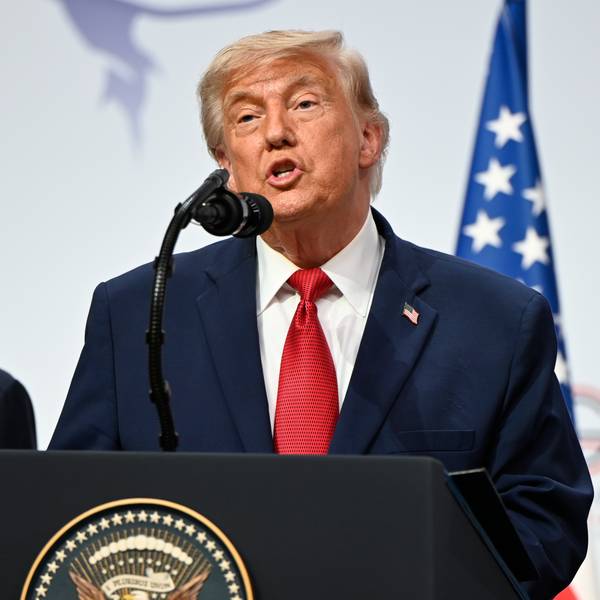
Donald Trump will undoubtedly disgorge more of his predictable and already tiresome tirades. Words will once again pour out in randomly shuffled stacks, like cards dealt by a drunken croupier. One imagines him under the hot lights, reeking of narcissism, Trump "Success" aftershave, and flop sweat.
Substance? If Trump manages to bring up jobs and trade, he may reprise his only strong moment from the first two debates. Otherwise he'll probably resort, as he often does, to spewing insults like a Don Rickles wannabe at a third rate celebrity roast.
And be forewarned: There will be sniffling.
Once again, Hillary Clinton will be called upon to maintain uncanny composure while being barraged by invective so poisonous it should come with a biohazard warning. Unlike her opponent, she'll probably allude to several important issues. But she may spend far too much time belaboring the rather obvious fact that Donald Trump is a horrible human being.
"When they go low, we go high," said First Lady Michelle Obama, a statement that has already proven inaccurate. Recent Clinton ads attacking Trump have featured everyone from military veterans to obnoxious movie characters. As the New York Times reports,
"The Clinton campaign calculates that its candidate is likelier to prevail by 'disqualifying' Mr. Trump -- using ads to make the idea of voting for him socially unacceptable in professional suburbs -- among additional well-educated voters ... than by holding on to working-class voters tempted by Mr. Trump's populism ..."
In one sense, it's hard to blame them for devoting so much effort to dissing the Donald. An old political cliche says, "Don't interrupt your enemy when he's in the process of destroying himself." It must be tempting to take that one step further and offer a helping hand.
Tempting, but a mistake. Many voters can be persuaded to despise a privileged, bigoted, misogynistic, bullying, lying, pompous, self-regarding jackass. But Trump has undoubtedly convinced most of those voters already.
Only 12 percent of registered Republicans felt Trump should drop out after his sexual assault boasts became public. More have probably been swayed since then. But if they haven't turned on him by now, a campaign ad from Hillary Clinton isn't likely to move them.
Clinton could choose to "go high" instead, using the debate platform to offer uplifting proposals around the issues that matter most to voters - issues like jobs, wages, growth, student debt, and criminal justice.
When it comes to uplift, moderator Chris Wallace won't be much help. Wallace made it clear that he plans to abdicate his journalistic responsibility on Wednesday night. He likened the moderator's job to "being a referee in a heavyweight championship fight," a statement that trivializes the democratic process.
"I do not believe it is my job to be a truth squad," said Wallace, apparently unmindful of the Fifth Estate's traditional role in our civic life.
Trump will shower the audience with falsehoods - on the state of our democracy (the game is "rigged," but not in the way he says), the threats to our national security, and the patriotism of our neighbors. When the moderator won't challenge falsehoods, the candidate who lies the least must spend the most time correcting the record. Advantage: Trump.
Oddly enough, Wallace took a very different approach during the Republican primary debates, when he repeatedly and effectively challenged Trump's lies. His newfound reticence will be as unpopular as it is unprofessional. A new survey from the Pew Research Center shows that 83 percent of registered voters want the media to fact-check candidates and campaigns. Wallace does not plan to oblige them.
Wallace's announced list of debate topics was equally discouraging. They included "debt and entitlements," "foreign hot spots, "and "fitness to be president."
The phrase "debt and entitlements" reflects a misguided, inside-the-Beltway financial mindset. Economist Dean Baker had the same reaction I did: why tie debt to "entitlements" (Social Security and Medicare), rather than defense or other government spending - especially when Social Security is forbidden by law from contributing to federal deficits?
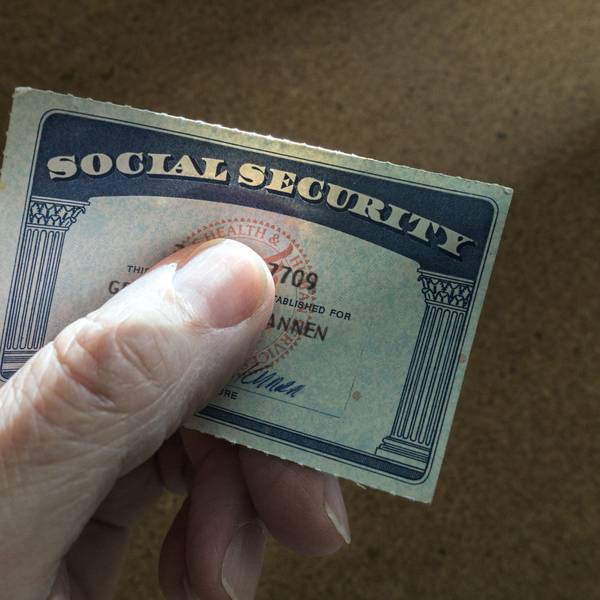
This is not the first time Social Security has been badly served in this year's debates. The third most popular question submitted for October 9's so-called "town hall" debate was, "Do you support expanding, and not cutting, Social Security's modest benefits?" It became even more timely after this week's announcement that Social Security's next cost of living adjustment will be a "measly" 0.3 percent, an average monthly increase of only $5 per month, despite the fact that drug prices and other medical costs have soared.
But that question was never asked. And Wallace's "debt and entitlements" phrasing suggests that he'll use the moderator's role to misinform viewers about Social Security, much as Martha Raddatz did in the 2012 vice-presidential debate.
As for the other subjects: "Foreign hot spots" is an odd phrase. Why this penchant for euphemisms? Why not say "military concerns," or "armed conflicts," or simply "war"? That topic certainly warrants more debate. And asking these two candidates about "fitness to be president" is just an invitation to trade insults - which, in this race, is about as necessary as encouraging 1964's Muhammad Ali to insult Sonny Liston.
Hillary Clinton will almost certainly attack Trump. When she does, voters who want "authenticity" from her will undoubtedly get what they're looking for. But she'll also need to provide a healthy dose of inspiration and substance if she is to mobilize the voters she needs on November 8.
Trump's vulgarity and demagoguery, together with the media's insatiable appetite for ratings, have made this campaign a race to the bottom. The night's biggest question won't be asked by the moderator. The question is: How low can this race go before it's over?
We're about to find out.
An Urgent Message From Our Co-Founder
Dear Common Dreams reader, The U.S. is on a fast track to authoritarianism like nothing I've ever seen. Meanwhile, corporate news outlets are utterly capitulating to Trump, twisting their coverage to avoid drawing his ire while lining up to stuff cash in his pockets. That's why I believe that Common Dreams is doing the best and most consequential reporting that we've ever done. Our small but mighty team is a progressive reporting powerhouse, covering the news every day that the corporate media never will. Our mission has always been simple: To inform. To inspire. And to ignite change for the common good. Now here's the key piece that I want all our readers to understand: None of this would be possible without your financial support. That's not just some fundraising cliche. It's the absolute and literal truth. We don't accept corporate advertising and never will. We don't have a paywall because we don't think people should be blocked from critical news based on their ability to pay. Everything we do is funded by the donations of readers like you. Will you donate now to help power the nonprofit, independent reporting of Common Dreams? Thank you for being a vital member of our community. Together, we can keep independent journalism alive when it’s needed most. - Craig Brown, Co-founder |
Richard (RJ) Eskow is a journalist who has written for a number of major publications. His weekly program, The Zero Hour, can be found on cable television, radio, Spotify, and podcast media.
What's worse than a political debate that fails to give voters the information they need? One that misinforms them, while at the same time demeaning the democratic process. The final 2016 presidential debate takes place Wednesday night, and expectations are low.
Donald Trump will undoubtedly disgorge more of his predictable and already tiresome tirades. Words will once again pour out in randomly shuffled stacks, like cards dealt by a drunken croupier. One imagines him under the hot lights, reeking of narcissism, Trump "Success" aftershave, and flop sweat.
Substance? If Trump manages to bring up jobs and trade, he may reprise his only strong moment from the first two debates. Otherwise he'll probably resort, as he often does, to spewing insults like a Don Rickles wannabe at a third rate celebrity roast.
And be forewarned: There will be sniffling.
Once again, Hillary Clinton will be called upon to maintain uncanny composure while being barraged by invective so poisonous it should come with a biohazard warning. Unlike her opponent, she'll probably allude to several important issues. But she may spend far too much time belaboring the rather obvious fact that Donald Trump is a horrible human being.
"When they go low, we go high," said First Lady Michelle Obama, a statement that has already proven inaccurate. Recent Clinton ads attacking Trump have featured everyone from military veterans to obnoxious movie characters. As the New York Times reports,
"The Clinton campaign calculates that its candidate is likelier to prevail by 'disqualifying' Mr. Trump -- using ads to make the idea of voting for him socially unacceptable in professional suburbs -- among additional well-educated voters ... than by holding on to working-class voters tempted by Mr. Trump's populism ..."
In one sense, it's hard to blame them for devoting so much effort to dissing the Donald. An old political cliche says, "Don't interrupt your enemy when he's in the process of destroying himself." It must be tempting to take that one step further and offer a helping hand.
Tempting, but a mistake. Many voters can be persuaded to despise a privileged, bigoted, misogynistic, bullying, lying, pompous, self-regarding jackass. But Trump has undoubtedly convinced most of those voters already.
Only 12 percent of registered Republicans felt Trump should drop out after his sexual assault boasts became public. More have probably been swayed since then. But if they haven't turned on him by now, a campaign ad from Hillary Clinton isn't likely to move them.
Clinton could choose to "go high" instead, using the debate platform to offer uplifting proposals around the issues that matter most to voters - issues like jobs, wages, growth, student debt, and criminal justice.
When it comes to uplift, moderator Chris Wallace won't be much help. Wallace made it clear that he plans to abdicate his journalistic responsibility on Wednesday night. He likened the moderator's job to "being a referee in a heavyweight championship fight," a statement that trivializes the democratic process.
"I do not believe it is my job to be a truth squad," said Wallace, apparently unmindful of the Fifth Estate's traditional role in our civic life.
Trump will shower the audience with falsehoods - on the state of our democracy (the game is "rigged," but not in the way he says), the threats to our national security, and the patriotism of our neighbors. When the moderator won't challenge falsehoods, the candidate who lies the least must spend the most time correcting the record. Advantage: Trump.
Oddly enough, Wallace took a very different approach during the Republican primary debates, when he repeatedly and effectively challenged Trump's lies. His newfound reticence will be as unpopular as it is unprofessional. A new survey from the Pew Research Center shows that 83 percent of registered voters want the media to fact-check candidates and campaigns. Wallace does not plan to oblige them.
Wallace's announced list of debate topics was equally discouraging. They included "debt and entitlements," "foreign hot spots, "and "fitness to be president."
The phrase "debt and entitlements" reflects a misguided, inside-the-Beltway financial mindset. Economist Dean Baker had the same reaction I did: why tie debt to "entitlements" (Social Security and Medicare), rather than defense or other government spending - especially when Social Security is forbidden by law from contributing to federal deficits?
This is not the first time Social Security has been badly served in this year's debates. The third most popular question submitted for October 9's so-called "town hall" debate was, "Do you support expanding, and not cutting, Social Security's modest benefits?" It became even more timely after this week's announcement that Social Security's next cost of living adjustment will be a "measly" 0.3 percent, an average monthly increase of only $5 per month, despite the fact that drug prices and other medical costs have soared.
But that question was never asked. And Wallace's "debt and entitlements" phrasing suggests that he'll use the moderator's role to misinform viewers about Social Security, much as Martha Raddatz did in the 2012 vice-presidential debate.
As for the other subjects: "Foreign hot spots" is an odd phrase. Why this penchant for euphemisms? Why not say "military concerns," or "armed conflicts," or simply "war"? That topic certainly warrants more debate. And asking these two candidates about "fitness to be president" is just an invitation to trade insults - which, in this race, is about as necessary as encouraging 1964's Muhammad Ali to insult Sonny Liston.
Hillary Clinton will almost certainly attack Trump. When she does, voters who want "authenticity" from her will undoubtedly get what they're looking for. But she'll also need to provide a healthy dose of inspiration and substance if she is to mobilize the voters she needs on November 8.
Trump's vulgarity and demagoguery, together with the media's insatiable appetite for ratings, have made this campaign a race to the bottom. The night's biggest question won't be asked by the moderator. The question is: How low can this race go before it's over?
We're about to find out.
Richard (RJ) Eskow is a journalist who has written for a number of major publications. His weekly program, The Zero Hour, can be found on cable television, radio, Spotify, and podcast media.
What's worse than a political debate that fails to give voters the information they need? One that misinforms them, while at the same time demeaning the democratic process. The final 2016 presidential debate takes place Wednesday night, and expectations are low.
Donald Trump will undoubtedly disgorge more of his predictable and already tiresome tirades. Words will once again pour out in randomly shuffled stacks, like cards dealt by a drunken croupier. One imagines him under the hot lights, reeking of narcissism, Trump "Success" aftershave, and flop sweat.
Substance? If Trump manages to bring up jobs and trade, he may reprise his only strong moment from the first two debates. Otherwise he'll probably resort, as he often does, to spewing insults like a Don Rickles wannabe at a third rate celebrity roast.
And be forewarned: There will be sniffling.
Once again, Hillary Clinton will be called upon to maintain uncanny composure while being barraged by invective so poisonous it should come with a biohazard warning. Unlike her opponent, she'll probably allude to several important issues. But she may spend far too much time belaboring the rather obvious fact that Donald Trump is a horrible human being.
"When they go low, we go high," said First Lady Michelle Obama, a statement that has already proven inaccurate. Recent Clinton ads attacking Trump have featured everyone from military veterans to obnoxious movie characters. As the New York Times reports,
"The Clinton campaign calculates that its candidate is likelier to prevail by 'disqualifying' Mr. Trump -- using ads to make the idea of voting for him socially unacceptable in professional suburbs -- among additional well-educated voters ... than by holding on to working-class voters tempted by Mr. Trump's populism ..."
In one sense, it's hard to blame them for devoting so much effort to dissing the Donald. An old political cliche says, "Don't interrupt your enemy when he's in the process of destroying himself." It must be tempting to take that one step further and offer a helping hand.
Tempting, but a mistake. Many voters can be persuaded to despise a privileged, bigoted, misogynistic, bullying, lying, pompous, self-regarding jackass. But Trump has undoubtedly convinced most of those voters already.
Only 12 percent of registered Republicans felt Trump should drop out after his sexual assault boasts became public. More have probably been swayed since then. But if they haven't turned on him by now, a campaign ad from Hillary Clinton isn't likely to move them.
Clinton could choose to "go high" instead, using the debate platform to offer uplifting proposals around the issues that matter most to voters - issues like jobs, wages, growth, student debt, and criminal justice.
When it comes to uplift, moderator Chris Wallace won't be much help. Wallace made it clear that he plans to abdicate his journalistic responsibility on Wednesday night. He likened the moderator's job to "being a referee in a heavyweight championship fight," a statement that trivializes the democratic process.
"I do not believe it is my job to be a truth squad," said Wallace, apparently unmindful of the Fifth Estate's traditional role in our civic life.
Trump will shower the audience with falsehoods - on the state of our democracy (the game is "rigged," but not in the way he says), the threats to our national security, and the patriotism of our neighbors. When the moderator won't challenge falsehoods, the candidate who lies the least must spend the most time correcting the record. Advantage: Trump.
Oddly enough, Wallace took a very different approach during the Republican primary debates, when he repeatedly and effectively challenged Trump's lies. His newfound reticence will be as unpopular as it is unprofessional. A new survey from the Pew Research Center shows that 83 percent of registered voters want the media to fact-check candidates and campaigns. Wallace does not plan to oblige them.
Wallace's announced list of debate topics was equally discouraging. They included "debt and entitlements," "foreign hot spots, "and "fitness to be president."
The phrase "debt and entitlements" reflects a misguided, inside-the-Beltway financial mindset. Economist Dean Baker had the same reaction I did: why tie debt to "entitlements" (Social Security and Medicare), rather than defense or other government spending - especially when Social Security is forbidden by law from contributing to federal deficits?
This is not the first time Social Security has been badly served in this year's debates. The third most popular question submitted for October 9's so-called "town hall" debate was, "Do you support expanding, and not cutting, Social Security's modest benefits?" It became even more timely after this week's announcement that Social Security's next cost of living adjustment will be a "measly" 0.3 percent, an average monthly increase of only $5 per month, despite the fact that drug prices and other medical costs have soared.
But that question was never asked. And Wallace's "debt and entitlements" phrasing suggests that he'll use the moderator's role to misinform viewers about Social Security, much as Martha Raddatz did in the 2012 vice-presidential debate.
As for the other subjects: "Foreign hot spots" is an odd phrase. Why this penchant for euphemisms? Why not say "military concerns," or "armed conflicts," or simply "war"? That topic certainly warrants more debate. And asking these two candidates about "fitness to be president" is just an invitation to trade insults - which, in this race, is about as necessary as encouraging 1964's Muhammad Ali to insult Sonny Liston.
Hillary Clinton will almost certainly attack Trump. When she does, voters who want "authenticity" from her will undoubtedly get what they're looking for. But she'll also need to provide a healthy dose of inspiration and substance if she is to mobilize the voters she needs on November 8.
Trump's vulgarity and demagoguery, together with the media's insatiable appetite for ratings, have made this campaign a race to the bottom. The night's biggest question won't be asked by the moderator. The question is: How low can this race go before it's over?
We're about to find out.