SUBSCRIBE TO OUR FREE NEWSLETTER
Daily news & progressive opinion—funded by the people, not the corporations—delivered straight to your inbox.
5
#000000
#FFFFFF
To donate by check, phone, or other method, see our More Ways to Give page.
Daily news & progressive opinion—funded by the people, not the corporations—delivered straight to your inbox.
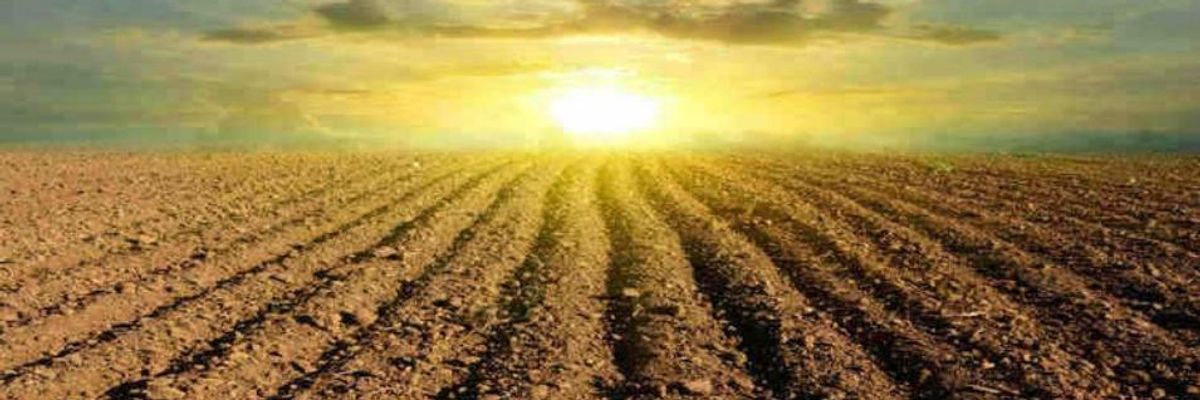
While most of the focus on climate risk disclosure has been on the fossil fuel industry, few sectors face as much risk as food and agriculture--in particular, companies with long supply chains increasingly vulnerable to disruption.(Photo: shutterstock)
Just prior to the new year, Senator Elizabeth Warren (D-MA) threw her hat into what is expected to be a crowded 2020 presidential race. Senator Warren has been an advocate for climate action, and her lead climate proposal capitalizes on her market regulatory expertise to require new levels of climate risk disclosure by public corporations--including agribusiness firms.
Introduced in September, the Climate Risk Disclosure Act, which also has the support of several other rumored presidential candidates including Cory Booker (D-NJ), Kamala Harris (D-CA), and Kirsten Gillibrand (D-NY), would require public companies to disclose climate related risk to their shareholders. While the Securities and Exchange Commission (SEC) already advises that publicly traded companies disclose climate change risks to investors, companies are not required to report on climate in any standardized way through their SEC filings. Additionally, the SEC has been lax in enforcing climate change disclosures.
The Climate Risk Disclosure Act directs the SEC, in consultation with climate experts at other federal agencies, to issue rules within one year that require every public company to disclose:
The push for greater climate risk disclosure is gaining support. The global Task Force on Climate-Related Financial Disclosures published guidelines for public corporations and investors in 2017, and last year the task force reported growing momentum in the adoption of the new climate risk disclosure guidelines.
While most of the focus on climate risk disclosure has been on the fossil fuel industry, few sectors face as much risk as food and agriculture--in particular, companies with long supply chains increasingly vulnerable to disruption. The National Climate Assessment published late last year outlined a series of daunting climate-related concerns for agriculture, including "increased rates of crop failure, reduced livestock productivity, and altered rates of pressure from pests, weeds, and diseases."
Last year, we wrote about the climate risk to meat companies in locating large concentrated animal feeding operations (CAFOs) near high-risk hurricane zones. For instance, Smithfield controls hundreds of CAFOs within or near flood plains in North Carolina. Two recent hurricanes have caused the breach of giant hog manure lagoons in the state that have spilled out into nearby waterways.
The meat and fertilizer companies could also face stronger regulations as governments implement policies to reduce two potent GHGs (methane and nitrous oxide) in order to reach their Paris climate goals.
As climate change accelerates, agribusiness and food companies will have to adapt to new conditions to reduce their risk and transition toward a more resilient, climate-friendly economy. Senator Warren's bill shines a much-needed bright light on corporate climate risk that should inform the future priorities of investors.
This country and this world are at a monumental crossroads. US voters have an opportunity to beat back the forces of fascism and confront the billionaires who are rigging the economy, our media system, and our democracy, making it increasingly impossible for ordinary people to get by. We’re not just talking about the election. We’re talking about what must be done once these fascist elements are vanquished from power. We need a bolder set of solutions than what either major party has so far been willing to offer and a working-class movement ready to fight like hell for it. Trump didn't emerge from nowhere. The conditions that fueled MAGA authoritarianism were created by decades of radical neoliberal economic policies and a corrupt political system dominated by corporate interests. They slashed taxes on the super-rich, promising that the benefits would trickle down. They said giveaways to the corporate titans would make life more affordable for the rest of us. It was all bullshit. And when a bitter, betrayed populace searches for someone to blame, right-wing demagogues have little trouble finding scapegoats. People know when they're being lied to, but you won't hear any of this from the corporate media. Only independent journalism—powered and funded by people who believe in building a better world—can deliver truly trustworthy daily news. If you share our vision, please contribute whatever you can to sustain our work. |
Just prior to the new year, Senator Elizabeth Warren (D-MA) threw her hat into what is expected to be a crowded 2020 presidential race. Senator Warren has been an advocate for climate action, and her lead climate proposal capitalizes on her market regulatory expertise to require new levels of climate risk disclosure by public corporations--including agribusiness firms.
Introduced in September, the Climate Risk Disclosure Act, which also has the support of several other rumored presidential candidates including Cory Booker (D-NJ), Kamala Harris (D-CA), and Kirsten Gillibrand (D-NY), would require public companies to disclose climate related risk to their shareholders. While the Securities and Exchange Commission (SEC) already advises that publicly traded companies disclose climate change risks to investors, companies are not required to report on climate in any standardized way through their SEC filings. Additionally, the SEC has been lax in enforcing climate change disclosures.
The Climate Risk Disclosure Act directs the SEC, in consultation with climate experts at other federal agencies, to issue rules within one year that require every public company to disclose:
The push for greater climate risk disclosure is gaining support. The global Task Force on Climate-Related Financial Disclosures published guidelines for public corporations and investors in 2017, and last year the task force reported growing momentum in the adoption of the new climate risk disclosure guidelines.
While most of the focus on climate risk disclosure has been on the fossil fuel industry, few sectors face as much risk as food and agriculture--in particular, companies with long supply chains increasingly vulnerable to disruption. The National Climate Assessment published late last year outlined a series of daunting climate-related concerns for agriculture, including "increased rates of crop failure, reduced livestock productivity, and altered rates of pressure from pests, weeds, and diseases."
Last year, we wrote about the climate risk to meat companies in locating large concentrated animal feeding operations (CAFOs) near high-risk hurricane zones. For instance, Smithfield controls hundreds of CAFOs within or near flood plains in North Carolina. Two recent hurricanes have caused the breach of giant hog manure lagoons in the state that have spilled out into nearby waterways.
The meat and fertilizer companies could also face stronger regulations as governments implement policies to reduce two potent GHGs (methane and nitrous oxide) in order to reach their Paris climate goals.
As climate change accelerates, agribusiness and food companies will have to adapt to new conditions to reduce their risk and transition toward a more resilient, climate-friendly economy. Senator Warren's bill shines a much-needed bright light on corporate climate risk that should inform the future priorities of investors.