SUBSCRIBE TO OUR FREE NEWSLETTER
Daily news & progressive opinion—funded by the people, not the corporations—delivered straight to your inbox.
5
#000000
#FFFFFF
To donate by check, phone, or other method, see our More Ways to Give page.
Daily news & progressive opinion—funded by the people, not the corporations—delivered straight to your inbox.
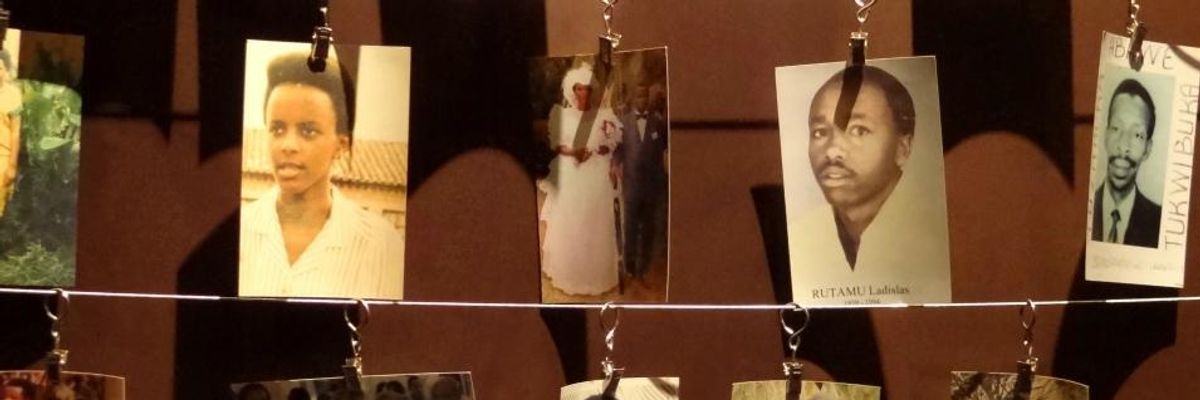
Photographs of genocide victims are displayed at the Genocide Memorial Center in Kigali, Rwanda. (Photo: Adam Jones, Ph.D./Wikimedia Commons/cc)
This first week of April marks the 25th anniversary of the Rwandan genocide, a three-month long massacre during which Hutu militants killed an estimated 800,000 Tutsis and moderate Hutus after the Hutu president was killed. The international community responded to the atrocities late, and then sought accountability after the genocide by establishing the International Criminal Tribunal of Rwanda (ICTR) to try those most responsible.
The legacy of Rwanda's genocide has some compelling messages for American people about the power of our words, and the danger of hate speech.
It is important that we remember the horror of the genocide and reflect on the mistakes made, in order to work toward a more peaceful future. One of the main takeaways from the ICTR's atrocity trials is that words matter.
The world of the Rwandan genocide may to most people seem far removed from the United States. It does not to me. I am a law professor who grew up an Army brat, often abroad. I graduated high school in Nuremberg in the former West Germany--the site of the famous Nuremberg Tribunal held in the wake of the Holocaust. I know that words matter. Always mindful of the horrors of the Holocaust and the ways that democratic majorities can scapegoat and dehumanize minorities, my professional focus has been in constitutional and international law.
The law, and particularly international criminal trials, should teach us about past mistakes. The legacy of Rwanda's genocide has some compelling messages for American people about the power of our words, and the danger of hate speech. Few of us are immune to the polarizing media coverage. Our leaders and media pundits use generalizations about cultures and fear-mongering to drive home support for policy in a very profound and impactful way. Creating hate as opposed to understanding will lead to repeat mistakes. This week in particular, we should heed the legacy of Rwanda's genocide, reminding our nation of what can happen when we don't identify and speak about the impact that fear has on our united psyche.
We Americans know words matter. We famously have strong free-speech protections. We are outliers in the international community for refusing to penalize hate speech. However, even those of us with the strongest commitments to free speech understand that speech can be dangerous and even constitute incitement.
Indeed, many terrorist prosecutions turn on speech acts. The Appeals Chamber of the International Criminal Tribunal of Rwanda recognized the power of speech to lead to violence when it upheld the convictions of key figures in the genocide: Hassan Ngeze, former editor of the Kangura newspaper; Ferdinand Nahimana, an historian and founder of Radio Television Libre des Mille Collines (RTLM); and Jean-Bosco Baryagwiza, a Rwandan diplomat and executive committee chairman of RTLM. The print and broadcast media fomented and disseminated statements of broad hatred of the Tutsi ethnic group through aggressive and demeaning rhetoric, even labeling the opposition as "inyenzi" (cockroaches) and calling for their extermination.
To honor the lives unnecessarily lost in the Rwandan genocide, we Americans can, while embracing our culture of free speech and free media, ensure that we treat all people, whatever their nationality, as human beings deserving of respect.
Today, our leaders' rhetoric is running too close to past mistakes. Words matter. America's highest leaders' refer to undocumented migrants alternately as "rapists," "bad guys" or "criminals" who "infest" our country. We Americans must demand change in that practice, and heed the lesson of the Rwandan tribunal: that there is often a thin line between hate speech and hate crime.
Professor Susan Benesch's work on dangerous speech can be helpful in discerning that line. We can regard with extra vigilance: speech by powerful speakers who have a high degree of influence over their audience; situations in which an audience has grievances and fears; speech that either explicitly or implicitly calls for violence; contexts that include past acts of violence, including a lack of efforts to confront or solve these acts of violence; and means of dissemination that may be the primary or sole news source for the relevant audience.
In our country, reported hate crimes have risen three years consecutively, including a 17 percent rise from 2017 to 2018, according to the FBI. Indeed, the FBI director cites white nationalism and violent extremism as threats to the U.S., even as our president says he "does not really see white nationalism as a threat." Our increasingly polarized media leaves a chasm of understanding between us Americans.
To honor the lives unnecessarily lost in the Rwandan genocide, we Americans can, while embracing our culture of free speech and free media, ensure that we treat all people, whatever their nationality, as human beings deserving of respect.
Dear Common Dreams reader, It’s been nearly 30 years since I co-founded Common Dreams with my late wife, Lina Newhouser. We had the radical notion that journalism should serve the public good, not corporate profits. It was clear to us from the outset what it would take to build such a project. No paid advertisements. No corporate sponsors. No millionaire publisher telling us what to think or do. Many people said we wouldn't last a year, but we proved those doubters wrong. Together with a tremendous team of journalists and dedicated staff, we built an independent media outlet free from the constraints of profits and corporate control. Our mission has always been simple: To inform. To inspire. To ignite change for the common good. Building Common Dreams was not easy. Our survival was never guaranteed. When you take on the most powerful forces—Wall Street greed, fossil fuel industry destruction, Big Tech lobbyists, and uber-rich oligarchs who have spent billions upon billions rigging the economy and democracy in their favor—the only bulwark you have is supporters who believe in your work. But here’s the urgent message from me today. It's never been this bad out there. And it's never been this hard to keep us going. At the very moment Common Dreams is most needed, the threats we face are intensifying. We need your support now more than ever. We don't accept corporate advertising and never will. We don't have a paywall because we don't think people should be blocked from critical news based on their ability to pay. Everything we do is funded by the donations of readers like you. When everyone does the little they can afford, we are strong. But if that support retreats or dries up, so do we. Will you donate now to make sure Common Dreams not only survives but thrives? —Craig Brown, Co-founder |
This first week of April marks the 25th anniversary of the Rwandan genocide, a three-month long massacre during which Hutu militants killed an estimated 800,000 Tutsis and moderate Hutus after the Hutu president was killed. The international community responded to the atrocities late, and then sought accountability after the genocide by establishing the International Criminal Tribunal of Rwanda (ICTR) to try those most responsible.
The legacy of Rwanda's genocide has some compelling messages for American people about the power of our words, and the danger of hate speech.
It is important that we remember the horror of the genocide and reflect on the mistakes made, in order to work toward a more peaceful future. One of the main takeaways from the ICTR's atrocity trials is that words matter.
The world of the Rwandan genocide may to most people seem far removed from the United States. It does not to me. I am a law professor who grew up an Army brat, often abroad. I graduated high school in Nuremberg in the former West Germany--the site of the famous Nuremberg Tribunal held in the wake of the Holocaust. I know that words matter. Always mindful of the horrors of the Holocaust and the ways that democratic majorities can scapegoat and dehumanize minorities, my professional focus has been in constitutional and international law.
The law, and particularly international criminal trials, should teach us about past mistakes. The legacy of Rwanda's genocide has some compelling messages for American people about the power of our words, and the danger of hate speech. Few of us are immune to the polarizing media coverage. Our leaders and media pundits use generalizations about cultures and fear-mongering to drive home support for policy in a very profound and impactful way. Creating hate as opposed to understanding will lead to repeat mistakes. This week in particular, we should heed the legacy of Rwanda's genocide, reminding our nation of what can happen when we don't identify and speak about the impact that fear has on our united psyche.
We Americans know words matter. We famously have strong free-speech protections. We are outliers in the international community for refusing to penalize hate speech. However, even those of us with the strongest commitments to free speech understand that speech can be dangerous and even constitute incitement.
Indeed, many terrorist prosecutions turn on speech acts. The Appeals Chamber of the International Criminal Tribunal of Rwanda recognized the power of speech to lead to violence when it upheld the convictions of key figures in the genocide: Hassan Ngeze, former editor of the Kangura newspaper; Ferdinand Nahimana, an historian and founder of Radio Television Libre des Mille Collines (RTLM); and Jean-Bosco Baryagwiza, a Rwandan diplomat and executive committee chairman of RTLM. The print and broadcast media fomented and disseminated statements of broad hatred of the Tutsi ethnic group through aggressive and demeaning rhetoric, even labeling the opposition as "inyenzi" (cockroaches) and calling for their extermination.
To honor the lives unnecessarily lost in the Rwandan genocide, we Americans can, while embracing our culture of free speech and free media, ensure that we treat all people, whatever their nationality, as human beings deserving of respect.
Today, our leaders' rhetoric is running too close to past mistakes. Words matter. America's highest leaders' refer to undocumented migrants alternately as "rapists," "bad guys" or "criminals" who "infest" our country. We Americans must demand change in that practice, and heed the lesson of the Rwandan tribunal: that there is often a thin line between hate speech and hate crime.
Professor Susan Benesch's work on dangerous speech can be helpful in discerning that line. We can regard with extra vigilance: speech by powerful speakers who have a high degree of influence over their audience; situations in which an audience has grievances and fears; speech that either explicitly or implicitly calls for violence; contexts that include past acts of violence, including a lack of efforts to confront or solve these acts of violence; and means of dissemination that may be the primary or sole news source for the relevant audience.
In our country, reported hate crimes have risen three years consecutively, including a 17 percent rise from 2017 to 2018, according to the FBI. Indeed, the FBI director cites white nationalism and violent extremism as threats to the U.S., even as our president says he "does not really see white nationalism as a threat." Our increasingly polarized media leaves a chasm of understanding between us Americans.
To honor the lives unnecessarily lost in the Rwandan genocide, we Americans can, while embracing our culture of free speech and free media, ensure that we treat all people, whatever their nationality, as human beings deserving of respect.
This first week of April marks the 25th anniversary of the Rwandan genocide, a three-month long massacre during which Hutu militants killed an estimated 800,000 Tutsis and moderate Hutus after the Hutu president was killed. The international community responded to the atrocities late, and then sought accountability after the genocide by establishing the International Criminal Tribunal of Rwanda (ICTR) to try those most responsible.
The legacy of Rwanda's genocide has some compelling messages for American people about the power of our words, and the danger of hate speech.
It is important that we remember the horror of the genocide and reflect on the mistakes made, in order to work toward a more peaceful future. One of the main takeaways from the ICTR's atrocity trials is that words matter.
The world of the Rwandan genocide may to most people seem far removed from the United States. It does not to me. I am a law professor who grew up an Army brat, often abroad. I graduated high school in Nuremberg in the former West Germany--the site of the famous Nuremberg Tribunal held in the wake of the Holocaust. I know that words matter. Always mindful of the horrors of the Holocaust and the ways that democratic majorities can scapegoat and dehumanize minorities, my professional focus has been in constitutional and international law.
The law, and particularly international criminal trials, should teach us about past mistakes. The legacy of Rwanda's genocide has some compelling messages for American people about the power of our words, and the danger of hate speech. Few of us are immune to the polarizing media coverage. Our leaders and media pundits use generalizations about cultures and fear-mongering to drive home support for policy in a very profound and impactful way. Creating hate as opposed to understanding will lead to repeat mistakes. This week in particular, we should heed the legacy of Rwanda's genocide, reminding our nation of what can happen when we don't identify and speak about the impact that fear has on our united psyche.
We Americans know words matter. We famously have strong free-speech protections. We are outliers in the international community for refusing to penalize hate speech. However, even those of us with the strongest commitments to free speech understand that speech can be dangerous and even constitute incitement.
Indeed, many terrorist prosecutions turn on speech acts. The Appeals Chamber of the International Criminal Tribunal of Rwanda recognized the power of speech to lead to violence when it upheld the convictions of key figures in the genocide: Hassan Ngeze, former editor of the Kangura newspaper; Ferdinand Nahimana, an historian and founder of Radio Television Libre des Mille Collines (RTLM); and Jean-Bosco Baryagwiza, a Rwandan diplomat and executive committee chairman of RTLM. The print and broadcast media fomented and disseminated statements of broad hatred of the Tutsi ethnic group through aggressive and demeaning rhetoric, even labeling the opposition as "inyenzi" (cockroaches) and calling for their extermination.
To honor the lives unnecessarily lost in the Rwandan genocide, we Americans can, while embracing our culture of free speech and free media, ensure that we treat all people, whatever their nationality, as human beings deserving of respect.
Today, our leaders' rhetoric is running too close to past mistakes. Words matter. America's highest leaders' refer to undocumented migrants alternately as "rapists," "bad guys" or "criminals" who "infest" our country. We Americans must demand change in that practice, and heed the lesson of the Rwandan tribunal: that there is often a thin line between hate speech and hate crime.
Professor Susan Benesch's work on dangerous speech can be helpful in discerning that line. We can regard with extra vigilance: speech by powerful speakers who have a high degree of influence over their audience; situations in which an audience has grievances and fears; speech that either explicitly or implicitly calls for violence; contexts that include past acts of violence, including a lack of efforts to confront or solve these acts of violence; and means of dissemination that may be the primary or sole news source for the relevant audience.
In our country, reported hate crimes have risen three years consecutively, including a 17 percent rise from 2017 to 2018, according to the FBI. Indeed, the FBI director cites white nationalism and violent extremism as threats to the U.S., even as our president says he "does not really see white nationalism as a threat." Our increasingly polarized media leaves a chasm of understanding between us Americans.
To honor the lives unnecessarily lost in the Rwandan genocide, we Americans can, while embracing our culture of free speech and free media, ensure that we treat all people, whatever their nationality, as human beings deserving of respect.