SUBSCRIBE TO OUR FREE NEWSLETTER
Daily news & progressive opinion—funded by the people, not the corporations—delivered straight to your inbox.
5
#000000
#FFFFFF
To donate by check, phone, or other method, see our More Ways to Give page.
Daily news & progressive opinion—funded by the people, not the corporations—delivered straight to your inbox.
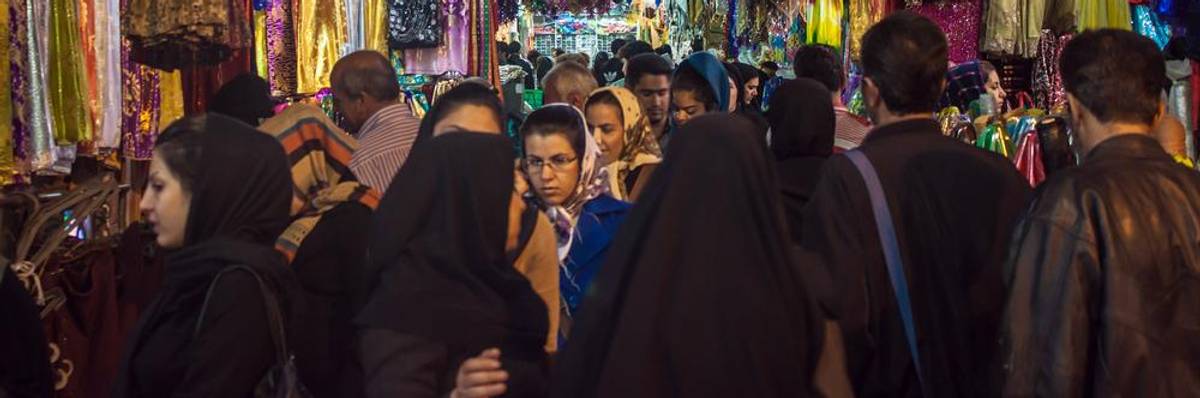
Iranians and Americans alike deserve diplomacy, not war -- and that includes war by economic means. (Photo: Shutterstock)
"What's wrong?" I asked my mother, as I saw her broken expression. She was on the phone, speaking with my grandparents in Iran. "A terrible thing has happened," she replied.
My grandparent's home in Tehran had been broken into. The thieves took everything they could carry -- my grandmother's jewelry, my uncle's prized watch collection, his wedding band, and some cash. Perhaps the only thing left untouched was the grand, ornate Persian rug in their living room.
My grandfather had left the house for 10 minutes for afternoon prayers at the mosque. Now, he swears to never leave his home unattended again. He takes turns leaving the house with my grandmother, both in constant dread of another break-in.
Across Iran, such burglaries seem to be increasing as ordinary Iranian people face increased hardship from U.S.-imposed sanctions.
As a dual citizen, I was born and raised in Columbus, Ohio, but I've been traveling to Iran regularly ever since I was four months old.
I grew up in a household that taught me to love who I am, to see the wisdom in maintaining cultural intricacies, and to relish in the socio-religious traditions that keep life going. Words cannot do justice to the feeling of affinity that envelops me every time I step into my second home in Tehran.
My mother, in efforts to ease her old parents' anxious hearts, could only repeat tavakol be khoda, or as we like to translate it: "Your faith must be stronger than your fear."
President Trump has sought confrontation with Iran at every opportunity. Since America's unilateral withdrawal from the nuclear deal in 2018, the U.S. has re-imposed sanctions targeting critical sectors of Iran's economy.
Whether it's Cuba or Venezuela or Iran, history shows that sanctions alone have never forced a change in policy by an adversary. Since then, oil exports have more than halved, choking the main source of funding for the country. Iranian currency has lost almost 60 percent of its value against the U.S. dollar, reaching a record low.
Meanwhile, sanctions and problems in banking transfers have made it extremely hard to buy everything from food to medicine. In the past 12 months, the cost of red meat and poultry has increased by 57 percent. Physicians are forced to prescribe less effective drugs, while patients must wait longer for operations.
During my visit last December, I witnessed the desperation with my own eyes.
Children stood, begging on the streets, tapping on my car window, trying to sell flowers and CDs. Highly educated youth sat in their homes, unable to find employment. Families withstood long lines at government-subsidized grocery stores to receive rationed meat. Patients had to self-treat their illnesses because they couldn't purchase proper medicine.
Day after day, I sit and watch my president come up with new ways to escalate tensions, like tweeting that we're "cocked and loaded to retaliate," and only barely calling off a strike that would have killed 150 people -- potentially starting a war without congressional approval. Or imposing new sanctions on top Iranian officials, which could close off the road to diplomacy.
Yet the absence of armed conflict doesn't mean that over 80 million innocent people aren't tremendously hurting already -- and for no good reason. Economic sanctions are a form of warfare on people who are just trying to make ends meet.
Trump has even configured a way to suppress the normal aspirational response to escape destitute living conditions -- banning Iranians entry to the most promising nation on Earth with his Muslim travel ban.
Whether it's Cuba or Venezuela or Iran, history shows that sanctions alone have never forced a change in policy by an adversary. Iranians and Americans alike deserve diplomacy, not war -- and that includes war by economic means.
Can our faith be stronger than our fear?
This country and this world are at a monumental crossroads. US voters have an opportunity to beat back the forces of fascism and confront the billionaires who are rigging the economy, our media system, and our democracy, making it increasingly impossible for ordinary people to get by. We’re not just talking about the election. We’re talking about what must be done once these fascist elements are vanquished from power. We need a bolder set of solutions than what either major party has so far been willing to offer and a working-class movement ready to fight like hell for it. Trump didn't emerge from nowhere. The conditions that fueled MAGA authoritarianism were created by decades of radical neoliberal economic policies and a corrupt political system dominated by corporate interests. They slashed taxes on the super-rich, promising that the benefits would trickle down. They said giveaways to the corporate titans would make life more affordable for the rest of us. It was all bullshit. And when a bitter, betrayed populace searches for someone to blame, right-wing demagogues have little trouble finding scapegoats. People know when they're being lied to, but you won't hear any of this from the corporate media. Only independent journalism—powered and funded by people who believe in building a better world—can deliver truly trustworthy daily news. If you share our vision, please contribute whatever you can to sustain our work. |
"What's wrong?" I asked my mother, as I saw her broken expression. She was on the phone, speaking with my grandparents in Iran. "A terrible thing has happened," she replied.
My grandparent's home in Tehran had been broken into. The thieves took everything they could carry -- my grandmother's jewelry, my uncle's prized watch collection, his wedding band, and some cash. Perhaps the only thing left untouched was the grand, ornate Persian rug in their living room.
My grandfather had left the house for 10 minutes for afternoon prayers at the mosque. Now, he swears to never leave his home unattended again. He takes turns leaving the house with my grandmother, both in constant dread of another break-in.
Across Iran, such burglaries seem to be increasing as ordinary Iranian people face increased hardship from U.S.-imposed sanctions.
As a dual citizen, I was born and raised in Columbus, Ohio, but I've been traveling to Iran regularly ever since I was four months old.
I grew up in a household that taught me to love who I am, to see the wisdom in maintaining cultural intricacies, and to relish in the socio-religious traditions that keep life going. Words cannot do justice to the feeling of affinity that envelops me every time I step into my second home in Tehran.
My mother, in efforts to ease her old parents' anxious hearts, could only repeat tavakol be khoda, or as we like to translate it: "Your faith must be stronger than your fear."
President Trump has sought confrontation with Iran at every opportunity. Since America's unilateral withdrawal from the nuclear deal in 2018, the U.S. has re-imposed sanctions targeting critical sectors of Iran's economy.
Whether it's Cuba or Venezuela or Iran, history shows that sanctions alone have never forced a change in policy by an adversary. Since then, oil exports have more than halved, choking the main source of funding for the country. Iranian currency has lost almost 60 percent of its value against the U.S. dollar, reaching a record low.
Meanwhile, sanctions and problems in banking transfers have made it extremely hard to buy everything from food to medicine. In the past 12 months, the cost of red meat and poultry has increased by 57 percent. Physicians are forced to prescribe less effective drugs, while patients must wait longer for operations.
During my visit last December, I witnessed the desperation with my own eyes.
Children stood, begging on the streets, tapping on my car window, trying to sell flowers and CDs. Highly educated youth sat in their homes, unable to find employment. Families withstood long lines at government-subsidized grocery stores to receive rationed meat. Patients had to self-treat their illnesses because they couldn't purchase proper medicine.
Day after day, I sit and watch my president come up with new ways to escalate tensions, like tweeting that we're "cocked and loaded to retaliate," and only barely calling off a strike that would have killed 150 people -- potentially starting a war without congressional approval. Or imposing new sanctions on top Iranian officials, which could close off the road to diplomacy.
Yet the absence of armed conflict doesn't mean that over 80 million innocent people aren't tremendously hurting already -- and for no good reason. Economic sanctions are a form of warfare on people who are just trying to make ends meet.
Trump has even configured a way to suppress the normal aspirational response to escape destitute living conditions -- banning Iranians entry to the most promising nation on Earth with his Muslim travel ban.
Whether it's Cuba or Venezuela or Iran, history shows that sanctions alone have never forced a change in policy by an adversary. Iranians and Americans alike deserve diplomacy, not war -- and that includes war by economic means.
Can our faith be stronger than our fear?