SUBSCRIBE TO OUR FREE NEWSLETTER
Daily news & progressive opinion—funded by the people, not the corporations—delivered straight to your inbox.
5
#000000
#FFFFFF
To donate by check, phone, or other method, see our More Ways to Give page.
Daily news & progressive opinion—funded by the people, not the corporations—delivered straight to your inbox.
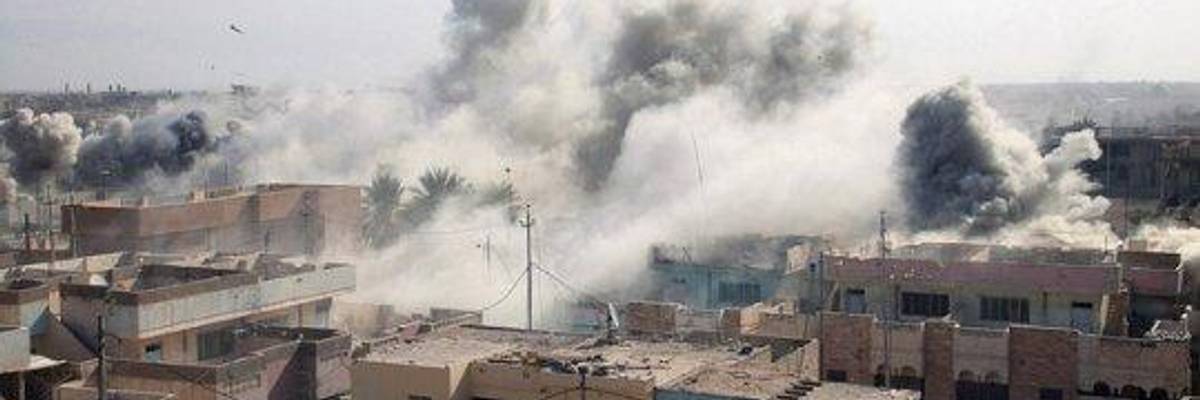
The SDF is now vulnerable to the full might of the Turkish army. (Photo: James Gordon/cc/flickr)
U.S. President Donald Trump told Turkish President Recep Tayyip Erdogan on Sunday, October 6, that the United States troops inside Syria would not defend the Syrian Democratic Forces, which have built an enclave inside Syria along a section of the Turkish border. The Syrian Democratic Forces (SDF) are made up largely of Kurdish factions, who set up this armed force to defend the mainly Kurdish enclave in northern Syria. When the U.S. began its attack on the Islamic State (ISIS), the SDF became the ground forces beneath the U.S. bombers. Now, the U.S. has decided to betray the sacrifice of the SDF.
Turkey has previously threatened to attack the SDF and other Kurdish groups inside Syria east of the River Euphrates. In 2014 and 2015, Turkey signaled that it would invade Syria. In August 2016, the Turkish military crossed the border with U.S. air cover. Erdogan said--at that time--that Turkey was going to attack both ISIS and the Kurdish militia group, People's Protection Units (YPG). This operation, which was largely around the Syrian town of Jarabulus along the Syria-Turkey border, was known as Operation Euphrates Shield. The 2016 intervention opened the door to two further interventions in northern Idlib (2017) and in Afrin (2018), the last operation with an Orwellian name--Operation Olive Branch. These were targeted attacks and not an all-out war on the SDF and other Syrian forces.
Now, Erdogan's government is preparing to enter Syria for a major military operation against the SDF. The U.S. forces have already left the observation posts at Tel Abyad and Ras al-Ain--both key places where the U.S. monitored Turkish troops and shielded the SDF from Turkish attacks. That shield has now been removed. U.S. forces remain in the region, but there is every indication that they will remove themselves from the main hubs of the SDF.
The SDF is now vulnerable to the full might of the Turkish army. The political leaders of the SDF say that they would defend their enclave--known as Rojava--"at all costs." Over the past year, Ilham Ehmed, the co-chair of the Syrian Democratic Council, has warned that Turkey is determined to enter this "safe zone" (or what the U.S. calls a "security mechanism"). Ehmed said--before this recent announcement--that Turkey will invade Rojava, harshly attack the SDF, and re-settle the three million Syrian refugees who are now in Turkey. These refugees are not from the area east of the River Euphrates. Not only will the Turkish government wreck Rojava, but it will ethnically cleanse the area by bringing in large numbers of non-Kurdish Syrians. It is important to recall that the population of Syrian Kurds is around two million. Ehmed has expressed her worry about this attempt to render the Syrian Kurds of Rojava extinct.
What will a Turkish invasion mean for the area?
It is worthwhile to be alarmed by these developments. The United Nations has taken the correct assessment of the situation. The UN's Humanitarian Coordinator for Syria--Panos Moumtzis--said, "We don't know what is going to happen. ... We are preparing for the worst." So should the rest of us.
This article was produced by Globetrotter, a project of the Independent Media Institute.
Dear Common Dreams reader, It’s been nearly 30 years since I co-founded Common Dreams with my late wife, Lina Newhouser. We had the radical notion that journalism should serve the public good, not corporate profits. It was clear to us from the outset what it would take to build such a project. No paid advertisements. No corporate sponsors. No millionaire publisher telling us what to think or do. Many people said we wouldn't last a year, but we proved those doubters wrong. Together with a tremendous team of journalists and dedicated staff, we built an independent media outlet free from the constraints of profits and corporate control. Our mission has always been simple: To inform. To inspire. To ignite change for the common good. Building Common Dreams was not easy. Our survival was never guaranteed. When you take on the most powerful forces—Wall Street greed, fossil fuel industry destruction, Big Tech lobbyists, and uber-rich oligarchs who have spent billions upon billions rigging the economy and democracy in their favor—the only bulwark you have is supporters who believe in your work. But here’s the urgent message from me today. It's never been this bad out there. And it's never been this hard to keep us going. At the very moment Common Dreams is most needed, the threats we face are intensifying. We need your support now more than ever. We don't accept corporate advertising and never will. We don't have a paywall because we don't think people should be blocked from critical news based on their ability to pay. Everything we do is funded by the donations of readers like you. When everyone does the little they can afford, we are strong. But if that support retreats or dries up, so do we. Will you donate now to make sure Common Dreams not only survives but thrives? —Craig Brown, Co-founder |
U.S. President Donald Trump told Turkish President Recep Tayyip Erdogan on Sunday, October 6, that the United States troops inside Syria would not defend the Syrian Democratic Forces, which have built an enclave inside Syria along a section of the Turkish border. The Syrian Democratic Forces (SDF) are made up largely of Kurdish factions, who set up this armed force to defend the mainly Kurdish enclave in northern Syria. When the U.S. began its attack on the Islamic State (ISIS), the SDF became the ground forces beneath the U.S. bombers. Now, the U.S. has decided to betray the sacrifice of the SDF.
Turkey has previously threatened to attack the SDF and other Kurdish groups inside Syria east of the River Euphrates. In 2014 and 2015, Turkey signaled that it would invade Syria. In August 2016, the Turkish military crossed the border with U.S. air cover. Erdogan said--at that time--that Turkey was going to attack both ISIS and the Kurdish militia group, People's Protection Units (YPG). This operation, which was largely around the Syrian town of Jarabulus along the Syria-Turkey border, was known as Operation Euphrates Shield. The 2016 intervention opened the door to two further interventions in northern Idlib (2017) and in Afrin (2018), the last operation with an Orwellian name--Operation Olive Branch. These were targeted attacks and not an all-out war on the SDF and other Syrian forces.
Now, Erdogan's government is preparing to enter Syria for a major military operation against the SDF. The U.S. forces have already left the observation posts at Tel Abyad and Ras al-Ain--both key places where the U.S. monitored Turkish troops and shielded the SDF from Turkish attacks. That shield has now been removed. U.S. forces remain in the region, but there is every indication that they will remove themselves from the main hubs of the SDF.
The SDF is now vulnerable to the full might of the Turkish army. The political leaders of the SDF say that they would defend their enclave--known as Rojava--"at all costs." Over the past year, Ilham Ehmed, the co-chair of the Syrian Democratic Council, has warned that Turkey is determined to enter this "safe zone" (or what the U.S. calls a "security mechanism"). Ehmed said--before this recent announcement--that Turkey will invade Rojava, harshly attack the SDF, and re-settle the three million Syrian refugees who are now in Turkey. These refugees are not from the area east of the River Euphrates. Not only will the Turkish government wreck Rojava, but it will ethnically cleanse the area by bringing in large numbers of non-Kurdish Syrians. It is important to recall that the population of Syrian Kurds is around two million. Ehmed has expressed her worry about this attempt to render the Syrian Kurds of Rojava extinct.
What will a Turkish invasion mean for the area?
It is worthwhile to be alarmed by these developments. The United Nations has taken the correct assessment of the situation. The UN's Humanitarian Coordinator for Syria--Panos Moumtzis--said, "We don't know what is going to happen. ... We are preparing for the worst." So should the rest of us.
This article was produced by Globetrotter, a project of the Independent Media Institute.
U.S. President Donald Trump told Turkish President Recep Tayyip Erdogan on Sunday, October 6, that the United States troops inside Syria would not defend the Syrian Democratic Forces, which have built an enclave inside Syria along a section of the Turkish border. The Syrian Democratic Forces (SDF) are made up largely of Kurdish factions, who set up this armed force to defend the mainly Kurdish enclave in northern Syria. When the U.S. began its attack on the Islamic State (ISIS), the SDF became the ground forces beneath the U.S. bombers. Now, the U.S. has decided to betray the sacrifice of the SDF.
Turkey has previously threatened to attack the SDF and other Kurdish groups inside Syria east of the River Euphrates. In 2014 and 2015, Turkey signaled that it would invade Syria. In August 2016, the Turkish military crossed the border with U.S. air cover. Erdogan said--at that time--that Turkey was going to attack both ISIS and the Kurdish militia group, People's Protection Units (YPG). This operation, which was largely around the Syrian town of Jarabulus along the Syria-Turkey border, was known as Operation Euphrates Shield. The 2016 intervention opened the door to two further interventions in northern Idlib (2017) and in Afrin (2018), the last operation with an Orwellian name--Operation Olive Branch. These were targeted attacks and not an all-out war on the SDF and other Syrian forces.
Now, Erdogan's government is preparing to enter Syria for a major military operation against the SDF. The U.S. forces have already left the observation posts at Tel Abyad and Ras al-Ain--both key places where the U.S. monitored Turkish troops and shielded the SDF from Turkish attacks. That shield has now been removed. U.S. forces remain in the region, but there is every indication that they will remove themselves from the main hubs of the SDF.
The SDF is now vulnerable to the full might of the Turkish army. The political leaders of the SDF say that they would defend their enclave--known as Rojava--"at all costs." Over the past year, Ilham Ehmed, the co-chair of the Syrian Democratic Council, has warned that Turkey is determined to enter this "safe zone" (or what the U.S. calls a "security mechanism"). Ehmed said--before this recent announcement--that Turkey will invade Rojava, harshly attack the SDF, and re-settle the three million Syrian refugees who are now in Turkey. These refugees are not from the area east of the River Euphrates. Not only will the Turkish government wreck Rojava, but it will ethnically cleanse the area by bringing in large numbers of non-Kurdish Syrians. It is important to recall that the population of Syrian Kurds is around two million. Ehmed has expressed her worry about this attempt to render the Syrian Kurds of Rojava extinct.
What will a Turkish invasion mean for the area?
It is worthwhile to be alarmed by these developments. The United Nations has taken the correct assessment of the situation. The UN's Humanitarian Coordinator for Syria--Panos Moumtzis--said, "We don't know what is going to happen. ... We are preparing for the worst." So should the rest of us.
This article was produced by Globetrotter, a project of the Independent Media Institute.