SUBSCRIBE TO OUR FREE NEWSLETTER
Daily news & progressive opinion—funded by the people, not the corporations—delivered straight to your inbox.
5
#000000
#FFFFFF
To donate by check, phone, or other method, see our More Ways to Give page.
Daily news & progressive opinion—funded by the people, not the corporations—delivered straight to your inbox.
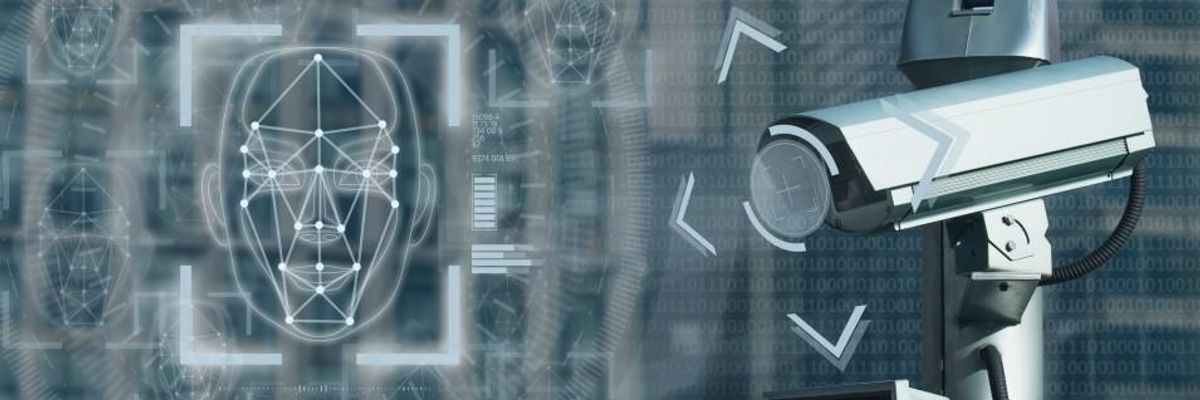
"Aside from the information garnered from surveillance and informants, a number of instructions in the handbook cover key information related to court proceedings and discovery for defense attorneys, as well as how certain info about informants should not be placed in the main case files." (Image: iStock/Getty Images)
Unicorn Riot obtained confidential Immigration & Customs Enforcement (ICE) policy manuals in 2017. Icebreaker Part 7 covers ICE's "Case Management Handbook" which was in effect between 2008 and 2016. The handbook is closely based on a critical database structure called the Treasury Enforcement Communications System (TECS), which has been a backbone of federal law enforcement data management and intelligence gathering since 1987.
According to a release by GovernmentAttic.org this 2008-vintage manual was still active policy at the end of 2016. The overall document is 61 pages including the cover. Download the PDF directly here.
Notes on the Case Management PDF are below this story, which covers the context of TECS and the design of its latest surveillance and data gathering replacements. In recent years the version of TECS referenced in the handbook has been replaced with "Integrated Case Management" (ICM), which is designed and managed by controversial data mining intelligence contractor Palantir, itself owned and controlled by Silicon Valley billionaire Peter Thiel.
In Icebreaker Part 6, Unicorn Riot covered how paramilitary-style Special Response Teams (SRTs) could use TECS to research possible subjects of armed raids. Icebreaker Part 3 covered how cases including fugitives used tracking provided by TECS.
ICE was created by merging several pre-existing government agencies a couple years after 9/11. This manual was written before Homeland Security Investigations (HSI) became a independent agency within ICE, and is instead referred to as "Office of Investigations" (OI) in the manual.
Aside from the information garnered from surveillance and informants, a number of instructions in the handbook cover key information related to court proceedings and discovery for defense attorneys, as well as how certain info about informants should not be placed in the main case files.
Dossier and tracking databases designed by U.S. corporations have been a key instrument of social control for the U.S. government since at least the colonial occupation of the Philippines. As Prof. Alfred McCoy documents in "Policing America's Empire" and in related lectures, the combination of recently-invented fingerprints and personal dossiers enabled colonial administrators to exercise tight control over the island nation and begin developing US-America's unique forms of counterinsurgency to prevent the overthrowing of the colonial power structure.
American companies such as IBM assisted Nazi Germany's government in tabulating and tracking targeted minorities including Jewish and Roma people for detention and eventual extermination in the European Holocaust. IBM and Polaroid assisted the apartheid-era government of South Africa which relied on American companies' services to implement sophisticated identity-tracking measures in uphold racist methods of governance there.
Read more here....
Dear Common Dreams reader, It’s been nearly 30 years since I co-founded Common Dreams with my late wife, Lina Newhouser. We had the radical notion that journalism should serve the public good, not corporate profits. It was clear to us from the outset what it would take to build such a project. No paid advertisements. No corporate sponsors. No millionaire publisher telling us what to think or do. Many people said we wouldn't last a year, but we proved those doubters wrong. Together with a tremendous team of journalists and dedicated staff, we built an independent media outlet free from the constraints of profits and corporate control. Our mission has always been simple: To inform. To inspire. To ignite change for the common good. Building Common Dreams was not easy. Our survival was never guaranteed. When you take on the most powerful forces—Wall Street greed, fossil fuel industry destruction, Big Tech lobbyists, and uber-rich oligarchs who have spent billions upon billions rigging the economy and democracy in their favor—the only bulwark you have is supporters who believe in your work. But here’s the urgent message from me today. It's never been this bad out there. And it's never been this hard to keep us going. At the very moment Common Dreams is most needed, the threats we face are intensifying. We need your support now more than ever. We don't accept corporate advertising and never will. We don't have a paywall because we don't think people should be blocked from critical news based on their ability to pay. Everything we do is funded by the donations of readers like you. When everyone does the little they can afford, we are strong. But if that support retreats or dries up, so do we. Will you donate now to make sure Common Dreams not only survives but thrives? —Craig Brown, Co-founder |
Unicorn Riot obtained confidential Immigration & Customs Enforcement (ICE) policy manuals in 2017. Icebreaker Part 7 covers ICE's "Case Management Handbook" which was in effect between 2008 and 2016. The handbook is closely based on a critical database structure called the Treasury Enforcement Communications System (TECS), which has been a backbone of federal law enforcement data management and intelligence gathering since 1987.
According to a release by GovernmentAttic.org this 2008-vintage manual was still active policy at the end of 2016. The overall document is 61 pages including the cover. Download the PDF directly here.
Notes on the Case Management PDF are below this story, which covers the context of TECS and the design of its latest surveillance and data gathering replacements. In recent years the version of TECS referenced in the handbook has been replaced with "Integrated Case Management" (ICM), which is designed and managed by controversial data mining intelligence contractor Palantir, itself owned and controlled by Silicon Valley billionaire Peter Thiel.
In Icebreaker Part 6, Unicorn Riot covered how paramilitary-style Special Response Teams (SRTs) could use TECS to research possible subjects of armed raids. Icebreaker Part 3 covered how cases including fugitives used tracking provided by TECS.
ICE was created by merging several pre-existing government agencies a couple years after 9/11. This manual was written before Homeland Security Investigations (HSI) became a independent agency within ICE, and is instead referred to as "Office of Investigations" (OI) in the manual.
Aside from the information garnered from surveillance and informants, a number of instructions in the handbook cover key information related to court proceedings and discovery for defense attorneys, as well as how certain info about informants should not be placed in the main case files.
Dossier and tracking databases designed by U.S. corporations have been a key instrument of social control for the U.S. government since at least the colonial occupation of the Philippines. As Prof. Alfred McCoy documents in "Policing America's Empire" and in related lectures, the combination of recently-invented fingerprints and personal dossiers enabled colonial administrators to exercise tight control over the island nation and begin developing US-America's unique forms of counterinsurgency to prevent the overthrowing of the colonial power structure.
American companies such as IBM assisted Nazi Germany's government in tabulating and tracking targeted minorities including Jewish and Roma people for detention and eventual extermination in the European Holocaust. IBM and Polaroid assisted the apartheid-era government of South Africa which relied on American companies' services to implement sophisticated identity-tracking measures in uphold racist methods of governance there.
Read more here....
Unicorn Riot obtained confidential Immigration & Customs Enforcement (ICE) policy manuals in 2017. Icebreaker Part 7 covers ICE's "Case Management Handbook" which was in effect between 2008 and 2016. The handbook is closely based on a critical database structure called the Treasury Enforcement Communications System (TECS), which has been a backbone of federal law enforcement data management and intelligence gathering since 1987.
According to a release by GovernmentAttic.org this 2008-vintage manual was still active policy at the end of 2016. The overall document is 61 pages including the cover. Download the PDF directly here.
Notes on the Case Management PDF are below this story, which covers the context of TECS and the design of its latest surveillance and data gathering replacements. In recent years the version of TECS referenced in the handbook has been replaced with "Integrated Case Management" (ICM), which is designed and managed by controversial data mining intelligence contractor Palantir, itself owned and controlled by Silicon Valley billionaire Peter Thiel.
In Icebreaker Part 6, Unicorn Riot covered how paramilitary-style Special Response Teams (SRTs) could use TECS to research possible subjects of armed raids. Icebreaker Part 3 covered how cases including fugitives used tracking provided by TECS.
ICE was created by merging several pre-existing government agencies a couple years after 9/11. This manual was written before Homeland Security Investigations (HSI) became a independent agency within ICE, and is instead referred to as "Office of Investigations" (OI) in the manual.
Aside from the information garnered from surveillance and informants, a number of instructions in the handbook cover key information related to court proceedings and discovery for defense attorneys, as well as how certain info about informants should not be placed in the main case files.
Dossier and tracking databases designed by U.S. corporations have been a key instrument of social control for the U.S. government since at least the colonial occupation of the Philippines. As Prof. Alfred McCoy documents in "Policing America's Empire" and in related lectures, the combination of recently-invented fingerprints and personal dossiers enabled colonial administrators to exercise tight control over the island nation and begin developing US-America's unique forms of counterinsurgency to prevent the overthrowing of the colonial power structure.
American companies such as IBM assisted Nazi Germany's government in tabulating and tracking targeted minorities including Jewish and Roma people for detention and eventual extermination in the European Holocaust. IBM and Polaroid assisted the apartheid-era government of South Africa which relied on American companies' services to implement sophisticated identity-tracking measures in uphold racist methods of governance there.
Read more here....