SUBSCRIBE TO OUR FREE NEWSLETTER
Daily news & progressive opinion—funded by the people, not the corporations—delivered straight to your inbox.
5
#000000
#FFFFFF
To donate by check, phone, or other method, see our More Ways to Give page.
Daily news & progressive opinion—funded by the people, not the corporations—delivered straight to your inbox.

We should act now to ensure that incarceration does not turn into a death sentence for them. (Photo: Shutterstock)
On Saturday, the first federal inmate tested positive for coronavirus in a Brooklyn, New York, facility. Prison staff in Pennsylvania, Michigan, New York and Washington state have tested positive for the virus, forcing inmate quarantines. The media has dramatized the risk to those caught on a cruise ship or in a nursing home where the virus begins to spread. But surely those most at risk are the 2.2 million Americans locked up on any one day in prisons and jails across the country.
"We're all headed for some dire consequences," warned Daniel Vasquez, the former warden of San Quentin and Soledad state prisons in California. The prisoners, he noted, are "in such close quarters -- some double and triple-celled -- it's going to be impossible to stop it from spreading."
This peril is immediate and pressing. There are 2.2 million Americans locked up at any one time, but over 11 million go through prison or jail gates in any one year.
Most of those in jail have not been convicted or sentenced; they are languishing awaiting trial, many of them unable to afford bail.
Of the quarter of a million locked up in 122 different federal facilities, over 100,000 are over 60. Disproportionately poor and people of color, over 40 percent suffer from chronic health conditions.
The Center for Disease Control and Prevention has called on Americans to practice "social distancing," staying six feet away from one another, even as more and more states issue stay at home orders. But prisoners literally are locked down. In overcrowded prisons and jails, they cannot practice social distancing, and they cannot stay at home. In jails and prisons, the incarcerated share bathrooms, laundry and eating areas. In many, the toilet tank doubles as the sink for hand washing. Those bunked in the same cell -- as many as four -- share toilets and sinks. Circulation is almost always poor.
The coronavirus is particularly lethal for the elderly and for those with a pre-existing health condition. Again, the incarcerated are disproportionately at risk.
Of the quarter of a million locked up in 122 different federal facilities, over 100,000 are over 60. Disproportionately poor and people of color, over 40 percent suffer from chronic health conditions.
Moreover, once caught, the danger goes far beyond other inmates. Those cycling through jails come into contact with guards and prison officials, judges and courtroom officials, police and when they return to their homes, families and neighbors. It is time to reduce those at risk dramatically. Across the world, efforts are being made to reduce prison populations. Even Iran, denounced as a brutal dictatorship, has released 54,000 inmates temporarily in the face of the virus.
Some states have already begun to take some action in response to the threat. In California and New York, officials have begun to review cases seeking to release those who pose no threat to society. Many jails like those in Arizona require inmates to pay co-pays to see a doctor and fees to purchase medical supplies. Many jails ban hand sanitizers because of their alcoholic content. All that must change.
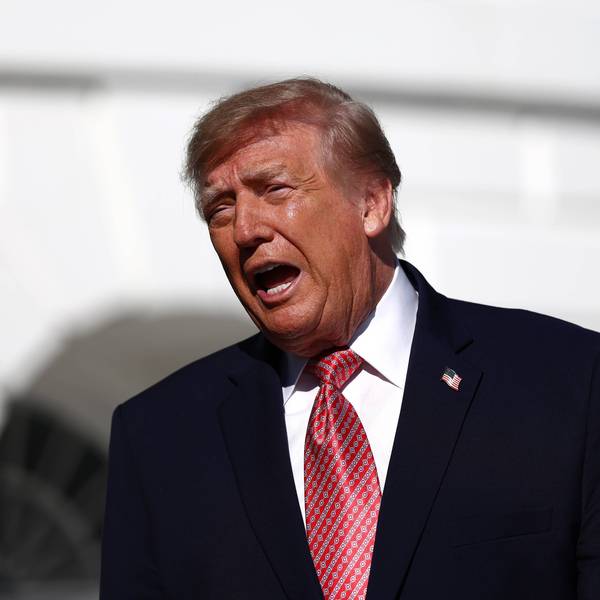
I wrote to President Donald Trump calling his attention to this crisis and urging federal action. He called me back to discuss the issue and promised that he would refer this to his leading aid, Jared Kushner, who played a major role in ushering into law the First Step Act, which took the first steps toward reducing our excessive incarceration levels.
We should act now to ensure that incarceration does not turn into a death sentence for them.
This country and this world are at a monumental crossroads. US voters have an opportunity to beat back the forces of fascism and confront the billionaires who are rigging the economy, our media system, and our democracy, making it increasingly impossible for ordinary people to get by. We’re not just talking about the election. We’re talking about what must be done once these fascist elements are vanquished from power. We need a bolder set of solutions than what either major party has so far been willing to offer and a working-class movement ready to fight like hell for it. Trump didn't emerge from nowhere. The conditions that fueled MAGA authoritarianism were created by decades of radical neoliberal economic policies and a corrupt political system dominated by corporate interests. They slashed taxes on the super-rich, promising that the benefits would trickle down. They said giveaways to the corporate titans would make life more affordable for the rest of us. It was all bullshit. And when a bitter, betrayed populace searches for someone to blame, right-wing demagogues have little trouble finding scapegoats. People know when they're being lied to, but you won't hear any of this from the corporate media. Only independent journalism—powered and funded by people who believe in building a better world—can deliver truly trustworthy daily news. If you share our vision, please contribute whatever you can to sustain our work. |
On Saturday, the first federal inmate tested positive for coronavirus in a Brooklyn, New York, facility. Prison staff in Pennsylvania, Michigan, New York and Washington state have tested positive for the virus, forcing inmate quarantines. The media has dramatized the risk to those caught on a cruise ship or in a nursing home where the virus begins to spread. But surely those most at risk are the 2.2 million Americans locked up on any one day in prisons and jails across the country.
"We're all headed for some dire consequences," warned Daniel Vasquez, the former warden of San Quentin and Soledad state prisons in California. The prisoners, he noted, are "in such close quarters -- some double and triple-celled -- it's going to be impossible to stop it from spreading."
This peril is immediate and pressing. There are 2.2 million Americans locked up at any one time, but over 11 million go through prison or jail gates in any one year.
Most of those in jail have not been convicted or sentenced; they are languishing awaiting trial, many of them unable to afford bail.
Of the quarter of a million locked up in 122 different federal facilities, over 100,000 are over 60. Disproportionately poor and people of color, over 40 percent suffer from chronic health conditions.
The Center for Disease Control and Prevention has called on Americans to practice "social distancing," staying six feet away from one another, even as more and more states issue stay at home orders. But prisoners literally are locked down. In overcrowded prisons and jails, they cannot practice social distancing, and they cannot stay at home. In jails and prisons, the incarcerated share bathrooms, laundry and eating areas. In many, the toilet tank doubles as the sink for hand washing. Those bunked in the same cell -- as many as four -- share toilets and sinks. Circulation is almost always poor.
The coronavirus is particularly lethal for the elderly and for those with a pre-existing health condition. Again, the incarcerated are disproportionately at risk.
Of the quarter of a million locked up in 122 different federal facilities, over 100,000 are over 60. Disproportionately poor and people of color, over 40 percent suffer from chronic health conditions.
Moreover, once caught, the danger goes far beyond other inmates. Those cycling through jails come into contact with guards and prison officials, judges and courtroom officials, police and when they return to their homes, families and neighbors. It is time to reduce those at risk dramatically. Across the world, efforts are being made to reduce prison populations. Even Iran, denounced as a brutal dictatorship, has released 54,000 inmates temporarily in the face of the virus.
Some states have already begun to take some action in response to the threat. In California and New York, officials have begun to review cases seeking to release those who pose no threat to society. Many jails like those in Arizona require inmates to pay co-pays to see a doctor and fees to purchase medical supplies. Many jails ban hand sanitizers because of their alcoholic content. All that must change.
I wrote to President Donald Trump calling his attention to this crisis and urging federal action. He called me back to discuss the issue and promised that he would refer this to his leading aid, Jared Kushner, who played a major role in ushering into law the First Step Act, which took the first steps toward reducing our excessive incarceration levels.
We should act now to ensure that incarceration does not turn into a death sentence for them.