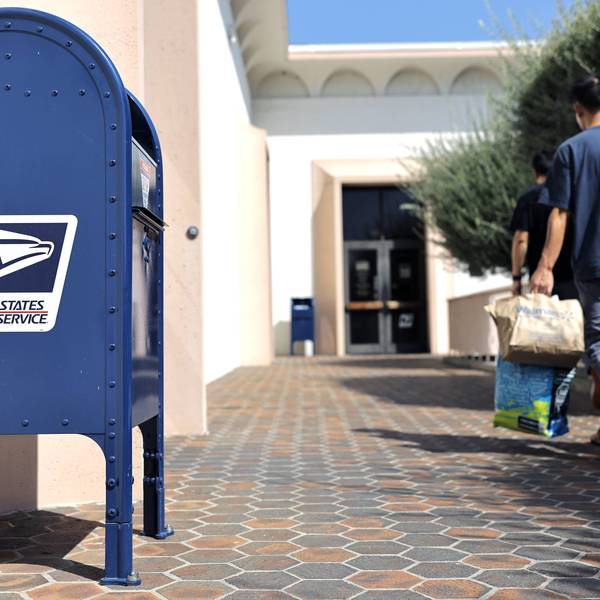


Vote by mail is gaining traction across the country. (Photo: Getty)
Voting By Mail Is Now a Necessity During COVID-19
We need to ignore the inflamed rhetoric the president is using and act now.
After twice rescheduling the state's primary, Georgia voters still faced an unsettling decision recently: go out to vote or stay safe at home and not risk exposure to a deadly disease. For those who did venture to the polls, they were met by unacceptable delays and technical issues. What happened in Georgia should be a warning sign to the rest of the country that we're not ready for the upcoming November election.
Earlier in the primary season, a very different story took place in Washington. In the state at the epicenter of the initial COVID-19 outbreak, there was only one change voters were instructed to make before casting their ballot. Don't lick the envelope - to limit ballot counters' exposure to the virus. Providing all Americans with the opportunity to vote by mail this year will keep people safe while protecting their constitutional right to free and fair elections. The only way to accomplish this is for Congress to step in and mandate expanded vote by mail in the next COVID-19 relief package.
Washington, along with Colorado, Hawaii, Oregon, and Utah all conduct their elections by mail, and California and Arizona allow voters the choice to permanently vote by mail. Even in the midst of a pandemic, Washington's presidential primary was broadly unaffected by COVID-19. Six states have postponed their primary to later this summer, others, like Washington, will vote again for their state and local primaries in the coming months, and the general election in November is less than 150 days away. If we are going to expand vote by mail, we need to start now or election day will look like what happened in Georgia where voters who registered for their absentee ballot never received it and ended up in long lines at the polls anyway.
In the CARES Act, Congress allocated $400 million to help states expand vote by mail and absentee ballot requests. While that was a start, it is nowhere near enough to allow every American who doesn't want to put their health at risk to cast their ballot this year. It also won't help voters who live in states that don't want to expand these options. The House approved an additional $3.6 billion for states to make their election systems safe for voters and poll workers in the Heroes Act. The Senate has done nothing.
Vote by mail is gaining traction across the country. A recent poll found that 64 percent of Americans support expanding vote by mail this year. Former first lady Michelle Obama even endorsed the idea along with more early voting opportunities and online voter registration. Top election officials in Ohio and Florida, two Republican-leaning states hit hard by COVID-19, are also voicing their support for vote by mail. The issue shouldn't be partisan.
This all comes in sharp contrast to comments from President Trump, who has voted by absentee ballot in both New York and Florida. He has pushed back against the idea saying there is "tremendous potential for voter fraud, and for whatever reason, doesn't work out well for Republicans." That's not true. Both parties benefit from expanded vote by mail.
In 2014, when Colorado first moved to an all vote by mail system, Republicans gained a slight voting advantage, ousted the incumbent Democratic U.S. senator and won three statewide elections. Utah saw a mirrored outcome in 2016, its first year shifting away from in-person voting, with Democrats gaining a slight advantage.
More importantly, data from these recent examples and the other states that already expanded vote by mail show voter turnout increased overall. In the years since Oregon became the first state to vote by mail, election turnout increased in primaries and general elections, presidential cycles and midterms, to some of the highest rates in the country. Furthermore, these changes were made without any significant issue or credible reports of voter fraud.
This fall's general election is too important to call into question. At the end of the day, everyone who wants to vote should have that opportunity no matter what state they live in. The best option to accomplish this goal is to expand vote by mail. We need to ignore the inflamed rhetoric the president is using and act now. To give states the time they need to prepare their systems and educate voters, this needs to be a component of the next federal COVID-19 relief package in Congress. The House has done its part and now the Senate needs to get off the sidelines and act. Vote by mail was a good idea before we were facing a pandemic, now it is a necessity.
We are at a crossroads
This country and this world are at a monumental crossroads. In a few short weeks, US voters will have an opportunity to beat back the forces of fascism and confront the billionaires who are rigging the economy, our media system, and our democracy, making it increasingly impossible for ordinary people to get by. We’re not just talking about the election. We’re talking about what must be done once these fascist elements are vanquished from power. We need a bolder set of solutions than what either major party has so far been willing to offer and a working-class movement ready to fight like hell for it. Trump didn't emerge from nowhere. The conditions that fueled MAGA authoritarianism were created by decades of radical neoliberal economic policies and a corrupt political system dominated by corporate interests. They slashed taxes on the super-rich, promising that the benefits would trickle down. They said giveaways to the corporate titans would make life more affordable for the rest of us. It was all bullshit. And when a bitter, betrayed populace searches for someone to blame, right-wing demagogues have little trouble finding scapegoats. People know when they're being lied to, but you won't hear any of this from the corporate media. Only independent journalism—powered and funded by people who believe in building a better world—can deliver truly trustworthy daily news. Our Fall Campaign is underway, and we need your help. To power our newsroom through the rest of the year, we need to raise $125,000 by midnight on October 31. So if you share our vision, please contribute whatever you can to sustain our work. |
After twice rescheduling the state's primary, Georgia voters still faced an unsettling decision recently: go out to vote or stay safe at home and not risk exposure to a deadly disease. For those who did venture to the polls, they were met by unacceptable delays and technical issues. What happened in Georgia should be a warning sign to the rest of the country that we're not ready for the upcoming November election.
Earlier in the primary season, a very different story took place in Washington. In the state at the epicenter of the initial COVID-19 outbreak, there was only one change voters were instructed to make before casting their ballot. Don't lick the envelope - to limit ballot counters' exposure to the virus. Providing all Americans with the opportunity to vote by mail this year will keep people safe while protecting their constitutional right to free and fair elections. The only way to accomplish this is for Congress to step in and mandate expanded vote by mail in the next COVID-19 relief package.
Washington, along with Colorado, Hawaii, Oregon, and Utah all conduct their elections by mail, and California and Arizona allow voters the choice to permanently vote by mail. Even in the midst of a pandemic, Washington's presidential primary was broadly unaffected by COVID-19. Six states have postponed their primary to later this summer, others, like Washington, will vote again for their state and local primaries in the coming months, and the general election in November is less than 150 days away. If we are going to expand vote by mail, we need to start now or election day will look like what happened in Georgia where voters who registered for their absentee ballot never received it and ended up in long lines at the polls anyway.
In the CARES Act, Congress allocated $400 million to help states expand vote by mail and absentee ballot requests. While that was a start, it is nowhere near enough to allow every American who doesn't want to put their health at risk to cast their ballot this year. It also won't help voters who live in states that don't want to expand these options. The House approved an additional $3.6 billion for states to make their election systems safe for voters and poll workers in the Heroes Act. The Senate has done nothing.
Vote by mail is gaining traction across the country. A recent poll found that 64 percent of Americans support expanding vote by mail this year. Former first lady Michelle Obama even endorsed the idea along with more early voting opportunities and online voter registration. Top election officials in Ohio and Florida, two Republican-leaning states hit hard by COVID-19, are also voicing their support for vote by mail. The issue shouldn't be partisan.
This all comes in sharp contrast to comments from President Trump, who has voted by absentee ballot in both New York and Florida. He has pushed back against the idea saying there is "tremendous potential for voter fraud, and for whatever reason, doesn't work out well for Republicans." That's not true. Both parties benefit from expanded vote by mail.
In 2014, when Colorado first moved to an all vote by mail system, Republicans gained a slight voting advantage, ousted the incumbent Democratic U.S. senator and won three statewide elections. Utah saw a mirrored outcome in 2016, its first year shifting away from in-person voting, with Democrats gaining a slight advantage.
More importantly, data from these recent examples and the other states that already expanded vote by mail show voter turnout increased overall. In the years since Oregon became the first state to vote by mail, election turnout increased in primaries and general elections, presidential cycles and midterms, to some of the highest rates in the country. Furthermore, these changes were made without any significant issue or credible reports of voter fraud.
This fall's general election is too important to call into question. At the end of the day, everyone who wants to vote should have that opportunity no matter what state they live in. The best option to accomplish this goal is to expand vote by mail. We need to ignore the inflamed rhetoric the president is using and act now. To give states the time they need to prepare their systems and educate voters, this needs to be a component of the next federal COVID-19 relief package in Congress. The House has done its part and now the Senate needs to get off the sidelines and act. Vote by mail was a good idea before we were facing a pandemic, now it is a necessity.