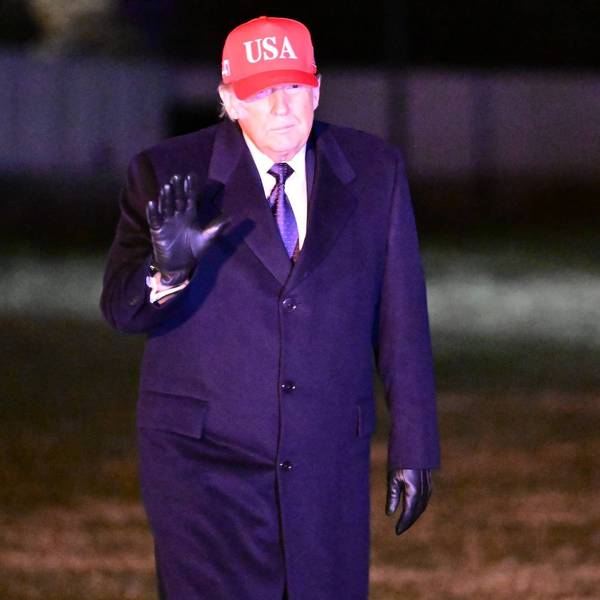

Sen. Bernie Sanders was right, because the crisis in American democracy was not initiated by the election of Donald Trump in 2016. (Photo: Atta Kenare/AFP/Getty Images)
Future of American Democracy: On Inequality, Polarization and Violence
While the buzzword throughout the election campaigns has been ‘saving American democracy’, the state of democracy in the US is likely to worsen in the foreseeable future.
In January 2017, the Economist Intelligence Unit (EIU)'s Democracy Index downgraded the state of democracy in the United States from "full democracy" to "flawed democracy".
The demotion of a country that has constantly prided itself, not only on being democratic but also on championing democracy throughout the world, took many by surprise. Some US pundits challenged the findings altogether.
However, judging by events that have transpired since, the accuracy of the EIU Index continues to demonstrate itself in the everyday reality of American politics: the extreme political and cultural polarization; growing influence of armed militias, police violence; mistreatment of undocumented immigrants, including children; marginalization of the country's minorities in mainstream politics and so on.
The EIU's Democracy Index has, finally, exposed the deteriorating state of democracy in the US because it is based on 60 different indicators which, aside from traditional categories - i.e. the function of government - also include other indicators such as gender equality, civil liberties and political culture.
Judging by the number, diversity and depth of the above indicators, it is safe to assume that the outcome of the US general elections this November will not have an immediate bearing on the state of American democracy. On the contrary, the outcome is likely to further fragment an already divided society and continue to turn the country's state-run institutions - including the Supreme Court - into a battleground for political and ideological alliances.
While the buzzword throughout the election campaigns has been 'saving American democracy', the state of democracy in the US is likely to worsen in the foreseeable future. This is because America's ruling elites, whether Republicans or Democrats, refuse to acknowledge the actual ailments that have afflicted American political culture for many years.
Sadly, when the campaign of Senator Bernie Sanders, former Democratic presidential nominee, insisted that massive structural adjustments were necessary at every level of government, he was dismissed by the Democratic establishment as 'unrealistic', and altogether 'unelectable'.
Sanders was, of course, right, because the crisis in American democracy was not initiated by the election of Donald Trump in 2016. The latter event was a mere symptom of a larger, protracted problem.
These are some of the major issues that are unlikely to be effortlessly resolved by the outcome of the elections, thus will continue to downgrade the state of democracy in the US.
The Inequality Gap: Income inequality, which is the source of socio-political strife, is one of the US' major challenges, spanning over 50 years. Inequality, now compounded with the COVID-19 pandemic, is worsening, affecting certain racial groups - African Americans, in particular - and women, more than others.
According to a study conducted by the Pew Research Center in February 2020, "income inequality in the US is the highest of all the G7 nations," a major concern for 78 percent of Democrats and 41 percent of Republicans.
Political Polarization: The large gap between the wealthy few and the impoverished many is not the only schism creating a wedge in American society. Political polarization - although, interestingly, it does not always express itself based on rational class demarcation - is a major problem in the US.
Both Republicans and Democrats have succeeded in making their case to enlist the support of certain strata of American society, while doing very little to fulfill the many promises the ruling establishments of these two camps often make during election campaigns.
For example, Republicans use a populist political discourse to reach out to working-class white Americans, promising them economic prosperity; yet, there is no evidence that the lot of working-class white American families has improved under the Trump Administration.
The same is true with Democrats, who have, falsely, long situated themselves as the champions of racial justice and fairer treatment of undocumented immigrants.
Militarization of Society: With socio-economic inequality and political polarization at their worst, trust in democracy and the role of the state to fix a deeply flawed system is waning. This lack of trust in the central government spans hundreds of years, thus, the constant emphasis on the Second Amendment of the US Constitution regarding "the right of the people to keep and bear arms."
Indeed, US society is one of the most militarized in the world. According to the Federal Bureau of Investigation (FBI), two-thirds of all local terrorism in the US is carried out by right-wing militias, who are now more emboldened and angrier than ever before. According to an October Southern Poverty Law Center report, there are about 180 active anti-government paramilitary groups in the US.
For the first time in many years, talks of another 'American Civil War' have become a daily mainstream media discussion.
It would be entirely unrealistic to imagine that democracy in the US will be restored as a result of any given elections. Without a fundamental shift in US politics that confronts the underlying problems behind the socio-economic inequality and political polarization, the future carries yet more fragmentation and, possibly, violence.
The coming weeks and months are critical in determining the future direction of American society. Alas, the current indicators are hardly promising.
We are at a crossroads
This country and this world are at a monumental crossroads. US voters have an opportunity to beat back the forces of fascism and confront the billionaires who are rigging the economy, our media system, and our democracy, making it increasingly impossible for ordinary people to get by. We’re not just talking about the election. We’re talking about what must be done once these fascist elements are vanquished from power. We need a bolder set of solutions than what either major party has so far been willing to offer and a working-class movement ready to fight like hell for it. Trump didn't emerge from nowhere. The conditions that fueled MAGA authoritarianism were created by decades of radical neoliberal economic policies and a corrupt political system dominated by corporate interests. They slashed taxes on the super-rich, promising that the benefits would trickle down. They said giveaways to the corporate titans would make life more affordable for the rest of us. It was all bullshit. And when a bitter, betrayed populace searches for someone to blame, right-wing demagogues have little trouble finding scapegoats. People know when they're being lied to, but you won't hear any of this from the corporate media. Only independent journalism—powered and funded by people who believe in building a better world—can deliver truly trustworthy daily news. Our Fall Campaign is underway, and we need your help. To power our newsroom through the rest of the year, we need to raise $125,000 by midnight on October 31. So if you share our vision, please contribute whatever you can to sustain our work. |
In January 2017, the Economist Intelligence Unit (EIU)'s Democracy Index downgraded the state of democracy in the United States from "full democracy" to "flawed democracy".
The demotion of a country that has constantly prided itself, not only on being democratic but also on championing democracy throughout the world, took many by surprise. Some US pundits challenged the findings altogether.
However, judging by events that have transpired since, the accuracy of the EIU Index continues to demonstrate itself in the everyday reality of American politics: the extreme political and cultural polarization; growing influence of armed militias, police violence; mistreatment of undocumented immigrants, including children; marginalization of the country's minorities in mainstream politics and so on.
The EIU's Democracy Index has, finally, exposed the deteriorating state of democracy in the US because it is based on 60 different indicators which, aside from traditional categories - i.e. the function of government - also include other indicators such as gender equality, civil liberties and political culture.
Judging by the number, diversity and depth of the above indicators, it is safe to assume that the outcome of the US general elections this November will not have an immediate bearing on the state of American democracy. On the contrary, the outcome is likely to further fragment an already divided society and continue to turn the country's state-run institutions - including the Supreme Court - into a battleground for political and ideological alliances.
While the buzzword throughout the election campaigns has been 'saving American democracy', the state of democracy in the US is likely to worsen in the foreseeable future. This is because America's ruling elites, whether Republicans or Democrats, refuse to acknowledge the actual ailments that have afflicted American political culture for many years.
Sadly, when the campaign of Senator Bernie Sanders, former Democratic presidential nominee, insisted that massive structural adjustments were necessary at every level of government, he was dismissed by the Democratic establishment as 'unrealistic', and altogether 'unelectable'.
Sanders was, of course, right, because the crisis in American democracy was not initiated by the election of Donald Trump in 2016. The latter event was a mere symptom of a larger, protracted problem.
These are some of the major issues that are unlikely to be effortlessly resolved by the outcome of the elections, thus will continue to downgrade the state of democracy in the US.
The Inequality Gap: Income inequality, which is the source of socio-political strife, is one of the US' major challenges, spanning over 50 years. Inequality, now compounded with the COVID-19 pandemic, is worsening, affecting certain racial groups - African Americans, in particular - and women, more than others.
According to a study conducted by the Pew Research Center in February 2020, "income inequality in the US is the highest of all the G7 nations," a major concern for 78 percent of Democrats and 41 percent of Republicans.
Political Polarization: The large gap between the wealthy few and the impoverished many is not the only schism creating a wedge in American society. Political polarization - although, interestingly, it does not always express itself based on rational class demarcation - is a major problem in the US.
Both Republicans and Democrats have succeeded in making their case to enlist the support of certain strata of American society, while doing very little to fulfill the many promises the ruling establishments of these two camps often make during election campaigns.
For example, Republicans use a populist political discourse to reach out to working-class white Americans, promising them economic prosperity; yet, there is no evidence that the lot of working-class white American families has improved under the Trump Administration.
The same is true with Democrats, who have, falsely, long situated themselves as the champions of racial justice and fairer treatment of undocumented immigrants.
Militarization of Society: With socio-economic inequality and political polarization at their worst, trust in democracy and the role of the state to fix a deeply flawed system is waning. This lack of trust in the central government spans hundreds of years, thus, the constant emphasis on the Second Amendment of the US Constitution regarding "the right of the people to keep and bear arms."
Indeed, US society is one of the most militarized in the world. According to the Federal Bureau of Investigation (FBI), two-thirds of all local terrorism in the US is carried out by right-wing militias, who are now more emboldened and angrier than ever before. According to an October Southern Poverty Law Center report, there are about 180 active anti-government paramilitary groups in the US.
For the first time in many years, talks of another 'American Civil War' have become a daily mainstream media discussion.
It would be entirely unrealistic to imagine that democracy in the US will be restored as a result of any given elections. Without a fundamental shift in US politics that confronts the underlying problems behind the socio-economic inequality and political polarization, the future carries yet more fragmentation and, possibly, violence.
The coming weeks and months are critical in determining the future direction of American society. Alas, the current indicators are hardly promising.