SUBSCRIBE TO OUR FREE NEWSLETTER
Daily news & progressive opinion—funded by the people, not the corporations—delivered straight to your inbox.
5
#000000
#FFFFFF
To donate by check, phone, or other method, see our More Ways to Give page.
Daily news & progressive opinion—funded by the people, not the corporations—delivered straight to your inbox.
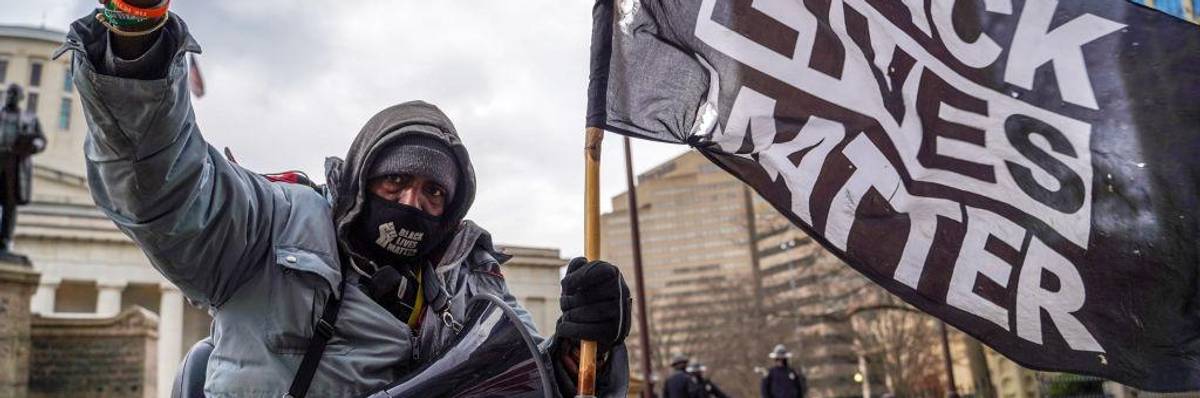
We who were there in the 1960s and before still believe in the dreams of our generation as well as the dreams of those who march under the banners of Black Lives Matter today. (Photo by Jason Whitman/NurPhoto via Getty Images)
Last November, we held our breaths until the votes came in--and afterwards until a winner was declared. And again and again as the loser sought to undo his loss and retain his soiled imagined crown.
One more time we had to suck in our breaths as the conspirator-in-chief's army marauded through the nation's capital on January 6, smashing through doors and windows and waving the Confederate battle flag. The vice president and members of the Senate and House of Representatives fled for their lives.
For hours, our election results remained on hold until a newly assembled force retook the Capitol. For weeks we waited until our newly anointed leaders took their places, and only then guarded by the largest force any of us had ever seen in our nation's capital.
Hope against hope, we longed to dream our common dreams again. Yet as the near-lockstep votes of 43 Republican senators to exonerate the former president for inciting all this reveals, resistance to democracy remains dangerously powerful.
We've seen this before.
I'm part of a generation of activists who have been battling white supremacy since the 1960s. In those years, Blacks and whites fought together--and sometimes died--to get legislation outlawing Jim Crow passed in those very same halls of Congress. Some of us worked to see that these new laws were implemented, and cheered as progress was made and discriminatory barriers were dismantled.
Those of us who are older are now also seeing something else: new generations of activists--Black, brown, and white--pushing beyond where the civil rights warriors of my generation left off.
But these gains have been under attack ever since--in the North as well as the South. I have been in the midst of these fights since becoming a civil rights lawyer in 1964.
I began my career by challenging system-wide segregation in Cleveland and Cincinnati public schools. Next I worked to pry open the all-white craft unions and fight racist police practices in New York City as associate counsel of the National Association for the Advancement of Colored People.
Later, in private practice, I defended innocent Black men like Rubin Hurricane Carter and John Artis from racially prejudiced prosecutions. Finally, I worked with groups attacking housing and zoning segregation. These cases have been my mainstay.
There have been some victories, but that has only hardened the opposition.
Today, at 83 years old and watching from the sidelines, I've shuddered to see police still shooting Black men in the back and killing them in custody, while Black teenagers spend years in prison when any district attorney or judge should have seen they were clearly innocent.
School segregation is meanwhile only deepening. Last year Stuyvesant, New York City's premier public high school, admitted 760 students--just 10 of whom were Black. Even after years of protests for more equity, the resistance to changing the way Stuvesant chooses students is intense.
But those of us who are older are now also seeing something else: new generations of activists--Black, brown, and white--pushing beyond where the civil rights warriors of my generation left off.
We who were there in the 1960s and before still believe in the dreams of our generation as well as the dreams of those who march under the banners of Black Lives Matter today. We've also seen that those dreams will always be under attack--from the white reaction of my day to the insurrectionists who occupied our Capitol in service of a monstrous administration dedicated to white supremacy.
Protecting our already fragile and weakened democracy requires accountability for these violent insurrectionists and the politicians who support them. But more importantly, it requires that new generations of activists for equality keep rising. And this, at least, I find encouraging. Together, we will remain strong.
Dear Common Dreams reader, It’s been nearly 30 years since I co-founded Common Dreams with my late wife, Lina Newhouser. We had the radical notion that journalism should serve the public good, not corporate profits. It was clear to us from the outset what it would take to build such a project. No paid advertisements. No corporate sponsors. No millionaire publisher telling us what to think or do. Many people said we wouldn't last a year, but we proved those doubters wrong. Together with a tremendous team of journalists and dedicated staff, we built an independent media outlet free from the constraints of profits and corporate control. Our mission has always been simple: To inform. To inspire. To ignite change for the common good. Building Common Dreams was not easy. Our survival was never guaranteed. When you take on the most powerful forces—Wall Street greed, fossil fuel industry destruction, Big Tech lobbyists, and uber-rich oligarchs who have spent billions upon billions rigging the economy and democracy in their favor—the only bulwark you have is supporters who believe in your work. But here’s the urgent message from me today. It's never been this bad out there. And it's never been this hard to keep us going. At the very moment Common Dreams is most needed, the threats we face are intensifying. We need your support now more than ever. We don't accept corporate advertising and never will. We don't have a paywall because we don't think people should be blocked from critical news based on their ability to pay. Everything we do is funded by the donations of readers like you. When everyone does the little they can afford, we are strong. But if that support retreats or dries up, so do we. Will you donate now to make sure Common Dreams not only survives but thrives? —Craig Brown, Co-founder |
Last November, we held our breaths until the votes came in--and afterwards until a winner was declared. And again and again as the loser sought to undo his loss and retain his soiled imagined crown.
One more time we had to suck in our breaths as the conspirator-in-chief's army marauded through the nation's capital on January 6, smashing through doors and windows and waving the Confederate battle flag. The vice president and members of the Senate and House of Representatives fled for their lives.
For hours, our election results remained on hold until a newly assembled force retook the Capitol. For weeks we waited until our newly anointed leaders took their places, and only then guarded by the largest force any of us had ever seen in our nation's capital.
Hope against hope, we longed to dream our common dreams again. Yet as the near-lockstep votes of 43 Republican senators to exonerate the former president for inciting all this reveals, resistance to democracy remains dangerously powerful.
We've seen this before.
I'm part of a generation of activists who have been battling white supremacy since the 1960s. In those years, Blacks and whites fought together--and sometimes died--to get legislation outlawing Jim Crow passed in those very same halls of Congress. Some of us worked to see that these new laws were implemented, and cheered as progress was made and discriminatory barriers were dismantled.
Those of us who are older are now also seeing something else: new generations of activists--Black, brown, and white--pushing beyond where the civil rights warriors of my generation left off.
But these gains have been under attack ever since--in the North as well as the South. I have been in the midst of these fights since becoming a civil rights lawyer in 1964.
I began my career by challenging system-wide segregation in Cleveland and Cincinnati public schools. Next I worked to pry open the all-white craft unions and fight racist police practices in New York City as associate counsel of the National Association for the Advancement of Colored People.
Later, in private practice, I defended innocent Black men like Rubin Hurricane Carter and John Artis from racially prejudiced prosecutions. Finally, I worked with groups attacking housing and zoning segregation. These cases have been my mainstay.
There have been some victories, but that has only hardened the opposition.
Today, at 83 years old and watching from the sidelines, I've shuddered to see police still shooting Black men in the back and killing them in custody, while Black teenagers spend years in prison when any district attorney or judge should have seen they were clearly innocent.
School segregation is meanwhile only deepening. Last year Stuyvesant, New York City's premier public high school, admitted 760 students--just 10 of whom were Black. Even after years of protests for more equity, the resistance to changing the way Stuvesant chooses students is intense.
But those of us who are older are now also seeing something else: new generations of activists--Black, brown, and white--pushing beyond where the civil rights warriors of my generation left off.
We who were there in the 1960s and before still believe in the dreams of our generation as well as the dreams of those who march under the banners of Black Lives Matter today. We've also seen that those dreams will always be under attack--from the white reaction of my day to the insurrectionists who occupied our Capitol in service of a monstrous administration dedicated to white supremacy.
Protecting our already fragile and weakened democracy requires accountability for these violent insurrectionists and the politicians who support them. But more importantly, it requires that new generations of activists for equality keep rising. And this, at least, I find encouraging. Together, we will remain strong.
Last November, we held our breaths until the votes came in--and afterwards until a winner was declared. And again and again as the loser sought to undo his loss and retain his soiled imagined crown.
One more time we had to suck in our breaths as the conspirator-in-chief's army marauded through the nation's capital on January 6, smashing through doors and windows and waving the Confederate battle flag. The vice president and members of the Senate and House of Representatives fled for their lives.
For hours, our election results remained on hold until a newly assembled force retook the Capitol. For weeks we waited until our newly anointed leaders took their places, and only then guarded by the largest force any of us had ever seen in our nation's capital.
Hope against hope, we longed to dream our common dreams again. Yet as the near-lockstep votes of 43 Republican senators to exonerate the former president for inciting all this reveals, resistance to democracy remains dangerously powerful.
We've seen this before.
I'm part of a generation of activists who have been battling white supremacy since the 1960s. In those years, Blacks and whites fought together--and sometimes died--to get legislation outlawing Jim Crow passed in those very same halls of Congress. Some of us worked to see that these new laws were implemented, and cheered as progress was made and discriminatory barriers were dismantled.
Those of us who are older are now also seeing something else: new generations of activists--Black, brown, and white--pushing beyond where the civil rights warriors of my generation left off.
But these gains have been under attack ever since--in the North as well as the South. I have been in the midst of these fights since becoming a civil rights lawyer in 1964.
I began my career by challenging system-wide segregation in Cleveland and Cincinnati public schools. Next I worked to pry open the all-white craft unions and fight racist police practices in New York City as associate counsel of the National Association for the Advancement of Colored People.
Later, in private practice, I defended innocent Black men like Rubin Hurricane Carter and John Artis from racially prejudiced prosecutions. Finally, I worked with groups attacking housing and zoning segregation. These cases have been my mainstay.
There have been some victories, but that has only hardened the opposition.
Today, at 83 years old and watching from the sidelines, I've shuddered to see police still shooting Black men in the back and killing them in custody, while Black teenagers spend years in prison when any district attorney or judge should have seen they were clearly innocent.
School segregation is meanwhile only deepening. Last year Stuyvesant, New York City's premier public high school, admitted 760 students--just 10 of whom were Black. Even after years of protests for more equity, the resistance to changing the way Stuvesant chooses students is intense.
But those of us who are older are now also seeing something else: new generations of activists--Black, brown, and white--pushing beyond where the civil rights warriors of my generation left off.
We who were there in the 1960s and before still believe in the dreams of our generation as well as the dreams of those who march under the banners of Black Lives Matter today. We've also seen that those dreams will always be under attack--from the white reaction of my day to the insurrectionists who occupied our Capitol in service of a monstrous administration dedicated to white supremacy.
Protecting our already fragile and weakened democracy requires accountability for these violent insurrectionists and the politicians who support them. But more importantly, it requires that new generations of activists for equality keep rising. And this, at least, I find encouraging. Together, we will remain strong.