SUBSCRIBE TO OUR FREE NEWSLETTER
Daily news & progressive opinion—funded by the people, not the corporations—delivered straight to your inbox.
5
#000000
#FFFFFF
To donate by check, phone, or other method, see our More Ways to Give page.
Daily news & progressive opinion—funded by the people, not the corporations—delivered straight to your inbox.
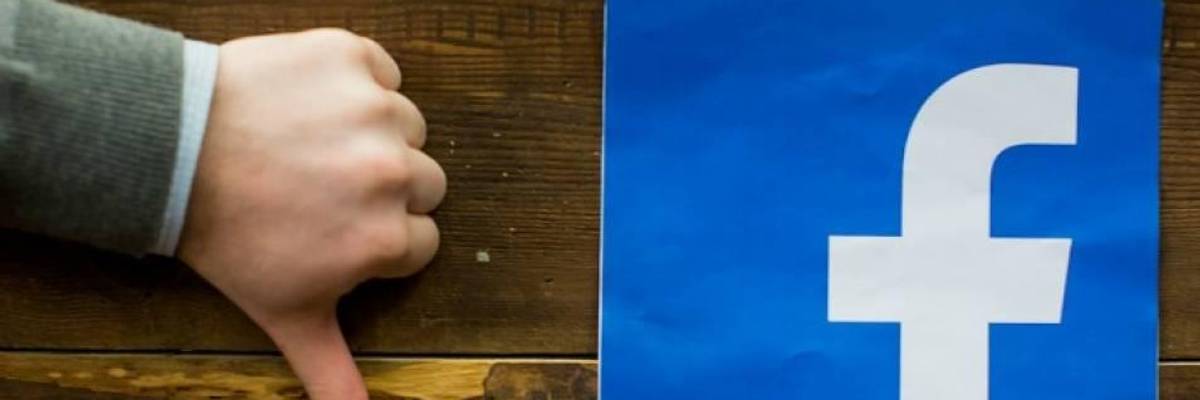
Tim Berners-Lee's original vision for the world wide web had the reader and user at the center, writes Grygiel, "but not everyone was as public-spirited: Companies like Facebook have been moving away from this principle since the web's founding." (Photo: sue seecof/flickr/cc)
When Facebook disabled Australians' access to news articles on its platform, and blocked sharing of articles from Australian news organizations, the company moved a step closer to killing the World Wide Web - the hyperlink-based system of freely connecting online sites created in 1989 by Sir Tim Berners-Lee.
Though the social media giant has said it will return to the negotiating table and restore news for now, the company has shown its hand - and how it is continuing to reshape the web.
As a social media scholar, I see clearly that the internet in 2021 is not the same open public sphere that Berners-Lee envisioned. Rather, it is a constellation of powerful corporate platforms that have come to dominate how people use the internet, what information they get and who is able to profit from it.
The Australian government's legislative efforts aim to support the news industry by helping to broker a deal whereby Facebook would pay Australian news organizations for content posted on its platform by users. Right now, Facebook isn't required to pay for news in any way, and the company objected to this new potential cost of business.
Berners-Lee warned the Australian government the proposed law could undermine free linking, which he called a "fundamental principle of the web." Facebook's own statement of self-defense focused on Berners-Lee's argument, saying Facebook provides value to news organizations by linking to them. But their statements show that neither has acknowledged that Facebook has, for many people, effectively become the web.
Back in the 1980s, Berners-Lee envisioned the web as a network of community-minded academic researchers sharing their knowledge quickly and conveniently across the world. The main mechanism for this was the hyperlink - text that, when clicked on, led readers to something they were interested in, or to supporting material on the actual source's website. This meant information was freely exchanged, with attribution. The priority was helping users find the material they wanted, wherever it was online.
Berners-Lee's design serves the reader, but not everyone was as public-spirited: Companies like Facebook have been moving away from this principle since the web's founding. These corporate platforms are designed to capture and dominate users' attention - and turn it into money.
When a user posts a link on Facebook, it's not just a hyperlink as Berners-Lee envisioned. It's much more advanced, displaying information from the linked page, including, for news stories, a headline, a main image and sometimes a summary of the news users might see if they clicked the link. In this way, users can get a lot of the information without ever leaving Facebook, hurting news organizations' revenues.
On Instagram, which is owned by Facebook, users' options are even more restricted. People can post photos and text, but cannot directly share links to other websites. The only active links in a post are internal, for tagging others on Instagram and hashtags.
In my view, both cases show that Facebook doesn't really want an interconnected web: It wants to keep its users on its own platforms. Facebook displays valuable information, but if people don't click through, or there is nothing to effectively click on, then those who actually created the content will continue to have a hard time making money off their work.
The situation in Australia is a significant opportunity to examine how much power Facebook has over the ways people can seek information online.
News media may decide to bid farewell to Facebook, which provides about one-fifth of traffic to media sites in Australia, and not necessarily much revenue in other parts of the world. They might seek other options for digital distribution of their content. But in the near term they may need financial help from somewhere if they have become too dependent on Facebook.
Or news organizations could negotiate with Facebook directly in deals and avoid restrictive laws, as the proposed legislation is not even final yet.
News publishers could also ask regulators to help them gain more control over how news content is presented on platforms to increase link referral traffic, which is key to generating revenue. A return to simpler hyperlinks--and adding them to Instagram--could help more users click through on news stories while preserving the principles of the web. Just because advanced technology exists doesn't mean it's helpful in all situations or good. But then again, a basic old-timey solution may not work for those trapped in the "attention economy."
This country and this world are at a monumental crossroads. US voters have an opportunity to beat back the forces of fascism and confront the billionaires who are rigging the economy, our media system, and our democracy, making it increasingly impossible for ordinary people to get by. We’re not just talking about the election. We’re talking about what must be done once these fascist elements are vanquished from power. We need a bolder set of solutions than what either major party has so far been willing to offer and a working-class movement ready to fight like hell for it. Trump didn't emerge from nowhere. The conditions that fueled MAGA authoritarianism were created by decades of radical neoliberal economic policies and a corrupt political system dominated by corporate interests. They slashed taxes on the super-rich, promising that the benefits would trickle down. They said giveaways to the corporate titans would make life more affordable for the rest of us. It was all bullshit. And when a bitter, betrayed populace searches for someone to blame, right-wing demagogues have little trouble finding scapegoats. People know when they're being lied to, but you won't hear any of this from the corporate media. Only independent journalism—powered and funded by people who believe in building a better world—can deliver truly trustworthy daily news. If you share our vision, please contribute whatever you can to sustain our work. |
When Facebook disabled Australians' access to news articles on its platform, and blocked sharing of articles from Australian news organizations, the company moved a step closer to killing the World Wide Web - the hyperlink-based system of freely connecting online sites created in 1989 by Sir Tim Berners-Lee.
Though the social media giant has said it will return to the negotiating table and restore news for now, the company has shown its hand - and how it is continuing to reshape the web.
As a social media scholar, I see clearly that the internet in 2021 is not the same open public sphere that Berners-Lee envisioned. Rather, it is a constellation of powerful corporate platforms that have come to dominate how people use the internet, what information they get and who is able to profit from it.
The Australian government's legislative efforts aim to support the news industry by helping to broker a deal whereby Facebook would pay Australian news organizations for content posted on its platform by users. Right now, Facebook isn't required to pay for news in any way, and the company objected to this new potential cost of business.
Berners-Lee warned the Australian government the proposed law could undermine free linking, which he called a "fundamental principle of the web." Facebook's own statement of self-defense focused on Berners-Lee's argument, saying Facebook provides value to news organizations by linking to them. But their statements show that neither has acknowledged that Facebook has, for many people, effectively become the web.
Back in the 1980s, Berners-Lee envisioned the web as a network of community-minded academic researchers sharing their knowledge quickly and conveniently across the world. The main mechanism for this was the hyperlink - text that, when clicked on, led readers to something they were interested in, or to supporting material on the actual source's website. This meant information was freely exchanged, with attribution. The priority was helping users find the material they wanted, wherever it was online.
Berners-Lee's design serves the reader, but not everyone was as public-spirited: Companies like Facebook have been moving away from this principle since the web's founding. These corporate platforms are designed to capture and dominate users' attention - and turn it into money.
When a user posts a link on Facebook, it's not just a hyperlink as Berners-Lee envisioned. It's much more advanced, displaying information from the linked page, including, for news stories, a headline, a main image and sometimes a summary of the news users might see if they clicked the link. In this way, users can get a lot of the information without ever leaving Facebook, hurting news organizations' revenues.
On Instagram, which is owned by Facebook, users' options are even more restricted. People can post photos and text, but cannot directly share links to other websites. The only active links in a post are internal, for tagging others on Instagram and hashtags.
In my view, both cases show that Facebook doesn't really want an interconnected web: It wants to keep its users on its own platforms. Facebook displays valuable information, but if people don't click through, or there is nothing to effectively click on, then those who actually created the content will continue to have a hard time making money off their work.
The situation in Australia is a significant opportunity to examine how much power Facebook has over the ways people can seek information online.
News media may decide to bid farewell to Facebook, which provides about one-fifth of traffic to media sites in Australia, and not necessarily much revenue in other parts of the world. They might seek other options for digital distribution of their content. But in the near term they may need financial help from somewhere if they have become too dependent on Facebook.
Or news organizations could negotiate with Facebook directly in deals and avoid restrictive laws, as the proposed legislation is not even final yet.
News publishers could also ask regulators to help them gain more control over how news content is presented on platforms to increase link referral traffic, which is key to generating revenue. A return to simpler hyperlinks--and adding them to Instagram--could help more users click through on news stories while preserving the principles of the web. Just because advanced technology exists doesn't mean it's helpful in all situations or good. But then again, a basic old-timey solution may not work for those trapped in the "attention economy."