SUBSCRIBE TO OUR FREE NEWSLETTER
Daily news & progressive opinion—funded by the people, not the corporations—delivered straight to your inbox.
5
#000000
#FFFFFF
To donate by check, phone, or other method, see our More Ways to Give page.
Daily news & progressive opinion—funded by the people, not the corporations—delivered straight to your inbox.
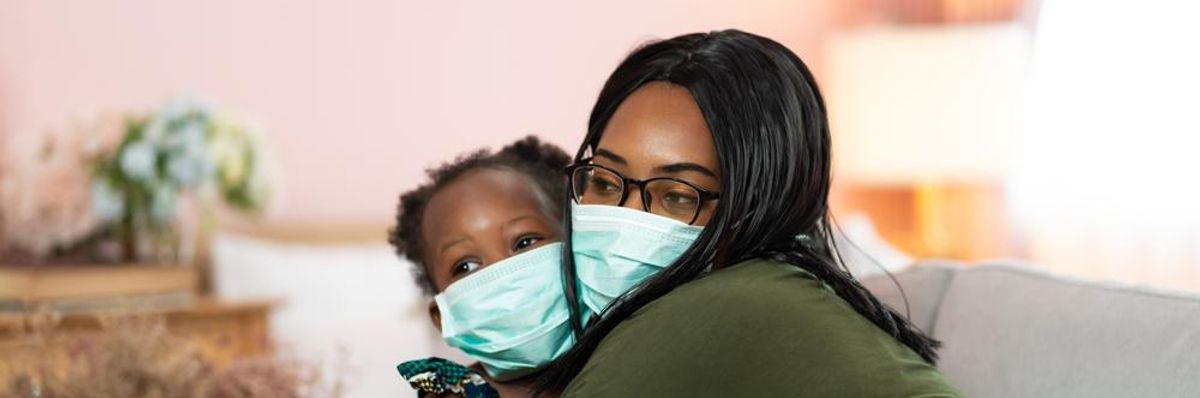
Now more than ever before, a strong care infrastructure is needed to ensure equal pay for equal work. (Photo: Shutterstock)
The pandemic has dramatically exposed the vital role that care workers play in our society. As child care centers and schools closed and nursing homes became COVID-19 hotspots, families have strained to juggle work and other responsibilities while taking care of loved ones.
But the labor of caregiving--as essential as it is--is severely undervalued and carried out by some of the nation's most vulnerable workers.
Ninety-two percent of domestic workers are women, and more than half are women of color
Ninety-two percent of domestic workers are women, and more than half are women of color. The typical domestic worker is paid just $12 per hour, including overtime, tips, and commissions--nearly 40 percent less than the typical non-domestic worker.
Eighty-two percent of domestic workers don't have a single paid sick day, leaving millions of domestic workers with an impossible choice during a global pandemic: either keep themselves and their loved ones safe, or work to put food on the table.
The House Oversight and Reform committee recently highlighted these staggering inequities in a hearing in honor of Equal Pay Day, which highlights the broader gender pay gap between men and women.
"For domestic workers, equal pay is not only about equal pay for equal work, but it's also about equal valuing of the work that women do in the economy at large," testified Ai-jen Poo, co-founder and Executive Director of the National Domestic Workers Alliance (NDWA).
"Caregiving and cleaning work is work that has always been assigned to women and taken for granted that women will do," she added. "This work epitomizes essential work. It enables millions to participate in the workforce knowing their homes and families are safe."
The wage gap between domestic workers and non-domestic workers persists in large part because federal labor law excludes domestic workers from key protections.
The National Labor Relations Act, which protects employees' rights to organize for better conditions and bargain collectively, explicitly excludes workers "in the domestic service of any family or person at his home." Similarly, the Fair Labor Standards Act--which established the federal minimum wage--explicitly excluded both farmworkers and domestic workers.
These exclusions set the tone for how care work would be valued by both the public and policymakers.
One solution is the Domestic Workers Bill of Rights, which would guarantee a minimum wage and overtime pay, as well as basic protections against racial and gender discrimination for domestic workers.
According to the National Women's Law Center, over 2 million women have left the workforce since the pandemic began.
But domestic work is far from the only care crisis facing the nation.
Because women tend to bear more caregiving responsibilities, they were more likely than men to drop out of the labor force, particularly in the first phase of the pandemic, to take care of children who had to stay home from school or daycare, or to look after sick family members.
According to the National Women's Law Center, over 2 million women have left the workforce since the pandemic began. The women's labor force participation rate--meaning the percentage of adult women who are either working or looking for work--has fallen to 57 percent, the lowest it's been since 1988.
NDWA has joined with SEIU and other partners in a campaign called #CareCan'tWait to make sure the Biden administration's $2 trillion jobs plan provides decent wages and benefits for caregivers as well as support for those who need care for children and aging, ill, or disabled family members.
Now more than ever before, a strong care infrastructure is needed to ensure equal pay for equal work. But this change can only happen if those in power acknowledge the value of care workers.
As former First Lady Rosalynn Carter once reminded us all, "You have either been a caregiver, you are a caregiver, you will be a caregiver, or someone will care for you."
Dear Common Dreams reader, It’s been nearly 30 years since I co-founded Common Dreams with my late wife, Lina Newhouser. We had the radical notion that journalism should serve the public good, not corporate profits. It was clear to us from the outset what it would take to build such a project. No paid advertisements. No corporate sponsors. No millionaire publisher telling us what to think or do. Many people said we wouldn't last a year, but we proved those doubters wrong. Together with a tremendous team of journalists and dedicated staff, we built an independent media outlet free from the constraints of profits and corporate control. Our mission has always been simple: To inform. To inspire. To ignite change for the common good. Building Common Dreams was not easy. Our survival was never guaranteed. When you take on the most powerful forces—Wall Street greed, fossil fuel industry destruction, Big Tech lobbyists, and uber-rich oligarchs who have spent billions upon billions rigging the economy and democracy in their favor—the only bulwark you have is supporters who believe in your work. But here’s the urgent message from me today. It's never been this bad out there. And it's never been this hard to keep us going. At the very moment Common Dreams is most needed, the threats we face are intensifying. We need your support now more than ever. We don't accept corporate advertising and never will. We don't have a paywall because we don't think people should be blocked from critical news based on their ability to pay. Everything we do is funded by the donations of readers like you. When everyone does the little they can afford, we are strong. But if that support retreats or dries up, so do we. Will you donate now to make sure Common Dreams not only survives but thrives? —Craig Brown, Co-founder |
The pandemic has dramatically exposed the vital role that care workers play in our society. As child care centers and schools closed and nursing homes became COVID-19 hotspots, families have strained to juggle work and other responsibilities while taking care of loved ones.
But the labor of caregiving--as essential as it is--is severely undervalued and carried out by some of the nation's most vulnerable workers.
Ninety-two percent of domestic workers are women, and more than half are women of color
Ninety-two percent of domestic workers are women, and more than half are women of color. The typical domestic worker is paid just $12 per hour, including overtime, tips, and commissions--nearly 40 percent less than the typical non-domestic worker.
Eighty-two percent of domestic workers don't have a single paid sick day, leaving millions of domestic workers with an impossible choice during a global pandemic: either keep themselves and their loved ones safe, or work to put food on the table.
The House Oversight and Reform committee recently highlighted these staggering inequities in a hearing in honor of Equal Pay Day, which highlights the broader gender pay gap between men and women.
"For domestic workers, equal pay is not only about equal pay for equal work, but it's also about equal valuing of the work that women do in the economy at large," testified Ai-jen Poo, co-founder and Executive Director of the National Domestic Workers Alliance (NDWA).
"Caregiving and cleaning work is work that has always been assigned to women and taken for granted that women will do," she added. "This work epitomizes essential work. It enables millions to participate in the workforce knowing their homes and families are safe."
The wage gap between domestic workers and non-domestic workers persists in large part because federal labor law excludes domestic workers from key protections.
The National Labor Relations Act, which protects employees' rights to organize for better conditions and bargain collectively, explicitly excludes workers "in the domestic service of any family or person at his home." Similarly, the Fair Labor Standards Act--which established the federal minimum wage--explicitly excluded both farmworkers and domestic workers.
These exclusions set the tone for how care work would be valued by both the public and policymakers.
One solution is the Domestic Workers Bill of Rights, which would guarantee a minimum wage and overtime pay, as well as basic protections against racial and gender discrimination for domestic workers.
According to the National Women's Law Center, over 2 million women have left the workforce since the pandemic began.
But domestic work is far from the only care crisis facing the nation.
Because women tend to bear more caregiving responsibilities, they were more likely than men to drop out of the labor force, particularly in the first phase of the pandemic, to take care of children who had to stay home from school or daycare, or to look after sick family members.
According to the National Women's Law Center, over 2 million women have left the workforce since the pandemic began. The women's labor force participation rate--meaning the percentage of adult women who are either working or looking for work--has fallen to 57 percent, the lowest it's been since 1988.
NDWA has joined with SEIU and other partners in a campaign called #CareCan'tWait to make sure the Biden administration's $2 trillion jobs plan provides decent wages and benefits for caregivers as well as support for those who need care for children and aging, ill, or disabled family members.
Now more than ever before, a strong care infrastructure is needed to ensure equal pay for equal work. But this change can only happen if those in power acknowledge the value of care workers.
As former First Lady Rosalynn Carter once reminded us all, "You have either been a caregiver, you are a caregiver, you will be a caregiver, or someone will care for you."
The pandemic has dramatically exposed the vital role that care workers play in our society. As child care centers and schools closed and nursing homes became COVID-19 hotspots, families have strained to juggle work and other responsibilities while taking care of loved ones.
But the labor of caregiving--as essential as it is--is severely undervalued and carried out by some of the nation's most vulnerable workers.
Ninety-two percent of domestic workers are women, and more than half are women of color
Ninety-two percent of domestic workers are women, and more than half are women of color. The typical domestic worker is paid just $12 per hour, including overtime, tips, and commissions--nearly 40 percent less than the typical non-domestic worker.
Eighty-two percent of domestic workers don't have a single paid sick day, leaving millions of domestic workers with an impossible choice during a global pandemic: either keep themselves and their loved ones safe, or work to put food on the table.
The House Oversight and Reform committee recently highlighted these staggering inequities in a hearing in honor of Equal Pay Day, which highlights the broader gender pay gap between men and women.
"For domestic workers, equal pay is not only about equal pay for equal work, but it's also about equal valuing of the work that women do in the economy at large," testified Ai-jen Poo, co-founder and Executive Director of the National Domestic Workers Alliance (NDWA).
"Caregiving and cleaning work is work that has always been assigned to women and taken for granted that women will do," she added. "This work epitomizes essential work. It enables millions to participate in the workforce knowing their homes and families are safe."
The wage gap between domestic workers and non-domestic workers persists in large part because federal labor law excludes domestic workers from key protections.
The National Labor Relations Act, which protects employees' rights to organize for better conditions and bargain collectively, explicitly excludes workers "in the domestic service of any family or person at his home." Similarly, the Fair Labor Standards Act--which established the federal minimum wage--explicitly excluded both farmworkers and domestic workers.
These exclusions set the tone for how care work would be valued by both the public and policymakers.
One solution is the Domestic Workers Bill of Rights, which would guarantee a minimum wage and overtime pay, as well as basic protections against racial and gender discrimination for domestic workers.
According to the National Women's Law Center, over 2 million women have left the workforce since the pandemic began.
But domestic work is far from the only care crisis facing the nation.
Because women tend to bear more caregiving responsibilities, they were more likely than men to drop out of the labor force, particularly in the first phase of the pandemic, to take care of children who had to stay home from school or daycare, or to look after sick family members.
According to the National Women's Law Center, over 2 million women have left the workforce since the pandemic began. The women's labor force participation rate--meaning the percentage of adult women who are either working or looking for work--has fallen to 57 percent, the lowest it's been since 1988.
NDWA has joined with SEIU and other partners in a campaign called #CareCan'tWait to make sure the Biden administration's $2 trillion jobs plan provides decent wages and benefits for caregivers as well as support for those who need care for children and aging, ill, or disabled family members.
Now more than ever before, a strong care infrastructure is needed to ensure equal pay for equal work. But this change can only happen if those in power acknowledge the value of care workers.
As former First Lady Rosalynn Carter once reminded us all, "You have either been a caregiver, you are a caregiver, you will be a caregiver, or someone will care for you."