
SUBSCRIBE TO OUR FREE NEWSLETTER
Daily news & progressive opinion—funded by the people, not the corporations—delivered straight to your inbox.
5
#000000
#FFFFFF
To donate by check, phone, or other method, see our More Ways to Give page.


Daily news & progressive opinion—funded by the people, not the corporations—delivered straight to your inbox.
The freedoms to live and thrive in a safe environment, to be educated and healthy without falling into debt, and to simply be able to put food on the table are all consistent with the freedom to marry or not, to procreate or not, to affirm one’s gender, and to love anyone one chooses.
This June, some Republican-led states are rebranding Pride Month with staid-sounding faux morality.
Instead of celebrating the rights and dignity of its LGBTQ+ communities, Utah and Arkansas are choosing to label this month “Fidelity Month.” They may as well come out and say queer people are “infidels.”
Tennessee and Alabama Republicans—supporters of President Donald Trump, a father of five children from three different marriages—have dubbed June as “nuclear family month.”
Alabama’s Republican Gov., Kay Ivey, wants the month of June to be known as “Strong Families Month.” Ivey, who is also a strong Trump ally, has been married and divorced twice and has no children.
It’s rich for Republicans to uphold so-called family values in an economy that is hardly suitable for building and raising families of any sort.
The hypocrisy is off the charts. And it’s dangerous.
For much of human history, Western civilizations have sought to shame and criminalize gender and sexual diversity. For LGBTQ+ communities, recent GOP-led political attacks and cultural erasure are matters of life-and-death. Hate crimes against LGBTQ+ people have surged. Debating the rights of queer people to exist has fueled suicide within that community.
Pride has been an antidote to the outdated taboos and dangerous stigmas that have hurt innumerable people. The history of Pride month goes back to the first Pride March in New York City on June 28, 1970 commemorating the one-year anniversary of the Stonewall uprising.
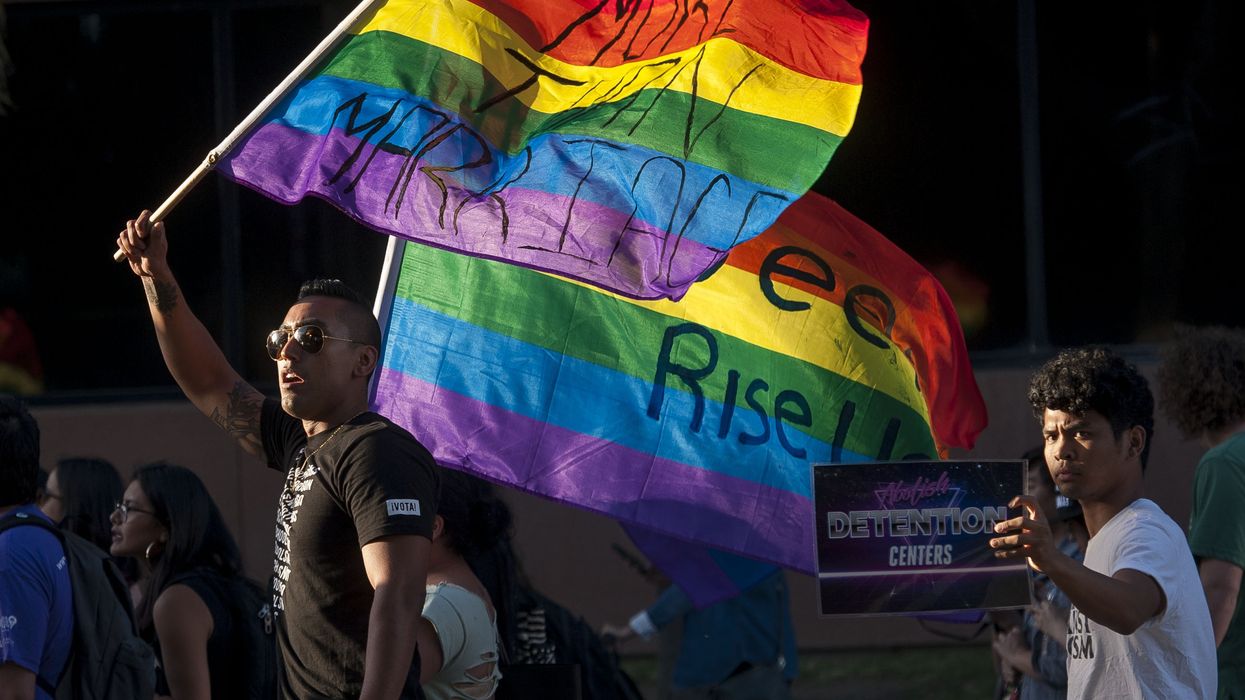
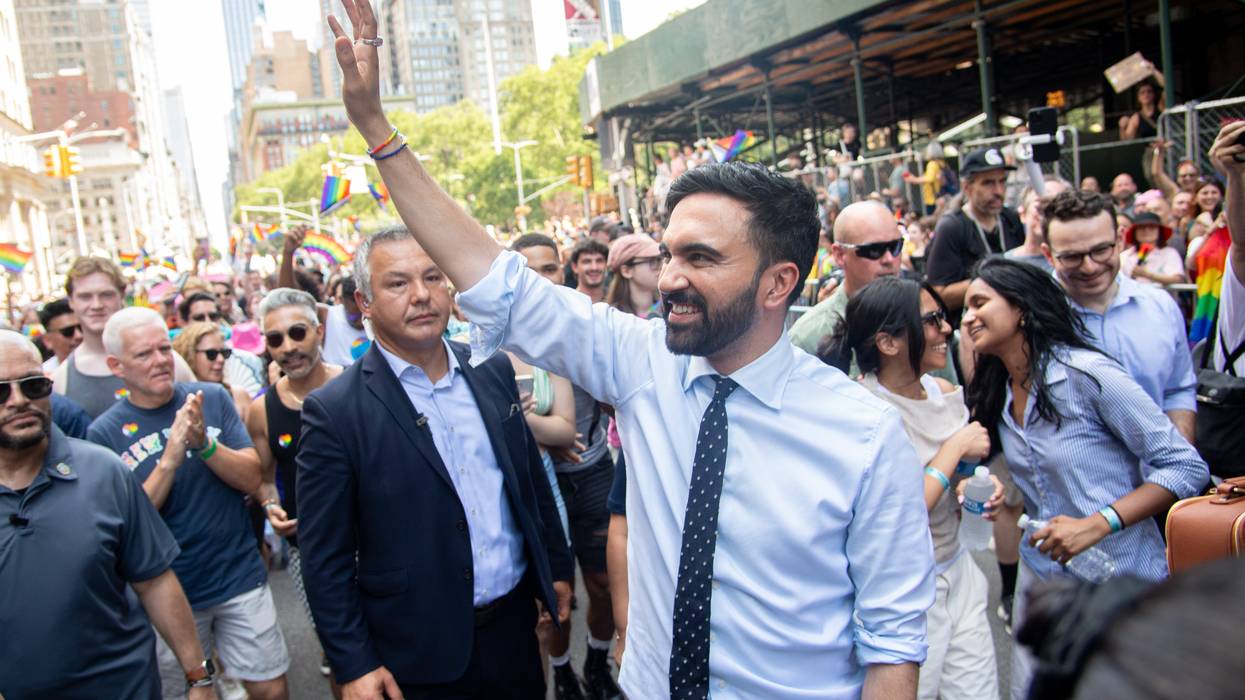
Today most major cities in the US, along with many smaller towns, mark Pride Month with marches and parades throughout June. They are joyful occasions celebrating marriage equality, bodily autonomy, gender affirming care, and the freedom of people to be themselves without fear or judgement.
Although not without flaws, Pride has aspired to be a life-affirming tradition, even spreading all over the world. The rainbow Pride flag encourages people to break out of heterodoxy and binary thinking—puns definitely intended.
The Republican attacks on LGBTQ+ people serve a similar purpose to their racist attacks on immigrants. Both groups are vulnerable communities, scapegoated to distract people from their own economic hardships.
As the United States mints the world’s very first trillionaire, Elon Musk, about half the nation—which amounts to hundreds of millions of Americans—is struggling to get by. The prices of oil, groceries, and commercial flights remain high as a result of Trump’s war on Iran. Skyrocketing health insurance costs are crushing Americans. Higher education has become out of reach for a majority of people. Childcare costs are ridiculous. And housing costs continue to soar.
The rebranding of Pride Month not only feeds the dehumanization of LGBTQ+ communities but obscures the very real economic injustices facing most Americans.
It’s rich for Republicans to uphold so-called family values in an economy that is hardly suitable for building and raising families of any sort. How can people consider having children when it might force them to choose between paying for childcare versus rent?
While conservative politicians are busy erasing queer families, they are enriching the already rich while shrugging off the struggles of working Americans. Notably, the GOP is happy to be the near-exclusive recipient of political contributions from Musk’s Super PAC.
Pride can and should go hand-in-hand with economic justice for all. Transgender youth are almost 10 times more likely to be unhoused than the general population. LGBTQ+ workers earn lower wages on average than their straight cisgender counterparts.
The freedoms to live and thrive in a safe environment, to be educated and healthy without falling into debt, and to simply be able to put food on the table are all consistent with the freedom to marry or not, to procreate or not, to affirm one’s gender, and to love anyone one chooses.
The conservative answer to inequality is to worsen it through division and scapegoating. Our response must be grounded in collective liberation.
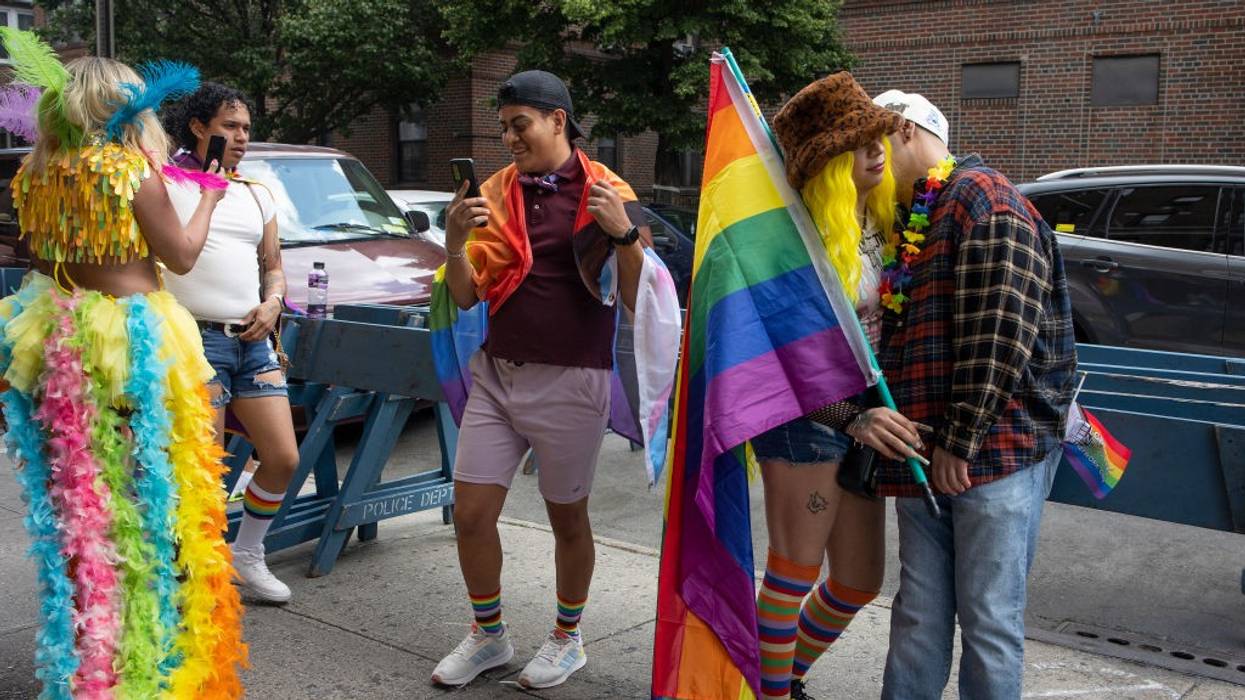
“More than 75 anti-LGBTQ+ bills have been signed into law this year alone, more than doubling last year’s number, which was previously the worst year on record,” the Human Rights Campaign said.
The modern struggle for equality for lesbian, gay, bisexual, and transsexual people has been waged for over a century. Despite significant gains, the work is sadly far from over as Pride Month begins. Just as massive plumes of sun-dimming smoke from wildfires now raging north of the border billow over the eastern half of the United States, darkening the sky and driving people indoors, so too has an epidemic of discrimination and hate targeting traditionally marginalized LGBTQ+ communities swept the land, unleashed by demagogues, cynical politicians, and bigots. State and local governments from coast to coast are passing repressive bills, banning books, and criminalizing people.
The rash of laws, often accompanied by intimidation and acts of violence, has prompted the Human Rights Campaign, the nation’s largest LGBTQ+ civil rights organization, to announce:
“We have officially declared a state of emergency for LGBTQ+ people in the United States for the first time following an unprecedented and dangerous spike in anti-LGBTQ+ legislative assaults sweeping state houses this year. More than 75 anti-LGBTQ+ bills have been signed into law this year alone, more than doubling last year’s number, which was previously the worst year on record.”
Human Rights Campaign (HRC) President Kelley Robinson explained on the Democracy Now! news hour:
“In this moment, when people are traveling across the country, when they’re deciding to move or what schools to go to, we had a responsibility to let people know that, one, there’s an imminent health and safety crisis facing our community, and, two, there’s a dizzying patchwork of protections for us and for our families depending on the state that you’re in.”
HRC tracks these anti-LGBTQ+ bills. Over 520 of them have been introduced so far this year, and 75 have already been signed into law, with broad impacts: criminalizing the provision of gender-affirming health care for youth, prohibiting the teaching of LGBTQ-related topics, barring transgender people from using a gender-appropriate bathroom, banning books, and more.
“A loud and vocal minority… is sowing hate and fear against our community because they’re not willing to solve the real problems,” Robinson added. “If they actually cared about the safety of our kids, they would be moving forward legislation to prevent gun violence, the number one killer of our children.”
The legislative assault is occurring in parallel with the 2024 Republican presidential primary season. Florida Governor Ron DeSantis has championed several oppressive laws targeting the LGBTQ+ community, including the school curriculum ban known as the “Don’t Say Gay” law, and banning gender affirming care for minors. Others in the increasingly crowded Republican field are following suit.
“A loud and vocal minority… is sowing hate and fear against our community because they’re not willing to solve the real problems.”
Former South Carolina Governor and presidential hopeful Nikki Haley suggested opposing trans rights was a feminist issue.
“The idea that we have biological boys playing in girls’ sports, it is the women’s issue of our time,” Haley said at a recent CNN town hall. “How are we supposed to get our girls used to the fact that biological boys are in their locker rooms?”
Robinson responded on Democracy Now!, “This is political theater. They are doing this to pander to a MAGA Republican base in so many of these states… Seventy percent of Americans support the LGBTQ+ community and believe that legislatures should be standing with our values. One in five of Generation Z identifies as a member of this community, 20 million American adults. This is not an issue of the margins.”
The evangelical Christian movement has long been at the forefront attacking the LGBTQ+ community. Major televangelists like Pat Robertson, who died this week at the age of 93, and groups like Focus on the Family and the Alliance to Defend Freedom have stoked intolerance and repression not only here at home, but around the world.
Uganda is now on the front lines of this U.S.-based push to criminalize homosexuality. In May, Ugandan President Yoweri Museveni signed an anti-LGBTQ law that makes same-sex relationships punishable by life in prison or, in some cases, death. Many LGBTQ Ugandans have gone into hiding or have fled the country.
“The homophobia and transphobia we are seeing towards queer and trans persons in Uganda is from the West. It is mostly peddled by extreme American evangelicals,” Ugandan LGBTQ activist Frank Mugisha said on Democracy Now! He fears similar laws will follow in neighboring countries like Tanzania and Kenya.
Human Rights Campaign’s state of emergency declaration is unprecedented, but is not simply a warning. Their statement ends with a call to action, one which everyone, whether LGBTQ+ or not, should heed this Pride month and beyond:
“Our community is in danger, but we won’t stop fighting back—not now, not ever.”
LGBTQ people are under attack and deserve support this Pride Month and all year long.
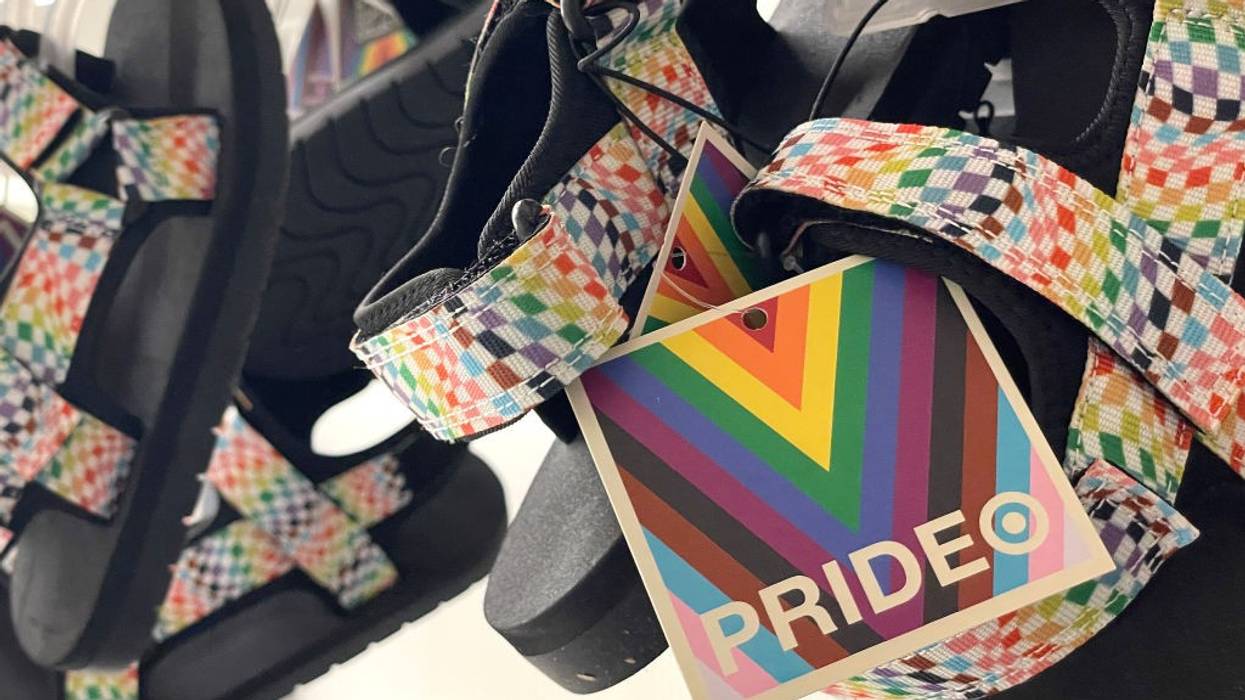
I wasn’t aware until recently that Target had an LGBTQ-themed section to commemorate Pride Month, which began on June 1. Why shouldn’t it? We have months that celebrate Black history, Hispanic heritage, Arab heritage, Jewish American Heritage, Women’s history. We celebrate cultures that were not always respected or given their due, and in many cases still aren’t.
The rainbow flag seems to wave in one variation or another wherever people equally take pride in celebrating people who alone, paradoxically, are the target of sweeping naked discriminatory legislation across the country.
Post-racial fantasies aside, there’s still plenty of discrimination against minorities—if anything, it’s on a sharp rise, with Blacks, Asians and Jews at the top of the target list—but it often requires a whole set of coded signs and the scabby language of dog whistles, at least in the workplace, in schools, in public places. Except, of course, when the target is LGBTQ people. It’s open season on them everywhere, starting with schools.
The rainbow flag flew at Harvey Milk’s funeral, and has been flying since, though these days it seems to take an Iwo Jima or two to keep it afloat.
As of this writing, nearly 500 bills have been introduced or passed this year alone, 10 of them in Florida, replacing LGBTQ identity with the equivalent of a yellow star, the emblem Nazis forced Jews to wear to distinguish them from everyone else in a warm-up to the Holocaust. Last year it was 180 bills.
This is what we’re doing to a group of people that should be the poster child for civil liberties and human rights.
LGBTQ culture—as opposite to cancel culture as it gets—is boundlessly diverse. The acronym seems to add a letter every year. In Canada the acronym is at risk of breaking anti-sprawl ordinances. It now refers to Lesbian, Gay, Bisexual, Transgender, Queer, Questioning, Intersex, Pansexual, Two-Spirited (2S), and Asexual. If you wonder what two-spirited means, just remember Little Horse, the “boy who didn’t want to fight the pawnee” in Little Big Man, back when the United States could muster a little tolerance from mayhem.
The acronym reflects the immense variations implied by the freedom of sexual orientation, assuming that part of the Pledge applies. I hesitate to call it a community. There are no such monoliths, least of all in LGBTQ world. It is just as diverse ethnically, racially, and religiously. In a sense, you cannot possibly get more diverse than under the big LGBTQ tent. That’s the symbolism behind the pride flag.
Harvey Milk, the first openly gay elected officials in California, had asked artist Gilbert Baker to design a flag to represent all that wonderful synonym for American freedom. He came up with the rainbow flag, its stripes a more colorful echo of the stars and stripes, a more achieved version of the United States. It was first flown at the San Francisco Gay Freedom Day Parade in June 1978.
Five months later Dan White walked into Harvey Milk’s office and assassinated him right after assassinating Mayor George Moscone. At his trial White’s lawyer described him as “deeply endowed… in the traditional American values.” Witnesses described him as a paragon of virtue, press reports referred to him as an “all-American boy,” and his defense claimed he was hopped up on junk food so couldn’t be blamed for gunning down a mayor and a queer. The whitewashing worked. Instead of getting convicted of first degree murder, he got manslaughter and served just five years. When he killed himself in 1985, his lawyer, Douglas Schmidt, still called him the “third victim.” And we wonder why Alex Jones has a following.
The rainbow flag flew at Milk’s funeral, and has been flying since, though these days it seems to take an Iwo Jima or two to keep it afloat. If you think I’m exaggerating, consider that between violence against LGBTQ people and the suicide rate in that group, especially among youths, the 7,000 dead of Iwo Jima may be more of an understated parallel than you realize. And these Americans aren’t dying on an atoll. They’re your neighbors. You see through them in church. You degrade them in such easy little taps as you feed your social mierda bile between a thought and a prayer for safer sympathies from your phone.
Getting back to Target: I stopped in to buy myself a rainbow-themed pair of socks. Instead I found the LGBTQ display relegated to a dimly lit back alley in the store, the way old video stores used to dissimulate their porn collection. This was the result of anti-LGBTQ bigots confronting Target employees and vandalizing displays that had been more prominently placed.
You can’t really blame Target for protecting its employees, but it’s not as if the company can’t afford security. It has a full-on guard at its Palm Coast store, as I imagine it has many more in more rancid settings. They’re not there to help the little old visitor from Dubuque carry her parsley sprigs to her car. They’re there to ensure that customers live and let live. Instead, the guard is just another Target mannequin.
The company is patting itself on the back for not banning the displays. But this Pride Month, there’s not much to be proud of in people who to this day would rather burn than raise the Pride Flag. It’s about time it replaced all those MIA flags in school yards and at courthouses. LGBTQ victims, unlike the mythical missing, are real, and they’re piling up.
Pride should be a time to focus on pushing forth progress for all LGBTQ+ individuals, including our LGBTQ+ community incarcerated in our nation’s carceral system.
It’s official—we’re less than a month away from the beginning of Pride. And the anticipation is building. Disney recently announced its first ever Pride event, “Disneyland After Dark: Pride Nite.” Meanwhile, cities around the country have been announcing their Pride themes. San Francisco will focus on “Looking Back and Moving Forward.” D.C. Capital Pride’s theme will be “Peace, Love, Revolution;” and New York City’s is “Strength in Solidarity.”
But if we really want to show solidarity across our community, we must remember how many within our community aren’t truly free.
Pride represents a time to celebrate and honor the progress that has been made for LGBTQ+ rights, especially during a time where anti- LGBTQ+ laws are being introduced nearly daily. But it’s also a time to reflect on how many within our community are exposed to violence and trauma because of their identities. That’s why I believe while we celebrate the progress made for LGBTQ+ rights, Pride should also be a time to focus on pushing forth progress for all LGBTQ+ individuals, including our LGBTQ+ community incarcerated in our nation’s carceral system.
Today, lesbian, gay, and bisexual individuals are incarcerated at a rate three times greater than that of their heterosexual counterparts.
This year marks the 50th anniversary of mass incarceration in the U.S., a system of policies and practices that increased the prison population and have continued to disproportionately targeted LGBTQ+ people. Today, lesbian, gay, and bisexual individuals are incarcerated at a rate three times greater than that of their heterosexual counterparts. Approximately one in six transgender individuals have been incarcerated at some point in their lives. Overrepresentation of LGBTQ+ within our criminal justice system is no accident, but rather a reflection of a system that polices and criminalizes queer and trans lives—particularly queer and trans people of color.
Incarceration isn’t easy for anyone, and LGBTQ+ folks have an unusually harsh experience while incarcerated in an already cruel environment. In California, nearly 60% of trans individuals incarcerated have been sexually assaulted during their incarcerations, which is well higher than the average incarcerated population reports. Lesbian and bisexual women are almost five times more likely than heterosexual women to have a sentence length of over 20 years. Nationwide, over 70% of gay and bisexual men incarcerated have experienced solitary confinement, which is nearly twice the odds for heterosexual incarcerated men.
Pride, despite its intentions, has not always been aligned with the needs of those most marginalized within the LGBTQ+ community. Rather, the increased commercialism of Pride has resulted in corporations like Walmart actively marketing the month for profits while doing little to support the most urgent social problems faced by the community throughout the year, such as mass incarceration. This year, amidst unparalleled attacks on LGBTQ+ rights and transphobia, Pride should reflect its origins of community organizing for our most vulnerable members and achieving structural change.
To be sure, Pride is an important time of celebration and rejoicing over the progress we’ve made, and some may feel that a focus on those within a violent system of incarceration detracts from that moment of celebration. But I argue we can both celebrate the accomplishments that have been achieved over the last decade, from the passage of same-sex marriage to unprecedented representation of LGBTQ+ individuals in state and federal administrations, while demanding more. Pride should never become a time solely for anger or mourning, but we cannot rightfully celebrate these accomplishments that benefit us without pushing for additional ones for others in our community.
More so, what we yearn for as a community are systematic societal changes to protect and promote our well-being, including that of our most marginalized. While reforms to improve prisons and jails as well as the reentry process for LGBTQ+ incarcerated individuals are needed, we must also prevent LGBTQ+ people from being incarcerated in the first place. Abolishing HIV criminalization laws would be one place to start—an archaic notion of HIV risk transmission that allows 35 states to funnel their homophobia and transphobia. Anti-profiling laws from police that include protections for LGBTQ+ could be a start to reduce the overrepresentation of queer and trans people inside. Policies that prevent poverty and homelessness—which disproportionately impact LGBTQ+ people—could reduce scenarios that lead to incarceration in the first place.
The urgency of mass incarceration and its lasting harm on the LGBTQ+ community cannot be emphasized enough. We must not allow for another 50 years of mass incarceration as an ineffective solution to the ills of society, including poverty and inadequate health access. This Pride, we—as the queer and trans community—should live up to slogans praising solidarity, strength, or revolution by advocating and fighting for our incarcerated siblings.
On the night of June 27, 1969, police raided the Stonewall Inn, a seedy mob-controlled gay bar on Christopher Street in New York City. It was one of thousands of such raids that routinely took place in American cities and towns. But the response was anything but routine. For the first time ever, patrons fought back, setting off three days of rioting and proving the spark that ignited the modern gay rights movement. Inspired by the movements of the 60s, the moment of revolt turned into a wave of organizing.
From the days of the early Gay Liberation Front formed right after the Stonewall Riots and the offshoot Gay Activist Alliance, the "movement" has never been one movement but always a multiplicity of organizations, groups, strategies and actions. The spotlight has usually been on more privileged LGBTQI people, those with more resources, and their agendas have set most of the political priorities for queer people in the decades since. Thus it's especially important and appropriate to stop and remember that the people who helped start it all that night in Greenwich Village were among the most marginalized members of our community: drag queens, prostitutes, homeless youth.
As we await the Supreme Court's ruling on marriage equality, it's important to reaffirm the urgent needs of all LGBTQI people and communities. In addition to legal recognition of our relationships, we need civil rights protection in employment and housing. We need to address the crises our youth face - bullying and homelessness, and all the mental health and substance abuse risks that come with them. Queer and especially trans people face rising hate violence, and the lethal assault on trans women of color is staggering. We also need to look beyond our own borders: the rising tide of queer rights in the U.S. has a counterpart, which is the growing exportation of homophobic agendas by U.S. conservatives to other areas of the world.
The Center for Constitutional Rights will celebrate LGBTQ Pride and march in the annual Pride March this Sunday. We will be joined by our partners from Sexual Minorities Uganda. CCR is suing anti-gay extremist Scott Lively, one of the key figures behind the persecution of LGBTQI Ugandans, on behalf of SMUG, and we are working with LGBTQI organizations and allies in multiple countries where LGBTQI people are under attack as a result of interference by U.S.-based extremists. Our historic case against the NYPD for its unconstitutional and racially discriminatory stop-and-frisk program also affects the rights of LGBTQI New Yorkers. While most people know that the NYPD illegally targets Black and Brown people, many don't realize that they also target transgender and gender non-conforming people, especially people of color, and LGBTQI communities more broadly.
On Sunday, we'll be handing out information about these two cases to the millions of people who come out to watch the march. It's a fitting tribute to the poor and marginalized queers who fought back at the Stonewall 46 years ago. After all, it's the anniversary of that night that the Pride March commemorates.