SUBSCRIBE TO OUR FREE NEWSLETTER
Daily news & progressive opinion—funded by the people, not the corporations—delivered straight to your inbox.
5
#000000
#FFFFFF
To donate by check, phone, or other method, see our More Ways to Give page.
Daily news & progressive opinion—funded by the people, not the corporations—delivered straight to your inbox.
For generations, the ultra-rich have been pushing to overthrow the Progressive Era’s and the New Deal’s utilitarian reforms. They have now found their moment.
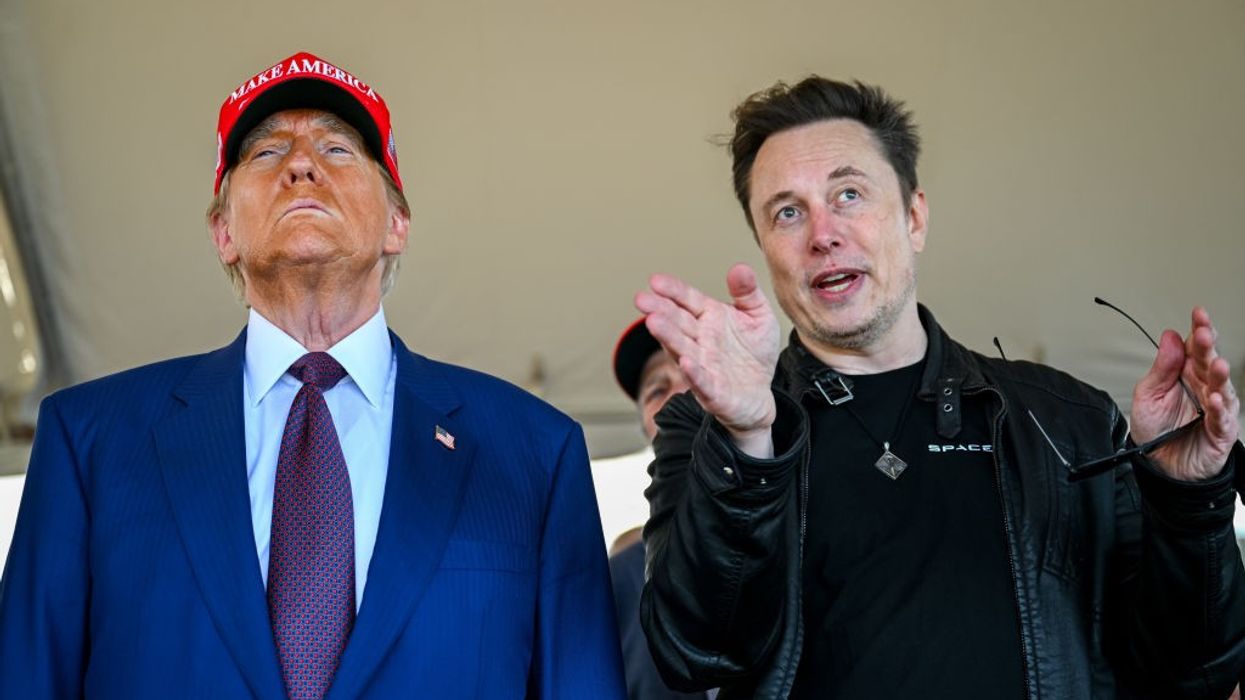
U.S. President Donald Trump, Elon Musk, and their ilk are returning the U.S. to the Gilded Age of robber barons, replete with railroad monopolies and no union protections. They are bringing us back to a time before the Progressive movement had instituted the first real wave of social reforms, which were later widely expanded by New Deal programs. These initial reforms offered workers’ compensation, free school meals for poor children, regulated working hours, and put antitrust laws on the books. They protected the everyday person, white- and blue-collar alike, and were a setback for the ultra-rich. For generations afterward, the ultra-rich have been pushing to overthrow the Progressive Era’s and the New Deal’s utilitarian reforms.
It started with deregulation in the 1970s and was then magnified during Ronald Reagan’s neoliberal presidency. The talking points behind deregulation duped people through bastardizing the concept of “freedom.” The U.S. is a free country, the argument goes, so there shouldn’t be regulation. Yet deregulation, in this sense, is focused on giving businesses and corporations free rein, screwing the rest.
Inevitably, the neoliberals’ free trade policies, the gutting of unions, the reducing of social programs, and the lowering of taxes for the very wealthy led to wide-scale disillusionment. It birthed the Occupy Wall Street and Tea Party movements.
That brings us to today, where there is one option: resistance everywhere.
The Tea Partiers, mostly unwittingly, pushed for the policies of the late 19th-century robber barons, free of any regulation on business and extremely low (if any) taxes, as if these policies would help the average person. The Occupy movement failed in that, while offering an accurate critique of vast wealth inequality, it did not propose any concrete goals. There was the fear that its message would be branded, hijacked, or warped by the mainstream media. Fair point, I suppose. But a protest movement without policy objectives is like a tree falling in an empty forest. Luckily, the forest was not empty.
Sen. Bernie Sanders (I-Vt.) had been voicing the same message for decades. He rose to national prominence shortly after the movement’s demise, and his popularity was, in part, due to the Occupy movement raising the issue of wealth inequality to public consciousness. Unlike Occupy, Bernie had specific utilitarian policy goals.
On the other side, Trump voiced the radical Tea Partiers’ message of the robber barons, with more overt xenophobia and racism.
In 2016, both establishment parties tried to crush their mass movement candidates. The Democratic Party succeeded and had Hillary Clinton run as its presidential candidate. On the other hand, the GOP failed to stop Trump and held their nose, presuming Hillary Clinton would trounce him in the general.
When Trump won, most were surprised. Trump himself was unprepared, and the majority of institutions were unprepared to back him. His policy efforts, such as the Muslim ban and immigrant parent-child separation, were short-lived due to popular and legal pushback and sloppy execution.
During his first term, Trump’s core supporters remained steadfast behind him, but most mainstream institutions did not overtly support or cave to him.
For an unprepared presidency, dawdling along much like a toddler with a flippant mouth, the Covid-19 pandemic was icing on the cake for executive leadership failure. Because of Trump’s anti-vax rhetoric, inept health policies, and spewing of misinformation, the deaths of nearly half-a-million Americans can be attributed to him.
Unsurprisingly, Trump was booted out of office in 2020 and Joe Biden stepped in. Once again, the Democrat establishment coalesced against Bernie’s candidacy.
During Biden’s first three years in office, he was a good president, passing the most important climate change legislation in U.S. history, the Inflation Reduction Act, and the bipartisan infrastructure bill. He supported unionization efforts and tried to eliminate student loan debts. He restored a sense of decency and aid for UNWRA.
As the 2024 election came closer, the Gaza genocide commenced, which Biden wholeheartedly backed. In Biden’s last year in office, when Trump became the clear GOP presidential candidate, he tried to outflank the GOP on the right on immigration, restricting asylum seeker border crossings and attempting to push an anti-immigrant bill that Sen. Mitch McConnell (R-Ky.) crafted. (Of course, Trump killed it to prevent Biden from getting “credit.”)
Throughout the Biden years, inflation increased dramatically, similarly to most of the world. Yet Biden could never adequately explain this phenomenon to the American people and was horrible at communicating his domestic accomplishments.
He and his staff ignored his mental decline, leaving former Vice President Kamala Harris little time to campaign. Simultaneous to Biden’s growing unpopularity, far-right institutions began crafting Project 2025 (now being instituted) for a new Trump administration. When the Dems lost this time, the far-right was prepared with institutional backing. For the most part, the establishment (media, corporations, etc.) caved to Trump and his anti-constitutional, authoritarian executive actions.
That brings us to today, where there is one option: resistance everywhere.
Resist on the streets, in Congress (wake up Jeffries and Schumer!), and the courts, to save a very flawed republic before it’s too late. Before fascistic robber barons steal it away, leaving the American people whistling in the desert wind watching a whiny rich snowflake asshole pretend that the United States is a reality TV gameshow.
For the Democrats to become a truly populist party, an entirely new wave of working-class candidates must come to the fore. But that won't just happen. A movement must be built and harnessed.
Donald Trump’s victory is causing James Carville, the outspoken raging Cajun who was Bill Clinton’s campaign manager in 1992, to call for the Democratic Party to go all in on a populist agenda. He wrote recently in the New York Times,
“Go big, go populist, stick to economic progress, and force them [Republicans] to oppose what they cannot be for. In unison.”
Is Carville really agreeing with the Center for Working Class Politics, which in October published the results of their YouGov survey, “Populism Wins Pennsylvania?” That report found that:
“… working-class Pennsylvanians responded most favorably to populist messages and messages that emphasized progressive economic policies. What’s more, we found little evidence that focusing on economic populism risks decreasing voter enthusiasm among core Democratic constituencies outside the working class.”
Ezra Klein, another Democratic Party influencer, picked up on that survey just before the election in November, but then dismissed it as an outlier: “Surveys like that should be treated with some skepticism”, he wrote. “The Harris team is running plenty of its own polls and focus groups and message tests.”
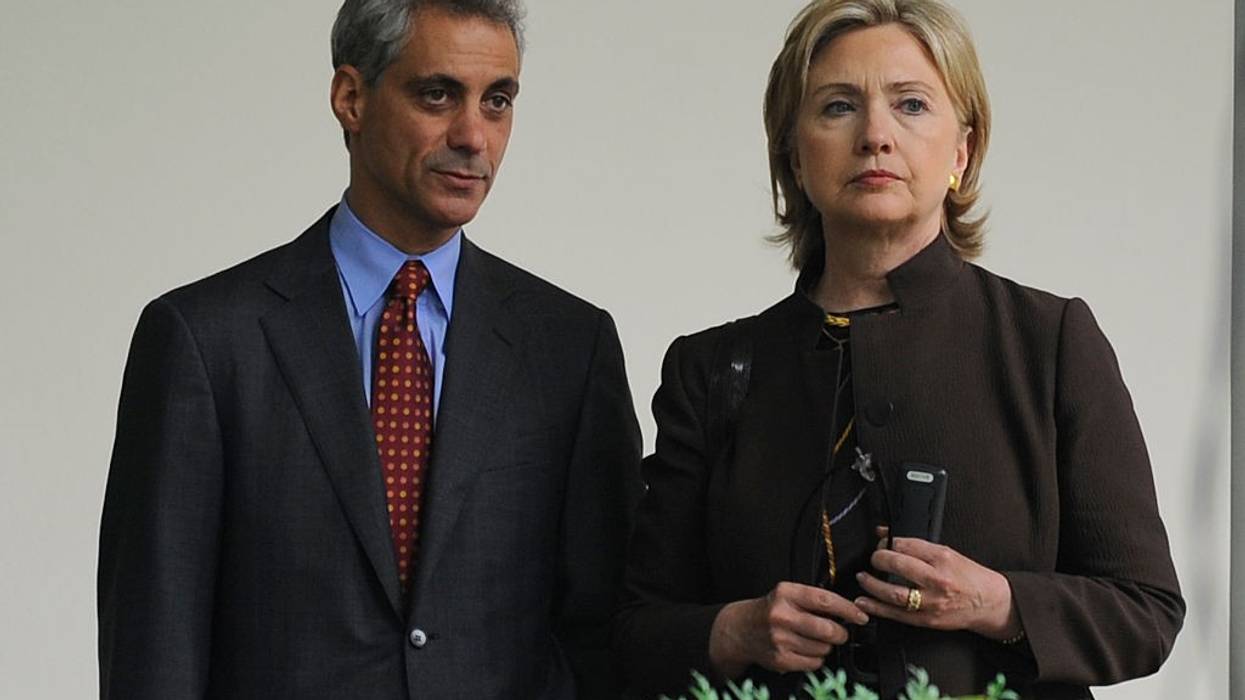
But the results of elections matter, and there is now a chorus of Democratic Party nouveau populists, including Rahm Emanuel, Bill Clinton’s close advisor, who went on to earn tens of millions on Wall Street.
It’s time to take a deep breath and recall how these recently minted populists helped to create the very conditions that crushed the working class. As former Senator Sherrod Brown discovered in Ohio, to this day, workers still blame the Democrats for NAFTA, the 1994 trade deal that Clinton, Carville, and Emanuel pushed that ended up costing millions of U.S. jobs.
It’s time to take a deep breath and recall how these recently minted populists helped to create the very conditions that crushed the working class.
Emanual seems these days to have become a closet Sanders supporter, claiming that Obama was way too soft on the bankers who crashed the economy in 2008:
Not only was no one held accountable, but the same bankers who engineered the crisis were aggrieved at the suggestion of diminished bonuses and government intervention. It was a mistake not to apply Old Testament justice to the bankers during the Obama administration, as some called for at the time.
Some did, at the time, but Emanuel did not. Buy hey, people do change, don’t they? Why shouldn’t we believe that the old Democrats can become real populists?
Let’s start with an understanding of how that Harris polling could have been so wrong. Why did their results cause them to shy away from the kind of strong populism that the Center for Working Class Politics found attracted the most working-class support in Pennsylvania? A state Harris had to win.
I don’t know the Harris pollsters personally, but I do know how the Center for Working Class Politics operates. They are meticulous. They know that their polls will be ripped apart by establishment academics and party gatekeepers, so they can’t make mistakes. They can’t let their own personal beliefs tilt the survey towards what they’d like to believe is true. Their goal is to ask the questions others aren’t asking, to better reflect the opinions of people of all types about working class values and beliefs.
Not so with the pollsters who cashed in on the Harris campaign. They know what their client wants to hear (and is capable of hearing). And it’s not that a strong anti-Wall Street message sells, and therefore that she should mercilessly attack what Sanders calls “the billionaire class.” After all, Harris made a public point of holding a Wall Street fundraiser in the middle of her campaign, and her staff made clear that Wall Street helped to shape her agenda. Her brother-in-law, Tony West, was special adviser to her election campaign, and has deep ties to Wall Street through Uber and Pepsico.
It’s not that Democratic Party pollsters cooked the books. They just knew to ask questions that hovered within the corporate Democratic comfort zone. They didn’t ask the strongest populist questions because they didn’t think those results would be welcomed within the campaign.
I once saw this process in action. I was watching a focus group through a one-way mirror. The topic was healthcare in the leadup to Obamacare, but it was stunning to see how the discussion was shaped by the types of questions the facilitators asked. They limited them to various types of health insurance and avoided more radical reforms of the healthcare system.
At one point a younger Black man expressed his frustration: “Why all this talk about insurance? I’m interested in health care and getting access to it.” He was thanked for his comment and then ignored, while I yelled at the mirror, “Talk about Medicare for All!” It didn’t happen because the group paying for the focus group, as well as the pollster, didn’t think Medicare for All was feasible, and therefore refused to discuss it.
Today, the Democratic elites not only run away from Medicare for All, but they refuse to acknowledge their financial ties to Wall Street. They are more than comfortable, however, accepting large consulting and speaking fees from what should be the targets of their populism. This goes back to Bill and Hillary Clintons’ tone-deaf acceptance of $153 million in speaking fees, including 39 speeches from the very banks that crashed the economy in 2008. During Hillary Clinton’s 2016 campaign she collected $1.8 million for eight speeches to Wall Street banks.
For the Democrats to become a populist party, an entirely new wave of working-class candidates must come to the fore. And for that to happened, we need a working-class movement that forms outside of the two parties and demands economic justice for all...
It's not hard to understand. The Wall Street barons who pay the speaking fees are the same kind of people who went to Yale with Hillary and Bill. They’re all from the same newly minted class of highly successful strivers. If there were any working-class roots in their backgrounds, they withered long ago. Nearly all Democratic Party elites are swathed within this moneyed class. During their leadership of the Vietnam War in the 1960s, author David Halberstam called them “the best and the brightest.” Now they are just the richest. In this milieu, light years away from the working class, getting $225,000 per speech seems like a trifle.
But let’s try to be fair. Can’t the party change its stripes now that Democratic influencers are talking populism in the wake of Trump’s victory?
Unfortunately, I don’t think their talk is credible. It’s doubtful that Carville, Klein, and Emanuel are capable of offering a sustained anti-Wall Street message. They are different from Bernie Sanders, and not just because of their word choices. It’s about their entire careers, the things that made them who they are, their entire way of being. Sanders has been an overt social democrat all his adult life. It’s obvious that he means what he says. He says it over and over again. He really couldn’t care less what Wall Street thinks about him.
As for the nouveau populists, I’m waiting for Carville to say, “Look I was dead wrong when I helped Bill Clinton undermine unions through NAFTA.” Or for Emanuel to confess that “I was wrong to take millions in Wall Street fees while workers were losing their jobs through mergers, leveraged buyouts, and stock buybacks.” Or for Ezra Klein to admit in print that the Center for Worker Class Politics, “were right about populism. The Harris pollsters were wrong, and I was at fault for dismissing their solid work.”
Or maybe the Democrats could finally show some outrage about Wall Street-induced mass layoffs that are destroying the livelihoods of working people. (For more information, please see Wall Street’s War on Workers.)
For the Democrats to become a populist party, an entirely new wave of working-class candidates must come to the fore. And for that to happened, we need a working-class movement that forms outside of the two parties and demands economic justice for all, as the original American populists, the Peoples Party, did in the 1880s. Today, that might look like a sustained, organized version of Occupy Wall Street, which fights against mass layoffs caused by Wall Street’s greed and for a $20 federal minimum wage.
Meanwhile, get ready for more faux populism from Democratic Party elites while Wall Street feasts on the riches Trump showers upon them.
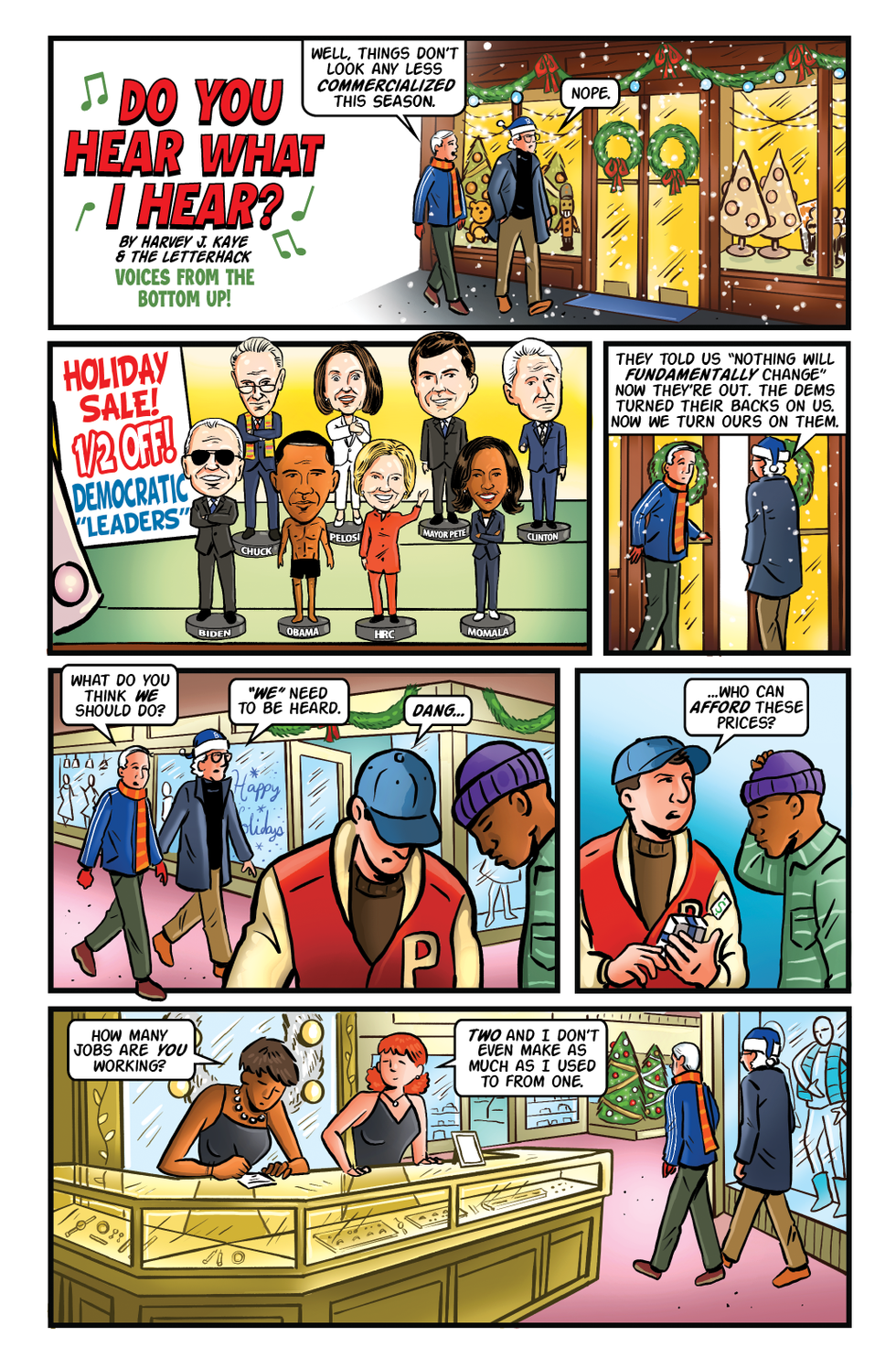
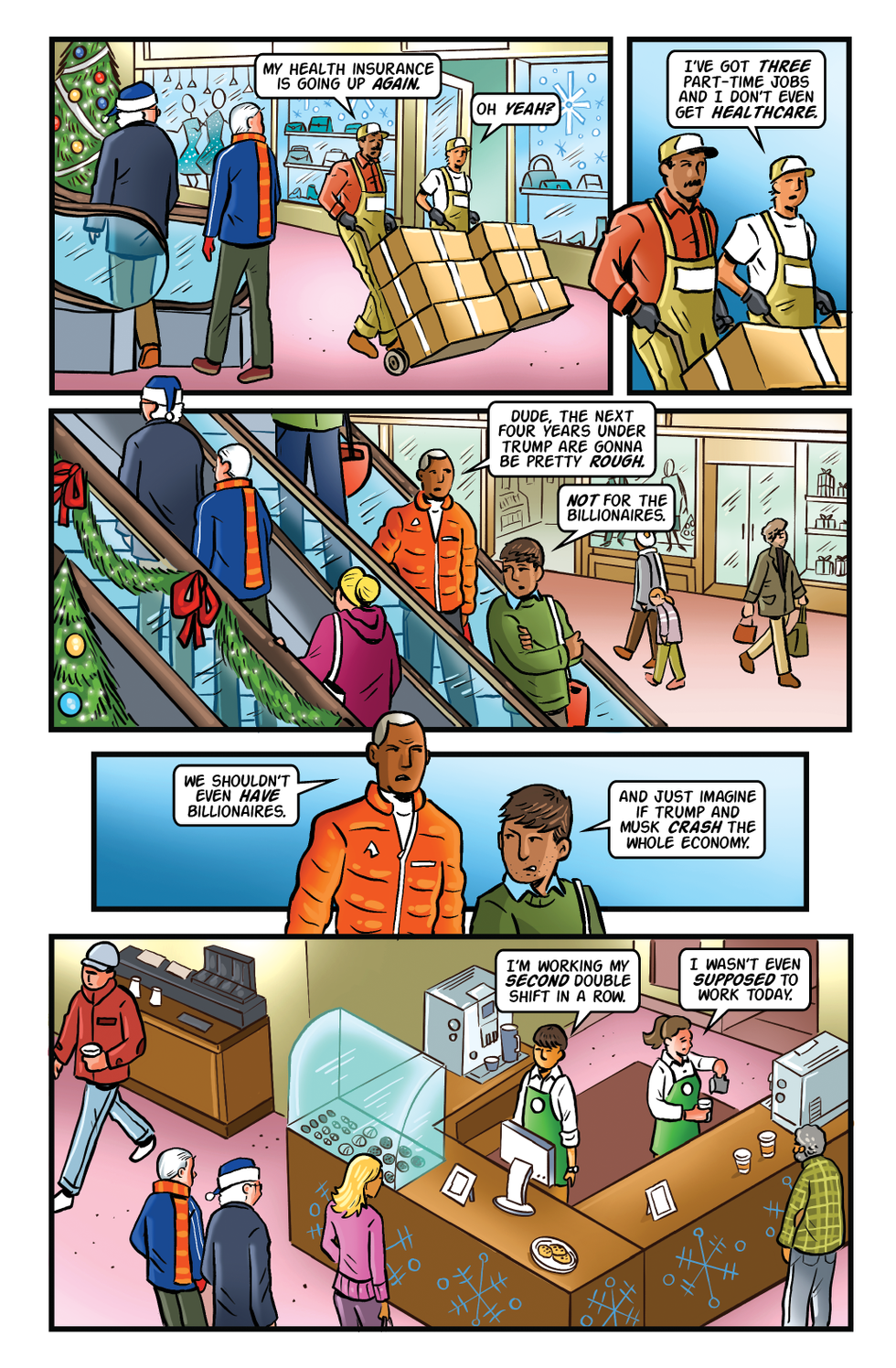
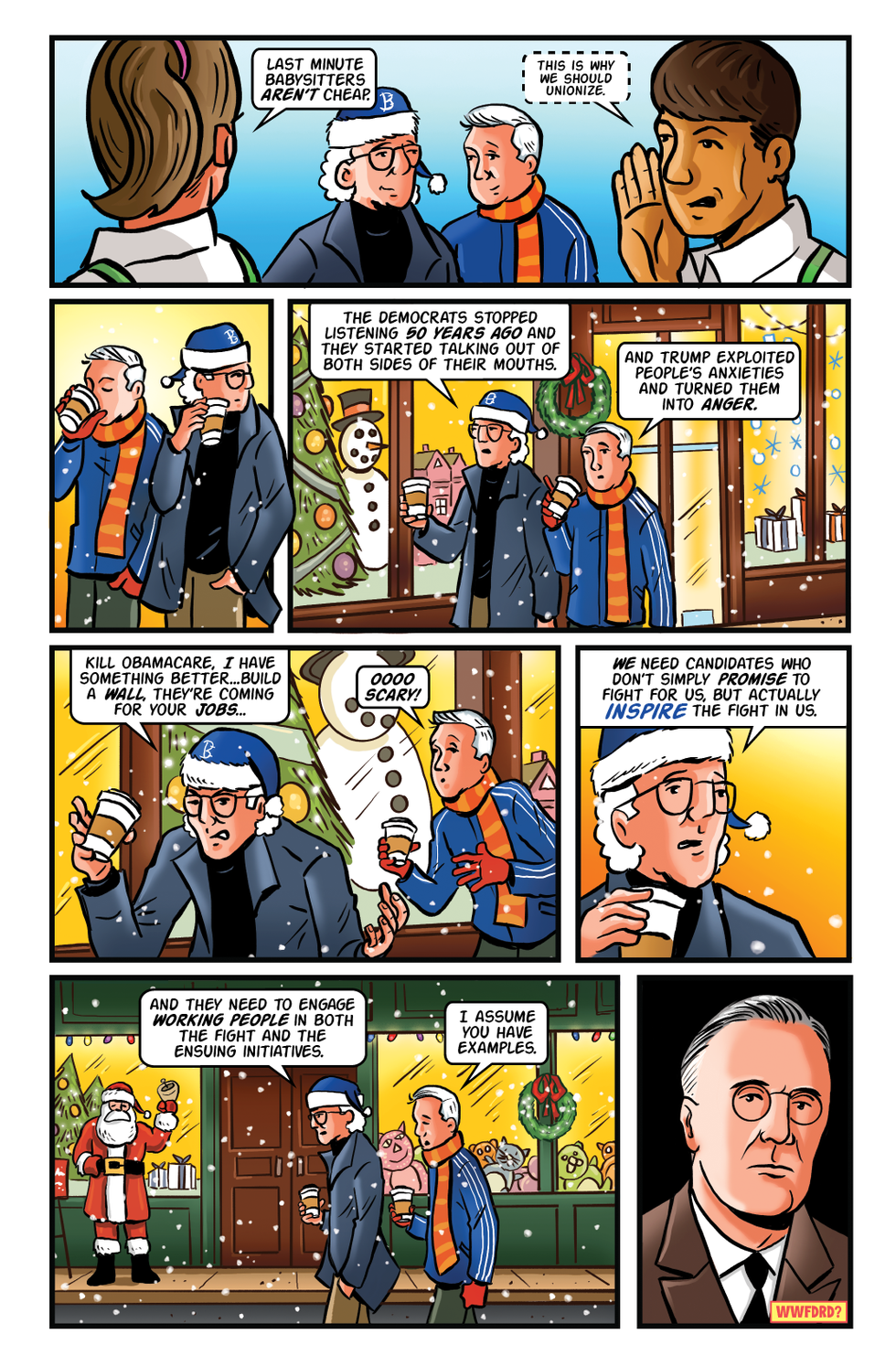
With our latest holiday-themed comic, we seek not only to empower the voices of working people, but also to push the Democrats to do so as we work to rebuild the party in favor of taking back and democratically transforming America.
It gives us no pleasure in saying this, for we definitely wanted it to go differently, but the Democrats deserved to lose. We, however, did not. They ceased to be the party of the people—the party of working people—years ago and they hardly seemed bothered by what was happening. Apparently the Democratic leaders were not listening to what working people were saying. Or, if they were listening, they failed to hear what was being said.
Embracing neoliberalism, the party’s leaders and presidents cultivated the affections of their billionaire donors; rationalized the widening inequalities and intensifying concentration of wealth and power; joined in the assaults upon the democratic achievements of the Greatest Generation and the Long Age of Roosevelt; distanced themselves from the resistance expressed in the Wisconsin Rising of 2011 and the anger and hopes of Occupy Wall Street; failed the Fight for $15; and made nothing of the polling which showed that Americans wanted not just change—indeed, radical change—but also jobs at living wages, guaranteed healthcare, decent affordable housing for all, and free public higher education (all of which would have amounted to what the greatest of Democratic Presidents, Franklin Roosevelt, projected as an Economic Bill of Rights in 1944).
In fact, even as workers began to organize anew and started demanding better deals from their bosses, the Democrats failed to act seriously to bolster their initiatives. Then, truly proving they had not been listening, they ran a 2024 presidential campaign that avoided calling out the billionaire bosses whose billions are growing ever greater and made little of the voiced needs and wants of the working class.
Situating our new comic in the Holiday season, we seek not only to remind liberals, progressives, radicals, and socialists to listen to and empower the voices of working people, but also to push the Democrats to do so as they/we work to rebuild the party in favor of taking back and democratically transforming America.
We close this installment of our comic-strip series with a portrait of FDR, the Democratic President who—for all of his tragic faults and failings—not only listened to and actually heard working people, but also encouraged them to progressively push him further than he might otherwise have gone and determinedly engaged their labors and energies to dramatically transform the nation and radically enhance freedom, equality, and democracy.
In upcoming comics for Common Dreams we intend to recount that history in hopes of inspiring and propelling Democrats and working people alike to take action.
On a sunny and cool September Saturday in 2011, hundreds of activists and protestors took to Zuccotti Park in New York City's Financial District. They set up tents, mutual aid stations, and more, occupying the space to protest inequality and corporate corruption. Occupy Wall Street brought the terms "the 99%" and "the 1%" into the mainstream American consciousness. When police raided Zuccotti Park in the middle of the night that November, the movement's flagship occupation came to an end. But what it sparked lives on today.
Many of the activists and organizers at the forefront of today's debt cancellation and forgiveness movement got their start at Occupy, either in that first New York demonstration or subsequent actions across the country. Natalia Abrams, who started Occupy Colleges, went on to found the Student Debt Crisis Center. Andrew Ross, an activist and social and cultural analysis professor at New York University, and Hannah Appel, an economic anthropologist at the University of California, Los Angeles, went on to start Strike Debt, a nationwide debt resistance movement. From Strike Debt, the Debt Collective--a debtors union primarily focused on student debt, carceral debt, and tenant debt--was born. A decade later, their efforts saw a small but significant victory when the White House announced federal student loan forgiveness in August.
In the years following Occupy, Strike Debt and the Debt Collective's efforts included producing The Debt Resistors' Operations Manual and launching a Rolling Jubilee that has bought $32 million of debt from secondary markets and canceled it. "It's a drop in the ocean, obviously," Ross says. In the U.S., 45 million current and former students hold $1.6 trillion in federal student debt, which accounts for 92% of all U.S. student debt. "But it was a proof of concept that people could actually take relief for themselves through mutual aid."
Canceling debt wasn't all the jubilee did. It also highlighted the insidious nature of the debt market, the ready availability of solutions, and the depth of a problem that's been centuries in the making.
The Advent of Student Debt
The cost of attending U.S. college and universities remained relatively stable until the 1960s and '70s. When Ronald Reagan became governor of California in 1967, he swiftly proposed that the University of California system charge tuition for the first time, while also cutting state funding for the schools by 10%, signaling the beginning of the end of state support for universities. Across the U.S., state appropriations for public universities dropped 29% from their peak in 1988 to 2013. In 2018, overall state funding for two- and four-year public colleges was $6.6 billion less than it was in 2008.
The Debt Collective and other entities working in the debt cancellation and forgiveness space are questioning the very foundations of our society, culture, economy, and the racial capital system that underpins them--and they're achieving victories.
Reagan came into office just as Black and Brown students began finally gaining access to higher education in the 1970s and '80s. It's then that the national education ethos seemed to pivot from viewing higher education as a public good to considering it a private investment. Jalil Bishop, an assistant professor at Villanova University who studies racism across institutions and markets, doesn't think the timing was a coincidence. Instead, he calls the phenomenon "racial capitalism."
Because communities of color "have been cut off from ever privately accumulating the wealth to pay for higher education," Bishop says, those communities had to "rely on student loans in a way that communities who have always had access to privately accumulated wealth, through homeownership and businesses they've inherited, [did not need] to rely on student loans." This lack of intergenerational wealth has led to entire families being saddled with student debt, in the form of Parent PLUS loans, in order to finance their children's higher education.
Those racial disparities are reflected in many forms of debt. Black and African American graduates owe an average of $25,000 more in student loan debt than their white counterparts, according to the Education Data Initiative, and are most likely to struggle financially in repaying that debt. The National Consumer Law Center also reports that 27.9% of Black households carry medical debt, compared with 17.2% of white households. Americans as a whole hold at least $195 billion in medical debt.
Because communities of color are disproportionately burdened by student, medical, and carceral debt, all of which are compounded by the growing racial wealth divide, they stand to gain substantially from debt cancellation and forgiveness, not only financially, but psychologically, too.
During the COVID-19 pandemic, when student loan repayments were put on pause, Bishop set out to uncover the mental toll of looming debt that feels impossible to pay off. He found that Black borrowers across income levels were suffering psychologically. "They were feeling like they once again found themselves in a debt trap, shackled to some type of arrangement that they couldn't escape and, to them, it really reflected other types of racial traps they had heard about in history. They felt like this was their subprime moment."
Borrowing Everywhere
Thanks to the rise of both financialization and securitization, after the early 1970s, it became more profitable for banks to invest in consumer debt, rather than their focus on the steel and railroad industries of previous decades, for example. Today, consumers can borrow for just about everything, from small purchases made with credit cards to large, durable goods, like cars, homes, and associated maintenance programs, the sellers of which often offer their own financing.
Debt has become a central element of the U.S. criminal justice system, too, largely in the form of fines and fees that total an estimated $26.7 billion in carceral debt held by those currently and formerly incarcerated. "If you look at any one household, there are numerous kinds of debt--medical debt, housing debt, credit card debt, auto debt--flowing through the household. They're all interdependent in a way," Ross says, since the ability to pay one debt impacts the others. As the debt market grew, so did myriad scams and predatory practices that fed off it, including for-profit colleges, like Corinthian College, which used deceptive marketing tactics and often left former students and graduates with worthless degrees and mountains of debt.
Corinthian students made up a significant portion of the Debt Collective's first Rolling Jubilee in 2014. But single-handedly erasing debt isn't Debt Collective's goal, explains Hannah Appel, one of the Debt Collective's founders. "We cannot crowdsource away everybody's debt," she says. "The endgame here is to put the potential power, the potential collective leverage of debt, into the hands of debtors to actually change the systems that indebted us in the first place."
It's through collective action, organizing, and legal pressure that the Debt Collective and other entities working in the debt cancellation and forgiveness space are questioning the very foundations of our society, culture, economy, and the racial capital system that underpins them--and they're achieving victories. In the summer of 2022, the U.S. Department of Education announced it would cancel $5.8 billion of debt owed by 560,000 Corinthian borrowers.
Technology is also playing a big role in debt cancellation efforts. The Debt Collective offers a suite of online tools that help debtors navigate the often complex legal process of disputing debt. Rather than navigating complicated processes alone, the Defense to Repayment app, for example, has borrowers answer questions to create state-specific legal arguments for debt disputes. Appel says an estimated 75,000 people used the app in the first eight months after its launch in February 2014.
Bigger Goals
The Debt Collective is far from alone in striving to eliminate debt. Groups like the Appleseed Network and The Fines and Fees Justice Center are working to oppose and reform the cost of criminal fines and fees and the debt associated with them. There are also RIP Medical Debt, Dream Defenders, Young Invincibles, Living With Conviction, and more organizations that are all, at least in part, organizing to address debt.
Their efforts are strategically intended to contribute to systemic reforms and goals, like abolishing student, medical, and carceral debt, and reforming the primary sources of that debt. Those efforts include supporting a single-payer health care system and tuition-free higher education--objectives that are "a lot closer than you might think," explains Andre Perry, a senior fellow at The Brookings Institution. "Community colleges in a lot of states are already there because Pell Grants generally cover their tuition," he says.
Bishop agrees. "Money is being spent right now to uphold a student loan industry where it's very clear that students don't win ... and it's possible for us to reallocate that," he says. "There is a need to ask questions around endowment sizes and our colleges being responsible with their funding."
Berea College in Kentucky, for example, hasn't charged tuition since 1892. Berea's students are largely from the surrounding Appalachia area, but many also come from across the U.S., and even from other countries. The college has aligned its admissions process with the needs basis outlined in the Pell Grant program. All of the college's students "bring some amount of the Pell Grant with them to help offset some of their costs," explains Luke Hodson, Berea's associate vice president of admissions. "Sometimes it may be [put] toward tuition costs, but most often it's toward covering some of their housing and meal expenses."
As Berea's provost Scott Steele notes, the college relies on student labor to supplement a lean staff. "Students work for the college on the grounds, as teaching assistants and in the financial aid office, the admissions office, the food service office," he says. To meet the college's annual operating expenses, returns from Berea's endowment constitute 74% of its funding, while 17% comes from federal and state aid and 9% comes from annual donations from supporters.
Ultimately, the debt cancellation movement is about grappling with questions of fairness and equality, both socioculturally and under the law.
When it comes to spending that money, Steele adds, "we're focused on the things that we think are bringing real value to the college experience and the education of our students, but we would not consider ourselves extravagant." Rather than building bigger and better stadiums and residence halls to attract tuition-paying students, Berea instead maintains the facilities it does have while funneling money toward services like its writing and student success centers.
"Not every college is willing to function that way or can function that way," Hodson says, noting that other institutions spend a lot of money to attract and enroll students. "I think we're starting to see that [cost] starting to outpace what the buyer, the student or family, are willing to really pay for."
Steele often fields calls from other institutions interested in replicating Berea's model, but he admits it's a hard transition to make. "It's very difficult to start from zero," he says. "I think other institutions could do something similar if they had the startup costs [covered], but it's really difficult to begin the model from scratch."
From Organizing to Systemic Change
Just like Berea's model can't immediately be replicated elsewhere, neither can many of the initiatives like the Debt Collective's Tenant Power Toolkit, which is focused on California, where tenant rights and consumer protection laws are stronger than most elsewhere in the country. However, the Debt Collective is also working with student law interns to replicate its California-centric services elsewhere.
It's fighting the law with the law on both a state-by-state and federal level that Eileen Connor, a lawyer and the president and director of the Project on Predatory Student Lending, believes is key to securing systemic change. "The fact is that a good number of our clients have defaulted on their student loans," she says. "They are having the law applied against them. They're having their Earned Income Tax Credits seized, they're having their wages garnished, and they're having their credit ruined, all through legal means. ... You have to meet the law where it is."
The leap from organizing to systemic change is a long game, but in the meantime, incremental changes can point us in that direction. On the carceral debt front, Helen Ho, a research director at The People Lab at Harvard's Kennedy School, suggests instituting fines and fees that are proportional to income, as other countries do. "On lower levels, there's things that individuals and nonprofits can do, which is setting up a clinic for ability-to-pay hearings. ... And perhaps you can combine that with advocacy to build something bigger, like folks are doing with bail funds."
Bishop and Perry advocate for the expansion of the Pell Grant program, which is currently included in several legislative proposals in Congress. Connor agrees, adding that whatever the solutions are, some experimentation will be required. "There has to be tighter controls on which institutions even get access to that money," she says. "I think there [could be] some partnership with states where there's a system that's closer to Medicare and Medicaid, where there's federal money, but it's administered by states. Maybe we should have a slightly different tax structure where, if there's public investment in higher education, it comes back to the public in the form of taxation on individuals as they succeed because of that initial public investment."
Ultimately, the debt cancellation movement is about grappling with questions of fairness and equality, both socioculturally and under the law, and mitigating some of the generational effects of racialized capitalism. Debt relief and the organizing behind it can also play a key role in recasting our modern conception of education and other forms of advancement as an individual endeavor.
As Connor puts it, "I think it's under-theorized and under-quantified how there are benefits [to education and training] that are not individual, but collective"--how, when one person gets an education, it doesn't just benefit them, but also the whole community around them. It's this collective approach that gives Bishop "so much hope." This, he says, is "because we have borrowers and everyday people and community members who are really leading a movement that, in real time, is rewriting national policy in a way that we don't always get to see around key issues."

Ten years ago, the Occupy Wall Street movement was born with protests in Manhattan's financial district. Its aim was to draw attention to the huge gap that had grown between the super-rich and average Americans in the age of global neoliberalism.
While it is uncertain whether it even qualifies as an actual social movement, Wall Street Occupy was a smashing success: its powerful message of the richest 1 percent owning more of the country's wealth than any other time in recent history captured the public imagination, provided the impetus for the emergence of a new wave of social activism, both in the US and abroad, and eventually became a rallying point for the left-wing of the Democratic Party.
However, like most actual social movements, Occupy Wall Street was short-lived and its lack of specific demands did not change the realities on the ground: economic inequalities have continued to grow since and Wall Street remains a dominant player in the US and world economy alike.
"Social movements ... do not last very long and ultimately fail to dismantle existing power structures because they do not invest in organizational structures."
Social movements emerge on account of the existence of dysfunction within a political or economic system. Systemic inequality and social and environmental injustice are the primary drives behind the rise of most forms of social activism in today's world, yet the decision for people to become politically active has simple psychological roots. Social movements emerge only when discontent has become quite prevalent among a sizable segment of the citizenry. Indeed, it was feelings of deprivation and discontent that gave rise to the anti-globalization movement of the 1990s, to the pro-democracy protests and uprisings that took place in the Middle East and North Africa in the early 2010s, and to the Russian protest movements in 2011-2012. Nonetheless, all of those movements also phased out rather quickly, without accomplishing their intended goals, although they did cause quite a stir at the time.
The problem with social movements is that they are informal groupings of individuals or organizations which, while they can generate significant attention around an issue or cause, influence positively public opinion, and initiate some form of tangible change, they lack the instruments to dismantle hegemonic power. Put differently, social movements, generally speaking, do not last very long and ultimately fail to dismantle existing power structures because they do not invest in organizational structures.
From the above, one may be quick to jump to the conclusion that participation in political parties is the most effective way for citizens in contemporary societies to bring about structural change. Not so fast. While this may have been the case in the past, it is no longer so today because political parties, including those of left and radical ideological orientation, have undergone fundamental organizational changes. With rare exceptions, they have moved away from being mass parties and have abandoned any pretext of actually seeking to bring about profound social and economic changes. Party identification has also declined everywhere in the world, and even the distinction between Left and Right has broken down.
In sum, the best hope we have for reshaping the world is with social activism and protest movements. But sustainable activism requires implementing organizational structures which are currently missing from most social movements. It would be most helpful in this case if contemporary social movements looked to the history of the old radical Left and the way those parties managed to sustain organizational continuity while fighting for a new social and economic order under political and social conditions far more adverse than what exists today. And to the way the Austrian communist party of today has managed, through a steadfast course in old-fashioned class politics, to engage itself in community activism in the city of Graz, a strategy which led to its shocking victory last month in the city's municipal elections.
"Crown heads, wealth, and privilege may well tremble should ever again the black and red unite," Otto von Bismarck allegedly said in connection with the political environment of his time.
We might be able one day to express something along similar lines if social movements started to implement the organizational structures of the Old Left.

As the bombshell Pandora Papers continue to expose dubious details about how the world's superrich hide their fortunes and avoid paying their fair share of taxes, Bloomberg on Friday published an analysis of U.S. Federal Reserve data revealing that Americans in the top 1% income tier now have more wealth than the entire middle class.
According to Bloomberg:
The middle 60% of U.S. households by income--a measure economists often use as a definition of the middle class--saw their combined assets drop to 26.6% of national wealth as of June, the lowest in Federal Reserve data going back three decades. For the first time, the superrich had a bigger share, at 27%.
"Middle class" is defined here as households earning $27,000 to $141,000 annually, while the income threshold for membership in the 1% is $500,000 per year. According to the Fed data, 1.3 million U.S. households now have more wealth than the 77.8 million families in the middle 60%.
By comparison, in 1990 the top 1% held just 17% of the nation's wealth--less than half of the middle class' 36%. Since the Occupy Wall Street movement elevated conversation about "the 99% v. the 1%" from the lexicon of class warfare to mainstream debate a decade ago, the top 1% now enjoy a 5% bigger slice of the wealth "pie," at the expense of everyone else.
The middle class' share of real estate, equities, and private businesses has also steadily declined in recent decades. While the middle class owned 44% of U.S. real estate assets in 1991, its share is down to 38% today.
The new analysis comes as American politicians and people debate what fair taxation looks like.
While Republicans and right-wing Democrats in Congress vehemently oppose raising taxes on the wealthiest individuals and corporations, most Americans--including a slim majority of self-described Republicans--back President Joe Biden's plan to raise taxes on people earning over $400,000 annually, according to a recent survey by Data for Progress and Invest in America. The poll also found that a majority of Americans, including 47% of Republicans, support raising the tax rate on large corporations from 21% to 28%.
The Bloomberg report also comes amid ongoing revelations from the Pandora Papers, a tremendous trove of nearly 12 million documents whose contents include details about how the U.S. is a "spectacularly corrupt tax haven," as one journalist described the findings.
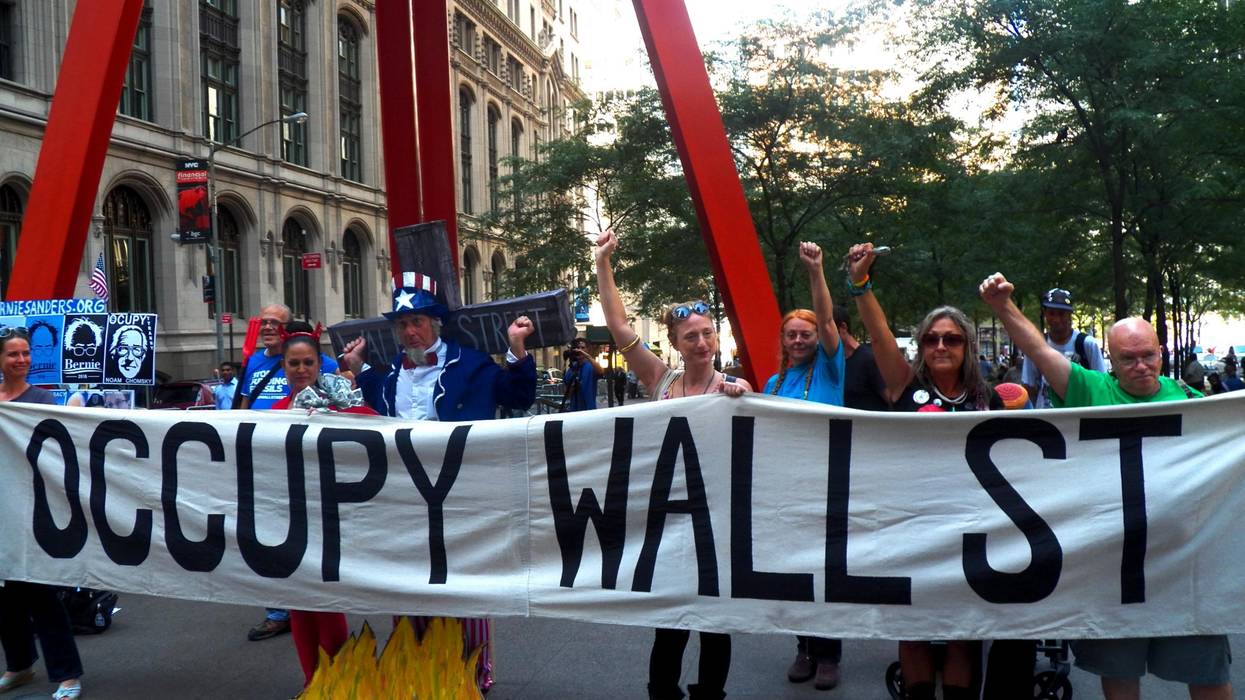
Ten years ago, young people set up camp in New York City's Zuccotti Park to protest rampant economic inequality and outsized corporate influence on our democracy. The Occupy Wall Street movement quickly spread to other U.S. cities but lost steam before it made a meaningful mark on policy.
Still, its enduring legacy--the slogan "We Are the 99 percent," -- heightened awareness of gross inequities in our political and economic systems.
Progressive taxation enables a public sector that can deliver us from the economic, health and climate emergencies that scream from the headlines every day in 2021.
The country emerged from the 2007-2009 recession to a long, slow recovery. At the time of the Occupy movement in 2011, unemployment was still rising, the poverty rate hovered at 15 percent and people were losing their homes. The typical family lost 40 percent of its wealth, with much deeper pain for poorer households and communities of color. All while Wall Street came roaring back.
Occupy protesters look prescient now. During the early days of the pandemic and recession, unemployment spiked faster than in any year since 1939. Yet billionaires added $1.8 trillion to their wealth from March 2020 to August 2021.
This systemic unfairness was at the heart of the Occupy protests in the fall of 2011. The financial industry helped wreck the economy, and our government worked to make them whole with no real strings attached. They didn't have to pay their workers better. They didn't have to curb executive compensation. We, collectively, didn't demand better corporate citizenship.
In 2017, elected officials made the same mistake. The Republican Congress gave enormous corporate tax cuts and promised--it turned out falsely--that companies would use their tax breaks to invest in America. Instead, these companies largely rewarded their shareholders and executives. Stock buybacks reached record levels in 2018 and 2019, and corporate tax payments shrunk. My colleagues released a report this year that found 39 profitable Fortune 500 corporations paid zero in taxes on average from 2018 to 2020 despite earning $122 billion over that period. Fifty-five profitable corporations avoided federal income tax in 2020.
In 2021, many people better understand the crucial role of government and what it means when it works and when it doesn't. Government action made poverty go down in 2020 (when measured after benefits) in the face of an unemployment spike at Depression levels. Government funding delivered a vaccine at "warp speed" and government action ensured that millions of adults who wanted the vaccine could get it within months after it became available.
We need an economy that works for all of us. And we need a government that can tackle our problems. This starts with tax policy that raises resources from the millionaires and billionaires who continue to thrive in an increasingly unequal America.
Progressive taxation enables a public sector that can deliver us from the economic, health and climate emergencies that scream from the headlines every day in 2021. President Biden has put forth a tax plan that begins to do that. Congress must deliver.

Black Lives Matter, Indigenous, anti-war, and other progressive activists reacted with a complete lack of surprise to data reported by The Guardian on Thursday that shows U.S. police are three times more likely to use violence against left-wing and social justice protesters than against those on the political right.
The report, based on statistics from from the U.S. Crisis Monitor--a database created this spring by researchers at Princeton and the nonprofit Armed Conflict Location and Event Data project (ACLED)--found that the overwhelming majority of the thousands of total protests across the nation over the past year have been peaceful.
While most demonstrations in general were not attacked by police, officers used tear gas, rubber bullets, beatings with batons, and other violence against protesters at 511 left-wing events as opposed to just 33 right-wing ones since April 2020, according to ACLED data.
The Guardian analyzed ACLED statistics and determined that 4.7% of protests organized by leftist groups were subjected to police use of force, while only 1.4% of demonstrations by right-wing groups saw police violence.
Ironically--or intentionally, according to some critics--people protesting police violence were much more likely to be subjected to that very violence, and the use of force disparity only widened in relation to peaceful demonstrations. The analysis revealed that police were 3.5 times more likely to attack people at left-wing protests where no violence, vandalism, or looting occurred than at similarly peaceful right-wing actions.
Left-wing protests analyzed include mostly Black Lives Matter, but also actions by Abolish ICE, Democratic Socialists of America, and the NAACP. Right-wing demonstrations include Blue Lives Matter, the QAnon and "Stop the Steal" conspiracy theories, and protests against Covid-19-related public health restrictions over the past year.
Unsurprisingly, left-wing activists were not surprised by the report, with reactions on social media ranging from feigned shock to "water is wet"-type comments. Human rights attorney Qasim Rashid called the report "a surprise to no one paying attention."
Not only have police attacked peaceful Indigenous, racial justice, economic justice, and other protesters in recent years, in some cases state and local law enforcement officers have actively worked with neo-Nazi factions and other far-right groups to target antiracism demonstrators. The FBI has also repeatedly reported a significant white supremacist presence among U.S. law enforcement agencies. Journalists and innocent bystanders have also been brutally attacked by police at or near leftwing demonstrations.
Most recently, commentators have noted the stark difference between the largely hands-off police treatment of the right-wing insurrectionist mob that perpetrated the deadly January 6, 2021 invasion of the U.S. Capitol--which killed one police officer--and the brutal law enforcement attacks on peaceful protesters in Washington, D.C. last summer that followed the killings of Black people including George Floyd, Breonna Taylor, Ahmaud Arbery, Tony McDade, and others.

When I was a teenager, I overheard my bass teacher commiserating with some other jazz musicians over the premature death of a colleague. "Yeah," one said, "he was a soulful cat." Of all the memories that might have resurfaced all these decades later, that was the one that came to mind when I learned that David Graeber had died at the age of 59.
But then, why shouldn't it? True, Graeber was a triple-A figure--anthropologist, activist, and author--or a 4A one, if you add "anarchist" to the list. He was a public intellectual, in an era when public intellectuals had largely become a thing of the past. But, above all else, he was soulful. That's rare and important. Intellect without heart can bring forth monsters. But intellect with heart is a crucible for beauty. Together, they produce wisdom. David Graeber was wise.
I first heard about David from his work with Occupy. Friends later introduced me to his book, Debt: The First 5,000 Years, which inspired me to read more of his work. I interviewed him twice for my radio/TV program, and we had several other conversations. That, plus some emails and the occasional Twitter interaction, was the extent of our relationship. It's not a lot of contact, but it meant a lot to me.
Our conversations will stay with me forever, ranging (as David's thinking did) everything from superheroes to structural violence, from crematoria to comic books. In one exchange, his comments led me to wonder whether our comic-book culture hadn't helped spawn Donald Trump. As in: If the so-called 'heroes' can't help us, let's see what the villain can do.
He replied by describing Trump shaking hands with other world leaders at a G8 summit or similar event. "It was as if, you know. this badly-drawn cartoon character had walked into a group of real people and they all had to imagine he was real."
David described Trump's election as "a practical joke played by a certain sector of the electorate on the political class. Because what they're saying is, 'When we see you, we see what you see when you see Donald Trump ... This is you: greedy, narcissistic, and completely corrupt ... He's just honest about it.'"
Not that David was interested in takedowns. He wanted to know why things happened: Why was Trump elected? Why did so many people think their jobs were pointless? Why were economists so wrong all the time? Why do so many scientists think animals are machines? His search for answers resulted in books like Bullshit Jobs, and essays like "Against Economics" and "What's the Point If We Can't Have Fun?"
"David Graeber's work is a testament to the human imagination, and a call to be more imaginative."
As presumptuous as it may sound, given the thinness of our actual contact, I considered him a friend. In the course of our few conversations, we discovered that both of us had used the 1960s cartoon The Jetsons in our writing, and that both of us appreciated the phrase, "the war against the imagination." When I told him the phrase came from a poem by Diane DiPrima, he asked me to send it to him. I hope he appreciated it. I imagine he did.
"(T)he only war that matters is the war against the imagination. All other wars are subsumed in it ... no one can fight it but you/ & no one can fight it for you."
David Graeber's work is a testament to the human imagination, and a call to be more imaginative. That's especially important here in Washington DC, where you're considered a delusional Utopian if you call for a percentage shift in the corporate tax code. David looked to the distant past, and to the future, to imagine truly radical changes in the human community.
"History," as DiPrima says, "is a living weapon in (your) hand."
DiPrima also wrote, "there is no part of yourself you can separate out, saying, this is memory, this is sensation, this is the work I care about, this is how I make a living."
I think David understood that intuitively. His work seemed to integrate seamlessly with his personality as a whole. From what I can tell, it fulfilled and enriched him. I know he had fun. And that's what he wanted for everyone: a world where people could live fulfilling, satisfying, meaningful lives. A world where they could have more fun.
David Graeber wanted that world because he could see it, in his mind's eye. He wanted that world because he was compassionate. He wanted that world because, like that jazzman, he was a soulful cat.
History was a living weapon in his hand. He will be missed.
David Graeber in conversation: Heroes, Kings, and Movements
David Graeber in conversation: Bullshit Jobs

Toiling amid a pandemic and a callous response from corporate America and the federal government that is exposing millions to deadly hazards and deepening poverty, workers across the country are rising up, planning hundreds of strikes and sickouts for International Workers' Day on May 1.
May Day actions throughout the United States will include worker strikes, car caravan protests, rent strikes, and a host of social media onslaughts urging work stoppages, and boycotts of major corporations that are failing to fairly pay and protect their workers amid the pandemic.
At a time when worker organizing could be stifled by physical distancing rules and the Trump administration's disabling of the National Labor Relations Board, workers are walking off the job in massive coordinated walk-outs and sick-outs targeting major employers such as Amazon, Whole Foods, Target, Walmart, FedEx, and Instacart, demanding hazard pay, personal protective equipment and other basic protections.
May Day actions throughout the United States will include worker strikes, car caravan protests, rent strikes, and a host of social media onslaughts urging work stoppages, and boycotts of major corporations that are failing to fairly pay and protect their workers amid the pandemic, activists say. Activists are also pressuring for rent and debt relief, and a "People's Bailout" demanding a more equitable stimulus and economic recovery plan that prioritizes workers.
Long overworked and underpaid, warehouse and food industry workers (including grocery clerks, meatpackers, and farmworkers) are now deemed "essential"--responsible for hazardous jobs at the epicenter of the Covid-19 storm. Yet while some unionized workers have secured hazard pay and protective gear, millions of these workers on the pandemic's front lines remain in or near poverty and without adequate healthcare or safety protections. Now they're striking back, shining a spotlight on the struggles of low-wage workers laboring amid viral hazards while corporations like Amazon and Instacart report booming business and profits.
Even as unemployment skyrockets above 20% (with an astounding 30 million new claims since the beginning of March), Amazon alone is raking in $11,000 per second and its shares are rising, the Guardian reports. The company's CEO Jeff Bezos, meanwhile, has seen his personal fortune bloat to $138 billion amid the pandemic.
Protesting unsafe conditions and lack of hazard pay for many employees, Target Workers Unite is waging a mass sickout of the retail chain's workers, stating, "We want to shut down industry across the board and pushback with large numbers against the right-wing groups that want to risk our lives by reopening the economy."
On its website, the group describes "atrocious" foot traffic in stores, "putting us at needless risk when greater safety measures are required to ensure social distancing. Workers nor guests have been required to wear masks...Our maximum capacity of guests have been set too high."
Whole Worker, a movement of Whole Foods workers pushing for unionization, plans a mass "sickout" for what is also being called #EssentialWorkersDay. Workers at the non-union corporate chain, which is owned by billionaire Bezos, are demanding guaranteed paid leave for employees who self-quarantine, reinstating healthcare coverage for part-time and seasonal workers, and the immediate shutdown of any store where a worker tests positive for Covid-19. According to organizers, 254 Whole Foods workers have tested positive for the virus nationwide, and two have died.
Gig economy workers for Instacart, the app-propelled tech corporation that dispatches "shoppers" for customers, will wage their second work stoppage in a month, after a March 30 strike demanding hazard pay, paid sick leave and safety protections. Despite Instacart's booming business amid the Covid-19 pandemic, "Most workers STILL haven't been able to order, let alone receive, proper PPE," according to the Gig Workers Collective.
This week, dozens of workers at an Amazon fulfillment center warehouse in Tracy, CA walked off the job after learning that a co-worker who had tested positive for Covid-19 had died. One employee told a local television station, "We are short handed now working extra hard, and I'm questioning what I'm still doing here honestly...I'm actually nervous now and wondering if it's even worth coming."
Citing a "lack of response from this government in terms of PPE and mandatory [safety] standards," the AFL-CIO will be supporting and "uplifting" striking workers at Amazon, Target, Instacart and elsewhere who are "risking their lives every day on the job," said spokesperson Kalina Newman. "While our affiliates who work with retail workers, UFCW and RWDSU, aren't helping organize the May Day strikes, they may uplift them. At the end of the day, we support workers who are standing up for their rights."
In an email, Newman elaborated that the AFL-CIO is encouraging union members "to contact their congressperson stressing that the coronavirus relief packages approved so far leave many working families behind, including hardworking immigrants who provide essential services."
Since the pandemic began, union workers at Safeway, Stop & Shop and Kroger's have won hazard pay and protective equipment guarantees, Newman added, following pressure from the United Food and Commercial Workers.
Other prominent labor groups are backing the May Day strike actions. Jobs With Justice "is supporting worker walkouts across the country, from Amazon workers to Instacart drivers," and will be "standing in solidarity with workers who are walking off the job and demanding safer working conditions," organizing director Nafisah Ula said in an email.
A range of other groups, including the Democratic Socialists of America and new grassroots initiatives like Coronastrike will also be backing up the workers on May Day. Launched by Occupy Wall Street alumni, Coronastrike aims to "amplify the efforts and voices of those striking," says organizer Yolian Ogbu, a 20-year-old climate justice activist.
"We're frustrated by the inaction by these corporations," Ogbu adds. "There is all this pent-up energy, and we're asking people to put it somewhere. People are desperate."
According to Fight for 15, the nationwide coalition for a $15 federal minimum wage, fast food workers have already been striking for fair wages and safety protections as they attempt to survive low-wage work and exposure to Covid-19. Since the pandemic began, fast food workers have walked off the job in Los Angeles, Oakland, Chicago, Memphis, Miami, St. Louis and other major cities, demanding personal protective equipment, hazard pay and paid sick leave.
In early April, hundreds of workers from more than 50 fast-food restaurants across California--including McDonald's, Taco Bell, Burger King and Domino's--walked out of work to demand better pay and safety protections, Vice reported. This week, Arby's workers in Morris, Illinois, walked out in the middle of their shift to protest conditions and climbed into their with windows festooned with big posters stating, "We don't want to die for fries," and "Hazard pay and PPE now!" They are demanding $3 per hour in added hazard pay and say the corporation has not provided masks or any other protective gear.
Since March, there have already reportedly been at least 140 documented wildcat strikes across the country.
As the Covid-19 pandemic intensifies and exposes America's inequalities, workers, so long stifled and embattled, are showing renewed force.